

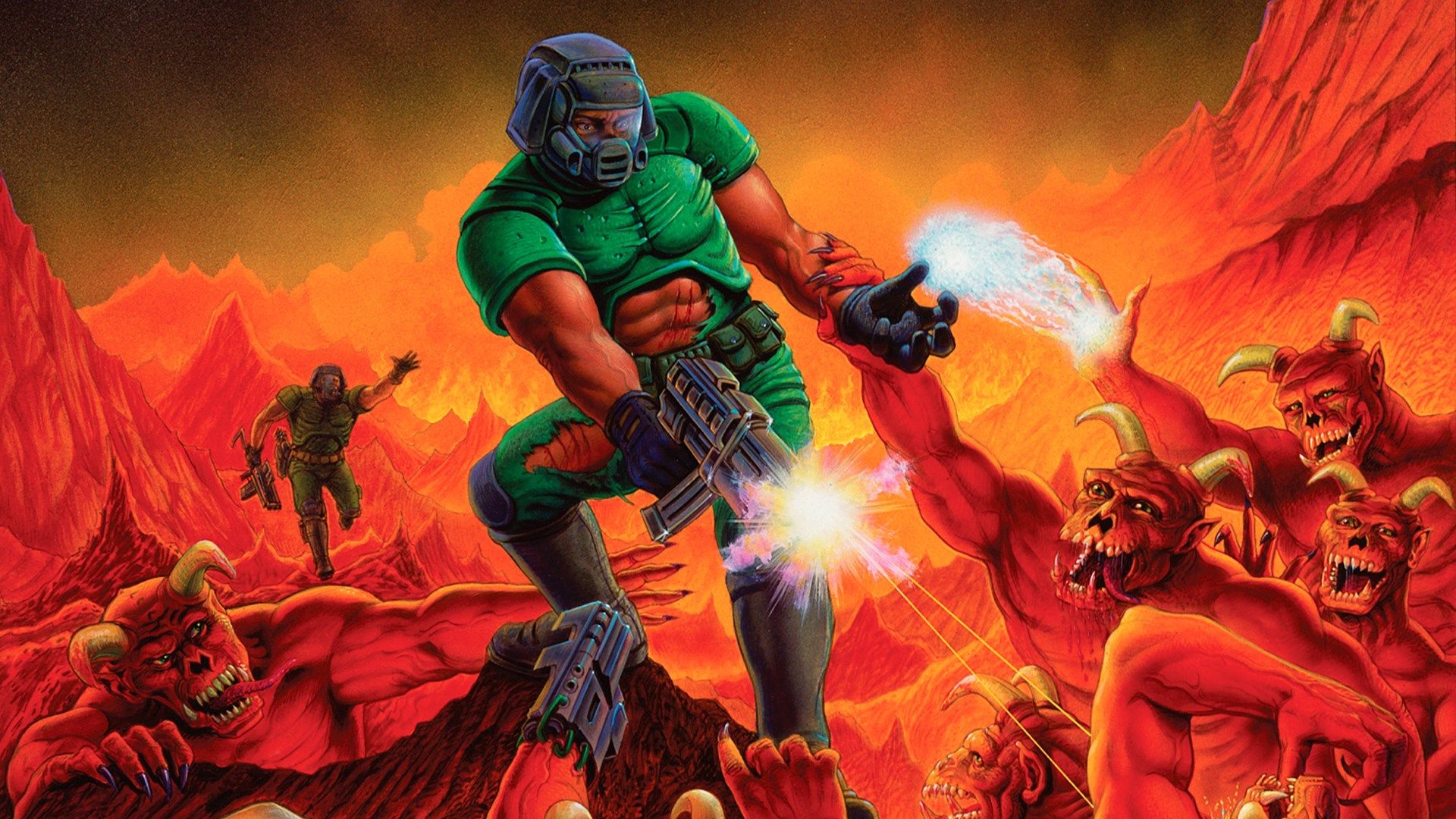
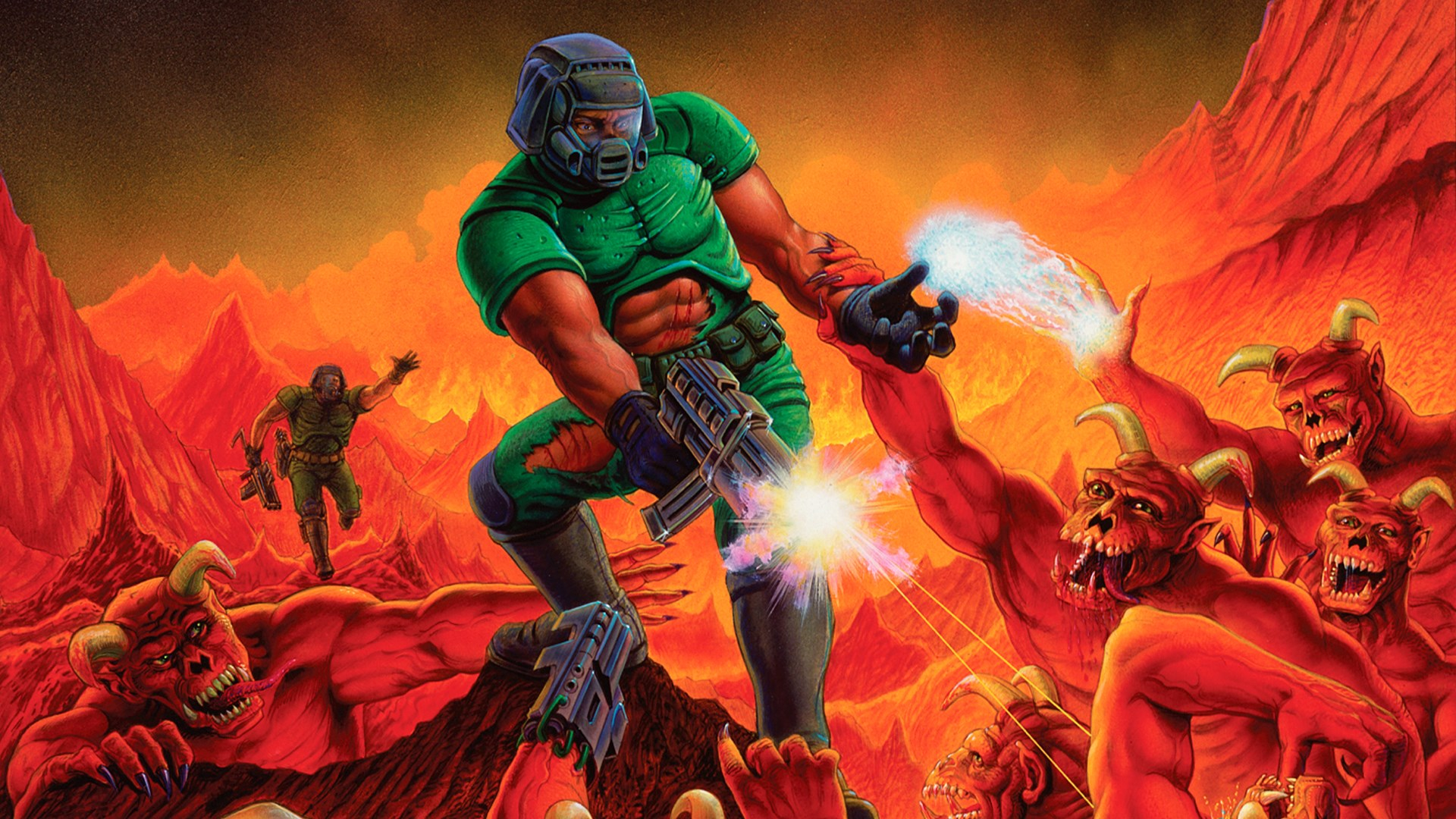
For over three decades, Doom has been revered by the gaming community as the definitive first-person shooter (FPS). It was the title that transformed the PC from a productivity tool into a playground for high-octane adrenaline, turning the young upstarts at id Software into industry titans. However, the game has recently transcended its status as a software icon, earning a permanent place in the canon of American history. The Washington Post, in a monumental retrospective commemorating the 250th anniversary of the United States, has officially named Doom one of the 25 most influential works of American culture.
This selection places Doom alongside foundational pillars of the American experience—ranging from Thomas Paine’s Common Sense and the Star-Spangled Banner to the innovations of Levi’s jeans and the cultural ubiquity of Mickey Mouse. By selecting one defining work for each decade of the nation’s history, the Post has codified Doom as the quintessential cultural artifact of the 1986–1995 era, solidifying its place in the American autobiography.
A Legacy of Digital Innovation
The selection of Doom—which beat out formidable cultural touchstones like Spike Lee’s Do the Right Thing, the pop-culture phenomenon of The Simpsons, and the observational genius of Seinfeld—is a testament to its radical technical and social impact.
Writing for the Washington Post, critic Gene Park detailed the game’s explosive arrival in December 1993. "College networks buckled under the traffic, and bulletin boards lit up, as the game eventually was installed on more computers than Microsoft Windows 95 at the time," Park noted.
Beyond the sheer technical achievement of its 3D engine, Doom was a harbinger of the modern digital age. It pioneered the concept of "shareware," allowing id Software to bypass traditional retail gatekeepers and distribute their vision directly to the end user. In doing so, the developers inadvertently created a blueprint for user-generated content, empowering a community of modders to build their own "corners of hell" years before the term "modding" became a staple of the gaming vernacular.
Chronology: From Garage Coding to National Recognition
To understand the magnitude of this honor, one must look at the meteoric rise of the game.
- 1993: Doom is released as shareware, changing the landscape of PC gaming overnight.
- 1994–1996: The "Doom Clone" phenomenon takes hold, establishing the FPS as the most dominant genre in interactive media.
- 1999: In the wake of the Columbine High School tragedy, Doom finds itself at the center of a national firestorm. Critics and politicians pointed to the game as a culprit for real-world violence, leading to a decade of intense scrutiny regarding video games and media consumption.
- 2024: The Library of Congress inducts the original Doom soundtrack into the National Recording Registry, acknowledging its auditory impact.
- 2026: The Washington Post formally recognizes Doom as one of the 25 most influential works of American culture, officially legitimizing its role in the nation’s history.
The Weight of Controversy: Navigating the Cultural Narrative
The inclusion of Doom on the Post’s list is particularly bold because it does not shy away from the game’s darkest chapter. Gene Park’s analysis explicitly addresses the "moral panic" of the late 1990s, where Doom served as a scapegoat for the Columbine tragedy.
"It was people with guns, not a game, that took lives," Park wrote, emphasizing that the game became a proxy for a grieving nation’s inability to process systemic issues. The "hearings on games and music" that followed became a recurring template in American politics, yet history has seemingly vindicated the medium. By including Doom on this list, the Post suggests that a work can be both a product of its time and a target of misunderstanding, yet still retain profound cultural significance.
The Human Element: Romero, Carmack, and Heritage
Perhaps the most nuanced aspect of the Post’s feature is its exploration of the human experience behind the code. The article highlights that the "spirit of sharing" that defined Doom was not just a design choice, but an extension of lead designer John Romero’s heritage.
Romero, who is of Yaqui and Cherokee descent, noted that the game’s unique approach to environment and spatial design was rooted in his family’s history. "A lot of Doom’s design… was really influenced by just that understanding of the environment, the world, and that comes from my dad, my grandma, everybody," Romero explained. This perspective reframes the "abstract environments" of Doom as a reflection of a worldview that values shared land and community—a starkly different interpretation than the "mindless violence" label often applied by the media in the 90s.
Official Responses from the Founders
The recognition of Doom as a cultural pillar was met with genuine emotion from the team that started it all. Both John Romero and Tom Hall, the visionaries behind the project, took to social media to express their pride.
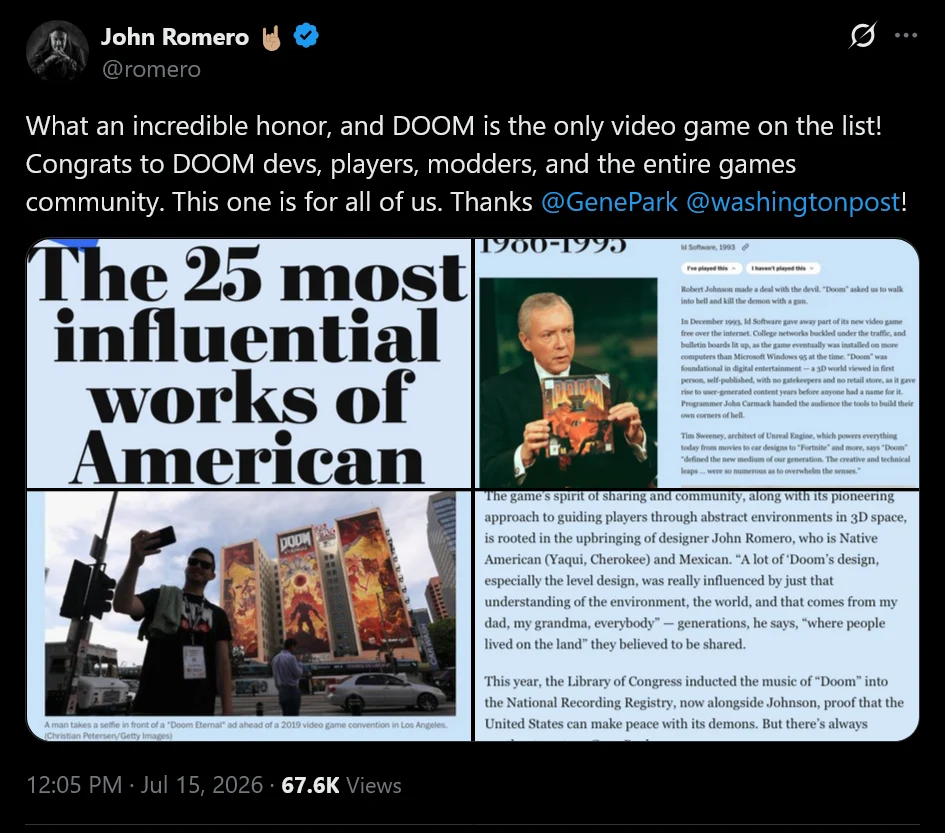
Romero’s response captured the communal nature of the project: "What an incredible honor, and DOOM is the only video game on the list! Congrats to DOOM devs, players, modders, and the entire games community. This one is for all of us."
Tom Hall echoed this sentiment, emphasizing the collective effort of the team: "Proud of id’s legacy and all the games we worked on. Congrats to [the team] and thanks to the Washington Post." These responses highlight that, for the creators, the award is not just a personal accolade, but a validation of the entire gaming medium’s legitimacy.
Implications: A New Era for Gaming History
The inclusion of Doom alongside works like the Narrative of the Life of Frederick Douglass and the recordings of Robert Johnson carries significant weight. It signals that the cultural gatekeepers are finally viewing video games not as mere toys or transient distractions, but as "defining acts of culture."
While some might argue that the list includes "pop culture fluff"—such as the selection of Keeping Up with the Kardashians for the 2006–2015 decade—the Post defends its methodology. Philip Kennicott, the paper’s culture critic, notes that the list is not a "best of" compilation, but a collection of "historical signposts." It is a mirror held up to an "imperfect and unfinished" America.

By choosing Doom, the Post acknowledges that American culture is defined as much by its digital frontiers as it is by its literary and musical traditions. The game represents a shift in how humanity interacts with space, community, and technology.
Conclusion: The Everlasting Impact
As we look back at the legacy of Doom, it is clear that its influence extends far beyond the confines of a screen. It was a catalyst for technological change, a subject of profound social debate, and a masterpiece of collaborative design.
With its recent inclusion in the US Library of Congress and this latest honor from the Washington Post, Doom has officially transitioned from a cult-classic PC game to an untouchable piece of American history. For the millions of players who once navigated its pixelated corridors, the game was always a masterpiece. Now, the rest of the world is beginning to understand why. Doom is not just a game; it is a fundamental chapter in the story of the modern American experience.

