

MENLO PARK, Calif. — At Meta Connect 2026, technology giant Meta dropped a bombshell that could fundamentally reshape the consumer virtual reality landscape. Bypassing the bulky, visor-heavy designs that have defined the industry for over a decade, Meta officially announced its sleek new flagship device: the Meta VR Glasses, slated for a commercial release in spring 2027 at an MSRP of $1,299.
Marketed by Meta as a revolutionary "cinema, workspace, and console in one," the lightweight hardware addresses the primary consumer complaints that have hindered mainstream adoption—namely, excessive weight, awkward aesthetics, and "headset hair." Alongside the hardware reveal, Meta showcased an expansive wave of upcoming games, massive software updates, and hand-tracking applications designed to leverage the form factor’s unique strengths when it launches early next year.
1. Main Facts: Hardware, Backward Compatibility, and Launch Lineup
The core announcement centers on the Meta VR Glasses, a device engineered to bridge the gap between consumer lifestyle tech and dedicated gaming hardware.
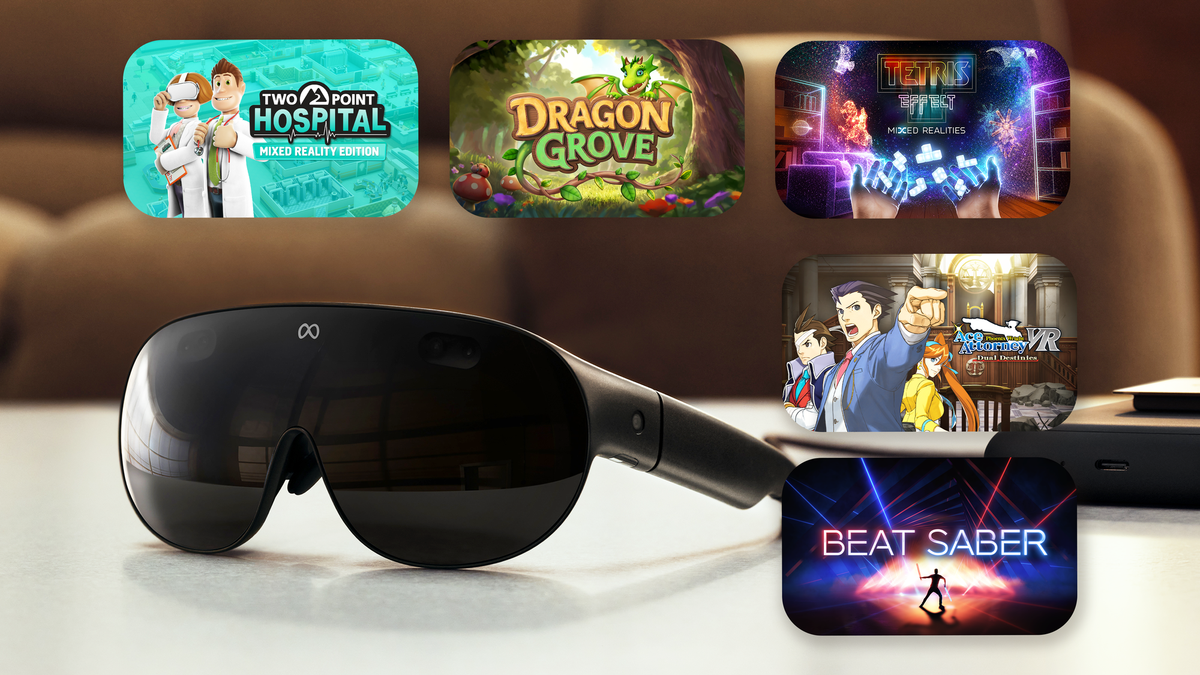
Weighing in at a remarkably light 100 grams, the glasses feature state-of-the-art 2.4K micro-OLED displays. Processing power is supplied via a tethered computing "puck" housing Qualcomm’s cutting-edge Snapdragon Reality Elite chipset.

Crucially, the Meta VR Glasses run the exact same operating system as the existing Quest ecosystem. This guarantees day-one backward compatibility with every single game in the Meta Quest library, instantly granting the new device a massive, mature catalog of titles.
However, the hardware launch comes with a notable hardware compromise: the primary retail SKU will ship without physical controllers, relying heavily on advanced native hand-tracking. For traditionalists who prefer physical inputs, bundles including Meta’s Touch Plus controllers will be available through select retail channels, and the controllers can also be purchased separately.

Complementing the hardware announcement is a robust slate of newly revealed games and updates tailored specifically for the platform:
- Beat Saber: Flux: Billed as the largest update in the history of the rhythm-game titan, Flux introduces a brand-new hand-tracking mode allowing players to complete songs completely controller-free. Launching with 35 tracks, the update also overhauls the game’s progression systems with earnable custom sabers, notes, and profile badges (while retaining optional controller support).
- Phoenix Wright Ace Attorney: Dual Destinies VR: Capcom’s iconic courtroom drama is making the leap to virtual reality. Players step into the roles of Phoenix Wright, Apollo Justice, and Athena Cykes to investigate 3D crime scenes and present evidence. The game makes clever use of hand gestures to point out witness contradictions and integrates voice-activation to recognize when players shout "Objection!" It arrives in 2027 for both Meta VR Glasses and Quest.
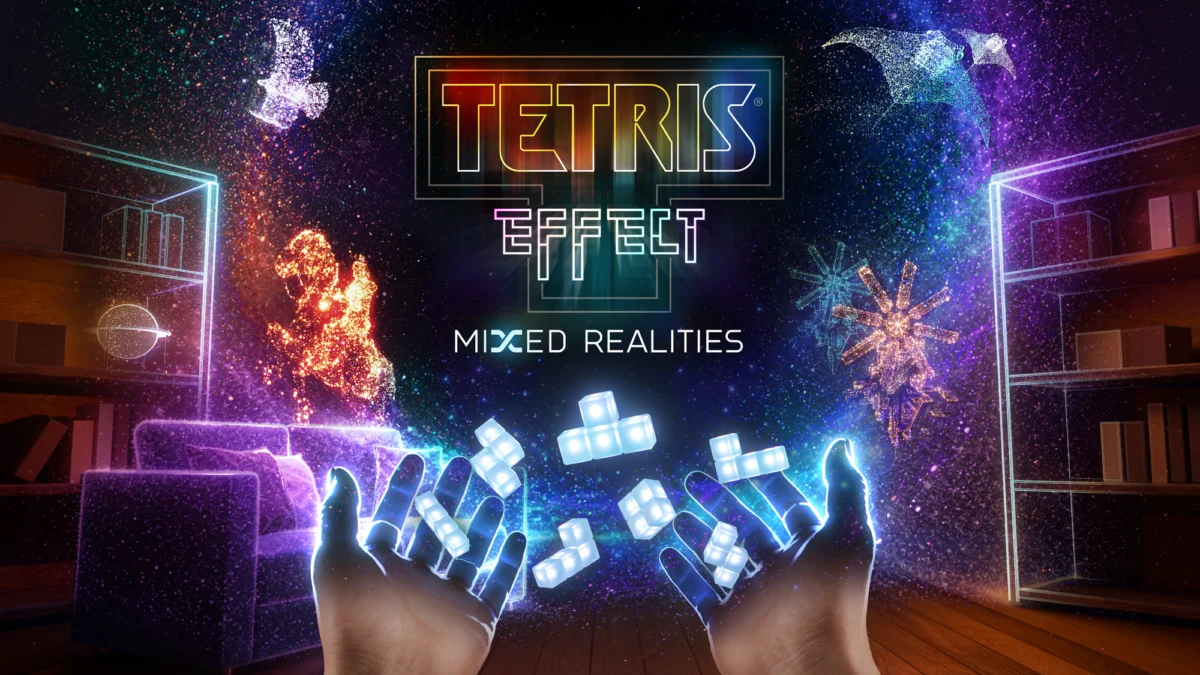
- Tetris Effect: Mixed Realities: A room-aware, hand-controlled mixed reality evolution of the classic puzzle masterpiece. Arriving in 2027, it utilizes the geometry, lighting, and passthrough cameras of the Meta VR Glasses to dynamically transform the user’s physical living space.
- Two Point Hospital VR (Mixed Reality Edition): The acclaimed management simulator is being re-imagined for spatial computing, featuring an advanced hand-tracking interface optimized for the new glasses, alongside launches on Quest 3 and 3S.
- Dragon Grove: A charming, free-to-play 3D puzzle game developed around cooperative interactions with dragons, designed from the ground up for hand-tracking on the Meta VR Glasses, Quest 3, and Quest 3S.
- Story of Seasons – Your Wonderful Life: Bringing the beloved cozy farm-life simulation genre into mixed reality.
- Cardmada: A pirate-themed tactical card-battling game heading to the new glasses and Quest 3 hardware.
- Dice Throne Digital: A free-to-play digital adaptation of the award-winning tabletop dice and card game, featuring full cross-play compatibility with mobile and PC iterations.
Additionally, updates for existing projects were highlighted:

- PAYDAY: Aces High is launching an open playtest on Quest 3 and 3S on October 19, rewarding participants with an exclusive in-game mask.
- Supernatural, the prominent fitness app recently divested by Meta to operate independently, will re-launch under new ownership this fall and serve as a day-one launch title for the Meta VR Glasses.
2. Chronology: The Road to Meta Connect 2026 and Beyond
Understanding the gravity of the spring 2027 release requires looking at the trajectory of Meta’s hardware strategy over recent years:
- Pre-2024: Meta dominated the standalone VR market with the Quest 2 and subsequent Quest 3, proving that untethered VR could capture enthusiast markets. However, high weight and facial pressure limited mainstream consumer adoption outside of dedicated gaming circles.
- Late 2024 – 2025: Rumors intensified regarding Apple’s spatial computing ambitions and Meta’s internal pivot toward ultra-slim, glasses-like form factors. Meta concurrently spun off fitness applications like Supernatural to streamline its internal software ecosystem.
- September 2026 (Meta Connect): Meta officially unveils the Meta VR Glasses, pricing them at $1,299 with a scheduled release window of spring 2027.
- October 19, 2026: Upcoming open playtest for PAYDAY: Aces High on Quest 3 and 3S.
- Late 2026: Independent re-launch of the Supernatural fitness app ahead of its day-one integration with the upcoming glasses.
- Spring 2027: Official commercial rollout and shipping of the Meta VR Glasses to consumers globally, alongside the deployment of day-one software updates like Beat Saber: Flux and Tetris Effect: Mixed Realities.
3. Supporting Data and Market Context
The launch of the Meta VR Glasses does not happen in a vacuum. The spatial computing and extended reality (XR) hardware market is currently experiencing its most competitive and turbulent phase to date.

- Pricing and Specs Comparison: At an MSRP of $1,299, the Meta VR Glasses position themselves firmly in the premium productivity and lifestyle tier. They utilize 2.4K micro-OLED displays and weigh a featherlight 100 grams, outsourcing heavy computational workloads to a Qualcomm Snapdragon Reality Elite-powered puck.
- The Competitor Landscape: Valve has recently entered the market fray with the release of the Steam Frame, a streaming-and-gaming-first VR headset designed to natively interface with user Steam libraries while supporting standalone play. The Steam Frame retails at $1,059 for the 256GB model and $1,299 for the 1TB model, placing it in direct price competition with Meta’s new hardware.
- Library Scale: By maintaining complete OS parity with the Quest ecosystem, the Meta VR Glasses sidestep the historical "empty ecosystem" problem that plagues new hardware platforms. Users will have access to hundreds of established titles from day one, supplemented by new mixed-reality software.
4. Official Responses and Industry Insights
Meta executives and lead developers at Connect 2026 framed the new device not merely as a peripheral, but as a lifestyle paradigm shift.
Meta representatives emphasized that the primary barrier to widespread VR adoption has never been a lack of interest in virtual worlds, but rather the physical ergonomics of traditional hardware. By stripping away bulk and designing a chassis that resembles luxury eyewear—while maintaining the utility of a "cinema, workspace, and console in one"—the company aims to normalize facial wearable technology for the general public.

Game developers have similarly voiced optimism regarding the shift toward native hand-tracking. Creators of titles like Dragon Grove and Beat Saber: Flux noted that removing the physical friction of controllers opens up immersive gaming to casual demographics who might otherwise be intimidated by dual-stick gamepad layouts.
5. Implications for the Future of Spatial Computing
The announcement of the Meta VR Glasses carries profound implications for the trajectory of interactive entertainment and consumer electronics:
- The Death of the "Brick" Headset: If consumers embrace a 100-gram glasses form factor, traditional standalone headsets risks being relegated strictly to hardcore, ultra-high-performance gaming niches—much like desktop towers versus laptops.
- Input Evolution: The choice to ship the primary SKU without controllers forces developers to double down on robust hand-tracking and voice recognition interfaces. Titles like Phoenix Wright and Tetris Effect: Mixed Realities prove that spatial computing apps can thrive without plastic hardware cluttering the user’s hands.
- Ecosystem Wars Intensify: With Valve’s Steam Frame targeting traditional PC gamers at the exact same $1,299 price point, and Meta targeting lifestyle, mixed reality, and mainstream media consumption with its glasses, consumers are facing a fork in the road. The battle for the future of virtual and mixed reality is no longer about who can render the most polygons—it is about comfort, accessibility, and seamlessly blending digital realities into everyday life.

