

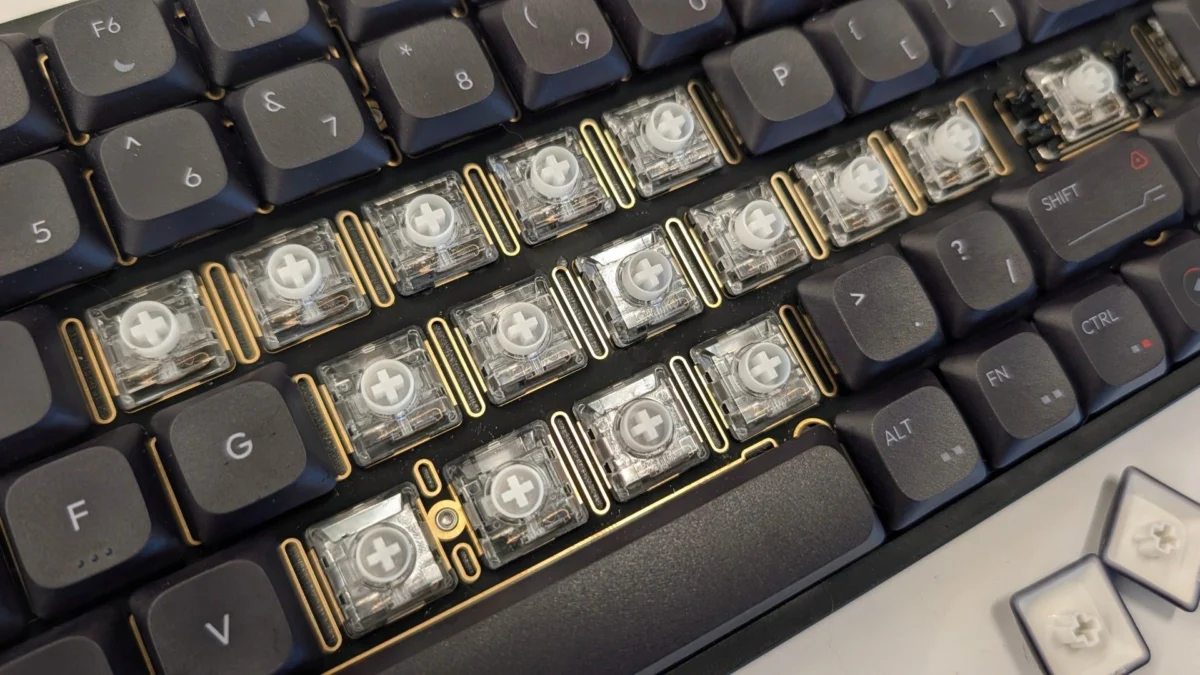
When discussing the upper echelon of the mechanical keyboard market, few brands command the early-adopter respect of IQUNIX. Long before the mainstream mechanical keyboard boom popularized by pandemic-era remote work trends and enthusiast culture, IQUNIX was already pioneering trends. The company was an early advocate for high-grade PBT keycaps, aviation-style custom cables, and robust aluminum chassis elements that have since transformed from boutique novelties into industry standards.
Having firmly established its reputation in the traditional mechanical keyboard space, IQUNIX has naturally looked toward market diversification. While the brand addresses the modern Hall Effect and rapid-trigger demographic with its specialized EZ series, its latest peripheral release—the IQUNIX MQ80—takes an entirely different approach.
Instead of chasing the rapid-triggering magnetic switch trend that currently dominates competitive gaming discourse, the MQ80 aims to refine the low-profile typing experience. It distills years of design lessons regarding acoustics, materials, and ergonomics into a sleek, ultra-slim frame. Yet, despite featuring a stunning all-aluminum build and remarkably satisfying acoustics, stiff market competition and limited portability keep the MQ80 from securing an unreserved recommendation.
Main Facts: At a Glance
- Product Name: IQUNIX MQ80
- Form Factor: Low-profile mechanical keyboard
- Build Material: Full aluminum chassis
- Core Appeal: Premium aesthetics, exceptional typing acoustics, and solid mechanical switch performance.
- Primary Drawbacks: Lacks magnetic/Hall Effect switches, limited portability, and faces intense competition that makes its standard price point difficult to justify immediately.
- The Verdict: Well-crafted and stylish, but buyers should consider skipping the initial launch price unless they explicitly dislike magnetic switches, or simply wait for a discounted promotional sale.
Chronology: The Evolution of IQUNIX and the Rise of the MQ80
To fully understand where the MQ80 fits into the modern peripheral landscape, it is helpful to look at the timeline of both the manufacturer and the low-profile keyboard market at large.
Pre-2020: The Boutique Pioneer
Years before mechanical keyboards became standard desk-setup staples across social media platforms like TikTok and Reddit, IQUNIX operated as a boutique manufacturer. During an era when most mainstream commercial keyboards relied on cheap ABS plastic and flimsy frames, IQUNIX introduced heavy metal builds, retro-inspired colorways, and durable PBT keycaps. Their products established a baseline expectation for luxury peripherals.
The Pandemic Boom and Market Saturation
When the global shift toward remote work catalyzed an unprecedented surge in consumer demand for home-office upgrades, the mechanical keyboard market exploded. Brands flooded the space with hot-swappable circuit boards, customized sound-dampening foam layers, and wireless connectivity. What was once a niche hobby transformed into a multi-million-dollar mainstream industry.
The Magnetic Switch Revolution
As traditional mechanical designs matured, a new technological wave emerged: Hall Effect (HE) magnetic switches. Offering adjustable actuation points and rapid-trigger capabilities, HE keyboards quickly became the gold standard for competitive esports athletes and high-performance gamers. In response, IQUNIX developed its EZ series to capture this burgeoning demographic.
The Launch of the MQ80
Rather than abandoning traditional mechanical switches entirely, IQUNIX turned its attention to a different segment: low-profile enthusiasts who prioritize desk minimalism, ergonomics, and sophisticated aesthetics over rapid-trigger gaming gimmicks. The MQ80 was engineered to bridge the gap between ultra-slim office keyboards and high-end enthusiast desktop boards, culminating in its official market release as a premium, low-profile contender.
Supporting Data and Design Analysis: Beneath the Aluminum Shell
The MQ80 is immediately striking upon unboxing, largely due to its commitment to material quality.
All-Aluminum Construction
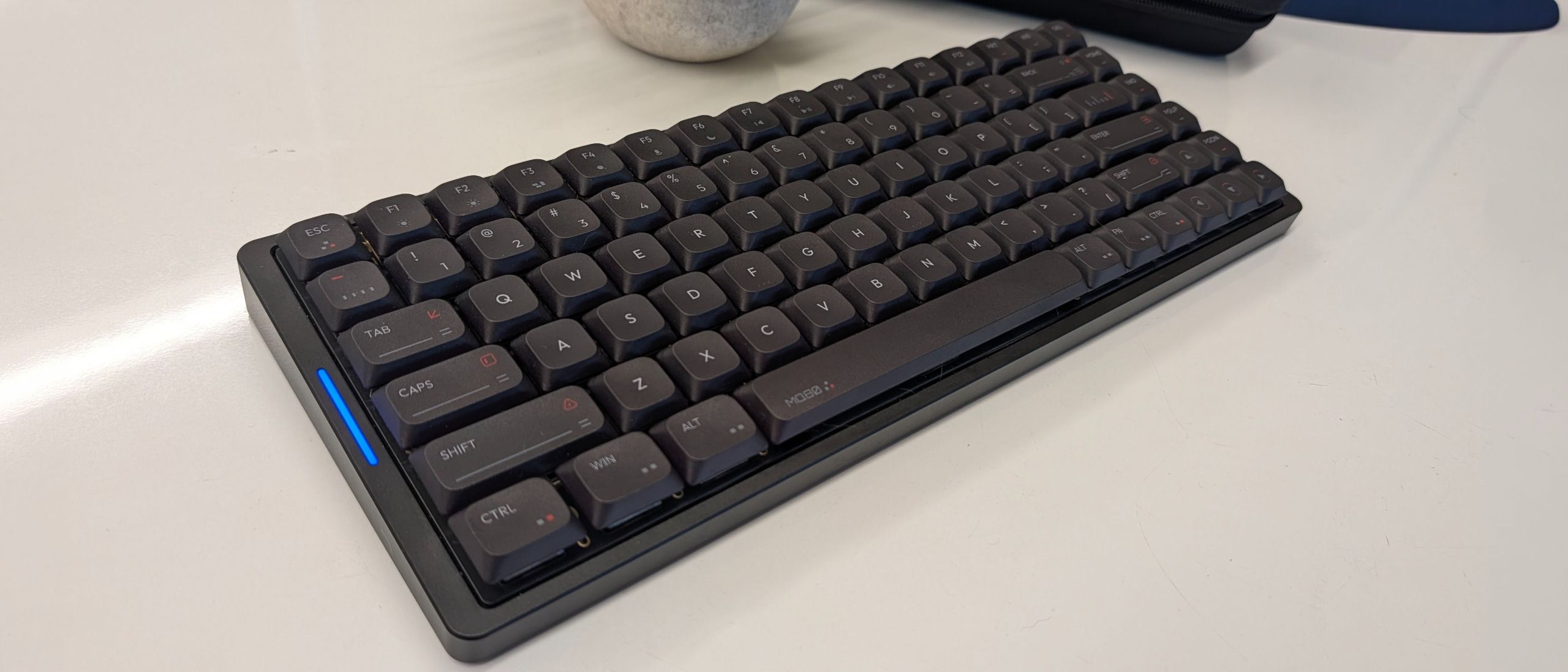
In a market saturated by plastic bodies—even among high-end options—the MQ80 stands out with its heavy, milled-aluminum frame. This material choice not only imparts a luxurious, cool-to-the-touch aesthetic reminiscent of high-end laptop chassis, but it also adds structural rigidity. There is virtually no flex to the board, ensuring that it stays firmly planted on your desk during intense typing sessions or gaming marathons.
Low-Profile Ergonomics
Low-profile keyboards have historically faced criticism for causing wrist fatigue due to awkward angles or sacrificing tactile feedback in the pursuit of slimness. The MQ80 addresses this by maintaining a subtle slope that encourages a more natural wrist posture. Without requiring a bulky wrist rest, users can comfortably transition from typing lengthy documents to gaming without straining their joints.
Acoustics and Keystroke Quality
One of the most surprising triumphs of the MQ80 is its sound profile. Low-profile keyboards often suffer from a hollow, clacky sound signature because there is minimal internal volume for sound dampening. IQUNIX has managed to defy these physical constraints. Through careful internal engineering, gasket implementation, and switch tuning, the MQ80 delivers some of the deepest, cleanest, and most satisfying acoustics ever engineered into a low-profile form factor. Every keystroke lands with a refined, muted thock that feels sophisticated rather than tinny or distracting.
The Feature Trade-Off: Where It Falls Short
Despite its stellar build quality and acoustics, the MQ80 enters a market fraught with demanding consumer expectations.
- Absence of Magnetic Switches: For buyers seeking bleeding-edge gaming performance, the omission of Hall Effect switches is a notable drawback. While traditional mechanical switches remain superior for pure typing comfort and sound, magnetic switches offer undeniable functional advantages in competitive gaming titles.
- Portability Concerns: Despite being "low-profile," the heavy-duty aluminum construction makes the MQ80 surprisingly weighty. It lacks the lightweight, grab-and-go convenience typically associated with slim travel keyboards, tying its utility primarily to stationary desktop setups.
Official Reviewer Consensus and Industry Implications
When evaluating the market positioning of the IQUNIX MQ80, industry experts emphasize a growing disconnect between luxury craftsmanship and consumer value propositions.
The Value Proposition Dilemma
The primary critique facing the MQ80 is not its performance—which remains genuinely impressive—but its pricing relative to the current competitive landscape. Reviewers note that while the keyboard is impeccably manufactured, the peripheral market has become intensely crowded. Competitors offer comparable features, hot-swappability, and alternative switch types at significantly lower price points.
As Tom’s Hardware notes in its verdict: "The IQUNIX MQ80 is well-made and super stylish, but it’s not quite the instant sell it used to be. Catch this one if you don’t like magnetic switches, but otherwise wait for a sale."
Market Implications for IQUNIX
The launch of the MQ80 highlights a broader strategic challenge for legacy boutique manufacturers. As mass-market brands successfully adopt features that were once exclusive to premium manufacturers—such as CNC-machined aluminum cases, gasket mounts, and factory-lubed switches—the justification for high retail prices narrows.
To maintain its competitive edge, IQUNIX must navigate a delicate balance. On one hand, the brand’s dedication to premium materials and acoustic engineering keeps its products desirable to purists. On the other hand, consumers today demand maximum versatility. If a keyboard lacks cutting-edge technology like Hall Effect sensors or wireless multi-device optimization at a competitive price tier, buyers are increasingly inclined to wait for promotional discounts.
Conclusion: Should You Buy the IQUNIX MQ80?
The IQUNIX MQ80 is a masterclass in industrial design, material selection, and acoustic tuning. It proves that low-profile mechanical keyboards do not have to sound hollow or feel cheap. For users who prefer the tactile predictability of traditional mechanical switches, appreciate the unmatched durability of an all-aluminum chassis, and demand a clean, minimalist desk aesthetic, the MQ80 delivers an exceptional daily driver.
However, for the average consumer or budget-conscious enthusiast, the initial asking price requires careful consideration. Lacking the high-performance gaming advantages of magnetic switches and lacking true travel-friendly portability, it occupies a specialized luxury niche. Unless you are dead-set on avoiding Hall Effect technology or simply fall in love with its refined aesthetic, the wisest strategy is to keep an eye on upcoming retail sales before adding the MQ80 to your collection.

