


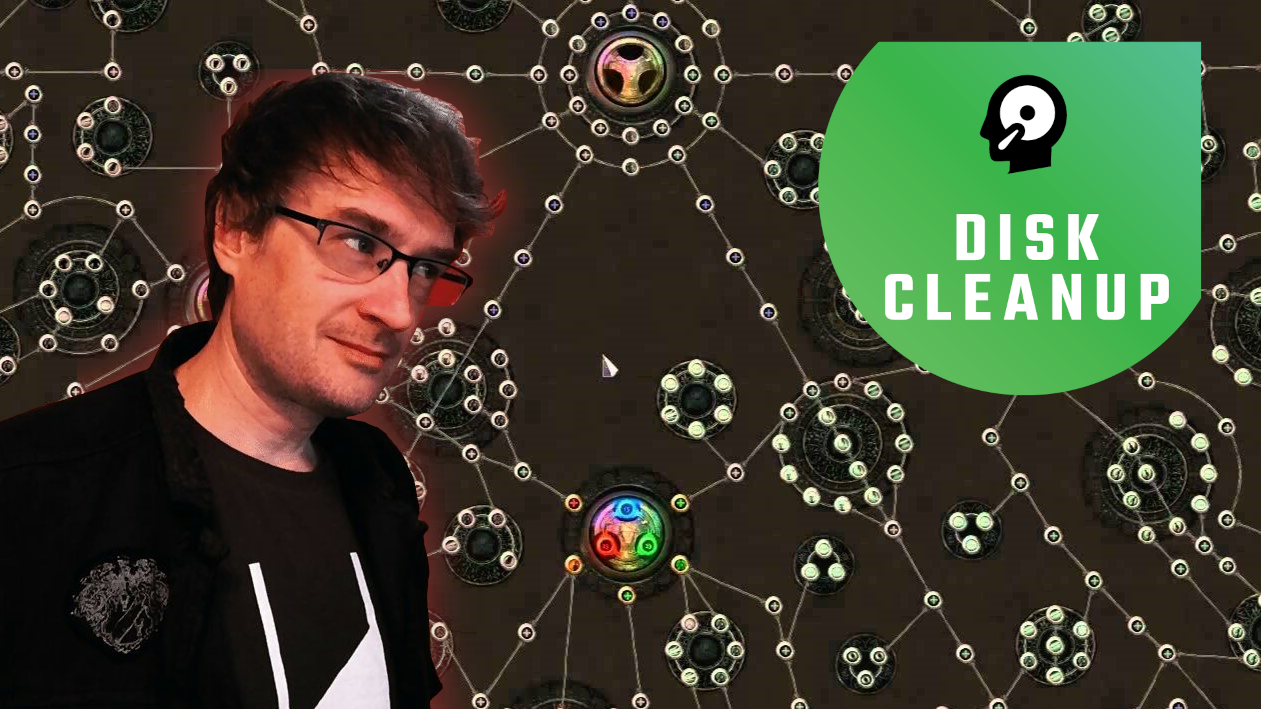
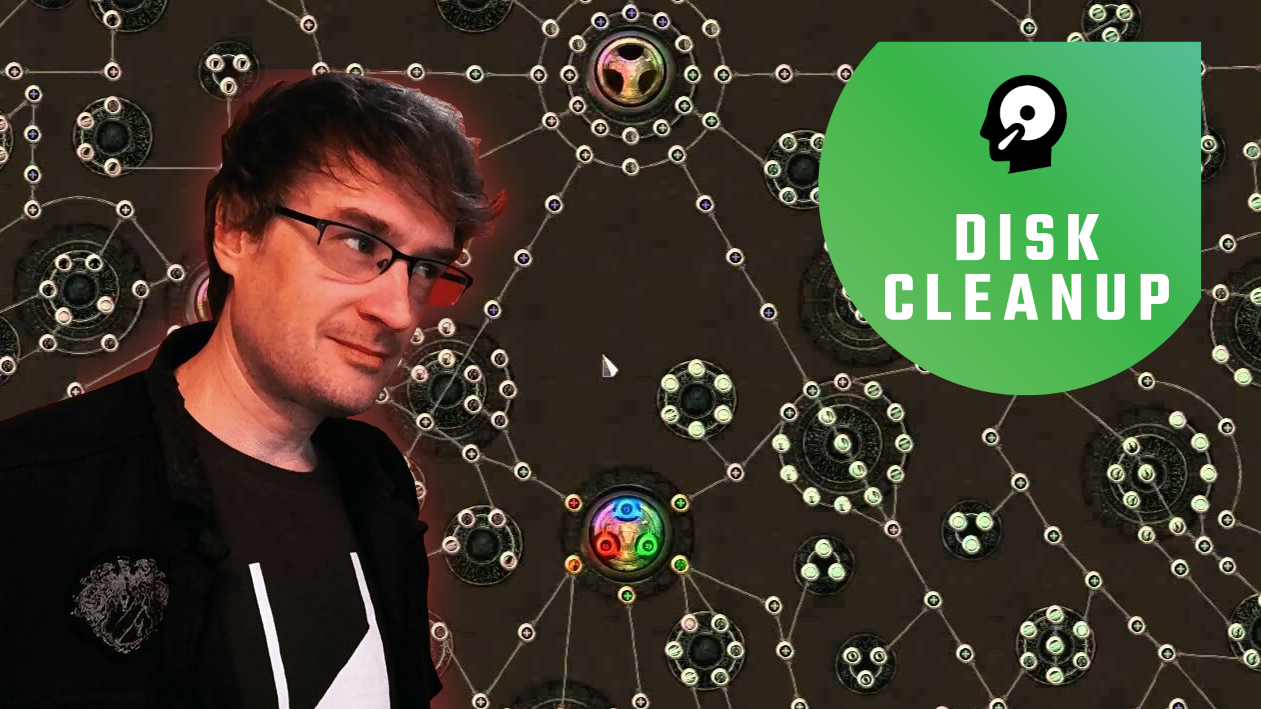
As part of our weekend feature series, "Disk Cleanup," we rummage through the Steam libraries and hard drives of the industry’s most revered creators. This week, veteran game director and immersive sim luminary Jordan Thomas pulls back the curtain on his formative years, the grueling development cycles behind cult classics, and his current obsession with Shakespearean deckbuilders.
Main Facts: The Legacy of Jordan Thomas
For decades, Jordan Thomas has occupied a distinct and influential space within the PC gaming landscape. Emerging from the shareware era of the early 1990s, Thomas has left an indelible mark on some of the most atmospheric, systemic, and psychologically rich titles in video game history.
His journey spans legendary studios and iconic franchises:
- Ion Storm Austin: Working on Thief: Deadly Shadows, where he designed "The Shalebridge Cradle"—widely regarded as one of the most terrifying and masterfully crafted levels in first-person gaming history.
- Irrational Games & 2K Marin: Leading the design for BioShock’s opulent and macabre "Fort Frolic" district before taking the directorial reins for BioShock 2, and later contributing to BioShock Infinite.
- Question (Independent Studio): Co-founding an indie outfit that brought eccentric, systemic experiences to life, including The Magic Circle, The Blackout Club, and South Park: Snow Day.
- The Killing Stone: Question’s recently launched dark roguelike deckbuilder inspired by 17th-century Shakespearean drama, featuring authentic period-accurate dialogue.
Yet, despite his storied pedigree in the immersive sim genre, Thomas approaches his craft with a refreshing pragmatism. Sitting down to discuss his personal PC setup, the veteran developer reveals a library shaped by thousands of hours of strategic depth, chaotic multiplayer physics, and a lifelong appreciation for games that treat the player’s intellect with respect.
Chronology: From Commander Keen to Shakespearean Sin-Eaters
Thomas’s relationship with PC gaming began long before he ever wrote a line of design documentation or mapped a 3D environment.
The Shareware Gateway
Growing up during the peak of PC shareware distribution, Thomas was introduced to interactive entertainment through free game demos supplied by his father. While many children of the era gravitated toward colorful platformers, Thomas found himself deeply drawn to ID Software’s seminal works.
"This is embarrassing in a way, but the first one I remember connecting to enough to do drawings at school—and it’s so immature—was old Commander Keen," Thomas reflects. "It was a quick segue from that into Wolfenstein and Quake. So weirdly, Commander Keen was a gateway drug into darker games that would then become my focus for a very long time."
Breaking into the Industry
That early fascination with shadow, dread, and atmospheric tension naturally steered Thomas toward Ion Storm Austin. Tasked with working on Thief: Deadly Shadows, he was given the responsibility of building The Shalebridge Cradle—an abandoned orphanage and asylum that combined ghost-story tropes with the systemic mechanics of the Thief engine. It established his reputation as a developer capable of weaponizing architecture and environmental storytelling.
Following the closure of Ion Storm Austin, Thomas transitioned to Irrational Games and 2K Marin, where his fingerprints became synonymous with the decaying, Objectivist dystopia of Rapture. After the conclusion of the BioShock trilogy’s initial run, Thomas sought creative freedom by co-founding the indie studio Question.

The Indie Evolution and The Killing Stone
At Question, Thomas and his team explored unconventional spaces. The Magic Circle served as a meta-commentary on game development itself, while The Blackout Club experimented with live-service storytelling and synchronous multiplayer horror.
Most recently, Question pushed into entirely new territory with The Killing Stone. The dark roguelike deckbuilder drops players into the 17th century, tasking them with un-cursing family decks by extracting inherited sins from the souls of a fictional dynasty. For the most dedicated players, the game even offers fully authentic period dialogue.
Supporting Data: Inside Thomas’s Steam Library
During our deep-dive into his PC, Thomas walked us through the titles that currently occupy his hard drive, revealing eclectic tastes that span hard-core strategy, cooperative physics sandboxes, and monumental time sinks.
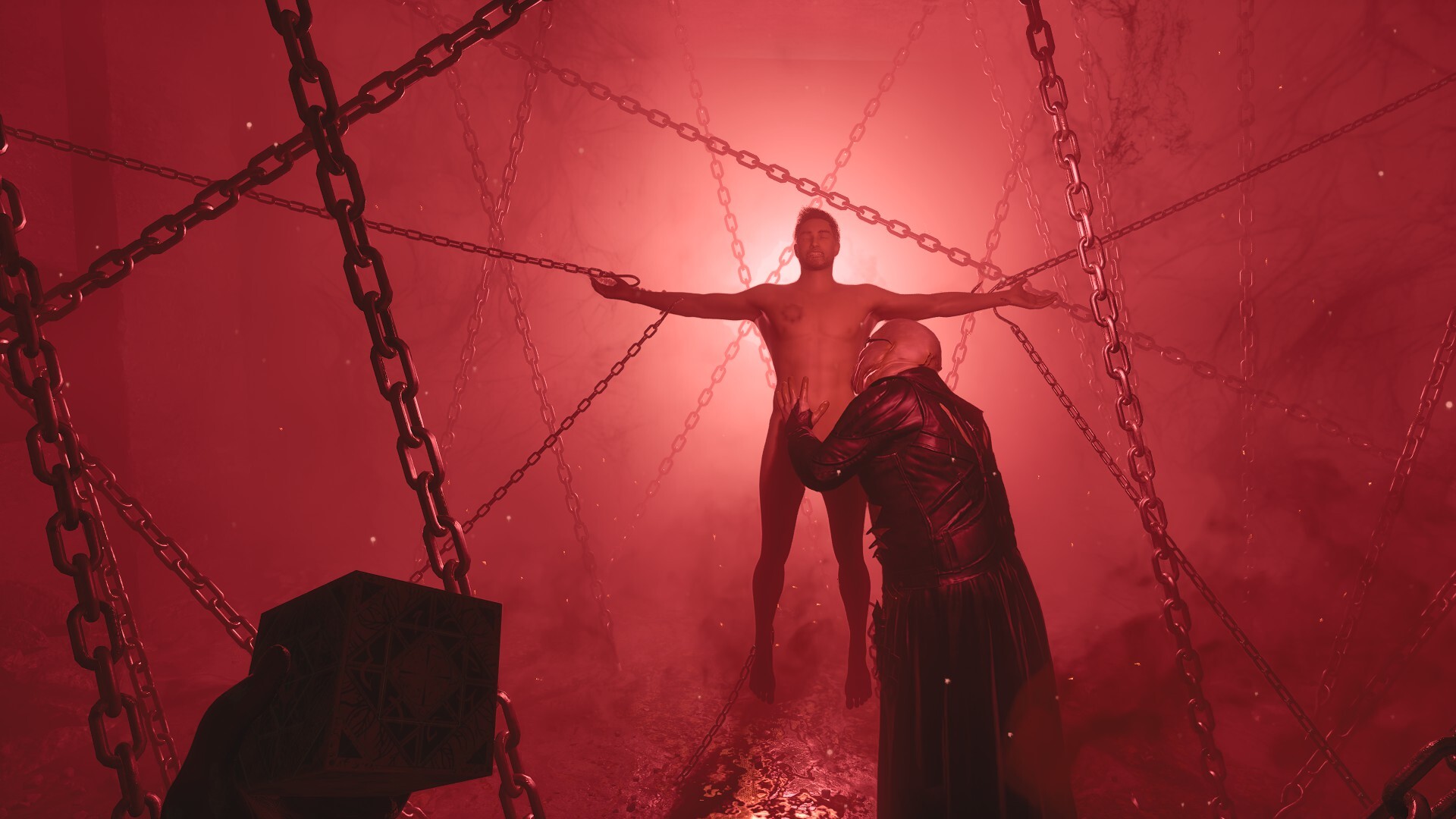
Current Play: Hellraiser: Revival and the Legacy of Condemned
Thomas is currently spectating and playing Hellraiser: Revival, a survival horror title developed by Saber Interactive. As a lifelong fan of Clive Barker’s mythology, Thomas appreciates the game’s willingness to lean into lurid, non-Euclidean geometry and the decay of human relationships.
Crucially, he sees Hellraiser: Revival as a spiritual successor to Monolith’s 2005 classic, Condemned: Criminal Origins.
"I prefer melee to shooting for many reasons," Thomas notes. "I’ve long since reached saturation point with guns in this country and in my life, so I moved into melee and stayed there… Monolith’s programmers of the enemies were early pioneers in finding semi-systemic, often designer-aided, smart things for the enemies to be doing."
Multiplayer Chaos: REPO
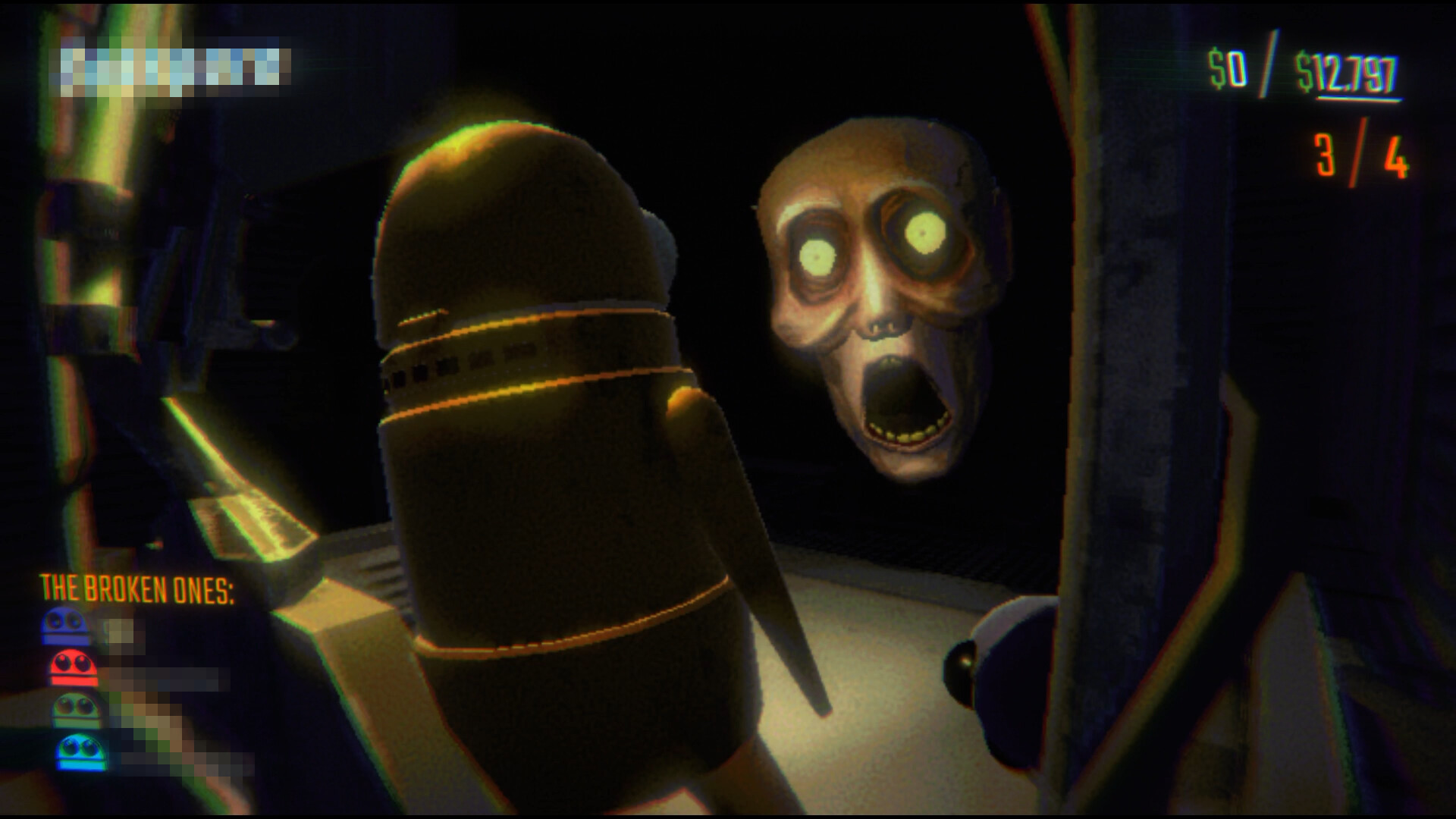
When looking at recent cooperative experiences, Thomas praises REPO, a physics-driven multiplayer game that delivers unexpected comedic and tense moments. He recalls a memorable session where his severed robot head was being carried back to a resurrection cart by a teammate while he managed a dying battery camera angle, screaming at his friends not to turn around and look at a gaze-activated monster.
"I’d never seen a moment like that happen before, where my limited agency death mattered," he says.
The Ultimate Time Sink: Path of Exile
No discussion of Thomas’s PC habits would be complete without addressing his staggering playtime in Grinding Gear Games’ action-RPG juggernaut, Path of Exile. Thomas logged an astonishing 7,613 hours in the game, primarily during the grueling development cycle of The Blackout Club.
Working punishing hours by day to manage the game’s live-service narrative events and coordinating with real-world actors, Thomas used Path of Exile as an emotional decompression chamber at night.
"I was essentially awake all the time during the day… but at night running the live encounters… there was this incredible need for stress relief. Path of Exile absorbed all of that damage," he explains. He notes that the joy of pruning and building his own complex character skill trees—eschewing influencer guides in favor of personal experimentation—became a vital therapeutic outlet.
Permanent Installations: Darkest Dungeon and Baldur’s Gate 3
When asked what games will never leave his hard drive, Thomas points to Darkest Dungeon 1—appreciated as much for Wayne June’s iconic, gravelly narration as its gothic atmosphere—and Larian Studios’ Baldur’s Gate 3. Thanks to a burgeoning modding community, Thomas views Baldur’s Gate 3 as having achieved the infinite replayability and modularity of The Elder Scrolls V: Skyrim.

Official Perspectives: Navigating Indie Development and Union Talent
Thomas’s insights extend beyond personal gaming preferences into the realities of modern game production, particularly regarding labor practices and independent development.
Reflecting on The Blackout Club, Thomas expressed immense pride in the studio’s commitment to supporting unionized voice talent, even on a restricted indie budget. By working alongside SAG-AFTRA and coordinating with prominent creators—such as members of Critical Role and voice actor Ashly Burch—the team devised an innovative system where actors could record localized, semi-improvised audio elements designed to simulate an ongoing, real-time haunting within the game world.
"For a low-budget game, we were very loudly pro-union and we wanted to work with union talent," Thomas says. "We went to SAG and said, ‘We’re doing something that’s never been done before.’"

Managing this audio-heavy pipeline required Thomas to rely heavily on non-gaming software like Audacity, which remains a permanent fixture on his workstation. The software became essential for cutting and processing the raw, lo-fi recordings captured during home setups, a workflow that continues to influence his current projects at Question.
Implications: The Evolution of the Immersive Sim
Thomas’s reflections offer a broader commentary on where the games industry stands today, particularly regarding the genre he helped define: the immersive sim.
For years, developers have debated whether the traditional immersive sim—with its rigid emphasis on systemic interaction, multiple solutions to problems, and meticulous environmental design—is a commercially viable or even sustainable format. However, Thomas suggests that the genre’s DNA has successfully mutated. Rather than lamenting the decline of pure, capital-I immersive sims, he points to how modern indie titles like REPO and emergent systemic multiplayer games are solving design problems in fresh, unexpected ways.

By embracing comedy, physics-driven multiplayer chaos, and genre-blending mechanics (such as marrying deckbuilding with Shakespearean drama in The Killing Stone), developers are keeping the core philosophy of player agency alive.
As Thomas moves forward from historical heavy-hitters like Thief and BioShock into quirky, literary indie experiments, his approach remains grounded in a simple truth: players will always respond to spaces that feel lived-in, mechanics that invite improvisation, and worlds that refuse to take themselves too seriously—even while dragging you through the darkest depths of the human psyche.

