

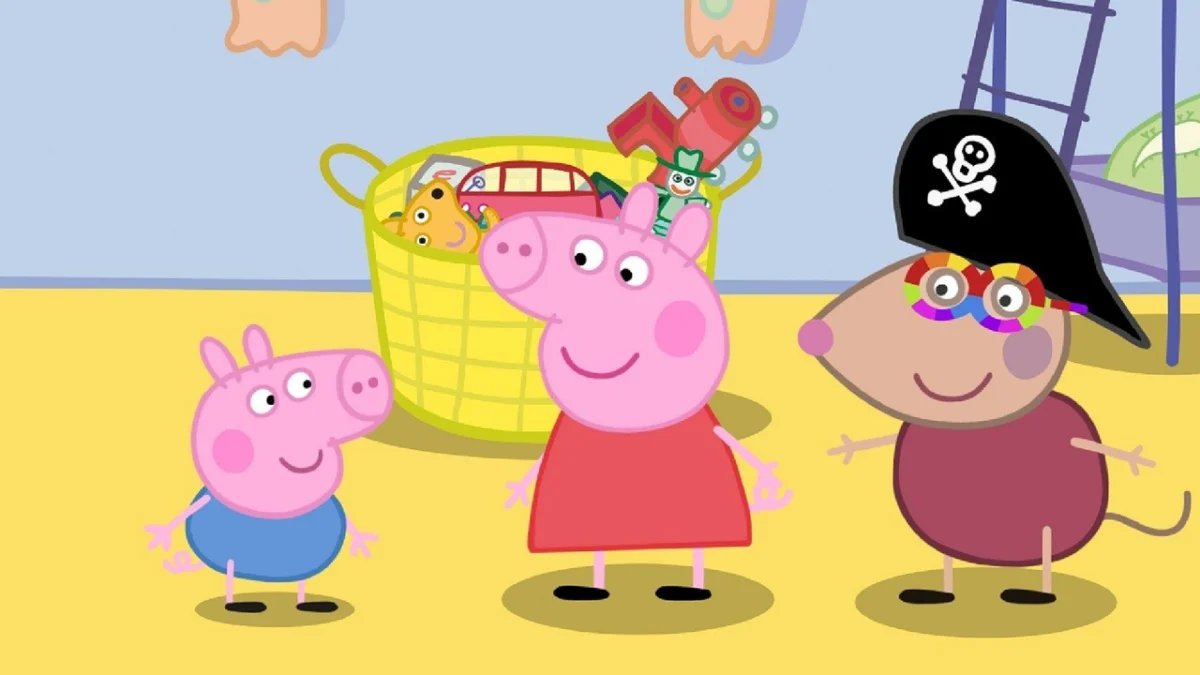
Hasbro, the multinational toy and entertainment giant behind iconic brands like Dungeons & Dragons, Magic: The Gathering, and the omnipresent Peppa Pig, has found itself at the center of a burgeoning ethical firestorm. Reports have surfaced indicating that the corporation is attempting to include clauses in contracts for child voice actors that would grant the company the rights to synthesize and use their voices via Artificial Intelligence (AI) for commercial purposes.
The revelation has sparked widespread condemnation from the entertainment industry, labor advocates, and parents alike, raising fundamental questions about the intersection of corporate profit motives, technological overreach, and the protection of minors in the digital age.
A Chronology of the Controversy
The alarm was first raised by the Agents of Young Performers Association (AYPA), which issued an open letter signed by over 1,000 industry professionals. The letter describes a troubling "take it or leave it" ultimatum presented by a major studio managing an international children’s franchise. While the letter initially remained broad, investigative reporting from Deadline soon linked the allegations directly to Hasbro and its management of the Peppa Pig brand.
According to the AYPA, the contracts in question explicitly demand that young actors consent to the use of AI, effectively allowing the studio to replicate their vocal performances for use in "all commercial assets" within the franchise. This move represents a significant escalation in the ongoing industry struggle over AI’s role in creative labor, shifting the battlefield from adult union workers to the most vulnerable participants in the entertainment industry: children.
The timeline of this incident coincides with a period of intense, often turbulent, internal shifts at Hasbro. Over the past decade, the company has faced a series of reputational setbacks, including aggressive legal tactics—such as dispatching private security firm the Pinkertons to retrieve leaked Magic: The Gathering cards—and a massive workforce reduction that saw 1,100 employees laid off, many of whom were instrumental in the development of critically acclaimed titles like Baldur’s Gate 3.
The Core of the Issue: Consent and Exploitation
The central tension in this controversy is the concept of informed consent. In traditional labor negotiations, adults possess the agency to weigh the risks of AI integration, negotiate for compensation, and leverage collective bargaining through organizations like SAG-AFTRA. Children, however, do not possess this same level of legal or cognitive autonomy.
Critics argue that by pressuring young actors to sign away their vocal likenesses in perpetuity, corporations are effectively locking these children into a digital "forever" that they cannot possibly understand or consent to as minors. The potential for these AI-generated voices to be repurposed in future media, advertisements, or even unauthorized derivative works creates a landscape where a child’s identity is harvested as a commodity, stripped of the human nuance and labor protection that defines professional acting.
"The prospect of a child—who would rely on guardians to interpret and agree to such a contract—getting roped into a perpetual AI license is, quite frankly, predatory," notes industry analysts. There is no precedent for a "responsible" or "transparent" way to handle the permanent digital cloning of a minor’s voice, as the technology fundamentally detaches the performance from the performer.
Hasbro’s Pattern of Missteps
This latest controversy arrives at a time when Hasbro is already struggling to maintain its standing as a steward of beloved intellectual properties. The company’s recent history is a catalog of corporate dissonance:
- Labor Relations: Beyond the current AI outcry, Hasbro has been criticized for aggressive anti-union tactics, including the distribution of materials to employees discouraging collective bargaining.
- The AI Obsession: Hasbro’s leadership, particularly its CEO, has been noted for a persistent, public interest in AI integration across its business models. While the company has occasionally backtracked on using AI in specific consumer-facing products like Magic: The Gathering cards due to massive public backlash, the underlying corporate strategy remains heavily invested in the technology.
- Failed Projects: The company’s mismanagement has extended to its digital wing, including the abrupt cancellation of high-profile projects—such as a Dungeons & Dragons game helmed by the director of Jedi: Fallen Order—and the failure of its virtual tabletop platform, Sigil.
These instances have collectively contributed to a perception that Hasbro is a company adrift, prioritizing short-term technological efficiency and cost-cutting over the creative integrity and human relationships that sustain its brands.
Official Responses and Corporate "Waffle"
In response to the mounting pressure and the specific allegations linked to Peppa Pig, Hasbro issued a statement that many industry observers have characterized as evasive. The company stated:
"The protection of child performers is core to who Hasbro is, it’s part of our DNA. As industry standards around AI continue to evolve, we are committed to engaging with this issue in a responsible and transparent manner."
This statement has been widely criticized for failing to address the substance of the accusation: the inclusion of non-negotiable AI clauses in child contracts. By focusing on "evolving industry standards," Hasbro appears to be attempting to frame its aggressive contract tactics as a neutral response to a changing market, rather than a conscious choice to exploit the legal ambiguity surrounding AI rights.
Broader Implications for the Gaming and Animation Industry
The ramifications of this story extend far beyond Peppa Pig. The entertainment industry has been in a state of high tension regarding AI since the technology became commercially viable for synthetic performance. Last year, the videogame voice actors’ strike—concluded only after grueling negotiations—sought to establish exactly the kind of protections for adults that Hasbro is accused of bypassing for children.
If a major studio is allowed to normalize the collection of AI-ready voice data from minors, it could set a dangerous precedent for the entire industry. It creates a "race to the bottom" where the unique, irreplaceable nature of human performance is replaced by a database of cloneable voices, effectively rendering the actors themselves obsolete.
For the gaming sector, the implications are particularly stark. As companies look to reduce the costs of localized dialogue and character VO, the temptation to use synthetic voices based on real human actors is immense. If the "Hasbro model" becomes the standard, the future of character performance in games may not be about acting, but about the licensing of biological data.
Conclusion: A Call for Accountability
The backlash against Hasbro is not merely a reaction to a single contract; it is a signal that the public and the creative community are drawing a line in the sand. When it comes to the voices of children, there is little room for corporate "flexibility" or vague promises of "responsible engagement."
As the AYPA and its 1,000+ signatories continue to demand clarity, the entertainment industry faces a reckoning. The question is whether companies will choose to treat child actors as creative partners with rights to their own likeness, or as mere inputs for a machine. For Hasbro, a company already suffering from a decade of eroded trust, this moment represents a critical juncture: they can continue to push the boundaries of technological exploitation, or they can recognize that in the business of imagination, the human element is not something that can be replaced by an algorithm.
Ultimately, the industry must decide if it is prepared to sacrifice the integrity of the next generation of performers for the sake of efficiency. Based on the current sentiment, the answer from the creative community is a resounding, and non-negotiable, "no."

