

By the Gaming Desk
Published: October 2026
Executive Summary & Main Facts
Strategy video games have long found a natural home in virtual reality, effectively casting the player in the role of an omniscient gamemaster hovering above a 3D tactical board. Nowhere is this dynamic more acutely realized than in the bridge of a capital ship. Enter BattleGroupVR2, the highly anticipated space-faring tactical simulation sequel developed by SpaceOwl Games. Currently available in Early Access on Steam (having launched on November 7, 2025) and the Meta Quest platform (following its release on August 28, 2026), the title retails for $24.99.
Tested extensively on the Meta Quest 3S, BattleGroupVR2 refines nearly every structural, visual, and mechanical pillar of its acclaimed predecessor. By allowing players to seamlessly transition between commanding a personal flagship from a bridge-view hologram and directing a sprawling allied fleet across star systems, the title delivers an intergalactic warfare experience that feels both grand in scale and intimately tactile.
However, the Early Access journey is not without its turbulence. While the game boasts sweeping visual overhauls, deep tactical encounters, and a tantalizing shared online universe mode, it currently stumbles significantly in the audio department due to grating synthetic voice acting—an issue developers have pledged to resolve prior to the 1.0 commercial launch.
Chronology of Development and Release
The trajectory of BattleGroupVR2 reflects the modern iterative model of virtual reality game development, prioritizing community feedback and staged feature rollouts over traditional locked-in releases.
- Predecessor Success: The original BattleGroupVR` established itself as a sleeper VR success story, proving that real-time strategy (RTS) could thrive in immersive headsets without sacrificing tactical complexity.
- November 7, 2025: SpaceOwl Games launches BattleGroupVR2 into Steam Early Access, bringing enhanced 3D spatial management, refined physics, and expanded fleet controls to PC VR enthusiasts.
- August 28, 2026: The title expands its ecosystem with a Meta Quest Early Access release, optimized for standalone hardware like the Quest 3 and Quest 3S, democratizing access for untethered players.
- Present Day (Late 2026): The game is actively iterating through its Early Access roadmap, integrating player data from skirmish matches, cooperative modes, and the fledgling shared-universe Conquest mode.
Supporting Data & Technical Specifications
To fully understand BattleGroupVR2, one must examine the hardware, gameplay mechanics, and mode structures that define the experience.
Technical Profile
- Game BattleGroupVR2
- Developer: SpaceOwl Games
- Platforms: Meta Quest (Quest 3 / 3S tested), PC VR via Steam
- Pricing: $24.99
- Release Dates: November 7, 2025 (Steam Early Access); August 28, 2026 (Quest Early Access)
- Accessibility & Comfort Features: Seated and standing play modes, adjustable controller haptics, customizable subtitle toggles, and functional voice-command integrations for select tactical maneuvers.
Game Modes Breakdown
- Open World Campaign: A narrative-driven sandbox mode where players warp between systems, gather supplies, recruit allies, and wage war against scavenger factions to build a dominant military presence.
- Skirmish & Gauntlet Modes: Tailored for instant action, these modes allow players to jump straight into dogfights and fleet clashes, though they currently feel iterative rather than transformative compared to the first game.
- Endless Mode: A survival-focused test of endurance that challenges players to optimize ship component builds and tactical longevity against ever-escalating waves of hostile forces.
- Multiplayer & Conquest Modes: The crown jewel for long-term engagement. While standard multiplayer permits direct matches with friends, the shared online Conquest mode creates a persistent, galaxy-wide theater of war where player factions fight for systemic dominance.
Deep Dive: Gameplay, Mechanics, and Audio Critique
The Bridge Experience and Traversal
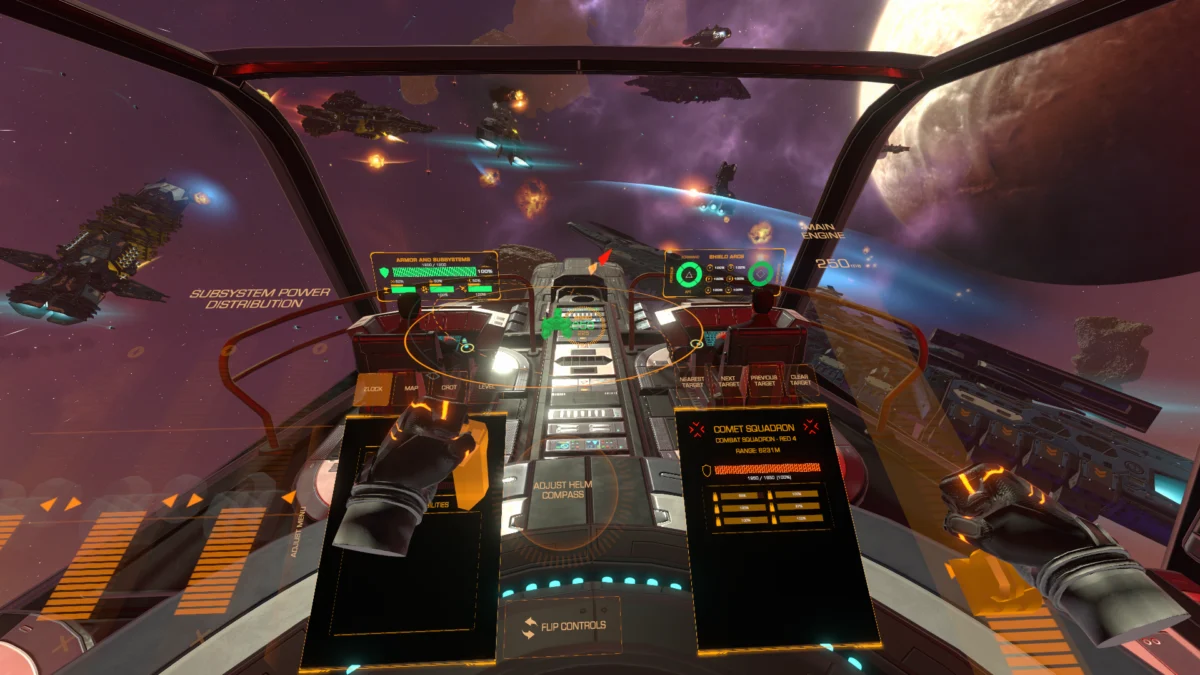
Stepping into the tutorial of BattleGroupVR2, players are immediately greeted by a glowing holographic projection of their flagship, hovering directly before them while the infinite blackness of deep space looms outside the bridge windows. Utilizing a sophisticated blend of controller grip inputs and analog stick adjustments, commanders can rotate and scale both their primary vessel and a miniaturized holographic model of the surrounding solar system.
Pointing into 3D space issues direct navigational orders. Because interstellar travel inherently involves long stretches of transit through asteroid fields and empty vacuum, SpaceOwl Games has thoughtfully included time-compression features, allowing players to accelerate travel speeds by 5x or 10x during downtimes.
Granular Combat Dynamics
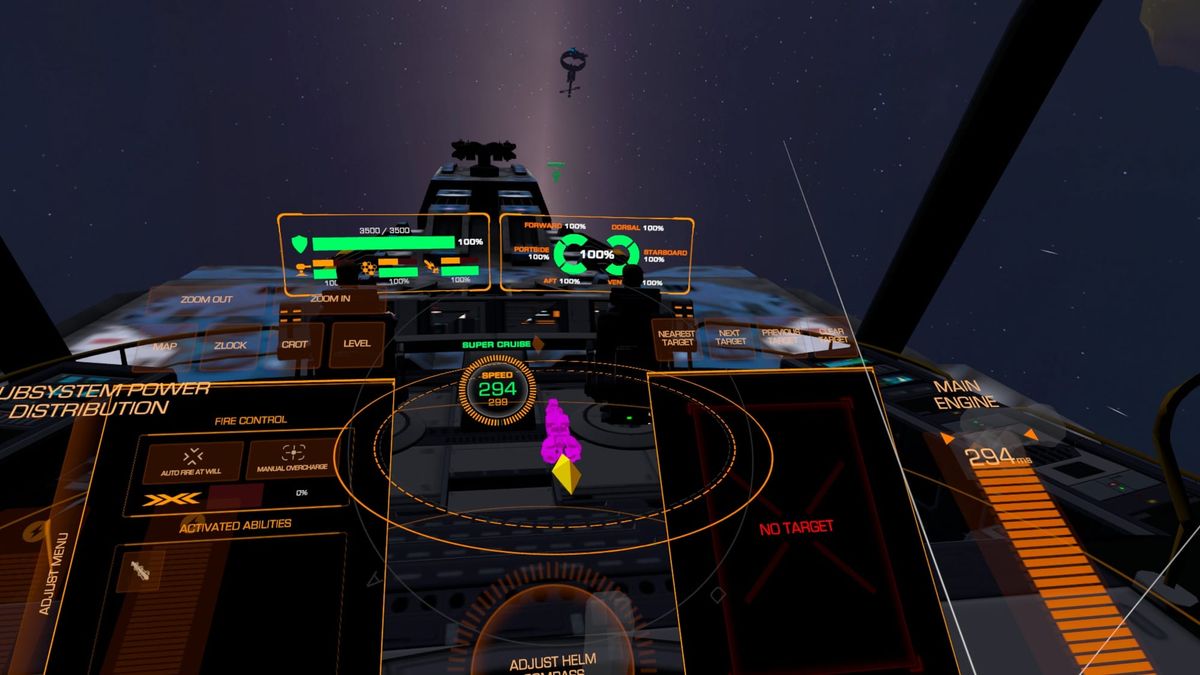
When hostile forces intercept your fleet, the pacing shifts dramatically. BattleGroupVR2 shines brightest in these moments of real-time combat. Players retain direct command over their flagship while orchestrating broader fleet movements. Tactical depth is achieved through multiple layers of micro-management:
- Environmental Cover: Maneuvering capital ships behind celestial bodies or massive space debris to evade incoming salvoes.
- Power Distribution: Dynamically shifting energy balances between weapons systems, kinetic shields, and sub-light engines to pivot between aggressive offensive pushes and desperate defensive maneuvers.
- Targeted Assaults: Directing specific battery fire at enemy weak points, engines, or command bridges.
The game strikes a delicate balance. It offers the granular control demanded by veteran strategy enthusiasts while maintaining an approachable ramp-up for newcomers. Difficulty curves and map scales can be adjusted to match player skill levels. However, minor control friction can occasionally surface during massive, chaotic skirmishes involving dozens of allied and enemy units, where pointer reticles may inadvertently snag on unintended targets.
The Elephant in the Room: Synthetic Voice Acting
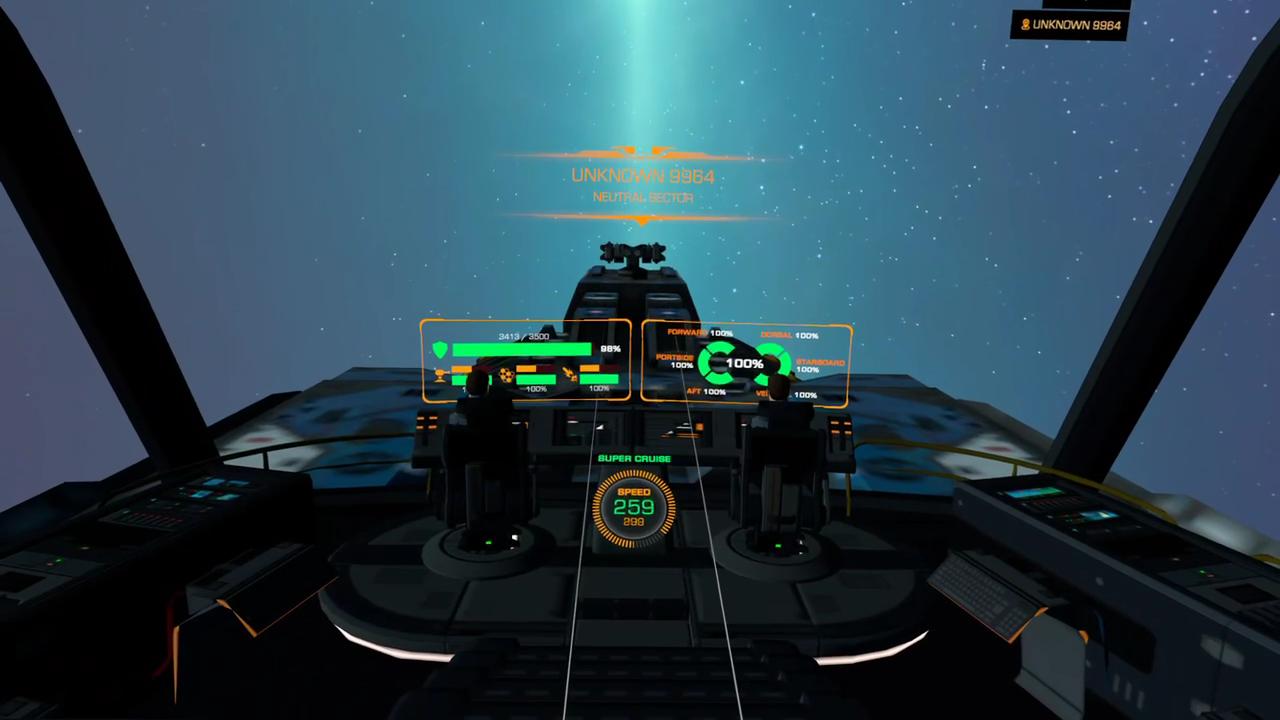
While the visual overhaul—featuring crisper textures, dynamic lighting, and majestic ship models—earns high marks, the audio design suffers a severe misstep. In its current Early Access state, all character voice lines have been generated using artificial intelligence speech synthesis.
The resulting audio output is grating, mechanical, and tonally jarring against the otherwise high-production-value sci-fi atmosphere. Because critical mission information and narrative lore are comprehensively displayed via readable text boxes, the inclusion of subpar AI voice acting feels entirely unnecessary. SpaceOwl Games has explicitly confirmed plans to replace these synthetic voice assets with professional human voice actors prior to the game’s eventual 1.0 commercial launch, a remediation that cannot arrive soon enough.
Official Developer Insights and Community Reactions
While SpaceOwl Games has kept broad official press releases focused on feature roadmaps and platform expansions, community sentiment within the Early Access ecosystem highlights both deep enthusiasm and constructive criticism.
Early adopters have heavily praised the developer’s responsiveness to balancing adjustments, particularly concerning fleet pathfinding and the mitigation of pointer-snagging issues during intense multiplayer engagements. Furthermore, the community has rallied around the potential of the persistent Conquest mode. Strategy veterans recognize that the true longevity of titles like BattleGroupVR2 rests not in scripted single-player campaigns, but in the political intrigue, shifting alliances, and long-term rivalries forged in shared online galaxies.
Implications for the VR Strategy Genre
BattleGroupVR2 serves as a case study for the maturation of virtual reality as a medium for complex strategy simulations.
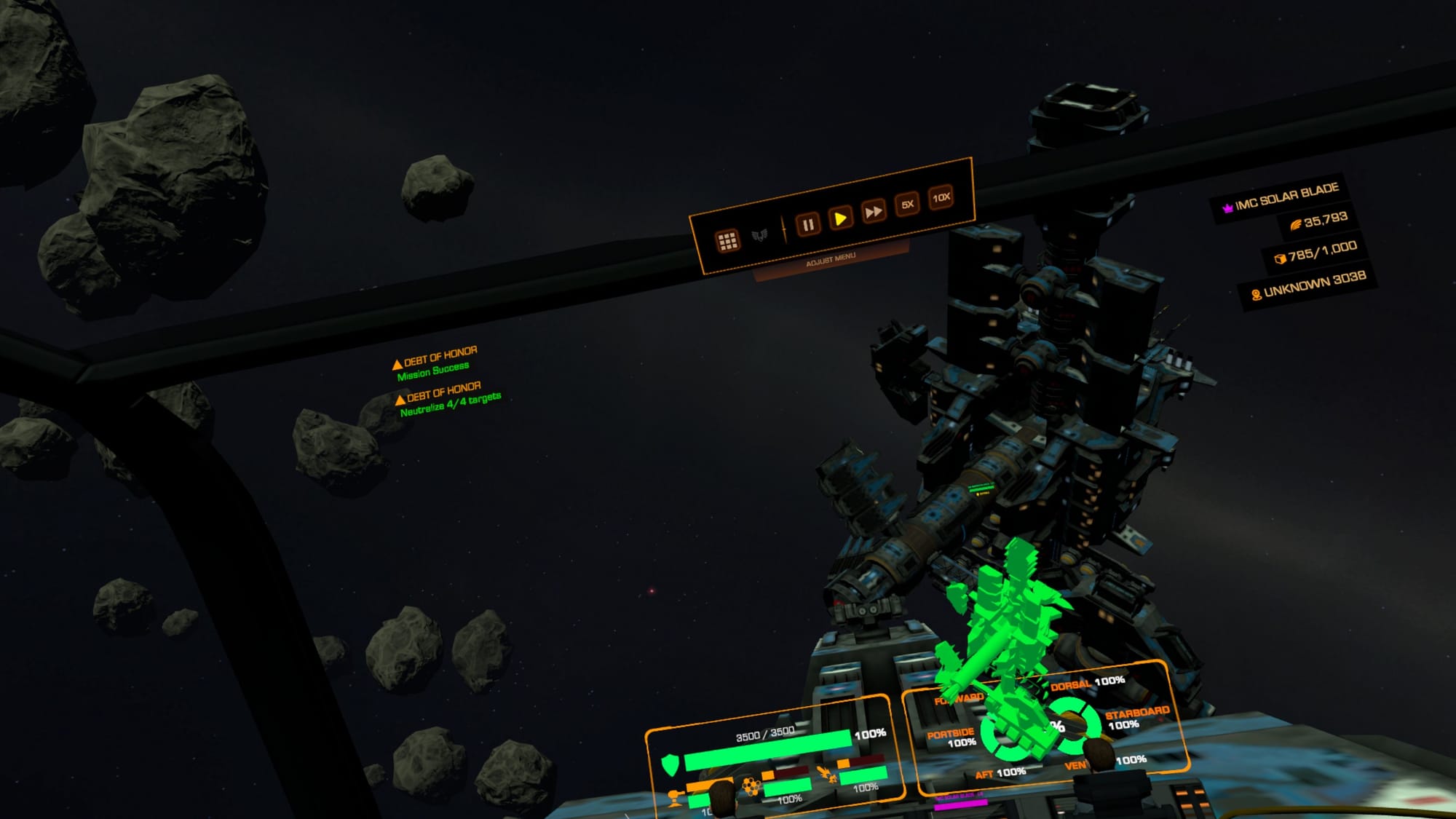
For years, skeptics argued that VR was best suited for visceral, short-form arcade experiences—first-person shooters, rhythm games, and casual exploration. BattleGroupVR2, much like its predecessor, shatters that assumption. The psychological impact of physically reaching out to scale a solar system, leaning over a bridge console to inspect damaged hull plating, or watching a tracer-lit dogfight unfold across a 360-degree theater of operations is something flat-screen monitors simply cannot replicate.
Despite lingering Early Access growing pains—such as repetitive skirmish layouts and the current audio missteps—the game proves that iterative evolution works. By respecting the foundational mechanics of the original title while expanding into persistent online conquest, SpaceOwl Games is laying the groundwork for what could become the definitive space strategy platform in modern virtual reality. As alliances form, borders shift, and human voice actors eventually replace the robotic dialogue trees, BattleGroupVR2 is well on its way to cementing command of the genre.

