

Main Facts
The indie gaming landscape has always thrived on taking mundane, highly specific nostalgic concepts and transforming them into surprisingly deep, satisfying digital experiences. The latest title capturing the imagination of players during Steam Next Fest is 10 Million Pixels, developed by Battle Lab. Blending elements of classic arcade brick-breakers, idle clickers, and hypnotic screen-saver aesthetics, the game taps directly into a universally shared childhood memory: watching a DVD logo bounce endlessly around a television screen, desperately waiting for it to hit the elusive corner sweet spot.
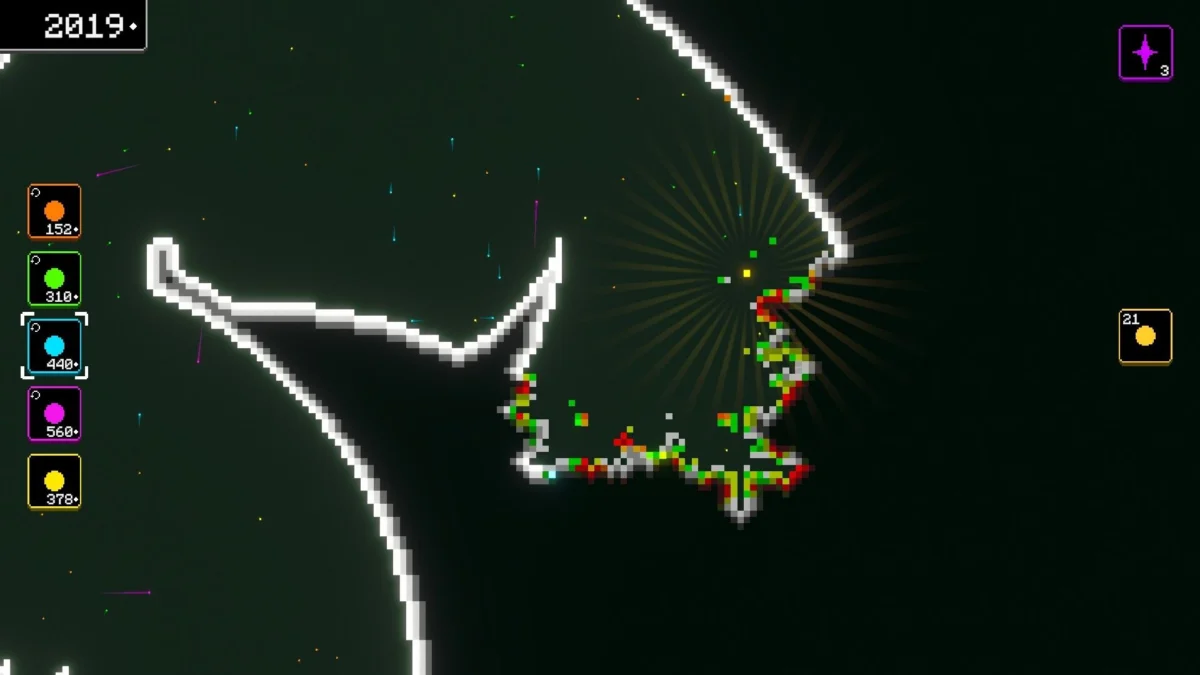
In 10 Million Pixels, players are greeted with a massive, dense grid comprised—as the title suggests—of millions of 2D pixels. Armed initially with a basic launching mechanism and a single bouncing ball, the player’s primary objective is to chip away at the solid pixel wall, slowly carving out tunnels, earning points, and ultimately hunting for a hidden "golden pixel."
The game’s Steam Next Fest demo has quickly gained traction for its seamless blend of passive relaxation and active strategic progression. Featuring soothing lo-fi beats, tactile auditory feedback, and a diverse armory of upgradeable balls with unique elemental properties, 10 Million Pixels elevates a simple mindless distraction into a masterclass of satisfying gameplay loops.
Chronology of an Obsession: From Classroom TVs to Steam Wishlists
The Genesis of a Cultural Memory
To understand the appeal of 10 Million Pixels, one must trace the cultural phenomenon back to the classrooms of the late 1990s and 2000s. Educators wheeling in bulky cathode-ray tube (CRT) televisions mounted on metal carts often struggled with archaic DVD players. During those frustrating ten-minute setup windows, restless classrooms would fall entirely silent, hypnotized by the fallback screensaver. As the logo drifted across the monitor, grazing edges while narrowly missing the corners, collective groans or triumphant cheers would erupt. It was a shared exercise in anticipation—one that left an indelible mark on an entire generation.
The Evolution into Interactive Media
Battle Lab recognized the psychological pull of this geometry-based waiting game and sought to gamify it. Early conceptualization of 10 Million Pixels focused on replicating the hypnotic motion of an autonomous object interacting with boundaries. However, the developers realized that pure observation lacked long-term engagement.
By introducing a destructive element—where the bouncing object actively degrades its environment rather than merely reflecting off it—the project evolved into a fully realized game. The introduction of the Steam Next Fest demo allowed thousands of players to experience this loop firsthand, transforming what started as a quirky concept into a viral wishlist contender.

Supporting Data and Gameplay Mechanics
At first glance, 10 Million Pixels appears deceptively simple. Players launch a ball into a microscopic opening within a colossal wall of 2D pixels. Every collision whittles down the structural integrity of the targeted pixel block until it vanishes, granting the player points. These points are then reinvested into purchasing additional balls, accelerating the rate of destruction and widening the breach in the pixel wall.
However, depth quickly emerges through environmental exploration and resource management.
The Arsenal of Balls
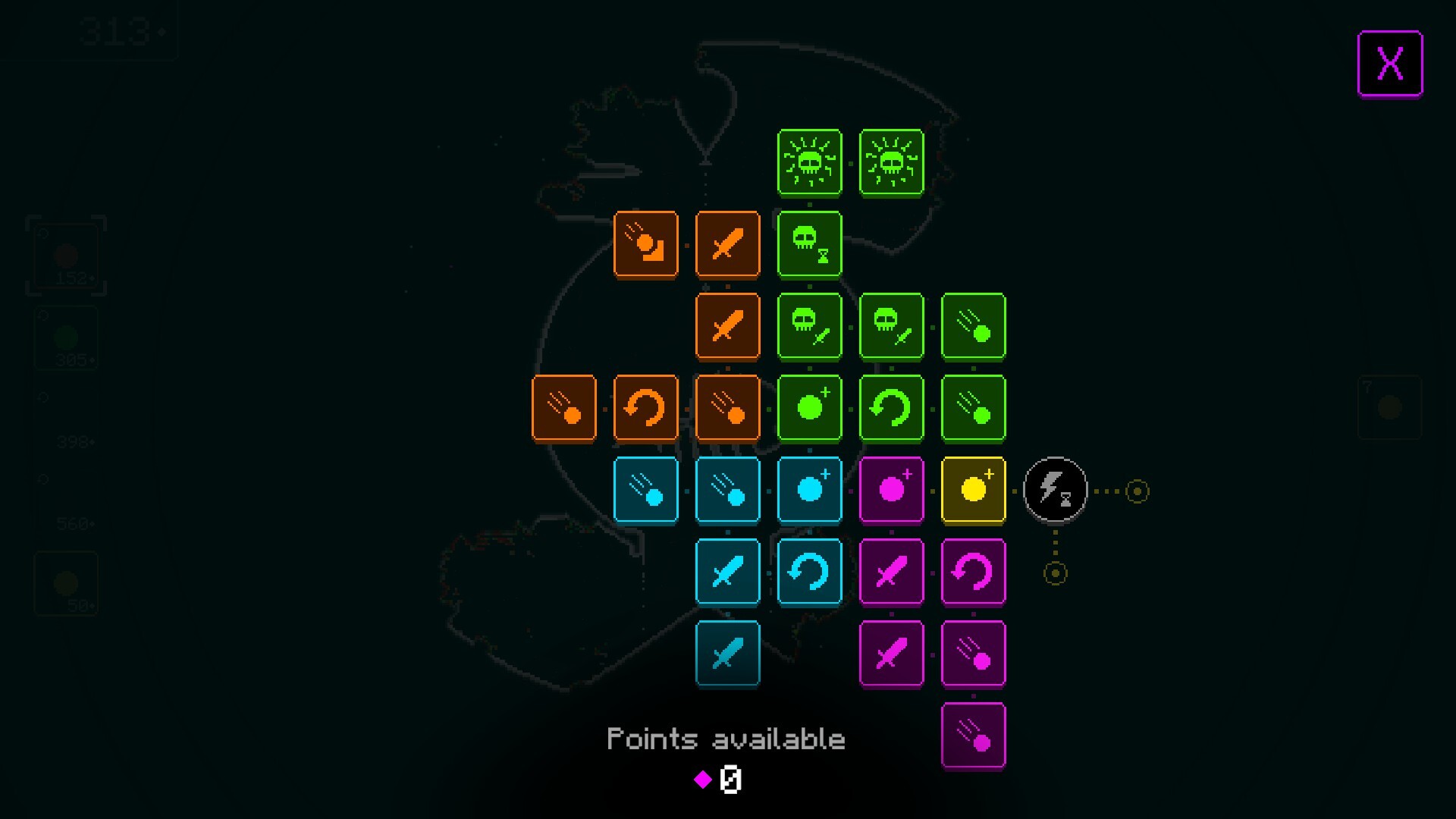
As players progress through the demo, they unlock a variety of specialized projectiles, each altering the tactical approach to clearing the map:
- The Orange Ball: The baseline projectile, reliable and cost-effective.
- The Toxic Green Ball: Introduces a damage-over-time (DoT) tic effect, steadily eating away at high-durability blocks long after initial impact.
- The Blue Ball: A moderately faster projectile designed for high-velocity ricochets.
- The Pink Ball: Pushes speed thresholds even higher, maximizing chaotic movement across the playfield.
- The Lightning Ball: The pinnacle of the demo’s arsenal, capable of discharging electrical arcs that fry adjacent blocks as it passes through.
Power-Ups and Hidden Objectives
Scattered deep within the pixelated expanse are elusive pink gems. Carving a precise path through the blocks to allow a ball to strike these gems unlocks crucial power-ups. These upgrades can enhance ball velocity, multiply damage output, or grant the rare ability to recycle existing projectiles.
Beyond mere destruction, the ultimate goal of the current demo is to locate a single golden pixel hidden somewhere within the millions on screen. While players occasionally acquire a specialized golden compass-ball that indicates the general direction of the prize, absolute certainty requires systematically reducing the entire map to nothingness.
Completing this primary objective in the demo takes approximately 40 minutes, though many players report lingering long afterward to uncover the strange, surreal secrets hidden beneath the pixel crust—such as a bizarre hidden image featuring an angel, a devil, and a fish skeleton suspended from a balloon.
Official Responses and Developer Insights
While Battle Lab has kept grand marketing campaigns to a minimum, letting the organic nature of Steam Next Fest carry the game’s momentum, early player reception has provided profound insight into the developer’s design philosophy.
In community forums and feedback channels, players have consistently praised the sensory design of 10 Million Pixels. Battle Lab’s meticulous attention to auditory feedback—specifically the warm, tactile "popping" sound generated when a ball fractures a pixel block—has been cited as a primary driver of the game’s addictive quality. Coupled with a gentle, ambient lo-fi soundtrack designed to induce a state of tranquil flow, the title bridges the gap between active puzzle-solving and ambient relaxation.
"It’s an experience that borders on meditative," notes early feedback from the Steam community. "You start playing just to see what happens, and before you know it, forty minutes have vanished in a haze of satisfying sound design and geometric precision."
Implications for the Indie Game Market
The unexpected success of 10 Million Pixels during Steam Next Fest highlights several important trends in the contemporary indie gaming ecosystem:
- The Power of Micro-Concepts: Modern gamers are increasingly drawn to "hyper-focused" titles—games that take a single, highly specific mechanic and polish it to a mirror sheen, rather than attempting sprawling, content-heavy epics.
- Sensory-Driven Design: As stress levels rise among modern audiences, games that prioritize calming auditory landscapes (A Short Hike, Unpacking) combined with satisfying, low-stakes mechanics find an eager, receptive audience.
- Nostalgia as a Hook: Leveraging generational touchstones—such as the classic DVD screensaver—proves to be a potent marketing tool, instantly establishing emotional resonance and driving curiosity-based downloads.
As development on 10 Million Pixels continues, the full release promises to expand significantly upon the foundation laid in the demo. With multiple maps featuring diverse, unbreakable solid objects concealed beneath the pixelated layers, Battle Lab is poised to turn a nostalgic joke into a lasting staple of the casual indie genre. Whether players are hunting for golden pixels or simply losing themselves in the hypnotic bounce of a digital ball, one thing is certain: the corner sweet spot has never felt so rewarding.

