

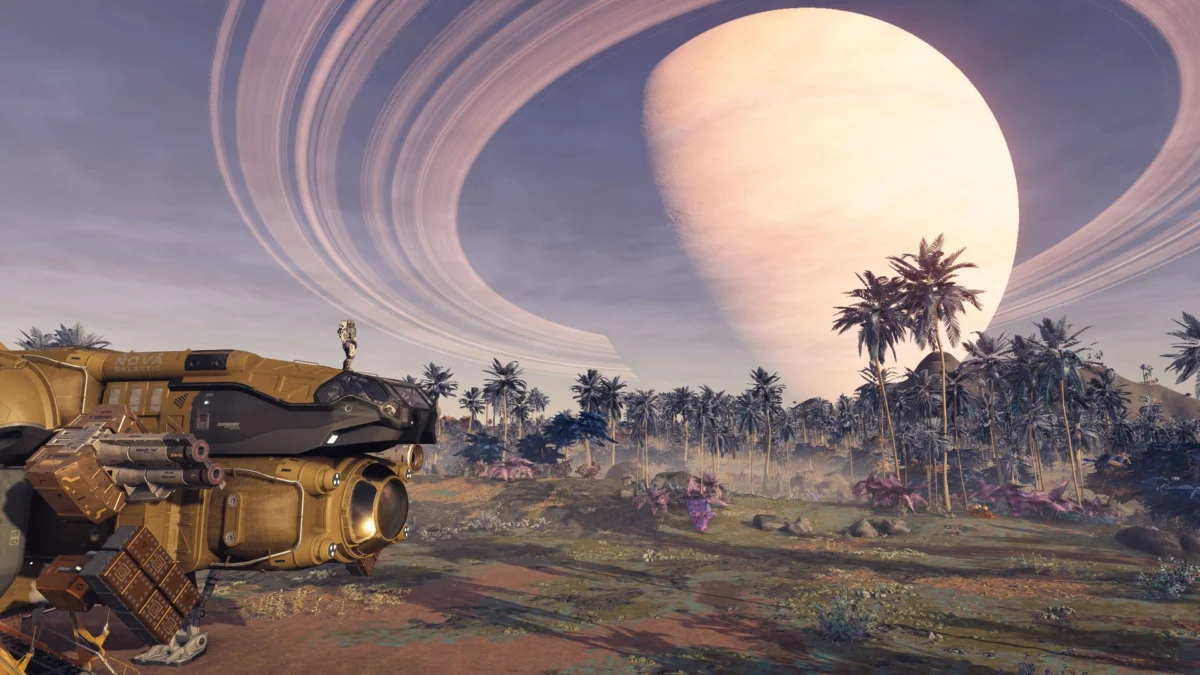
For many players, Starfield—Bethesda Game Studios’ ambitious "NASA-punk" RPG—represented the pinnacle of interstellar exploration. Yet, since its launch, a vocal segment of the community has pointed to a glaring immersion breaker: the disconnect between space travel and planetary surface exploration. For over a year, the journey from orbit to the ground has been punctuated by loading screens, cutscenes, and a persistent feeling that the player’s ship is less a vessel and more a teleportation hub disguised as a cockpit.
However, a groundbreaking project by developer and modder Frederik Wessberg threatens to upend this perception. By introducing seamless, real-time planetary descents, Wessberg is attempting to solve one of the most technical challenges in the game’s modding scene, fundamentally altering how players experience the Settled Systems.
The "Teleporting House" Problem: Contextualizing the Limitation
When Starfield debuted, the limitations of its engine were quickly laid bare. Players soon discovered that planets in the distance were not physical, traversable spheres, but rather static textures. In a famous experiment, streamer Alanah Pearce spent seven hours flying toward Pluto, only to find that she could pass directly through the celestial body. This confirmed that the game’s "space" was a compartmentalized experience: space was one "cell," and the planet’s surface was another, separated by the binary wall of a loading screen.
While the modding community previously introduced "Seamless Grav Jumps" and "Seamless Planet Takeoffs," these were largely cosmetic or mechanical tweaks that functioned within the game’s existing logic. They could not bypass the hard requirement of loading the surface assets. The result was a lingering disappointment; the fantasy of being a true space explorer was hampered by the game’s architectural reliance on transitions.
The Technical Breakthrough: Engineering the Descent
Frederik Wessberg’s work-in-progress mod represents a paradigm shift. Recent video footage of the project shows a ship entering an atmosphere, encountering visible heat friction effects, and punching through a layer of cloud cover before touching down on the surface—all without a single loading screen.
Critics and skeptics immediately questioned whether the cloud layer was simply a clever, opaque loading screen. Wessberg, however, has been transparent about the technical heavy lifting involved. "The clouds are not covering loading—they’re helping make the seam as minimal as possible right at the point when we do the final cell switch," Wessberg explained.
The mod achieves this through a sophisticated background asset-loading mechanism. Instead of pausing the game to load the next environment, Wessberg’s system allows the player to remain interactive while the game engine silently swaps the high-altitude space textures for the detailed, high-fidelity surface terrain.
A Complete Overhaul of Planetary Rendering
The most impressive aspect of the project is that it required Wessberg to effectively "rebuild" how Starfield handles planets. The original 2D-textured spheres had to be replaced with fully realized 3D models.
"I had to completely reimplement Starfield’s planet rendering in space in 3D in a way that looks detailed and sharp at every altitude," Wessberg noted. By tapping into the game’s own internal biome data, atmospheric compositions, and orbital physics, the mod creates a visually cohesive experience. The result is a planet that feels like a physical object in space rather than a backdrop.
A Chronology of Exploration: From Static Textures to Seamless Flight
- September 2023: Starfield launches. Players quickly identify that planetary bodies are inaccessible through manual flight, sparking debates about the game’s "scope" vs. "scale."
- Late 2023: Modders begin releasing "quality of life" mods, such as accelerated jump animations, to mask the frequency of loading screens.
- Early 2024: Community-led investigations into the game’s Creation Engine 2 reveal the "cell" structure that dictates how space and ground environments interact.
- Mid-2024: Frederik Wessberg begins sharing development updates on his Patreon, showcasing the initial prototypes of 3D planet rendering and atmospheric entry mechanics.
- Late 2024: The first "seamless descent" video surfaces, showing real-time entry and landing, sparking widespread excitement across the modding community and gaming press.
The Physics of Authenticity: Data as the "Truth"
One of the most fascinating aspects of Wessberg’s design philosophy is his reliance on the game’s underlying, hidden data. Despite the criticisms leveled at Starfield’s space travel, the game is, beneath the hood, mathematically rigorous. It calculates planetary orbits, solar distances, and lighting based on actual physical values.
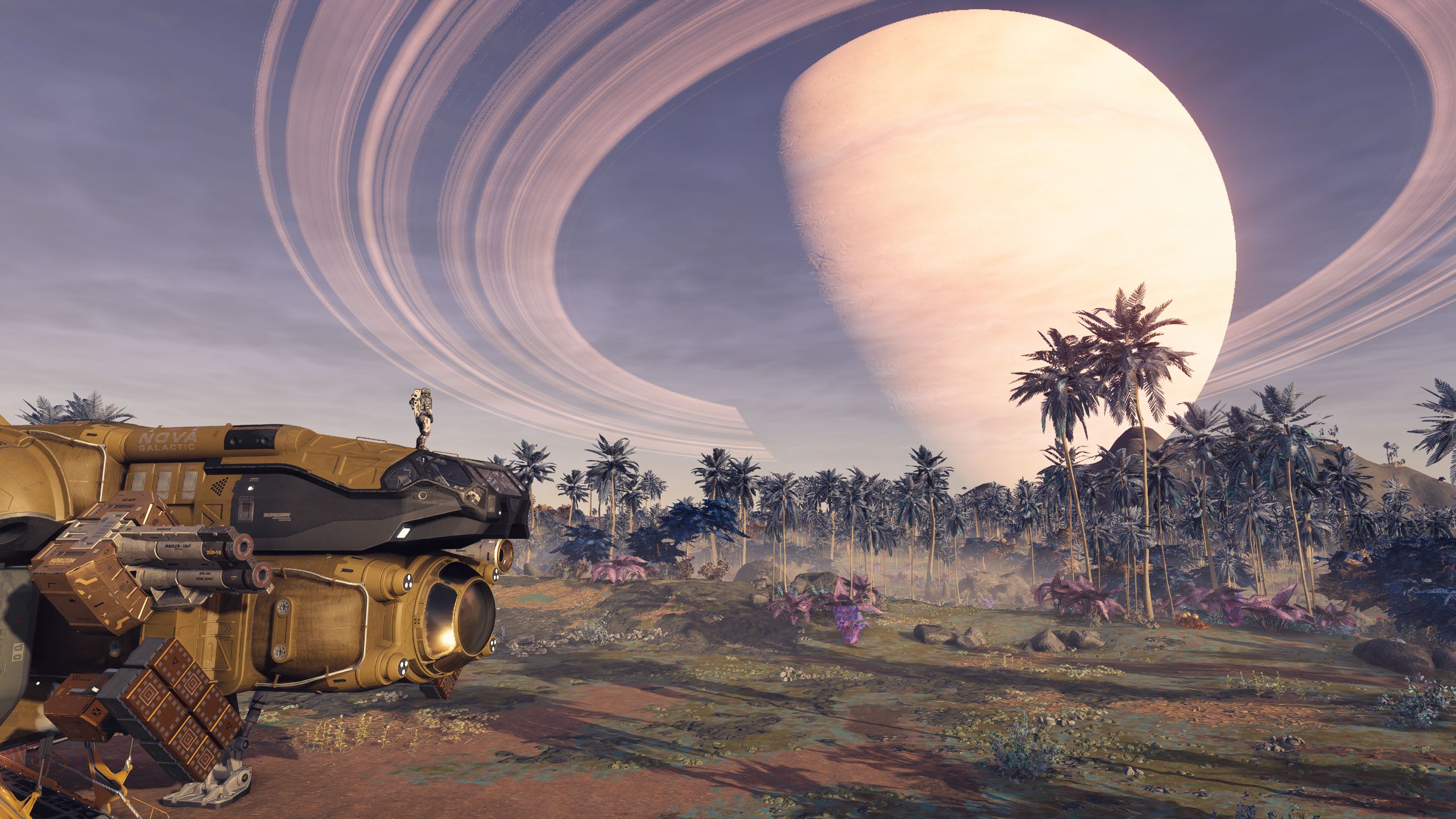
Wessberg’s mod leverages this "hidden" realism. "Starfield is actually amazingly physically accurate, and in many ways a true space simulator—it just doesn’t ever reveal this to the player," he says. The mod takes these variables—such as the light reflected from a nearby moon or the specific atmospheric density of a planet—and uses them to modulate the rendering of the planet as the player approaches. The result is not just a mod; it is an unlocker for the hidden potential of Bethesda’s own engine.
Implications for the Future of Modding
The success of this mod—currently in a work-in-progress state—carries significant implications for the future of the Starfield modding scene.
1. Re-evaluating Bethesda’s Engine
For years, the "Creation Engine" has been criticized for its rigid structure and reliance on interior/exterior cells. Wessberg’s work proves that the engine is capable of more fluid transitions than the developers initially prioritized. This sets a precedent for other modders to attempt similar "impossible" tasks, such as expanding the size of cities or adding more complex physics-based interactions in space.
2. A New Standard for Immersion
The ability to fly manually in low orbit, use an "autopilot" to walk around the ship during descent, and land in previously inaccessible areas like water, fundamentally changes the gameplay loop. Players are no longer simply "selecting" a landing spot; they are "navigating" to one. This transforms Starfield from a series of fast-travel points into a cohesive, contiguous sandbox.
3. The Patreon Economy and Mod Development
The development of this project has been supported through Wessberg’s Patreon, highlighting the shift toward professionalized, crowdfunded modding. As these mods become more complex, they require a level of man-hours that often mirror professional game development. This raises questions about the relationship between independent modders and the developers of the base game, as well as the future of paid support for community projects.
Official Silence and Community Reception
To date, Bethesda Game Studios has not issued a formal response regarding the technical implications of Wessberg’s mod. Historically, the studio has been supportive of the modding community, often integrating popular community fixes into official updates (as seen with the Skyrim and Fallout series).
The community response, however, has been overwhelmingly positive. On platforms like Nexus Mods and Reddit, players are praising the mod for "fixing" the primary complaint that held Starfield back from its potential as a space exploration sim. The project is expected to be released for free on Nexus Mods once completed, ensuring that the work remains accessible to the broader player base.
Conclusion: A New Horizon
Frederik Wessberg’s project is more than just a mod; it is a testament to the dedication of the PC gaming community. By refusing to accept the limitations imposed by the game’s design, Wessberg has effectively "opened" the Starfield universe. As he continues to refine the transition between space and surface, the community watches with anticipation, waiting to see if this innovation will become the new gold standard for open-world space RPGs.
For now, the clouds masking the loading screens are fading away—replaced, quite literally, by the atmosphere of a world that is finally, truly, there to be explored.

