

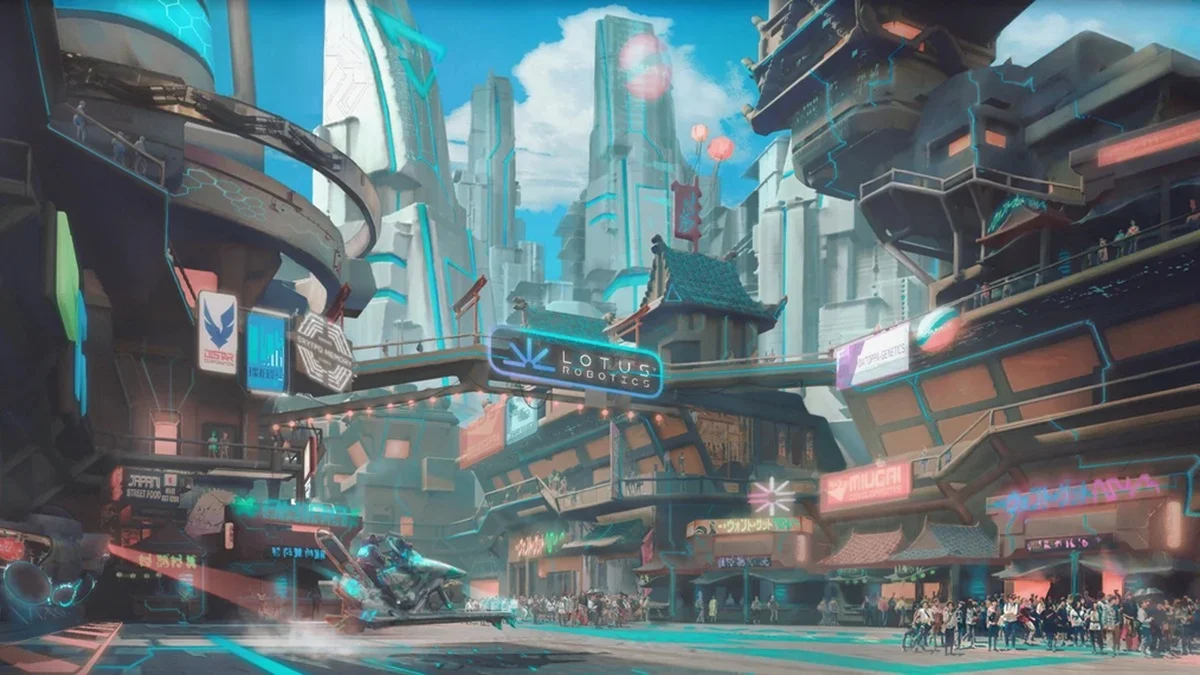
By Global Gaming Desk
Published: November 2024
Main Facts
The era of Zenith is drawing to a definitive close. Publisher TribeVR has officially announced that Zenith: Nexus—widely recognized by its original moniker, Zenith: The Last City—will permanently shutter its servers on December 18, 2026. This decision marks the final chapter for a prominent console-exclusive multiplayer virtual reality (VR) role-playing game that once stood as a premier showcase for social world-building on the PlayStation 4 and PlayStation 5.
For nearly three years, Zenith served as a foundational pillar for virtual reality gaming, bridging the gap between niche standalone hardware and sprawling, MMO-scale persistence. However, the economic realities of maintaining a live-service virtual reality environment have ultimately caught up with the developers.
The wind-down process is already underway. TribeVR has immediately halted the sale of all paid downloadable content (DLC) and premium in-game currency across digital storefronts. Despite these sweeping removals, the base application remains accessible for download on the PlayStation Store at the time of writing, allowing remaining community members to experience the digital world before the plug is pulled permanently.
The impending closure impacts two distinct modes that evolved over the project’s lifespan:
- The Last City: Originally the core of the experience, this 100+-hour paid MMO campaign offered deep cooperative dungeon crawling, player-versus-player (PvP) combat, and expansive exploration within an anime-inspired virtual universe.
- Infinite Realms: A later pivot toward a session-based, free-to-play model, Infinite Realms tasked users with clearing fast-paced mob waves using magic and navigating complex parkour challenges.
While TribeVR has not released an explicit, detailed financial breakdown regarding the shutdown, industry analysts and community observers widely attribute the decision to a shrinking active user base that could no longer sustain the operational costs of server maintenance, security, and ongoing infrastructure management.
Chronology: The Rise and Fall of Zenith
To understand the weight of Zenith: Nexus’s impending sunset, it is vital to trace the project’s trajectory from an ambitious Kickstarter darling to a casualty of shifting market trends.
Early Inception and the VR Renaissance (2018–2021)
Developed by Ramen VR and later managed alongside publishing partners like TribeVR, Zenith captured the imaginations of early adopters during a period when the VR industry was hungry for "killer apps." Inspired by classic massively multiplayer online games and anime aesthetics like Sword Art Online, the developers promised an immersive world where players could physically swing swords, cast spells with hand gestures, and climb virtually any surface in a massive open world.
Launch and Peak Hopes (January 2022)
When Zenith: The Last City launched in January 2022 across major VR platforms—including PlayStation VR for the PS4, PCVR, and Meta Quest—it achieved remarkable commercial visibility. It briefly topped sales charts and fostered a vibrant, bustling community. For a brief moment, it felt as though the dream of a true VR MMO had been realized. Players flooded the servers, forming guilds, trading items, and exploring the colorful landscape together.
Expansion, Rebranding, and the Pivot to Nexus (2023–2024)
As the novelty of the initial launch settled, retention became a central challenge. To combat player churn and attract a broader audience, the developers expanded the ecosystem. In 2023, the game tightened its console footprint into a focused console-exclusive experience on PS4 and PS5 before eventually restructuring under the banner of Zenith: Nexus.
This pivot introduced the Infinite Realms mode, a streamlined, free-to-play cooperative experience designed to appeal to players who lacked the dozens of hours required to progress through the traditional MMO campaign of The Last City.
Despite these structural innovations, the writing was already on the wall. In 2024, the development team announced that new content development for the game was officially ceasing. The focus shifted from growth and expansion to simple maintenance—a holding pattern that has now culminated in the final sunset announcement for December 2026.
Supporting Data and Technical Architecture
The operational realities of running a live-service virtual reality MMO are vastly different—and often far more punishing—than those of traditional flat-screen counterparts. Zenith: Nexus relied on a complex technical web to deliver its synchronized multiplayer experiences across differing hardware generations.
Platform Disparities and Optimization Pressures
Developing a game that spanned the technological divide between the aging PlayStation 4 (utilizing the original PlayStation VR headset) and the modern PlayStation 5 (supporting PS VR2) required immense developmental overhead. Optimizing draw distances, physics calculations for climbing, and fluid combat hit-detection for hundreds of concurrent users placed a heavy burden on Ramen VR’s engineering team.
As hardware standards advanced and consumer attention drifted toward newer standalone headsets and standalone software ecosystems, maintaining optimized server pipelines for older console configurations became financially untenable.
Live-Service Economics in VR
Unlike traditional single-player titles where development costs are front-loaded, live-service games demand continuous cash flow to support:
- Server Upkeep: Maintaining low-latency cloud infrastructure capable of tracking spatial coordinates, player inventories, and real-time combat data for multiple users simultaneously.
- Community Moderation: Ensuring safe, harassment-free environments in spatial social spaces where voice chat and physical avatars interact directly.
- Content Cadence: Constantly feeding the player base new dungeons, equipment, and events to prevent stagnation.
When player acquisition slows down and in-game microtransaction revenue dries up—accelerated in this case by the removal of premium currency purchases—the math of live-service management inevitably points toward server deprecation.
Official Responses and Community Reaction
The announcement of the closure has prompted a wave of nostalgia, sadness, and frustration across digital forums, Reddit, and Discord communities dedicated to virtual reality gaming.
Publisher Statement
In an official statement posted to Steam, TribeVR expressed gratitude to the loyal user base that sustained the project through its various iterations:
"Thank you to everyone who explored this world and supported the game," TribeVR shared in a community update. "You gave Zenith its community, and we’re grateful we had the chance to share this world with you."
The tone of the communication, while appreciative, underscores the quiet dignity with which publishers typically wrap up failed or unprofitable live-service experiments—offering a long runway (over two years from the initial content cessation to the final server shutdown) to allow players to say their goodbyes.
Community Backlash and Sentiment Analysis
Within the community, the response has been a mix of understanding and sorrow. Unlike traditional video games that can be preserved via offline patches, community-run servers, or peer-to-peer connections, an MMO anchored in proprietary server architecture essentially vanishes into digital ether once pulled offline.
Long-time players have taken to social media to organize farewell events, final dungeon raids, and mass gatherings in The Last City’s central hubs. Many veterans have voiced frustration over the ephemeral nature of digital-only media, pointing out that hundreds of hours of character progression, social bonds, and purchased digital goods will be permanently erased. Others, however, pragmatically noted that the writing had been on the wall ever since content development halted in 2024, viewing the two-year grace period until December 2026 as a mercifully extended twilight.
Implications for the Future of VR Gaming
The closure of Zenith: Nexus carries profound implications for the broader virtual reality landscape, particularly regarding the viability of massively multiplayer online games within the medium.
The Precarious State of VR MMOs
Zenith was long held up as the proof-of-concept that virtual reality could support large-scale, persistent social worlds akin to World of Warcraft or Final Fantasy XIV. Its failure—or, more accurately, its unsustainable financial lifecycle—serves as a cautionary tale for developers currently eyeing the VR space for grand, ambitious multiplayer projects.
Building a compelling VR MMO requires millions of dollars in upfront capital, yet the addressable market of dedicated VR headset owners remains a fraction of the traditional PC and console gaming demographic. When user acquisition plateaus, the high fixed costs of server infrastructure make it nearly impossible for mid-sized studios to weather prolonged downturns in player engagement.
The Growing Crisis of Digital Preservation
Beyond the economic realities, the Zenith shutdown highlights a deepening crisis in video game preservation. Because Zenith: Nexus relies entirely on centralized server structures managed by the publisher, the December 2026 shutdown means the game will become entirely unplayable. There is currently no announced plan for offline modes, local server files, or community-hosted master servers.
When the servers go dark, a notable piece of early PlayStation VR history will effectively cease to exist outside of recorded video clips, screenshots, and memories. This trend fuels ongoing debates within the gaming industry regarding consumer rights, digital ownership, and the moral obligation of publishers to preserve software heritage once commercial viability wanes.
What Comes Next?
As the countdown to December 18, 2026, ticks away, the legacy of Zenith will likely be viewed as a noble, pioneering experiment. It proved that complex, physics-driven social role-playing games could work in virtual reality, even if the financial models required to sustain them long-term remain elusive.
For developers looking toward the future of spatial computing, the lesson is clear: future VR worlds will need to find leaner operational models, modular content delivery systems, or robust offline-fallback architectures if they hope to survive the brutal economic realities of the modern gaming marketplace.

