

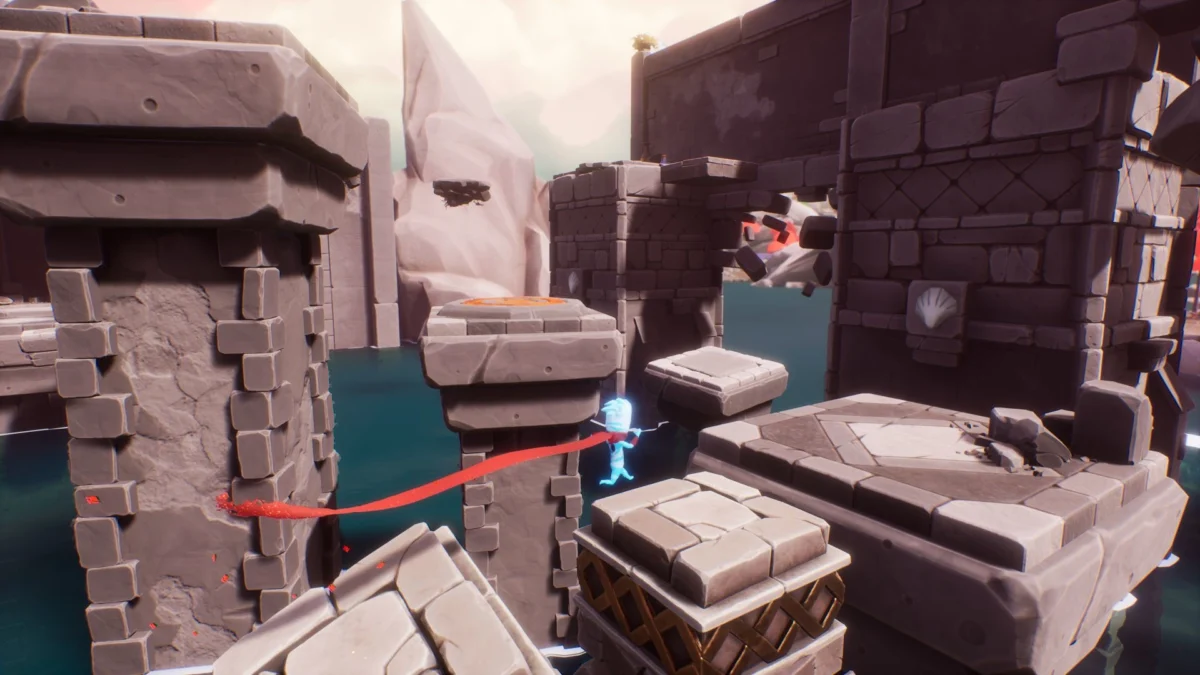
In the landscape of modern independent gaming, few titles manage to capture the elusive "magic" of the genre-defining classics. Yet, Scarf, a title that emerged onto the scene with a quiet but profound ambition, wears its influences on its sleeve—or, more accurately, around its neck. Since its debut, the game has been widely compared to 2012’s critically acclaimed Journey, a title that transformed the medium’s perception of environmental storytelling. However, Scarf manages to carve out a distinct identity, replacing the solitary nature of its predecessors with a poignant, symbiotic relationship between a nomad and a polymorphic entity.
Main Facts: A Tale of Two Travelers
At its core, Scarf is an adventure title that prioritizes atmosphere and narrative depth over traditional combat or high-octane action. The player assumes the role of a nameless nomad traversing a sprawling, ancient world characterized by its matte, painterly aesthetic and vibrant color palette.
The game’s central mechanic is the eponymous scarf—a living, dragon-shaped entity that has been forcibly separated from its mother. The fundamental goal of the game is simple yet emotionally resonant: the nomad and the scarf must journey through diverse biomes to retrieve fragments of a portal. Once activated, this portal serves as the key to reuniting the child with its parent.
Unlike many platformers that focus on twitch reflexes or punishing difficulty, Scarf aims for a "flow state." The game utilizes an adaptive orchestral score that swells during moments of discovery and recedes into ambient silence during periods of quiet reflection. This auditory design, combined with the game’s accessible platforming mechanics, positions Scarf as an introspective experience designed for immersion rather than frustration.

The Chronology of Development and Release
The journey of Scarf from concept to release was marked by a commitment to a specific artistic vision. Development focused on creating a world that felt alive and reactive, rather than a mere backdrop for puzzles.
- Pre-Production: The developers prioritized the movement mechanics and the bond between the protagonist and the scarf. The decision to remove all forms of combat was made early, ensuring the game’s pacing would remain focused on exploration.
- The Reveal: Following initial teasers, the game generated buzz for its striking art style, which eschews hyper-realism in favor of an evocative, almost dream-like, landscape.
- December 2021 Launch: The game officially released in late 2021, arriving at a time when players were increasingly seeking "cozy" or low-stress gaming experiences.
- Post-Launch Reception: Initial reviews lauded the game for its accessibility and visual beauty, though it faced some critique regarding the repetition inherent in its "collect-a-thon" structure.
Supporting Data: Mechanics and Environmental Design
The gameplay loop of Scarf relies on the player’s ability to manipulate the environment through the scarf’s unique capabilities. As the game progresses, the scarf transforms into various tools—a wing, a hook, or a glider—allowing the player to navigate increasingly complex terrain.
The Role of the Scarf
The scarf is not merely a tool; it is a character. It is responsive to the environment, frequently unwinding to explore surroundings on its own. This creates a compelling dynamic: when the player is separated from the scarf, they lose all specialized abilities. This design choice serves a dual purpose: it emphasizes the player’s reliance on their companion and highlights the scarf as a sentient entity. The player is forced to prioritize the welfare and restoration of the scarf, which acts as a powerful motivator for completing puzzle sequences.
Platforming and Puzzles
The platforming in Scarf is characterized by its "floaty" but responsive nature. While the precision required is minimal, the game is forgiving. Checkpoints are generous, and the game lacks the "gotcha" traps common in the platforming genre. Puzzles involve standard tropes: weight switches, water physics, and crumbling platforms. While veterans of the genre may find these challenges rudimentary, the game’s strength lies not in the complexity of its puzzles, but in the seamless way they are integrated into the world’s lore.

Official Perspectives: The Intent Behind the Design
In various interviews and promotional statements surrounding the game’s release, the development team emphasized that Scarf was never intended to be a difficult platformer. Their design philosophy was rooted in "gentle guidance."
The use of light particles to mark points of interest serves as a non-intrusive way to navigate, ensuring players never feel truly lost while still maintaining a sense of agency. The developers chose to omit combat entirely, viewing it as a distraction from the narrative’s core theme. In their view, the inclusion of enemies would have shattered the contemplative, meditative tone they worked to cultivate. By focusing on the bond between the nomad and the scarf, the creators aimed to evoke a sense of empathy that transcends standard gaming archetypes.
Implications: A Deeper Social Commentary
Beneath its colorful, accessible exterior, Scarf offers a surprisingly profound narrative. As players progress, they uncover "lore fragments"—cutscenes rendered in a style reminiscent of neolithic cave art. While these fragments may initially appear disjointed, they eventually coalesce into a narrative that explores themes of freedom and ecological responsibility.
The Narrative "Heel Turn"
One of the most notable aspects of the game is its narrative shift in the final act. What begins as a simple quest to reunite a child with its mother eventually unfolds into a sobering commentary on the cost of progress and the consequences of human (or humanoid) intervention in the natural order. This "heel turn" is executed with a subtlety that rewards players who take the time to engage with the optional lore.

The "Collect-a-thon" Critique
One of the primary implications for future game design noted by critics is the balance between exploration and busywork. Scarf occasionally suffers from the "laundry list" effect: the player is tasked with collecting items, only to find their progress blocked by a requirement to find a different set of items. While this encourages players to explore every nook and cranny of the world, it can lead to a slow, deliberate pacing that may not suit every player. However, for those who appreciate a slower, more introspective journey, these moments are opportunities to appreciate the world’s art and sound design.
Conclusion: A Worthwhile Journey
Scarf is a testament to the idea that games do not need to be difficult to be meaningful. By prioritizing atmosphere, emotional connection, and a gentle, allegorical narrative, it manages to stand out in a crowded market.
While it may not break new ground in terms of platforming mechanics, it succeeds in providing a cohesive, beautiful experience that can be completed in a single, satisfying sitting. For the player looking for a break from the high-stress, high-conflict nature of modern AAA gaming, Scarf offers a refreshing, introspective alternative. It serves as a reminder that sometimes, the most memorable journeys are not about the challenge of the climb, but about the companionship we find along the way. Whether one is drawn to its vibrant aesthetics or its surprisingly deep thematic undercurrents, Scarf is a quiet triumph that deserves its place in the pantheon of atmospheric indie adventures.

