

Main Facts
The small-form-factor (SFF) PC builder market has long grappled with a frustrating compromise: sacrificing high-end features, robust thermal management, and striking aesthetics for the compact footprint of a Micro-ATX or Mini-ITX chassis. With the release of the Gigabyte Z890M Aorus Elite Wifi7 Ice, that compromise is rapidly becoming a relic of the past. Priced competitively at $209 on Amazon, this motherboard is engineered specifically to harness Intel’s latest Core Ultra 200S Plus processors, packing the architectural muscle and connectivity of its larger ATX counterparts into a much tighter envelope.
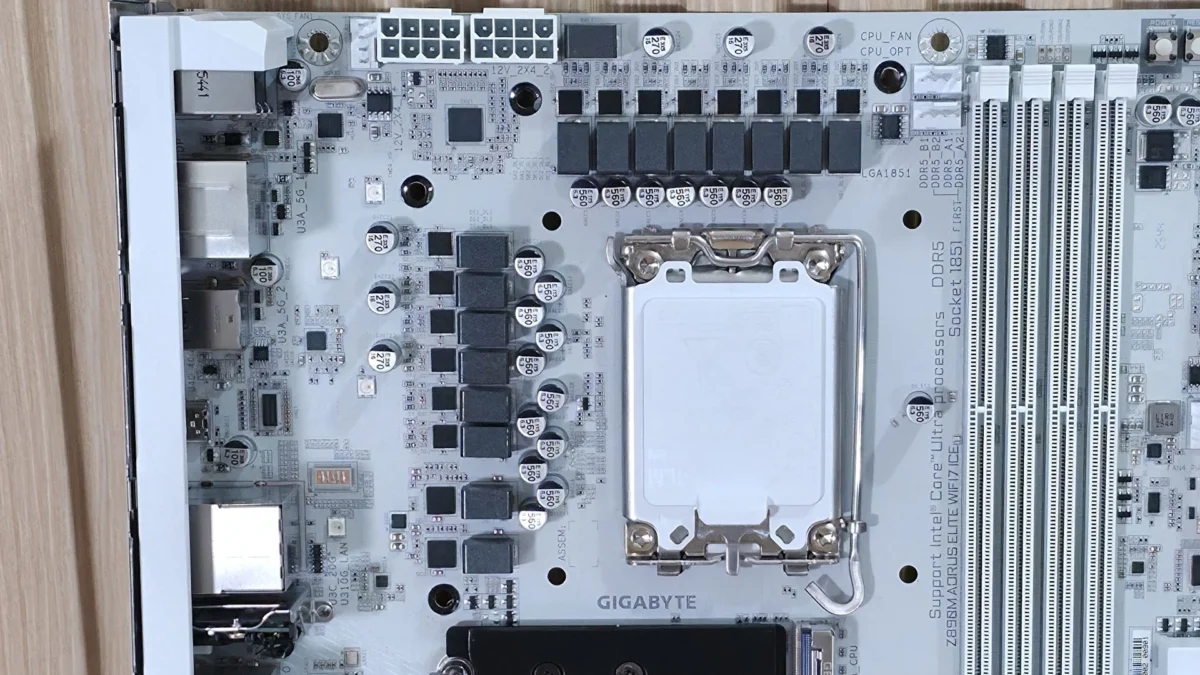
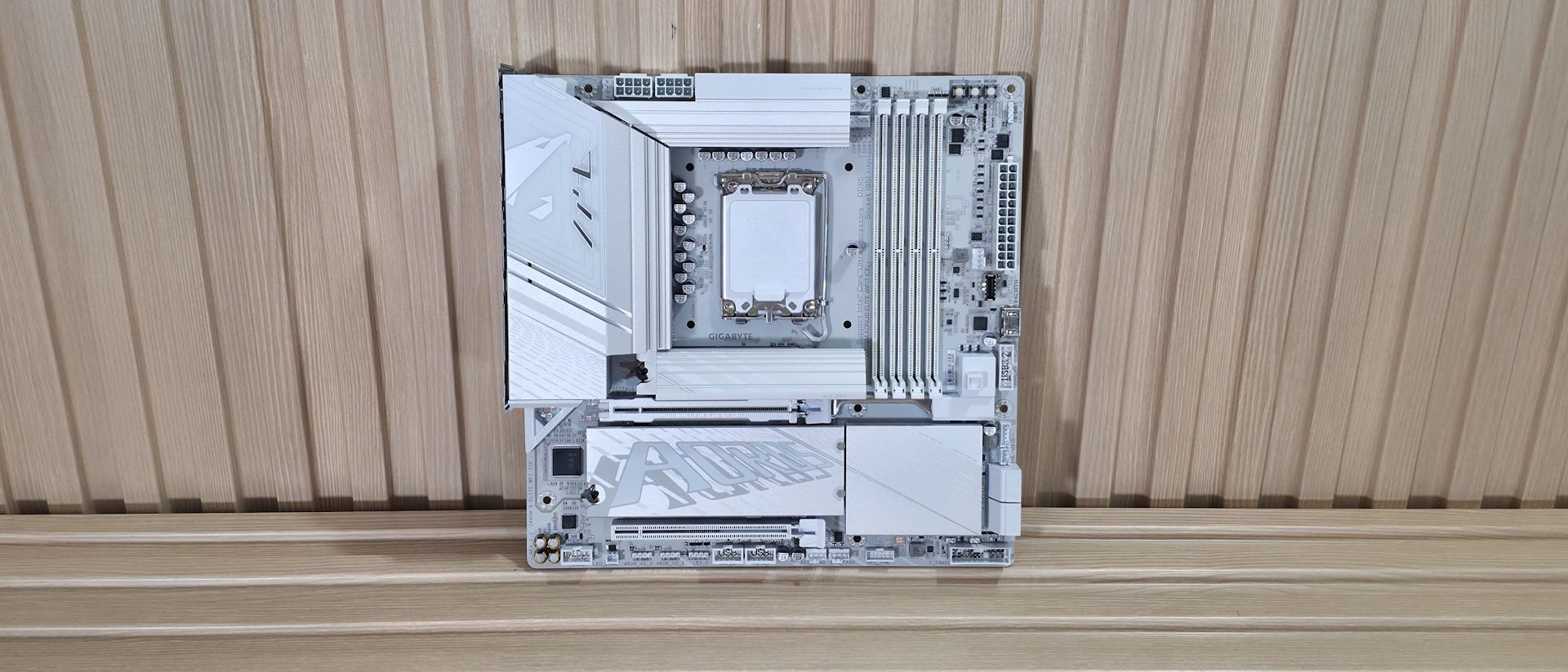
At first glance, what immediately sets the Z890M Aorus Elite Wifi7 Ice apart is its visual presentation. Eschewing the traditional, utilitarian black PCB design that has dominated the PC component industry for decades, this board leans heavily into the rapidly growing "all-white" or "icy-white" aesthetic movement. Featuring a pristine white PCB offset by silver and white heatsinks offering comprehensive coverage, it elevates the visual standard for budget-to-mid-range motherboards.
Beneath its striking exterior lies a robust feature set tailored for modern enthusiasts. The board provides three M.2 storage sockets—including two blazing-fast PCIe 5.0 lanes—alongside four traditional SATA ports. Networking capabilities are equally cutting-edge, featuring fast 2.5 GbE wired networking paired with Wi-Fi 7 (160 Hz) support for untethered high-speed data transfer. The rear I/O panel is densely populated, delivering a total of nine USB ports, highlighted by a versatile 40 Gbps Type-C port complete with DisplayPort capability.
While it features a basic built-in audio solution and a modest two-zone RGB lighting setup (positioned near the VRMs and beneath the chipset heatsink), the board’s emphasis on heavy-duty heatsink coverage for every M.2 slot gives it an unmistakable aura of premium engineering that vastly outweighs its modest $209 price tag.
Chronology
To understand how the Z890M Aorus Elite Wifi7 Ice arrived on test benches and retail shelves, it helps to look at the broader timeline of Intel’s platform evolution and Gigabyte’s design iterations over the past year:
- Late 2023 to Early 2024: Intel lays the groundwork for its next-generation socket architecture, signaling a shift toward AI-integrated processing, advanced power delivery requirements, and enhanced high-speed storage standards like PCIe 5.0 for mainstream platforms.
- Mid 2024: Gigabyte expands its popular "Ice" design philosophy—previously reserved for ultra-premium, enthusiast-tier boards—down into more accessible price brackets, recognizing a surging market demand for white-themed PC builds among gamers and content creators.
- Late 2024 (Intel Core Ultra Launch): Intel officially debuts its Core Ultra 200S processor lineup alongside the Z890 chipset family. Motherboard manufacturers flood the market with high-end ATX boards, leaving a noticeable gap for competitively priced, feature-rich Micro-ATX alternatives.
- Recent Weeks: The Gigabyte Z890M Aorus Elite Wifi7 Ice officially lands on review test benches. Initial unboxing and hardware evaluations reveal that Gigabyte successfully managed to squeeze top-tier connectivity—including Wi-Fi 7 and dual PCIe 5.0 M.2 slots—into a compact Micro-ATX form factor without inflating the MSRP beyond the psychological $200 threshold.
- Present Day: As retail availability stabilizes on platforms like Amazon at the $209 price point, independent reviewers and hardware analysts widely position the board as a top recommendation for builders looking to construct compact, visually cohesive white systems powered by Intel’s newest silicon.
Supporting Data
A deep dive into the hardware specifications of the Gigabyte Z890M Aorus Elite Wifi7 Ice reveals a remarkably well-balanced engineering sheet. When evaluated against standard industry metrics for the $200–$250 motherboard bracket, the Z890M Aorus Elite punches well above its weight class.
| Feature Category | Specification Details |
|---|---|
| Form Factor | Micro-ATX (Optimized for compact chassis design) |
| CPU Socket & Support | Intel LGA 1851, optimized for Intel Core Ultra 200S Series processors |
| Price Point | $209 USD (Retail availability via major vendors like Amazon) |
| Storage Connectivity | 3x M.2 Sockets (including 2x high-speed PCIe 5.0 lanes); 4x SATA III ports |
| Networking | 2.5 GbE Realtek/Intel Ethernet; Wi-Fi 7 (160 Hz support) |
| Rear I/O Connectivity | 9x Total USB Ports, featuring 1x 40 Gbps USB Type-C port with DisplayPort alt-mode |
| Expansion Slots | 2x Full-length PCIe slots (1x structurally reinforced with steel armor) |
| Cooling & Aesthetics | Full heatsink coverage across all M.2 slots; silver/white VRM heatsinks; Ice-white PCB |
| Lighting & Audio | 2-Zone RGB lighting (VRM zone and chipset heatsink); basic integrated onboard audio solution |
Performance and Thermal Dynamics
During comprehensive stress testing on open and enclosed test benches, the board manages thermal loads remarkably well. Thanks to the extended heatsink footprint—rarely seen on sub-$250 Micro-ATX boards—the VRMs remain exceptionally stable even under sustained multi-threaded workloads driven by high-tier Core Ultra processors.
The inclusion of dual PCIe 5.0 M.2 slots future-proofs the system for upcoming ultra-fast solid-state drives, though users should note that populating both lanes may require careful attention to CPU lane allocation and thermal dissipation, which the factory-installed heatsinks handle admirably. Furthermore, the inclusion of a 40 Gbps Type-C port brings lightning-fast external peripheral transfers to a form factor that historically skimped on high-speed rear connectivity.
Official Responses
While motherboard manufacturers rarely issue sweeping corporate statements for individual regional product releases, industry feedback from Gigabyte’s product development and marketing divisions highlights a clear strategic shift in how they approach mid-tier hardware design.
Speaking on background regarding the philosophy behind the "Ice" series expansion, Gigabyte representatives have repeatedly emphasized that modern PC building is no longer just about raw computational output—it is an extension of personal style and interior workspace design.
"The modern desktop computer is a centerpiece of the room, not just a utility box hidden under a desk," noted a representative familiar with Gigabyte’s component design philosophy. "With the Z890M Aorus Elite Wifi7 Ice, our goal was to eliminate the notion that builders using space-saving Micro-ATX cases must settle for dull, industrial aesthetics or compromise on advanced connectivity like Wi-Fi 7 and PCIe 5.0. We wanted to deliver an uncompromised visual and technical foundation at a price point that respects the builder’s budget."
Industry analysts have praised this approach, noting that while features like Wi-Fi 7 and dual PCIe 5.0 M.2 slots were once locked behind expensive enthusiast boards costing upwards of $400, filtering them down into $209 Micro-ATX platforms democratizes high-performance computing for a broader audience.
Implications
The introduction and successful reception of the Gigabyte Z890M Aorus Elite Wifi7 Ice carry significant implications for the broader PC hardware ecosystem, particularly regarding form factor trends, pricing strategies, and aesthetic standardization.
1. The Renaissance of Micro-ATX
For years, enthusiasts looking for top-tier features were funneled almost exclusively into standard ATX form factors. Mini-ITX offered compactness but came with severe thermal limitations, strict component clearance issues, and a heavy "tax" on pricing. Micro-ATX sat in an awkward middle ground—frequently populated by budget-oriented, bare-bones boards devoid of modern styling or advanced networking.
Boards like the Z890M Aorus Elite redefine the Micro-ATX category, proving that small-form-factor builds do not require sacrificing advanced lanes, robust power delivery, or high-speed connectivity. This may encourage chassis manufacturers to design more innovative, compact tower cases that maximize desk space without sacrificing hardware compatibility.
2. Mainstreaming the "All-White" Aesthetic
The aesthetic homogenization of PC components—characterized by endless rows of black PCBs, brushed aluminum, and aggressive "gamer" styling—has shifted dramatically. The market demand for clean, minimalist, white-themed builds has transitioned from a niche modder community into a dominant consumer preference.
By offering a fully white PCB and comprehensive heatsink masking at a $209 price point, Gigabyte is forcing competitors to rethink their mid-tier offerings. Consumers no longer have to pay a steep aesthetic premium to build a visually cohesive white system.
3. Democratization of Next-Gen Connectivity
Features such as Wi-Fi 7 and PCIe 5.0 storage lanes represent the bleeding edge of consumer PC technology. By embedding these standards into a sub-$210 motherboard, Gigabyte sets a new expectation for consumer value. Buyers investing in Intel’s Core Ultra platform can now adopt future-proof networking and storage standards without breaking the bank, shifting industry expectations for what a mid-range motherboard should deliver.
Conclusion
Ultimately, the Gigabyte Z890M Aorus Elite Wifi7 Ice stands out as a triumph of balanced engineering and aesthetic execution. It successfully bridges the gap between high performance, striking visual design, and SFF practicality. For builders planning a compact, white-themed Intel Core Ultra rig, it currently represents one of the most compelling investments on the market.

