

By Austin
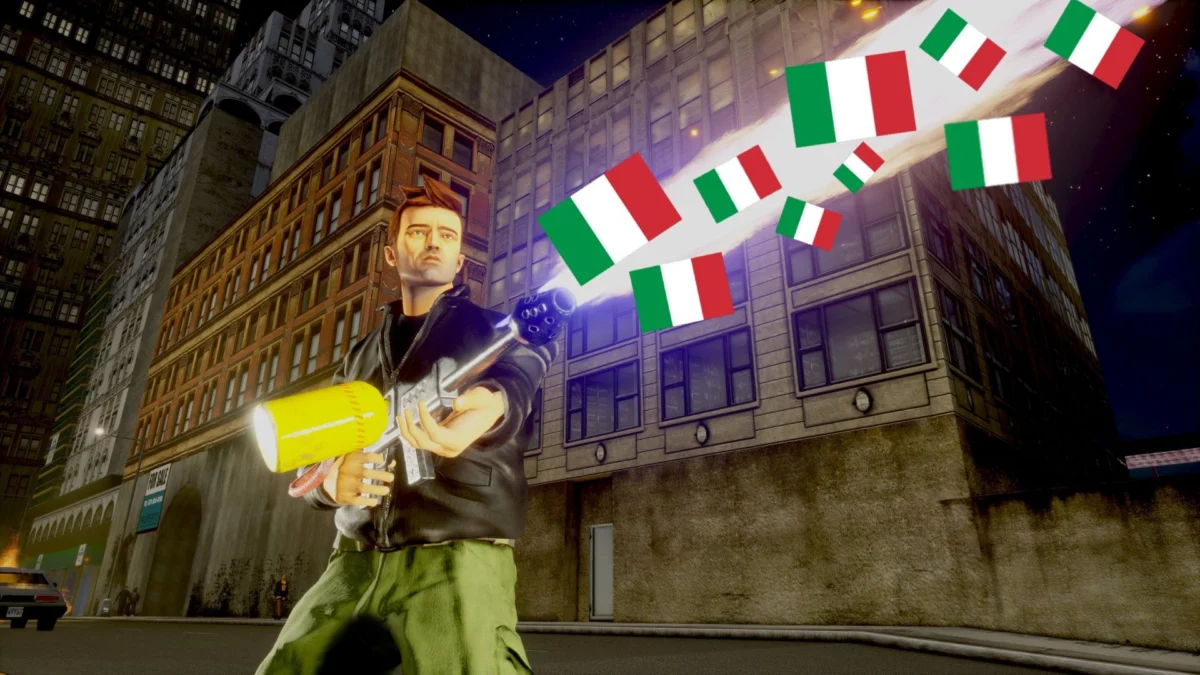
As the global gaming community stands on the precipice of Grand Theft Auto 6, looking ahead to what is arguably the most anticipated entertainment release in history, a poignant look backward reveals just how precarious Rockstar Games’ foundations once were. Marking the 25-year milestone of Grand Theft Auto 3—the genre-defining masterpiece that permanently altered the landscape of interactive entertainment—Rockstar veteran Obbe Vermeij has opened up about the title’s notoriously rocky development cycle.
Far from the smooth, calculated multi-studio operations of modern AAA game development, GTA 3 spent the vast majority of its production window teetering on the edge of technical disaster. Vermeij’s recent retrospective offers an unvarnished window into an era when the industry was transitioning from 2D sprites to sprawling 3D worlds, and when Rockstar North—then known as DMA Design—was navigating corporate acquisitions, scrapped concepts, and frantic last-minute optimization.
Main Facts: A Landmark Title Born from the Brink of Collapse
Released in October 2001, Grand Theft Auto 3 introduced players to the grim, fully 3D expanse of Liberty City, pioneering the modern open-world sandbox formula that countless studios have since imitated. Yet, according to Vermeij, the game that changed history was, for the longest time, a technical wreck.
"For most of development, GTA 3 was in a sorry state," Vermeij revealed in a series of posts on social media. "It crashed frequently, the frame rate was terrible, and the map was full of holes. Only in the last six months did everything come together. For the longest time, it looked like the frame rate was going to be 20 fps. Only in the final months did we manage to hit 30."
The challenges faced by the team at DMA Design highlight a universal truth in software engineering: the core identity and "fun factor" of a massive project often remain obscured until the final stretch of production. Much like Bethesda game director Todd Howard noted in 2023 regarding Starfield—which took seven years before the team finally cracked what made it fun—GTA 3 was a puzzle that only solved itself when the deadline loomed dangerously close.
Chronology: From Scrapped Miami Projects to a Risky 3D Gamble
The turbulent timeline of GTA 3 began during a period of massive corporate and structural transition. Shortly after Take-Two Interactive acquired DMA Design, a satellite office was established in Edinburgh, Scotland. While the studio had successfully wrapped up development on Space Station Silicon Valley for the Nintendo 64 in 1998, leadership initially lacked a clear roadmap for their next major project.
The Rise of GTA 2.5 and the Pivot to Full 3D
Seizing the initiative without formal prompting, developers Leslie Benzies and Aaron Garbut began experimenting with the conceptual architecture for what would eventually become GTA 3. Simultaneously, however, the team responsible for the original Grand Theft Auto and GTA 2 was pursuing an entirely different path: a project dubbed GTA 2.5, an isometric, 2.5D game set in a fictionalized Miami.
It wasn’t until the year 2000 that corporate strategy shifted definitively. GTA 2.5 was unceremoniously cancelled, the Dundee office working on it was closed down, and Take-Two officially greenlit the full 3D reboot under the GTA 3 banner.
What followed was an intense ground-up rebuilding process. Vermeij emphasized that virtually everything was written from scratch. "Only two people worked on both GTA 2 and GTA 3, and no code or art from GTA 2 was reused," he noted.
Organic Design and Late-Stage Storytelling
Without the rigid narrative constraints or procedural pipelines of modern game production, the development of GTA 3 relied heavily on improvisation and organic discovery. Mechanics, missions, and environmental features were built on the fly.
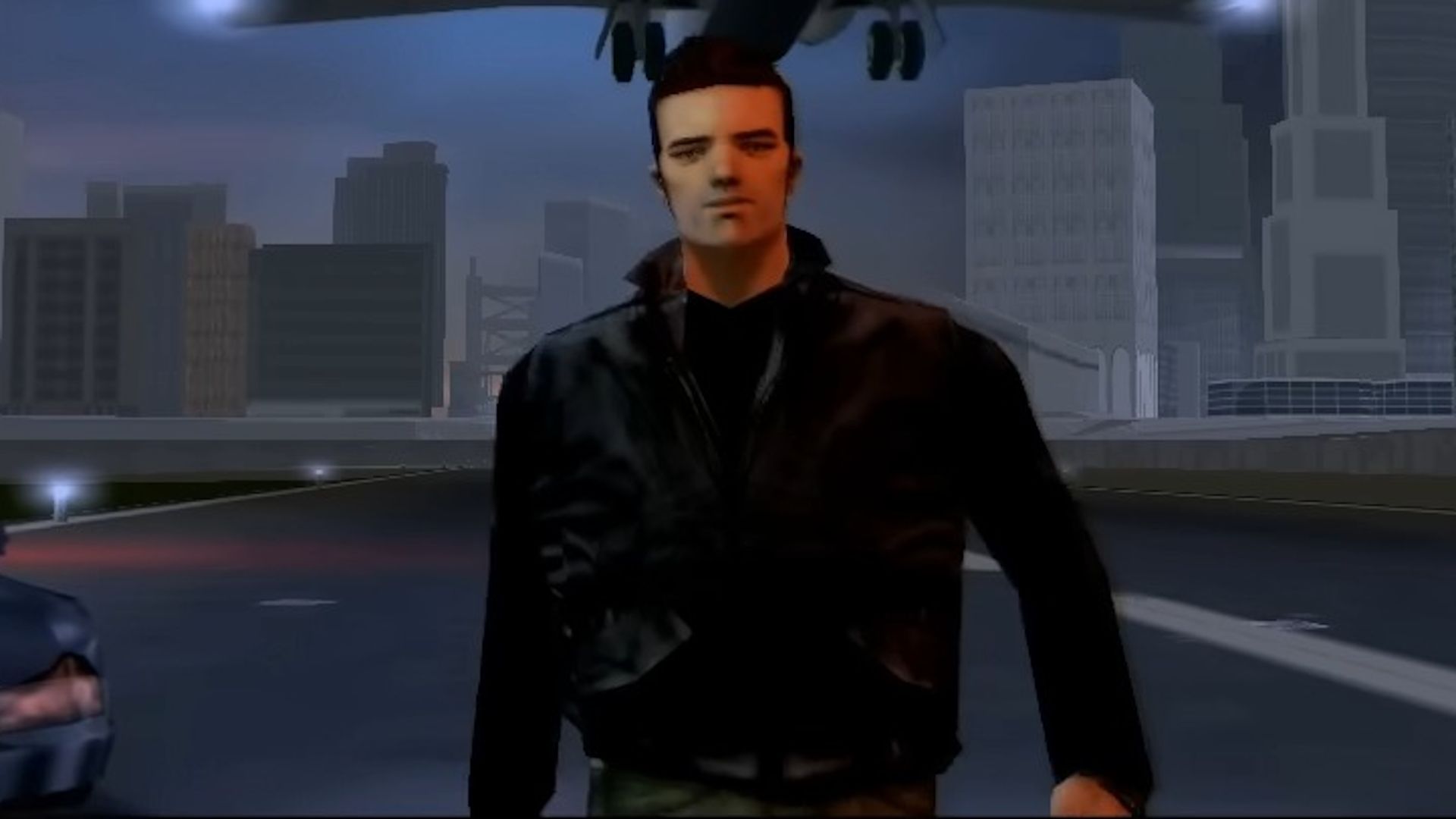
"The way we worked was organic," Vermeij explained. "People would come up with ideas for missions and we’d just try them. If they were fun, they were in. The story was secondary. In fact, the opening plot involving Catalina trying to canalize and betray Claude was added well into development."
Supporting Data: Scale, Crunch, and the Anxiety of Innovation
To contextualize the development of GTA 3, one must look at the sheer scale of the operation compared to modern standards. The team was tiny by contemporary AAA measurements, fostering a hyper-collaborative environment where developers wore multiple hats.
The Work-Life Balance of Y2K Game Development
In an industry now perpetually scrutinized for systemic "crunch" culture—a topic Rockstar itself confronted openly following the grueling development of Red Dead Redemption 2 and the measured approach taken toward GTA 6—Vermeij recalls a surprisingly balanced atmosphere during the production of GTA 3.
"Although everybody worked hard, I don’t remember many people doing crazy hours," Vermeij stated. "On the rare occasions I was in over the weekend, there were usually only one or two others. Even during crunch time, most people left the office around 9 or 10 in the evening. I always thought it was better to work eight focused hours than spend your life in the office."
A Cool Reception Before an Unstoppable Legacy
Despite the internal optimism driven by daily additions of new cars, pedestrian paths, and radio stations, market validation was far from guaranteed. GTA was not yet the untouchable cultural juggernaut it is today.
In May 2001, just months before release, GTA 3 made its public debut at the E3 convention—and the reception was lukewarm at best. Most attendees showed little interest, while those who did pay attention criticized the title for its unprecedented level of graphic violence. When it finally launched, initial sales were merely steady, lacking the explosive opening spikes typical of modern blockbusters. However, the game’s unique word-of-mouth appeal meant its sales figures never tapered off, slowly evolving into a cultural phenomenon.
Official Responses and Industry Reflections
The contrast between the scrappy, basement-level camaraderie of the early Edinburgh days and Rockstar’s current corporate footprint is staggering. Vermeij fondly remembers the social fabric of the studio:

"The thing I remember most is the camaraderie. In a small team, everybody relies on each other and everybody has a lot of input. Most of us were young and had only recently moved to Edinburgh. We went to the pub together. It felt like a group of friends who happened to be working on a project together."
Today, that dynamic has completely transformed. Rockstar Games operates with thousands of developers distributed across multiple global studios. To put the exponential growth into perspective, Rockstar has reportedly assigned entire teams of writers to pedestrian dialogue alone for GTA 6, utilizing crowd and NPC technologies that industry peers describe as "at least 10 years ahead" of standard modern game development.
Implications: The Future of Rockstar After GTA 6
The 25-year retrospective of GTA 3 arrives at a fascinating historical juncture for Rockstar Games. As the studio prepares to launch GTA 6—a project that has absorbed over a decade of labor hours, iterative design, and technological refinement—leadership has been vocal about the future.
Rockstar has openly acknowledged that the protracted development timeline of GTA 6 was partially bogged down by evolving creative visions and the monumental task of establishing new internal tools. However, studio executives have signaled that the heavy lifting has already been done. The proprietary pipelines, stress-tested workflows, and vastly expanded multi-studio synergy forged during the creation of GTA 6 mean that future installments, such as a hypothetical GTA 7, will not face the same agonizing multi-year development bottlenecks.
As modern game development balloons in budget, headcount, and technological complexity, Vermeij’s memories of GTA 3 serve as both a nostalgic reminder of a simpler time in tech history and a testament to the unpredictable nature of creative brilliance. Back in 2001, a small group of friends in Edinburgh could pull off a miracle in the final six months of a doomed schedule. Today, executing a cultural reset requires the synchronized efforts of thousands—proving that while the industry has changed beyond recognition, the chaotic pursuit of digital magic remains entirely the same.

