

By Global Tech Desk
The high-end PC gaming and hardware community has been rocked by an audacious logistical breach following the disappearance of a massive, high-value cargo shipment in South America. Days after initial reports surfaced regarding two missing pallets of unreleased and heavily sought-after next-generation graphics cards, the fallout has escalated dramatically.
According to local investigative reports emerging from Brazilian media outlets, at least one of the coveted, contraband Nvidia GeForce RTX 5090 graphics cards has already surfaced on the online secondary market. Simultaneously, law enforcement and airport security authorities have successfully identified three internal airport employees suspected of orchestrating or facilitating the brazen theft.
The missing cargo, valued at an astronomical $470,000 USD (approximately 2.5 million Brazilian Reais), represents one of the most significant physical hardware thefts in the recent history of the PC component supply chain. As distributors demand answers and international tech enthusiasts look on in disbelief, the incident has exposed critical vulnerabilities in high-security cargo handling facilities.
Main Facts
The core of the unfolding scandal centers around a major distribution logistics hub located within a Brazilian airport.
- The Stolen Cargo: Two entire pallets containing high-end Nvidia GeForce RTX 5090 graphics cards vanished from secure airport holding facilities over the weekend.
- Financial Impact: The total estimated market value of the missing shipment sits at approximately $470,000 USD (R$ 2.5 million), making it a high-priority target for both organized crime and opportunistic insiders.
- The Suspects: According to reports from Brazilian news publication GMC, local police and airport authorities have zeroed in on three internal employees believed to have played a direct role in the heist.
- Online Listings: In a brazen move by the perpetrators or secondary-market resellers, at least one graphics card from the stolen batch has already been spotted listed for sale online, though the listing was quickly pulled down as heat from law enforcement increased.
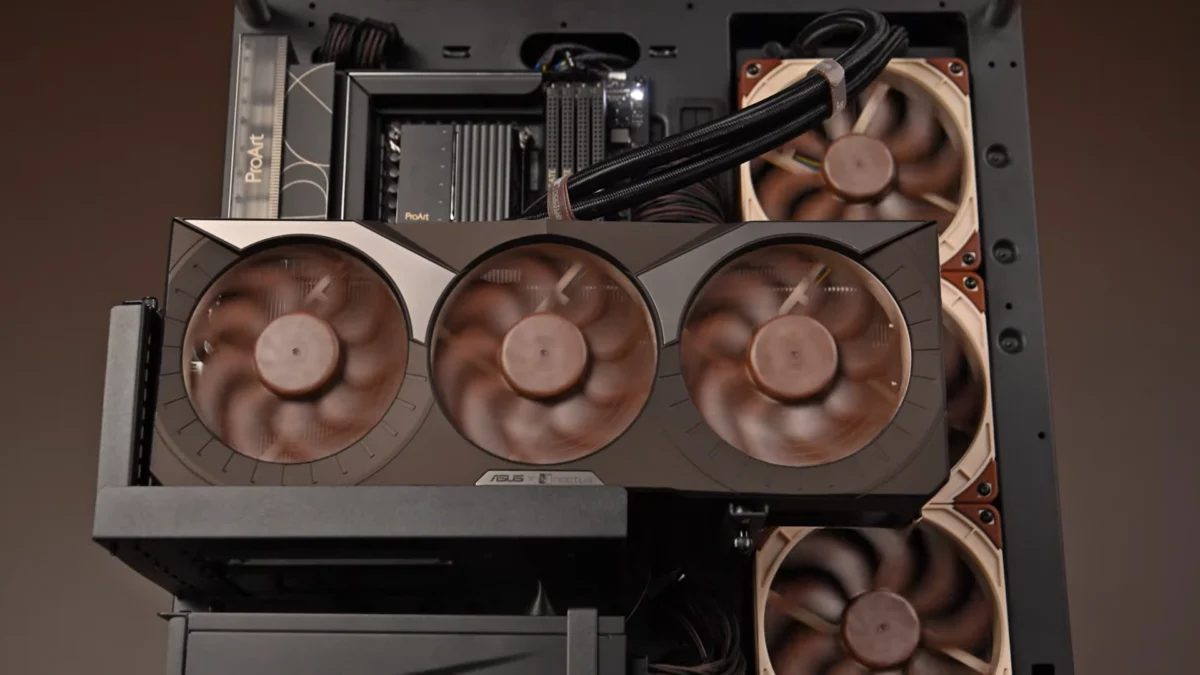
- The Hardware: The Nvidia GeForce RTX 5090 sits at the absolute pinnacle of consumer graphics technology, making units exceptionally rare, tightly controlled, and profoundly valuable to both enterprise buyers and elite gaming enthusiasts.
Chronology of a Heist
Understanding how nearly half a million dollars in cutting-edge silicon vanished into thin air requires tracking the timeline from arrival to discovery and subsequent fallout.
Arrival and Disappearance
The shipment touched down at the Brazilian airport facility late last week as part of a routine international freight transit meant to supply regional distributors. Handling high-value electronics requires strict chain-of-custody protocols, including secure tarmac offloading, biometric-controlled warehouse storage, and continuous closed-circuit television (CCTV) monitoring.

Despite these measures, two entire pallets managed to bypass standard tracking protocols and physically disappear from the secure zone. Because the shipment consisted of bulk distributor packaging rather than individual retail boxes sitting on open shelves, the perpetrators required heavy material-handling equipment, such as pallet jacks or forklifts, and insider knowledge of loading bay schedules to move the inventory undetected.
The Discovery and Silence
When the regional distributor attempted to process and take delivery of the consignment, warehouse managers discovered the discrepancy. Initial inquiries directed at airport logistics operators yielded a wall of silence. According to reports, the distributor was met with "zero answers" as facility operators struggled to account for the missing inventory. Realizing that the cargo had not simply been misplaced or misrouted, company executives escalated the matter to local law enforcement and federal transport authorities.
The Online Leak and Police Breakthrough
Within 48 hours of the public disclosure, the investigation accelerated rapidly. Local media outlet GMC reported that police detectives monitoring digital marketplaces flagged an online listing attempting to offload one of the stolen RTX 5090 cards. Although the listing was swiftly deleted by the seller in an apparent attempt to evade digital forensics tracking, cybercrime units had already logged crucial metadata.
Concurrently, internal security reviews, badge-swipe logs, and airport CCTV footage allowed investigators to identify three specific airport employees. These workers are now the primary focus of a criminal conspiracy probe, suspected of abusing their security clearances to bypass checkpoints and facilitate the removal of the pallets.
Supporting Data: The Value of the RTX 5090
To fully grasp the magnitude of this crime, one must examine the economic and technological landscape surrounding Nvidia’s flagship architecture.
The GeForce RTX 5090 is not a standard consumer commodity. As the crown jewel of Nvidia’s next-generation GPU lineup, production volumes are constrained by complex semiconductor manufacturing nodes, soaring global demand, and the heavy allocation of advanced silicon wafers toward enterprise artificial intelligence (AI) data centers.
+-------------------------------------------------------------+
|               SHIPMENT & MARKET BREAKDOWN                   |
+------------------------------+------------------------------+
| Metric                       | Detail                       |
+------------------------------+------------------------------+
| Total Stolen Value           | ~$470,000 USD (R$ 2.5 Million)|
| Volume                       | 2 Full Pallets               |
| Hardware Type                | Nvidia GeForce RTX 5090      |
| Location of Incident         | Brazilian Airport Hub        |
| Primary Suspects Identified  | 3 Airport Employees          |
+------------------------------+------------------------------+
When high-end GPUs of this caliber enter emerging markets like Brazil—where steep import tariffs, high shipping logistics costs, and currency fluctuations traditionally inflate retail pricing—their black-market value skyrockets. A single RTX 5090 can command an exorbitant price tag locally, meaning the stolen shipment represents a multi-hundred-thousand-dollar payday for anyone capable of laundering the hardware back into the open market.

Furthermore, because these cards were intercepted before reaching official retail channels, they lack standard manufacturer warranty tracking numbers in regional databases, making them difficult for unsuspecting buyers to register, yet enticingly cheap for rogue builders looking to bypass official import duties.
Official Responses and Industry Reaction
The silence initially met by the distributor has dissolved into a coordinated multi-agency response.
- The Distributor: Representatives for the affected South American distributor have issued formal statements emphasizing cooperation with federal authorities. Executives have expressed profound frustration over the initial lack of accountability from airport logistics operators, pointing out severe structural flaws in third-party handling contracts.
- Airport Authorities: Airport administration officials have released brief statements confirming an active internal audit. While refusing to name the three identified employees pending formal indictment, management stressed a "zero-tolerance policy" for insider theft and pledged full transparency with state and federal police forces.
- Law Enforcement: Brazilian civilian and federal police units have seized security server logs and are tracking the digital footprint left by the online marketplace listing. Authorities have warned prospective buyers that purchasing hardware known to be part of a criminal cargo theft constitutes handling stolen goods—a felony offense that carries severe legal penalties.
- Nvidia: While Nvidia corporate headquarters typically refrains from commenting on regional supply chain logistics and third-party transit crimes, industry insiders note that the manufacturer maintains strict compliance programs to blacklist serial numbers associated with stolen inventory, rendering unauthorized bulk shipments electronically crippled or flagged upon driver activation.
Broader Implications for Global Tech Logistics
Beyond the immediate drama in Brazil, this $470,000 heist serves as a glaring wake-up call for the global technology supply chain.
1. The Vulnerability of High-Value Transit Hubs
As consumer electronics shrink in physical size while expanding exponentially in financial worth, traditional cargo security measures are falling short. A single pallet of modern GPUs can carry a street value equivalent to a luxury sports car or a shipment of precious metals, yet they often move through facilities lacking specialized armed escort or segregated ultra-secure vaults.
2. The Rise of Insider Threat Vectors
Security experts point out that external armed hijackings—while dramatic—are far riskier than internal collusion. When warehouse workers, logistics coordinators, and ramp personnel can be compromised or leveraged, perimeter security becomes entirely circumvented. The identification of three airport employees in this case underscores the reality that supply chain security is only as strong as its most vulnerable human link.
3. Impact on Local Pricing and Availability
For regional gamers and workstation builders in South America, incidents like this directly impact market stability. Stolen inventory that finds its way onto black markets disrupts legitimate retail channels, creates artificial shortages, and drives up insurance and shipping overhead for distributors—costs that inevitably trickle down to the honest consumer.
What Comes Next?
As Brazilian police close the net on the three identified suspects and cybercrime units trace the digital crumbs of the deleted online sale, the race is on to recover the bulk of the missing pallets before they are irrevocably split apart and sold off piece-by-piece across international borders. For now, the stolen RTX 5090 shipment stands as a cautionary tale of what happens when ultra-high-value technology meets lax oversight in the global transport chain.

