

By the Gaming Industry Desk
The video game hardware market is navigating what analysts are calling its most precarious and volatile era since the early 1980s. With current-generation platforms like the PlayStation 5 and Xbox Series X experiencing rising costs and unprecedented economic pressures, the horizon for the next generation of home gaming looks jarringly expensive.
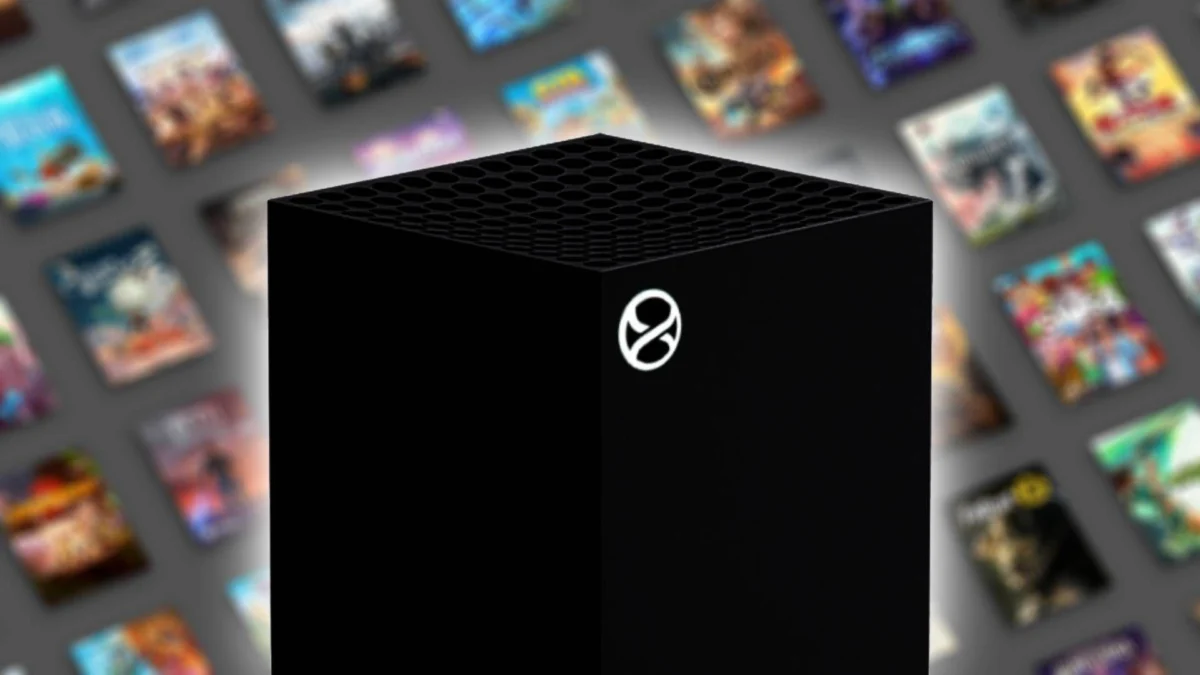
At the center of this storm is Microsoft’s upcoming next-generation console, currently tracked under the working title Project Helix. Recent internal projections leaked via industry reports indicate that the console could carry a staggering retail price tag between $1,200 and $1,800 if Microsoft opts not to heavily subsidize the hardware.
The prospect of a home console costing as much as a high-end gaming PC—or a used automobile—has sent shockwaves through the gaming community. Among the most vocal critics is former Blizzard President Mike Ybarra, whose scathing critique of the pricing model has sparked a fierce industry-wide debate over the future, necessity, and economic viability of dedicated gaming consoles.
1. Main Facts: The Anatomy of the Project Helix Rumors
To understand the scale of the current controversy, it is essential to examine the core details surrounding Microsoft’s next-generation hardware plans:
- The Projected Price Point: Internal Microsoft forecasting reportedly places the baseline manufacturing and retail cost of Project Helix between $1,200 and $1,800. This assumes the company scales back its traditional hardware subsidization strategy—a method where manufacturers sell consoles at a loss to encourage consumer adoption, recouping costs later through software sales and subscription services like Xbox Game Pass.
- Global Component Shortages: The primary driver behind these eye-watering figures is an ongoing, severe global shortage of computing memory (RAM) and other critical semiconductor components. Supply chain bottlenecks, coupled with skyrocketing demand for AI-infrastructure hardware, have inflated the cost of advanced silicon to historic highs.
- The Launch Timeline: Industry insiders suggest that Microsoft is eyeing a release window leading up to Christmas 2028 for Project Helix, giving the company a narrow window to stabilize supply chains or fundamentally alter its hardware strategy.
- The Death of Physical Media: Compounding consumer outrage are separate reports indicating that Project Helix may completely abandon physical game discs, functioning strictly as a digital- and cloud-first ecosystem.
2. Chronology: How We Reached a Pre-Crisis State
The trajectory leading to a potential $1,800 Xbox console has been shaped by a compounding series of economic, corporate, and technological milestones over the past decade:
- November 2020 (The $500 Baseline): Microsoft and Sony launch the Xbox Series X/S and PlayStation 5, respectively, establishing a mass-market expectation that high-end console gaming costs roughly $499. At this price point, hardware manufacturing margins were initially tight, but manageable.
- 2021–2023 (Global Supply Chain Disruption): The COVID-19 pandemic, followed by sweeping semiconductor manufacturing crises, exposes the fragility of global tech supply chains. Consoles become notoriously difficult to find, and component costs begin an upward climb.
- 2024–2025 (The Mid-Gen Refresh Era): Sony introduces the PlayStation 5 Pro at a higher-than-usual price point of $699, testing the limits of consumer price tolerance. Meanwhile, Microsoft undergoes massive corporate restructuring under new leadership, aiming to pivot its hardware and software strategy to prioritize multi-platform availability and cloud accessibility ("wherever people play").
- Late 2026 (The Leak and Public Backlash): Reports from outlets like Fortune reveal Microsoft’s internal $1,200–$1,800 projections for Project Helix. The figures immediately trigger public alarm, prompting former Blizzard President Mike Ybarra and industry analysts to publicly question the sanity of the strategy.
3. Supporting Data and Market Realities
The resistance to a four-figure console does not exist in a vacuum; it is heavily tied to broader macroeconomic realities and the diminishing returns of raw graphical power.
Macroeconomic Pressures
Consumers—particularly in North America—are currently grappling with sustained inflation across essential sectors. From housing, insurance, and fuel to daily grocery expenses like ground beef, household budgets are increasingly squeezed. In this economic climate, discretionary spending on luxury entertainment items is shrinking. An $1,800 entertainment device ceases to be a mainstream living room appliance and becomes a luxury investment reserved for an affluent niche.
The Diminishing Returns of Hardware Power
For decades, each console generation delivered a quantum leap in visual fidelity, framerates, and gameplay possibilities that instantly made older hardware feel obsolete. Today, however, that paradigm has shifted.

As Mike Ybarra noted in his critique, the capabilities of current-generation systems—such as the base Xbox Series X and the PS5 Pro—are more than sufficient for roughly 99% of the gaming audience. Furthermore, software optimization is stepping in where brute-force hardware used to dominate.
A prime example of this is Microsoft and AMD’s ongoing work with machine-learning upscaling technologies, such as FSR 4.1 (FidelityFX Super Resolution). By bringing advanced AI upscaling to existing Xbox Series X and S consoles, developers can extract significantly higher performance, resolution, and framerates out of existing hardware without requiring consumers to purchase entirely new machinery.
4. Official Responses and Industry Commentary
The backlash against the rumored pricing has drawn sharp commentary from high-profile industry veterans, most notably former Blizzard head Mike Ybarra. Taking to social media platform X (formerly Twitter, tracked under his handle @cantworkitout), Ybarra dismantled the logic behind an ultra-expensive console:
"I find this very hard to believe. A ‘console’ is a mass-audience device and you need great games and a low entry price (IMO $399 to $499). A console at the prices rumored below will never sell meaningful units to be of any value vs. alternatives. Zero. I wouldn’t release it at all."
Ybarra went on to advise hardware manufacturers to pump the brakes on the next generation entirely:
"Stick with PS5 Pro/Series X until prices normalize. The capabilities of those boxes are both fine for 99% of the audience. No one is screaming ‘I need a more powerful console’ right now and I believe tons of optimization can and is happening on those platforms."
Internally, Microsoft is also navigating a turbulent transitional period. Under CEO Asha Sharma, the company has initiated broad, layoff-heavy organizational resets aimed at modernizing the Xbox brand. Sharma’s mandate to "reset the business to be where the world plays" forces Microsoft to evaluate whether traditional console manufacturing remains a viable pillar of its long-term corporate strategy, or if it should lean deeper into cloud streaming, PC integration, and software-as-a-service models.
5. Implications for the Future of Gaming
If Project Helix or any equivalent next-generation console launches with a price tag exceeding $1,000, the ripple effects across the video game industry will be profound:
- The Death of the Traditional Console Cycle: For over forty years, the console market has relied on predictable, generational leaps where families could purchase a dedicated box for $300 to $500 that would last for seven to eight years. A four-figure entry barrier shatters this consumer contract, pushing dedicated gaming hardware out of the living room and into the realm of enthusiast PC culture.
- Accelerated Pivot to Cloud and Mobile Gaming: If dedicated hardware becomes too expensive to manufacture and purchase, companies like Microsoft will have an even stronger incentive to abandon console exclusivity. Expect a heavier push toward Game Pass subscriptions on smart TVs, mobile devices, handheld PCs (like the Steam Deck or Asus ROG Ally), and web-based cloud streaming.
- The Rise of Alternative Hardware Markets: Frustrated consumers priced out of the mainstream next-gen market may turn increasingly to retro gaming ecosystems, indie-focused devices (such as the Evercade Nexus), or PC hardware hybrids that offer broader utility beyond locked proprietary storefronts.
- Sony and Nintendo’s Positioning: While Microsoft wrestles with Project Helix, its competitors face divergent realities. Nintendo’s recent launch of the Switch 2 positions it comfortably in the family-friendly, accessible price tier, largely insulated from the high-end silicon wars. Sony, meanwhile, will have to carefully evaluate whether a hypothetical PlayStation 6 can avoid the financial traps currently closing in around Microsoft.
Conclusion
The notion of an $1,800 Xbox highlights a critical crossroads for the industry. As component costs rise and consumer tolerance dips, console manufacturers can no longer rely on the traditional playbook of selling subsidized hardware at a loss without severely damaging their bottom lines. Whether Microsoft chooses to radically alter Project Helix, delay its release until silicon prices normalize, or pivot entirely away from the traditional living room box, one thing is certain: the era of the affordable, mass-market home console is facing its greatest test yet.

