

By Global Gaming News Desk
Main Facts
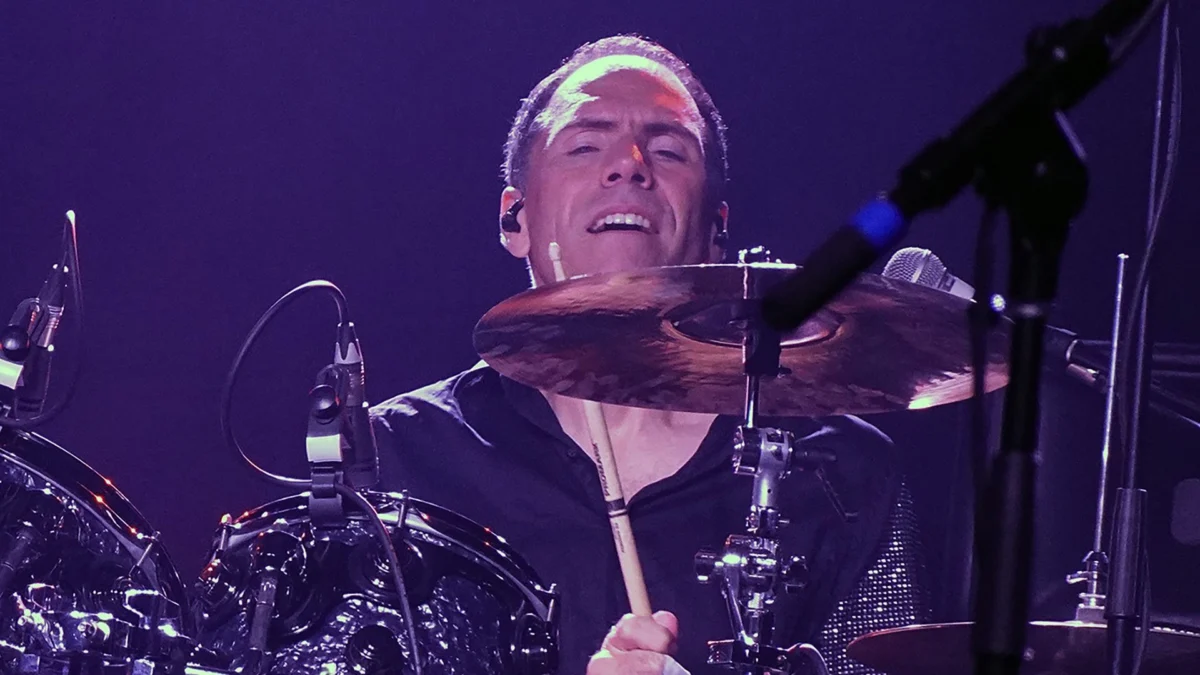
Legendary video game composer and industry veteran Frank Klepacki has strongly pushed back against persistent industry narratives declaring the real-time strategy (RTS) genre dead. Best known for his iconic, adrenaline-pumping musical scores for foundational titles like Command & Conquer and the dungeon crawler Eye of the Beholder 2, Klepacki argues that the RTS format has merely stepped out of the mainstream spotlight to make room for cyclical shifts in consumer attention.
Speaking in a recent interview with Edge magazine, Klepacki emphasized that doom-and-gloom prophecies surrounding the genre ignore the fundamental nature of the gaming industry, where development trends naturally ebb and flow over decades. While acknowledging that contemporary triple-A publishers have largely abandoned the heavy-budget development of traditional RTS titles due to a broader corporate aversion to financial risk, Klepacki maintains that the genre’s underlying mechanics remain vibrant.
Far from being a museum piece of 1990s PC gaming culture, the RTS genre is currently experiencing a resilient, multi-faceted resurgence. Traditional mainstays and spiritual successors—ranging from brand-new official campaigns for vintage classics to heavily anticipated upcoming franchise entries—prove that commanders and base-builders are still eager to harvest Tiberium, queue up unit production lines, and engage in tactical warfare.
Chronology of an Era: The Rise, Fall, and Rebirth of RTS
To understand Klepacki’s perspective, one must trace the historical trajectory of real-time strategy games, which defined the golden age of PC gaming throughout the late 20th century.
The 1990s: The Golden Age of Strategy
The foundational blueprint for the genre was forged in the early 1990s. While Westwood Studios’ Dune II: The Building of a Dynasty (1992) established the modern conventions of resource gathering, base construction, and unit management on a scrolling map, it was Command & Conquer (1995) and Blizzard Entertainment’s Warcraft: Orcs & Humans (1994) that catapulted real-time strategy into global superstardom.
During this era, Frank Klepacki’s industrial-rock and heavy-metal soundtracks—most notably the legendary track "Hell March" from Command & Conquer: Red Alert—became synonymous with the high-octane thrill of micromanaging armies. Sequels and competitors flooded the market: Total Annihilation, StarCraft, Age of Empires, and Homeworld expanded the technical and narrative boundaries of what computer games could achieve.
The 2000s: Expansion, Experimentation, and Live-Action FMVs
As the new millennium dawned, developers leaned heavily into cinematic flair. High-budget productions featured full-motion video (FMV) sequences starring Hollywood ensemble casts, such as Tim Curry and George Takei chewing the scenery in Command & Conquer: Red Alert 3. Simultaneously, games like Company of Heroes introduced tactical, cover-based squad combat that shifted the focus away from traditional base-building toward territory control.
However, the genre also began to sow the seeds of its own commercial contraction. Matchmaking bottlenecks, high mechanical skill floors, and the immense pressure of multiplayer optimization began to alienate casual players.
The 2010s: The MOBA Pivot and "Doom-and-Gloom"
By the early 2010s, publishers and analysts began pronouncing the death of the traditional RTS. The monumental success of Defense of the Ancients (DotA)—a user-created custom map derived from Warcraft III—spawned the Multiplayer Online Battle Arena (MOBA) phenomenon. Games like League of Legends and Dota 2 captured the strategic complexity and competitive thrill of RTS titles while stripping away the daunting chore of base-building and unit management.
Major studios halted funding for traditional strategy projects. Westwood Studios had long since been shuttered by EA, and Blizzard shifted its colossal development resources toward massively multiplayer online role-playing games (World of Warcraft) and card games (Hearthstone). To many industry observers, the RTS genre appeared to be a relic of the past.
The 2020s and Beyond: The Quiet Resurgence
As Klepacki noted in his recent statements, the supposed death of the genre was greatly exaggerated. The 2020s have played host to a quiet, determined renaissance for strategy titles. Rather than relying solely on blockbuster budgets, the resurgence has been sustained by a combination of devoted indie developers, passionate modding communities, and legacy publishers willing to test the nostalgic waters.
Supporting Data and Market Analysis
While first-person shooters, battle royales, and open-world action-RPG titles command the lion’s share of modern marketing budgets, data from digital storefronts like Steam indicate a remarkably stable and dedicated core audience for tactical and strategy games.
- The Indie and Mid-Tier Space: As triple-A publishers retreated from the middle market, independent developers stepped in to fill the void. Projects inspired directly by classic Westwood and Blizzard formulas have found enthusiastic crowdfunding and early-access backing. For instance, Tempest Rising has successfully delivered a modern take on the classic Command & Conquer formula, featuring asymmetrical factions, resource harvesting, and classic base construction.
- The Remaster and Retold Movement: Publishers have discovered significant commercial viability in remastering historical strategy titles rather than building new intellectual properties from scratch. Microsoft’s continuous support for the Age of Empires franchise—including Age of Empires IV and Age of Mythology: Retold—demonstrates that millions of players still actively log on to command historical and mythical armies.
- Unexpected Content Drops: Proving that the classic player base never truly left, Blizzard Entertainment stunned the community by releasing an entirely new campaign for Warcraft III over two decades after the release of The Frozen Throne.
Official Responses and Industry Perspectives
Frank Klepacki’s critique touches upon a deeper structural issue within the modern video game industry: the corporate aversion to risk.
"There was all of this doom-and-gloom talk about ten years ago, saying, ‘Oh, we think RTS is dead now—why are you still trying to work on games that are in a genre that’s going away?’" Klepacki remarked to Edge. "Obviously, if there are games coming out, [the genre is] not going away. It’s just that other types of games have taken the forefront of attention. Everything runs in cycles, you know? That’s how it always is."
Klepacki further highlighted the hollowed-out middle tier of game development as a primary culprit for the perceived stagnation of genres like RTS. While indie developers are praised for taking creative risks, and multi-billion-dollar corporations play it safe with annualized franchises or live-service cash cows, the traditional space for mid-budget, highly polished strategy games has drastically shrunk.
Industry analysts echo parts of this sentiment, pointing out that while the mechanics of real-time strategy do not lend themselves easily to traditional console controller schemes—historically dampening console sales figures—they maintain an intensely loyal, long-tail revenue stream on PC platforms, where mouse-and-keyboard precision remains king.
Implications for the Future of Strategy Gaming
What does this ongoing cycle mean for the future of interactive entertainment? Klepacki’s defense of the genre points to several broader takeaways for developers, publishers, and players alike:
- Cyclical Re-emergence: History demonstrates that game genres rarely vanish permanently; instead, they hibernate until nostalgia, technological advancements, or fresh design perspectives make them viable again. The return of franchises like Company of Heroes, Ruse, and upcoming entries like the Game of Thrones RTS adaptation proves that intellectual property holders still see long-term value in the format.
- Evolution Over Replication: While purists yearn for exact replicas of 1990s gameplay loops, modern RTS games are finding success by modernizing user interfaces, improving pathfinding AI, and integrating quality-of-life features that reduce tedious micromanagement without sacrificing tactical depth.
- The Persistence of Strategy DNA: Even when standalone RTS titles faced lean years, their tactical DNA successfully mutated into adjacent genres, influencing tower defense games, survival craft titles, and MOBAs. As players grow fatigued by endless live-service grind mechanics, the definitive, beginning-to-end campaign structures inherent to classic RTS design offer a refreshing alternative.
As Frank Klepacki aptly suggests, the base-building cannon may no longer dominate every gaming headline, but as long as commanders are willing to deploy their units, the real-time strategy genre will remain very much alive and kicking.

