

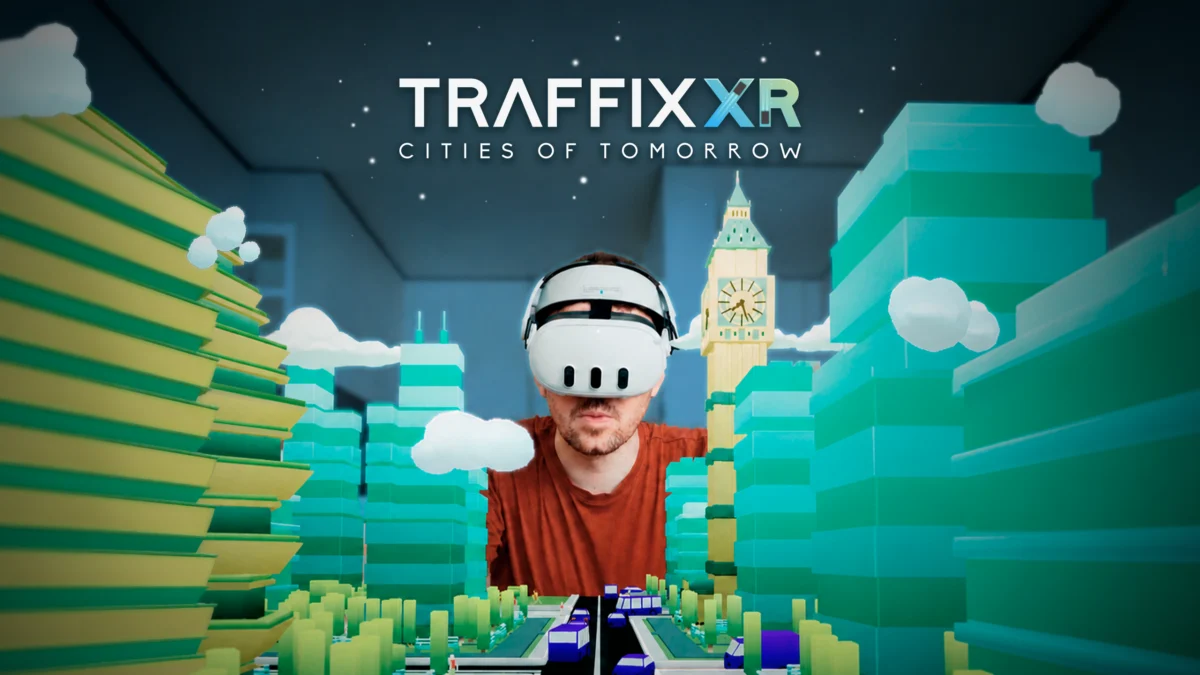
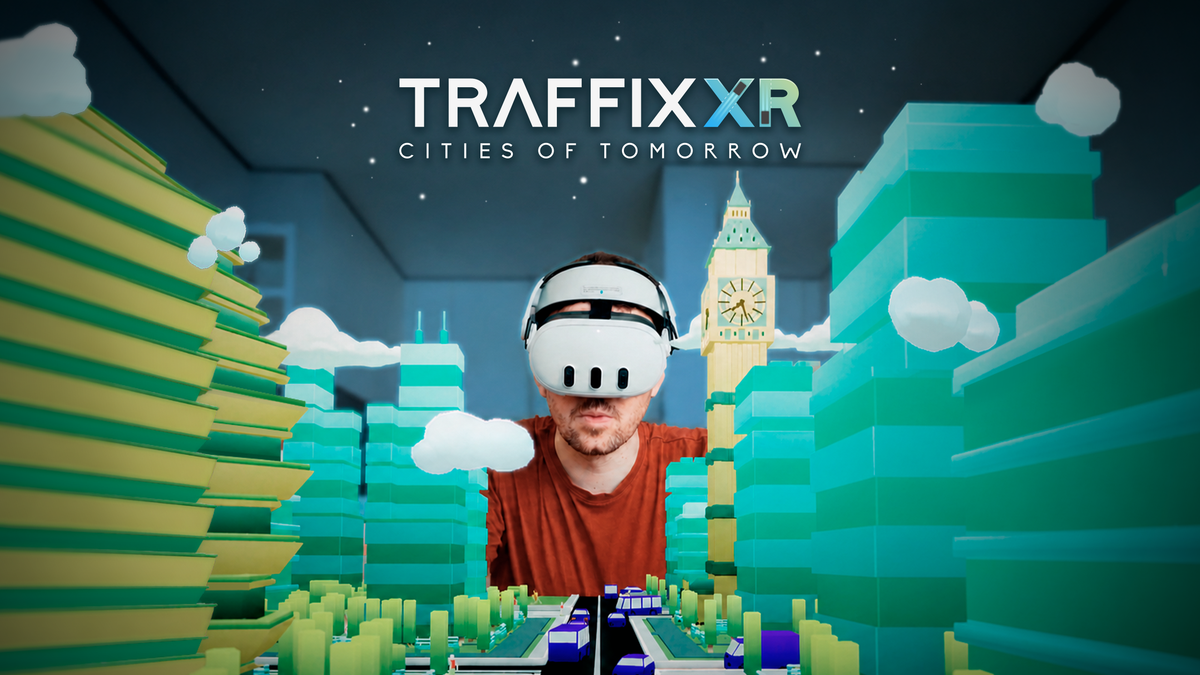
SAN FRANCISCO — The landscape of spatial computing and puzzle gaming is about to expand significantly with the upcoming release of Traffix XR: Cities of Tomorrow. Developed by Infinity Games, this innovative mini motorway management title is scheduled to launch on October 15, bringing its unique brand of relaxed, logistical strategy to the Meta Quest 3, Quest 3S, and Quest Pro headsets.
Designed from the ground up to leverage the unique capabilities of modern extended reality (XR) hardware, the game bridges the gap between cozy tabletop puzzle experiences and expansive urban planning simulations. By offering players the choice between fully immersive Virtual Reality (VR) and interactive Mixed Reality (MR)—where virtual asphalt can be laid directly across a living room coffee table—Traffix XR aims to capture a wide audience ranging from casual puzzle enthusiasts to hardcore simulation fans.
As the release date approaches, anticipation is building within the VR community. Early previews, trailer analyses, and comparisons to legendary flat-screen predecessors suggest that Infinity Games may have a sleeper hit on their hands. Below is a comprehensive breakdown of what to expect from Traffix XR: Cities of Tomorrow, examining its core mechanics, developmental background, the genre lineage it follows, and what its success could mean for the future of spatial puzzle games.
Main Facts: What is Traffix XR: Cities of Tomorrow?
At its core, Traffix XR: Cities of Tomorrow is a spatial traffic management and urban development puzzle game. Players assume the role of an omnipotent master planner tasked with organizing chaotic infrastructure into a harmonious, flowing network.
The primary mechanics involve planning, placing, erasing, and redirecting road tiles to connect major urban landmarks across a diverse array of distinct environments. As these connections are established and vehicles begin to navigate the pathways, the surrounding city reacts dynamically. Homes, towering skyscrapers, expansive bridges, and bustling subways emerge procedurally around the player’s road network, transforming a sparse landscape into a thriving, breathing metropolis.
Key Features and Mechanics:
- Dual-Mode Play: Players can choose between Mixed Reality, allowing them to anchor their city-building projects to physical surfaces in their real-world environment, or full Virtual Reality for complete immersion.
- Interactive Hand Tracking: Going beyond standard controller inputs, the game incorporates natural hand motions. Players must actively maintain their infrastructure by sweeping away snow, clearing road debris, and blowing away sand using intuitive gestures.
- Procedural Growth: The game environment does not remain static. Every road tile laid influences how the city expands, ensuring that no two traffic networks grow in precisely the same way.
- Platform Compatibility: Set for release on October 15, the title is optimized specifically for Meta Quest 3, Meta Quest 3S, and Meta Quest Pro.
Chronology: The Journey to Meta Quest
The path to Traffix XR’s October launch represents a natural evolution for Infinity Games, a studio recognized for creating clean, minimalist puzzle experiences across various platforms. While the studio has previously explored casual puzzle titles, transitioning into the spatial computing market with a fully realized XR traffic management game marks a major milestone.
- Conception and Early Development: Infinity Games began conceptualizing a traffic-focused spatial puzzle that could harness the power of passthrough technology on modern headsets. Recognizing that spatial computing allows players to interact with digital objects as if they exist in the physical room, the team designed the gameplay loop to feel tactile and immediate.
- Announcement and Trailer Drop: In early October, Infinity Games released the official gameplay trailer, showcasing the title’s clean aesthetic, procedural city growth, and mixed-reality capabilities. The trailer highlighted how roads could be effortlessly mapped across various environments, catching the attention of VR media outlets like UploadVR.
- Pre-Release Access and Media Evaluation: Following the trailer release, preview builds were distributed to select reviewers and gaming publications to test the game’s performance, comfort levels, and gameplay depth on the Meta Quest 3 ecosystem.
- Official Launch Date (October 15): Traffix XR: Cities of Tomorrow will officially launch on the Meta Horizon Store, bringing the title to users worldwide. Comprehensive reviews and community impressions are expected to drop concurrently with the release.
Supporting Data and Genre Lineage: Tracing the Roots of Traffic Puzzles
To fully understand the potential impact of Traffix XR, it is necessary to examine the lineage of minimalist traffic and transit management games that have captured players’ imaginations on traditional flat screens over the past decade.
The Influence of Mini Motorways and Mini Metro
For millions of gamers, titles like Mini Motorways (developed by Dinosaur Polo Club) and its predecessor Mini Metro have served as masterclasses in minimalist design, strategic routing, and addictive gameplay loops. In these flat-screen games, players draw roads to connect houses to destinations, managing ever-increasing volumes of traffic as cities grow exponentially.
Traffix XR: Cities of Tomorrow clearly draws inspiration from this pedigree. However, translating the top-down, minimalist aesthetic of games like Mini Motorways into a 3D spatial computing environment introduces entirely new dimensions of interaction.
The Evolution of Spatial Strategy
While flat-screen games require mouse clicks or controller joysticks to manipulate paths, Traffix XR relies on the precision of VR controllers and spatial hand tracking. Data from spatial computing usage indicates that tactile, physical interaction significantly enhances user retention and immersion in puzzle games. By forcing players to physically gesture to clear snow or sweep away sand—rather than simply pressing a button—Infinity Games is leaning into the unique ergonomics of the Meta Quest ecosystem.
Furthermore, the game’s hardware requirements are tailored to maximize the visual fidelity and passthrough clarity of the Meta Quest 3 and Quest 3S. With the mainstream adoption of these more affordable mixed-reality headsets, developers now have a sufficiently large installed base of users who can experience room-scale MR puzzles without performance bottlenecks.
Official Responses and Developer Vision
Infinity Games has emphasized that the design philosophy behind Traffix XR centers on accessibility and relaxation, distinguishing it from high-stress city builders like Cities: Skylines or SimCity.
In official promotional statements, the development team describes the experience as:
"A relaxed mixed-reality traffic puzzle where you […] connect road tiles to landmarks, make the traffic flow, and watch the city grow procedurally around your network."
Rather than overwhelming the player with complex tax policies, zoning laws, or utility management, Traffix XR distills urban planning down to its most hypnotic and satisfying element: the flow of movement. The emphasis is on problem-solving, spatial awareness, and the aesthetic pleasure of watching an orderly system function smoothly.
Early reactions from industry analysts and previewers have been largely positive, noting that the game successfully fills a niche that has been largely vacant on standalone VR platforms. While intense action games and cinematic shooters dominate much of the Quest library, there remains a passionate demand for "cozy" strategy and puzzle titles that can be played at a relaxed pace in mixed reality.
Implications: What Traffix XR Means for the Future of Quest 3 Mixed Reality
The launch of Traffix XR: Cities of Tomorrow carries several important implications for the broader XR ecosystem, particularly regarding the maturation of mixed reality as a viable medium for strategy and puzzle games.
1. Mainstreaming Mixed Reality for Casual Strategy
For a long time, mixed reality was viewed primarily as a novelty or utilized strictly for productivity apps and pass-through fitness games. However, titles like Traffix XR demonstrate that MR is uniquely suited for tabletop-style strategy games. Being able to project a growing, procedural city onto a physical dining table or living room floor creates a profound sense of presence that traditional monitors cannot replicate. As more developers embrace mixed reality for tabletop simulations, the line between board games, puzzles, and digital strategy will continue to blur.
2. Expanding the Demographic Reach of Standalone VR
The Quest 3 and Quest 3S have successfully lowered the barrier to entry for spatial computing, attracting users who may not identify as traditional gamers. Traffix XR caters directly to this demographic. Its clean, approachable art style, lack of aggressive combat mechanics, and meditative gameplay loop make it an ideal showcase title to demonstrate the value of VR/MR technology to non-gamers, family members, and casual puzzle fans.
3. Setting a Benchmark for Tactile Interaction in VR
The inclusion of natural hand motions—such as sweeping snow and clearing debris—highlights an important trend in modern XR design: moving beyond mere controller replication to embrace natural, gestural interaction. If Traffix XR successfully executes these mechanics without inducing fatigue or frustration, it could serve as a design blueprint for future spatial management simulators.
Conclusion
As October 15 approaches, expectations are high for Traffix XR: Cities of Tomorrow. By combining the addictive logistical puzzle mechanics popularized by flat-screen classics with the spatial immersion of Meta Quest 3 mixed reality, Infinity Games has crafted a title that stands out in the crowded VR marketplace.
Whether players choose to build their dream cities floating in virtual space or right atop their real-world furniture, the promise of a relaxed, procedurally generated urban planning experience is hard to resist. With pre-release review units already in the hands of major outlets like UploadVR, the gaming community will soon know whether Traffix XR delivers on its ambitious premise. One thing is certain: the future of spatial puzzle gaming is about to get a lot busier.

