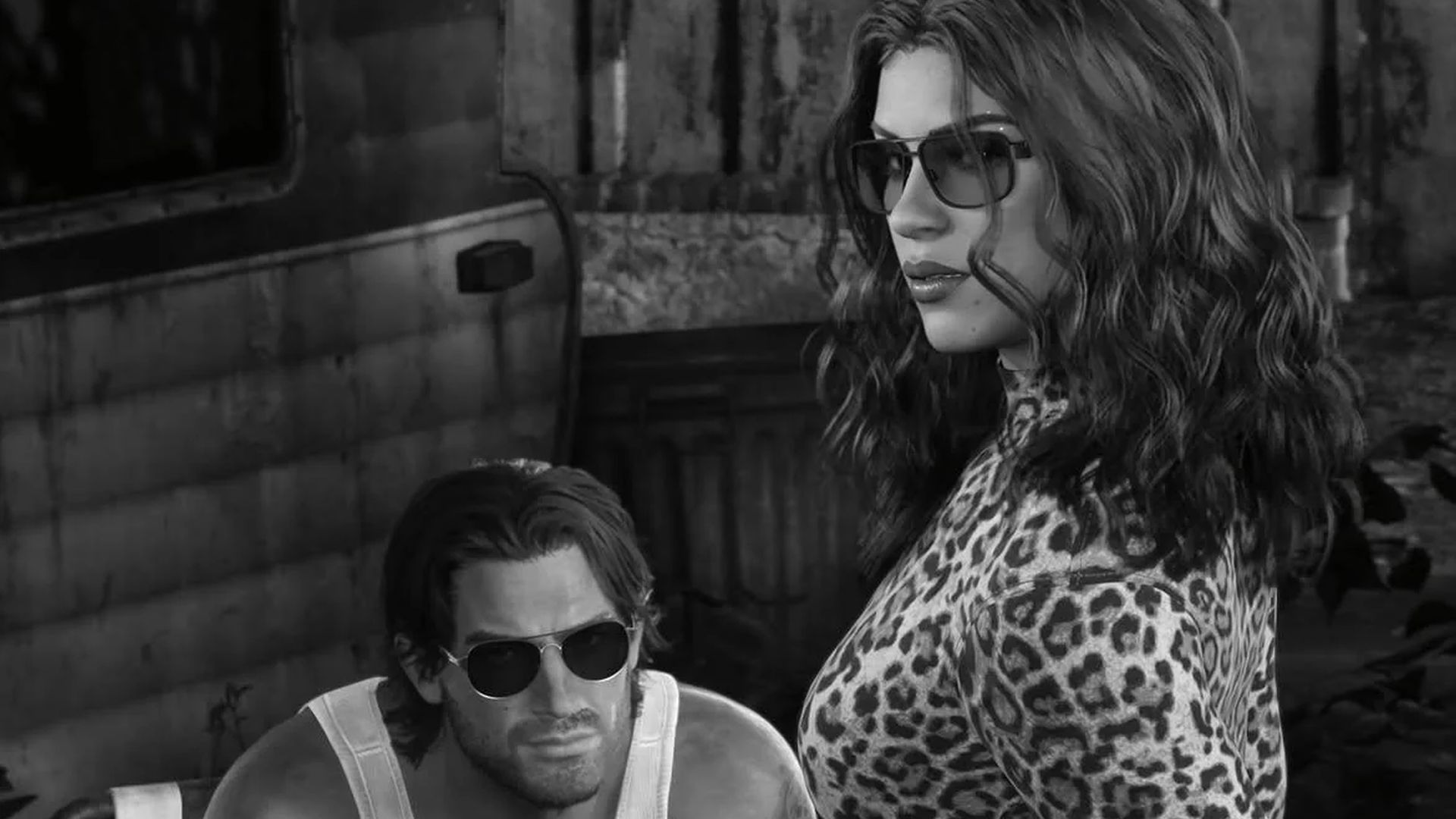
As the anticipation surrounding Grand Theft Auto 6 reaches a fever pitch, Rockstar Games continues its unconventional promotional blitz. In a surprising move, the studio partnered with the biannual fashion publication Love Magazine for an exclusive cover feature, showcasing the game’s main protagonists, Lucia and Jason, through a high-fashion, moody lens.
While the choice of a high-end fashion magazine might raise eyebrows—evoking echoes of past marketing campaigns that baffled international audiences—the feature dives deep into the creative philosophies shaping the most anticipated video game of the decade. According to key developers at Rockstar, GTA 6 aims to deliver a living, breathing, and aggressively satirical caricature of modern society, built on a foundation of hyper-detailed open-world design and complex, flawed character writing.
Main Facts: What We Learned About GTA 6’s World and Characters
Hyper-Satirical Tone: Rockstar is leaning heavily into over-the-top, grotesque parodies of contemporary culture, arguing that reality has become too bizarre to mirror straightforwardly.
Dynamic Open-World Audio: The game features overlapping NPC conversations and environmental chatter designed to wash over players as they sprint through crowded urban streets.
Robovoiced Political Spam: Players can expect intrusive real-world details baked into the game’s satire, including automated robocalls for political campaigns alongside familiar talk radio and in-game advertisements.
Dual Protagonists: Lucia makes history as the franchise’s first fully voiced female protagonist, starring alongside Jason in a relationship built on mutual vulnerability and growth.
Gameplay vs. Realism: Rockstar balances deep environmental immersion with mechanical convenience to ensure the player experience remains frictionless.
Chronology: The Evolution of Rockstar’s Satirical Marketing and Development
From Past Parodies to Present Realities
When Grand Theft Auto V launched over a decade ago, it skewered the rise of invasive social media and medical skepticism. However, in the years since, the real world has accelerated into a realm so surreal that even the voice actors behind classic GTA characters have questioned whether traditional satire can still make the same splash.
Rather than backing away from the challenge, Rockstar doubled down. Recognizing that reality now often outpaces fiction, the development team conceptualized GTA 6 not merely as a reflection of today’s culture, but as a grotesque, larger-than-life amplification of it.
The recent Love Magazine cover feature marks a pivot in the game’s rollout, transitioning from explosive gameplay trailers to deep-dive artistic profiles that explore the psychological and narrative underpinnings of the title.
Supporting Data: Crafting a Living Metropolis
Rockstar’s open-world design has always set the industry standard, but GTA 6 introduces new layers of ambient complexity. James Horton, writing director for open world, emphasizes the sheer density of the environment.
"It needs to wash over you when you’re sprinting down the busiest street in the city, hearing snatches of a hundred different conversations as you go,"Horton explained."If you shift your focus onto something new, it’s going to fill the frame, and it’s going to push back."
This audio-visual density is designed to create a sensory overload that mirrors the frantic pace of modern metropolitan life. Players won’t just walk past static non-player characters (NPCs); they will be immersed in overlapping dialogue trees, ambient city noise, and intrusive digital annoyances—such as robovoiced political campaign calls interrupting day-to-day criminal enterprises.
However, immersion does not come at the expense of playability. Rob Nelson, head of development and co-studio head at Rockstar North, addressed the eternal tug-of-war between realism and player agency:
"Sometimes you need things to feel realistic to help with immersion, and conversely, sometimes you need to forego realism in favour of what’s convenient for the player."
Official Responses: Inside the Minds of Rockstar’s Writers and Executives
The Love Magazine feature provided a rare platform for Rockstar’s senior leadership and writing staff to articulate the thematic goals of Grand Theft Auto 6.
Rupert Humphries, senior vice president of narrative, did not mince words regarding the studio’s satirical intent:
"If you are going to put all this effort into creating a version of today’s world, it has to be more over the top, more insane, more in your face. Otherwise, you could just go outside and live in the real world."
Humphries added that the guiding principle for the narrative team is to avoid holding up a mere mirror to society, opting instead to make everything "larger than life, and more grotesque."
Shaping Lucia and Jason
Beyond the satire and the chaos, the emotional core of GTA 6 rests on the shoulders of its two protagonists, Lucia and Jason. Game writer Elizabeth Gauvey-Kern shed light on the collaborative, human element injected into the criminal duo:
"We wanted both protagonists to be vulnerable, tough, flawed, right sometimes, wrong sometimes, able to learn from each other. That’s what we felt made them authentic, and a great team."
Echoing this sentiment, fellow game writer Alexa D’Agostino emphasized the pursuit of genuine character arcs over pristine archetypes:
"When you are focusing on writing a fully realised person with their own wants, you’re going to get something perfectly imperfect—with clichés, but also undeniably real."
Implications: What This Means for the Gaming Industry
The insights revealed in the Love Magazine feature carry profound implications for Grand Theft Auto 6 and the wider AAA gaming landscape:
Raising the Bar for Open-World Narrative Integration: By weaving ambient audio, political satire, and real-world annoyances (like robocalls) directly into the fabric of exploration, Rockstar is pushing the boundaries of emergent storytelling.
Character-Driven Crime Dramas: The focus on vulnerability and mutual growth between Lucia and Jason suggests a narrative maturity that moves beyond the cynical anti-heroes of past iterations, potentially offering a richer emotional anchor for players.
Marketing Beyond the Core Demographic: By utilizing high-fashion publications like Love, Rockstar continues to position GTA not just as a video game, but as a dominant cultural artifact that transcends traditional gaming circles.
As the release window draws closer, the gaming community watches with bated breath to see if Rockstar can successfully capture the absurd zeitgeist of the 2020s. If the developers’ ambitions are realized, Grand Theft Auto 6 may very well redefine what it means to satirize modern civilization.