

By Tech & Enterprise Staff
Published: October 2023 / Updated for Industry Analysis
Main Facts
In an aggressive push to optimize infrastructure costs, maximize computational efficiency, and reduce reliance on external merchant silicon providers, artificial intelligence powerhouse OpenAI is actively deploying its custom-designed application-specific integrated circuit (ASIC), codenamed Jalapeño.
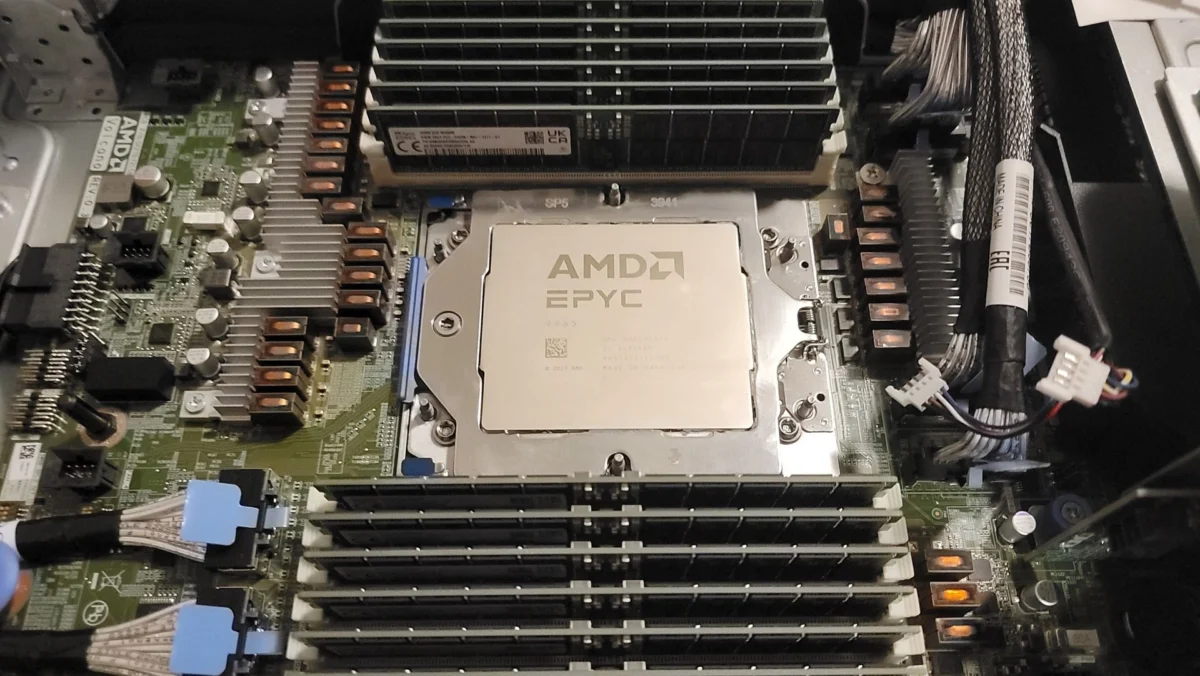
According to deep-dive industry reporting from SemiAnalysis and exclusive confirmations gathered by Tom’s Hardware, OpenAI’s rack-scale deployments pair the new Jalapeño inference accelerators with high-performance AMD EPYC "Turin" host processors. Each host node is provisioned with a massive 1.5 terabytes (TB) of system memory, creating a balanced, high-bandwidth compute architecture tailored specifically to the rigorous demands of large-scale artificial intelligence inference workloads.
The disclosure of these hardware pairings sheds light on a broader, highly calculated hardware strategy at OpenAI. Rather than relying exclusively on off-the-shelf accelerators from traditional market leaders, OpenAI is engineering custom silicon to handle the staggering inference demands of models like GPT-4 and its successors.
Crucially, OpenAI’s hardware leadership opted for a pragmatic engineering philosophy. In interviews with Tom’s Hardware, Richard Ho, Vice President and Head of Hardware at OpenAI, revealed that the decision to couple Jalapeño with AMD’s EPYC Turin architecture was driven by a desire to "de-risk" the deployment timeline, prioritize time-to-market, and hit aggressive performance-per-dollar targets without getting bogged down by the ecosystem maturity timelines of alternative hardware options—notably NVIDIA’s unproven or less mature standalone CPU offerings, such as the Vera architecture.
Chronology of OpenAI’s Hardware Evolution
To fully understand the significance of the Jalapeño deployment, one must trace the rapid evolution of OpenAI’s infrastructure strategy from a pure cloud-customer model to vertically integrated hardware engineering.
Phase 1: The Reliance on Merchant Silicon (Pre-2022)
In its formative years and through the breakthrough launches of early GPT models, OpenAI operated almost exclusively as a consumer of cloud computing resources, heavily dependent on Microsoft’s Azure infrastructure. This infrastructure was largely anchored by NVIDIA’s industry-standard data center GPUs (such as the V100, A100, and later H100). While these chips provided the raw horsepower necessary to train unprecedentedly large foundational models, the skyrocketing cost of inference and supply chain bottlenecks made it clear that long-term reliance on a single hardware ecosystem was a strategic vulnerability.
Phase 2: The Shift Toward Custom Silicon and Internal R&D (2022–2023)
As generative AI went mainstream, the global shortage of advanced AI chips threatened to stall OpenAI’s roadmap. The organization began quietly recruiting top-tier silicon architects, compiler engineers, and hardware validation experts. Led by industry veterans, OpenAI initiated stealth development projects focused on custom ASICs tailored explicitly for transformer-based inference workloads. The goal was simple: design silicon that could bypass the general-purpose overhead of traditional GPUs, delivering superior energy efficiency and lower cost-per-token metrics.
Phase 3: AI-Assisted Design and the Birth of ‘Jalapeño’ (2023–2024)
OpenAI’s hardware team embraced cutting-edge electronic design automation (EDA) methodologies, leveraging AI-assisted design tools to accelerate the development cycle of the Jalapeño ASIC. By utilizing machine learning algorithms to optimize floor-planning, signal integrity, and thermal dissipation, the engineering team compressed typical silicon development timelines.
Phase 4: Rack-Scale Deployment and AMD Integration (Present)
By late 2024 and moving into 2025, the Jalapeño project transitioned from simulation and tape-out to physical production and data center deployment. Eschewing proprietary CPU ecosystems that lacked field maturity, OpenAI partnered with AMD to anchor the Jalapeño racks with EPYC Turin host processors, resulting in the high-density, memory-rich architecture documented by SemiAnalysis.
Supporting Data and Technical Architecture
The architecture of OpenAI’s Jalapeño deployment represents a masterclass in modern heterogeneous computing. While traditional setups often lean toward homogeneous GPU clusters, the Jalapeño rack-scale deployment is engineered around a symbiotic relationship between specialized acceleration and high-throughput host processing.
The AMD EPYC "Turin" Foundation
At the heart of each Jalapeño server node sits an AMD EPYC Turin processor. Based on advanced Zen 5 core architecture, the Turin platform brings exceptional compute density, high memory bandwidth, and robust PCIe connectivity to the table.
- Memory Footprint: Each host node is equipped with 1.5TB of system memory. This massive memory allocation is vital for caching large model weights, managing expansive context windows, and feeding data streams to the Jalapeño ASICs without introducing storage or system-level bottlenecks.
- Socket Maturity: According to OpenAI’s Richard Ho, the Turin platform was selected because it "did what we needed to do" and benefited from deep ecosystem familiarity among OpenAI’s engineering partners.
The Jalapeño ASIC: Purpose-Built for Inference
Unlike training chips, which require massive floating-point precision and complex interconnects to handle backpropagation across thousands of nodes, inference chips like Jalapeño are optimized for forward-pass efficiency, low latency, and high throughput.
- Workload Specialization: Jalapeño is architected specifically to execute transformer operations—such as multi-head attention, layer normalization, and feed-forward networks—with minimal power consumption.
- Cost and Efficiency Metrics: By stripping away unneeded silicon circuitry required for general-purpose computing or heavy-duty training, OpenAI can achieve a significantly lower die cost per square millimeter, translating directly into cheaper inference services for end-users and enterprise clients.
Official Responses and Engineering Philosophy
The decision-making process behind the Jalapeño and Turin pairing offers rare insight into how top-tier AI labs navigate hardware design. In his interview with Tom’s Hardware, Richard Ho elaborated on the pragmatic constraints that shaped the project.
When asked about why OpenAI chose AMD’s Turin over NVIDIA’s emerging Vera CPU ecosystem, Ho was candid about the trade-offs between innovation and maturity:
"The way we approached that design was really in terms of de-risking and being able to do that design fast. Vera, as a standalone, is a little bit behind on that maturity level. The Turin device is strong. It did what we needed to do, and partly our partners had some experience with it."
Ho emphasized that the primary driver for the Jalapeño program was balancing ambition with operational reality:
"For the Jalapeño program, we were trying to make very pragmatic decisions. We wanted to be aggressive on the goals of the performance and the cost, but we didn’t want to take unnecessary risks. That felt like a good design decision that would fit within the parameters of how we make these design decisions."
This philosophy underscores a mature engineering culture. Rather than chasing theoretical perfection with unproven, bleeding-edge platform components, OpenAI’s hardware division prioritized field-proven reliability (AMD EPYC) combined with bespoke, high-performance acceleration (Jalapeño).
Broader Industry Implications
The deployment of the Jalapeño ASIC alongside AMD EPYC Turin hosts carries profound implications for the semiconductor industry, cloud providers, and the competitive landscape of artificial intelligence.
1. Breaking the NVIDIA Monopoly on AI Infrastructure
For years, NVIDIA has held an effective monopoly over high-end AI hardware through its CUDA software ecosystem and dominant GPU lineups (such as the H100 and Blackwell architectures). While NVIDIA remains the undisputed king of large-scale model training, OpenAI’s successful deployment of custom inference ASICs proves that hyperscalers can carve out independent hardware pathways for inference. As inference workloads begin to outpace training workloads in terms of global compute consumption, merchant silicon providers face a growing threat from custom internal ASICs built by tech giants like OpenAI, Google (TPUs), Meta (MTIA), and Amazon (Trainium/Inferentia).
2. Validation for AMD’s Data Center Strategy
AMD’s EPYC processors have steadily captured server market share from Intel over the past several generations. However, securing a design win of this magnitude with OpenAI—the most visible and influential AI lab in the world—serves as monumental validation for AMD’s data center roadmap. It demonstrates that AMD’s server platforms possess the reliability, memory bandwidth, and architectural maturity required to anchor the next generation of mission-critical AI infrastructure.
3. The Economics of Scale: Inference Cost Reduction
The ultimate bottleneck for generative AI adoption is not algorithmic capability; it is the cost of compute. Serving hundreds of millions of users queries daily requires staggering amounts of electricity and hardware capital expenditure. By developing custom ASICs like Jalapeño, OpenAI is taking direct control of its unit economics. Lowering the cost of inference means OpenAI can offer cheaper API access, expand free tiers, and improve profit margins—all while insulating itself from external supply chain shocks.
4. The Rise of AI-Assisted Hardware Design
Ho’s references to the rapid development cycle of Jalapeño highlight a transformative trend within semiconductor engineering: the use of artificial intelligence to design artificial intelligence chips. As EDA tools incorporate machine learning to automate complex routing, power optimization, and verification tasks, the time required to tape out custom silicon is shrinking dramatically. Jalapeño may well be a harbinger of an era where software-first companies can spin up custom silicon solutions with a fraction of the traditional headcount and budget previously required.
Conclusion
OpenAI’s deployment of the Jalapeño ASIC paired with AMD EPYC Turin hosts marks a watershed moment in the maturation of the generative AI industry. By blending pragmatic hardware choices with aggressive, custom-tailored silicon engineering, OpenAI is rewriting the playbook for AI infrastructure.
As the battle for artificial intelligence supremacy intensifies, the companies that control their hardware destiny—optimizing every watt, byte, and dollar from the silicon up—will hold the ultimate competitive advantage. For OpenAI, Jalapeño is not just an internal chip project; it is the foundation of a scalable, cost-effective future.

