

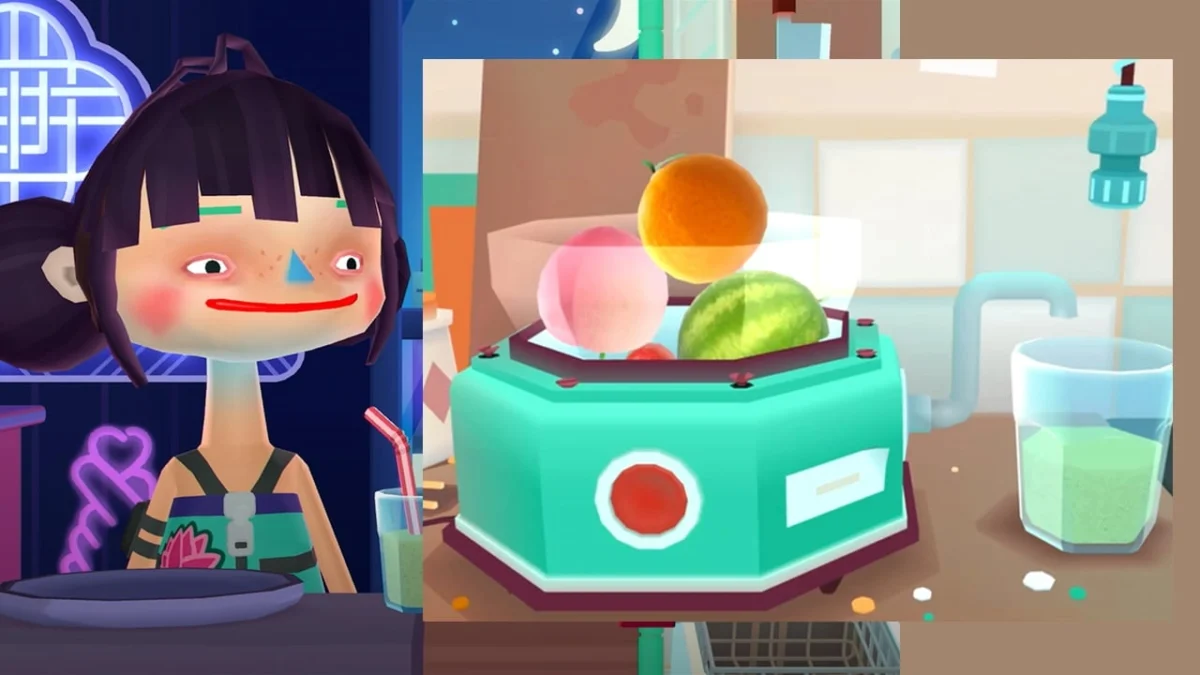
In the ever-evolving landscape of mobile gaming, few titles manage to bridge the generational divide as effectively as those developed by Toca Boca. Known for their "digital toy" philosophy, the studio has consistently prioritized open-ended play over rigid objectives. Their latest collaboration with Netflix, Toca Boca Jr Kitchen, represents a masterclass in sandbox design. While ostensibly marketed toward younger audiences, the game has quietly become a playground for adults seeking a low-stakes, high-hilarity creative outlet. By turning the kitchen into a laboratory of the absurd, Netflix and Toca Boca have created an experience that is as much about the process of failure as it is about the success of a culinary masterpiece.
Main Facts: A Sandbox Without Boundaries
At its core, Toca Boca Jr Kitchen is a simulation game that eschews the traditional "level-up" or "score-based" mechanics common in mobile gaming. Instead, it offers a "cooking sandbox" environment where the primary goal is experimentation. Players are presented with a fully equipped kitchen, a refrigerator stocked with 24 distinct ingredients—ranging from the mundane (broccoli, oranges) to the eccentric (whole octopuses)—and a trio of hungry, expressive characters waiting to judge the results.
The game mechanics are deceptively simple. Players can slice, sauté, fry, bake, or juice any ingredient at their disposal. The freedom is absolute: there are no "correct" recipes, no time limits, and no game-over screens. If a player wishes to create a deep-fried watermelon slice or a blended shrimp-and-broccoli smoothie, the game not only permits it but encourages the absurdity. The central hook lies in the characters’ reactions; each of the three avatars possesses a unique palate, providing dynamic, often hilarious, feedback that makes every dish a narrative event.
Chronology: The Evolution of Digital Play
Toca Boca’s history is rooted in the transition from physical playrooms to tablets. Founded in 2011, the studio was an early pioneer in the "digital toy" genre, focusing on apps that didn’t feel like games in the traditional sense. They removed the "win/lose" binary that dominated the App Store, opting instead to provide children with tools to explore their own imaginations.
The release of Toca Boca Jr Kitchen on the Netflix Games platform marks a significant milestone in the evolution of this philosophy. By integrating with Netflix’s subscription service, the game has gained a wider reach, stripping away the friction of microtransactions and intrusive advertisements. This partnership reflects a broader industry trend: the "premium" mobile experience. By housing titles like Toca Boca Jr Kitchen behind a subscription paywall, Netflix has effectively insulated its younger users from the predatory monetization tactics that currently plague the mobile gaming market, ensuring that the "toy" remains a toy, not a storefront.
Supporting Data: Understanding the "Kitchen" Mechanics
The depth of the experience is found in the interplay between the five primary kitchen tools: the oven, the juicer, the frying pan, the knife, and the blender. These tools are the engines of the game’s emergent gameplay.
- The Ingredients: The 24-item roster is carefully curated to allow for maximum visual and functional contrast. The inclusion of a "vegetarian mode" is a thoughtful addition, reflecting the studio’s commitment to inclusivity and accessibility, allowing users to tailor the experience to their dietary preferences or ethical standards.
- The Characters: Each character acts as a "feedback loop." Because they possess distinct likes and dislikes, players learn to "read" their audience. This introduces a subtle, non-intrusive element of cause-and-effect learning, which is a hallmark of educational game design.
- Technical Performance: The game’s art style—bright, tactile, and slightly surreal—complements its sandbox nature. The animations of the characters chewing, grimacing, or cheering are fluid and high-fidelity, ensuring that even the most "questionable" food choices result in high-quality visual rewards.
Official Responses and Creative Philosophy
In various promotional materials, Toca Boca has emphasized that their games are designed to be "co-play" experiences. The intent is not necessarily for a child to play in isolation, but for parents and siblings to gather around the screen to watch the chaos unfold.
"We don’t tell the player what to do," a representative from the studio noted during the launch phase. "We provide the environment and the tools, and the player provides the story." This philosophy is evident in the design of the "ew" reactions. By making the characters’ disgust funny rather than punitive, the developers have removed the fear of failure. In Toca Boca Jr Kitchen, a burnt, unappetizing mess isn’t a failure—it’s a punchline. This shift in perspective is crucial for younger players, as it builds resilience and encourages iterative thinking.
Implications for the Mobile Gaming Market
The success of Toca Boca Jr Kitchen on the Netflix platform carries several implications for the future of mobile gaming:
1. The Death of the "Ad-Supported" Model for Kids
Parents are increasingly wary of "free-to-play" games that utilize manipulative tactics to keep children engaged. Netflix’s entry into the space serves as a market disruptor. By offering an ad-free, high-quality experience, they are setting a new standard for what parents should expect from mobile software.
2. The Return of Sandbox Gaming
For years, mobile gaming was dominated by "idle" games and "gacha" mechanics. Toca Boca Jr Kitchen represents a return to the roots of gaming: play for the sake of play. It signals that there is a significant, underserved market for high-quality, creative-driven software that doesn’t demand the player’s wallet, but rather their imagination.
3. Cross-Generational Appeal
The "adults can enjoy it too" factor is not merely marketing fluff. There is a genuine therapeutic quality to the game’s lack of stakes. In an era of high-stress gaming, where every title seems to demand competitive excellence or grinding for resources, a game where one can simply boil a salad or juice a pineapple offers a form of digital escapism that is accessible to all ages.
The Verdict: Why It Works
Why does a game about feeding virtual characters keep both children and adults coming back? It is the intersection of curiosity and consequence. We are naturally inquisitive creatures; we want to know what happens if we mix lemon with raw fish, or if we deep-fry a strawberry. The game provides a safe, vibrant, and responsive environment to satisfy that curiosity.
Furthermore, the game’s simplicity is its greatest strength. By removing the clutter of complex menus, skill trees, or competitive leaderboards, the game forces the player to engage with the environment. It is a digital playhouse, and like any good playhouse, it is only as interesting as the imagination of the person inside it.
Whether you are a parent looking for an ad-free environment for your child, or an adult looking for a bizarre, low-pressure way to kill ten minutes, Toca Boca Jr Kitchen delivers. It is a reminder that gaming doesn’t always have to be about winning; sometimes, it’s just about seeing what happens when you throw an octopus into a blender.
For those seeking further entertainment, the Netflix Games library continues to expand with titles that prioritize creativity over competition. While you wait for your next culinary experiment, you may want to explore other ad-free experiences available to members, such as the relaxing puzzles of ‘Solitaire World Tour: Klondike’, which offers a similarly low-stress, high-satisfaction gameplay loop.

