

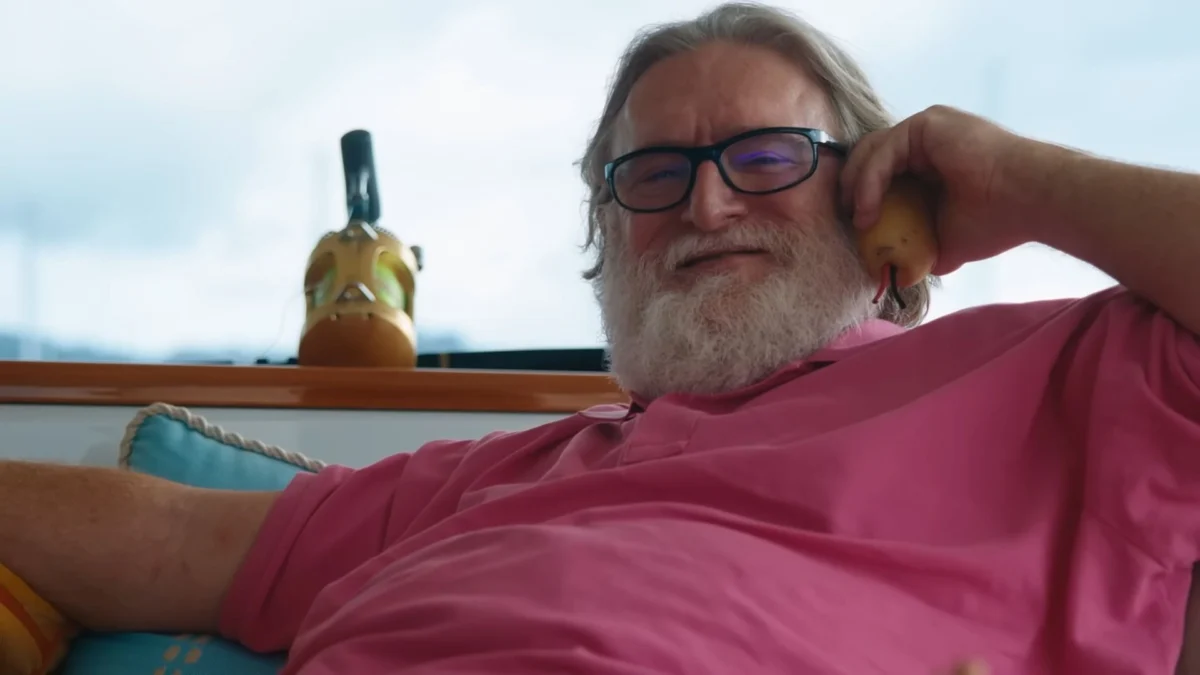
Gabe Newell, the co-founder and president of Valve, is a titan of the gaming industry. As the architect behind Steam—the world’s most influential digital distribution platform—and the visionary leader who brought us the Half-Life and Portal franchises, his professional footprint is undeniable. However, those who have worked alongside him often paint a picture of a man driven by a relentless, almost kinetic curiosity that extends far beyond the confines of source code and hardware manufacturing.
According to recent insights from Minh "Gooseman" Le, the co-creator of the legendary Counter-Strike mod, Newell’s personal life is defined by deep-seated "side quests"—periods of intense, hyper-focused obsession with niche interests. Among these, perhaps the most unexpected is his tenure as a connoisseur and creator of bladed weaponry.
The Blades of Bellevue: A Secret History of Craftsmanship
While the gaming world knows Newell for his contributions to digital immersion, his former colleagues recall a man who approached physical craftsmanship with the same intensity he applied to building Valve. In a recent conversation with Indie Game Joe, Minh Le shed light on the eclectic nature of Newell’s private life during the early days of Valve’s success.
"I remember one time he got into knives," Le recalled. "He started collecting knives and axes. He had this whole room full of knives and blades and swords… He would just have this room and order all these big medieval swords and axes, and he would just put them in the room. He became this collector of bladed weapons."
From Collector to Smithy
The progression from collector to practitioner is, in many ways, the "Gabe Newell archetype." He rarely stops at surface-level engagement. According to Le, Newell didn’t just amass a collection of steel; he sought to master the craft itself.
"After that, he got into knife making," Le continued. "He would start to make these knives. He would go and take lessons on how to make knives, and he got really into it."
This pattern of behavior suggests a mind that requires constant stimulation. Newell’s transition from a tech billionaire to an amateur bladesmith highlights a psychological trait often found in high-level innovators: the need to understand the fundamental "how" of the physical world. Whether it was the mechanics of a blade’s edge or the complexities of global digital retail, Newell’s approach remained consistent—deep, immersive, and fundamentally hands-on.
A Chronology of Curiosity: The Evolution of an Icon
Gabe Newell’s professional and personal trajectory has been anything but linear. To understand the man, one must look at the phases of his career and how they mirror his personal "fixations."
- The Microsoft Era (1983–1996): Newell’s formative years were spent at Microsoft, where he was a key developer on the first three releases of Windows. It was here that he reportedly learned the value of scalable systems, a lesson that would eventually dictate the design of Steam.
- The Foundation of Valve (1996–2003): After leaving Microsoft, Newell co-founded Valve. This period was marked by the birth of Half-Life, which revolutionized the first-person shooter genre. This era was defined by a singular focus on narrative and engine innovation.
- The "Blade and Boat" Years (2004–2012): As Steam began to dominate the market, Newell began to step back from the day-to-day grind of game development. This period saw the emergence of his more public-facing, idiosyncratic hobbies, including a well-documented enthusiasm for luxury yachting and, as confirmed by Le, the intense study of metallurgy and sword-smithing.
- The Modern Era (2013–Present): Newell has shifted into a role of visionary leadership. He is less involved in individual project management and more focused on long-term hardware initiatives like the Steam Deck and the Index VR system. His recent public appearances are characterized by a detached, "elder statesman" vibe, punctuated by occasional courtroom battles over Steam’s market dominance.
The Psychology of the "Side Quest"
Why does a man of such massive professional responsibility dedicate thousands of hours to learning how to forge a blade or obsessing over Dota 2 statistics? Experts in cognitive psychology might argue that for someone like Newell, whose primary job involves abstract, high-stakes digital decision-making, engaging in manual, physical tasks—or "low-stakes" competitive gaming—serves as a necessary mental reset.
Le describes this trait as a core component of Newell’s personality: "He would find these little interesting things and get super into it. He’d get super drawn into these. I guess he just had a lot of time on his hands, and he was very curious. He wanted to explore things, he was a learner, and he never stopped learning."
This intellectual curiosity is a double-edged sword. While it keeps the leader of a multi-billion-dollar company sharp and engaged, it also explains why he eventually stepped back from direct game design.
Why Newell Stepped Away from Game Development
The narrative surrounding Newell’s withdrawal from the creative side of Valve is often misunderstood. Some speculated that his hobbies (yachting, weaponry, gaming) took up too much of his time. However, recent reports from former developers tell a more nuanced story.
During the production of Portal 2, Newell reportedly realized that his presence in the room was stifling creativity. Because of his stature and success, subordinates would reflexively agree with his suggestions, regardless of whether they were the best ideas for the game. He "stepped back" from active development precisely because he recognized that his authority was an obstacle to the collaborative friction necessary for great game design.
In a sense, his shift toward personal "side quests" was a conscious effort to preserve the integrity of Valve’s creative culture. By focusing on his own interests, he allowed his teams to innovate without the looming shadow of his direct approval.

Implications for Valve’s Future
The "Renaissance Man" approach to leadership has defined Valve’s unique corporate structure. Valve is known for its flat hierarchy and lack of traditional management, a philosophy that mirrors Newell’s own life—he prefers to be a contributor rather than a dictator.
The Impact of the "Learner" Mindset
Newell’s penchant for learning has directly influenced Valve’s hardware strategy. The development of the Steam Deck, for instance, was not just a business move; it was a technical challenge that required deep, granular knowledge of hardware architecture. The company’s success in moving into handheld gaming hardware is a testament to the "Gabe Newell method": identify a niche, dive into the mechanics, master the craft, and apply it at scale.
Navigating Controversy
Of course, this intense, singular focus can sometimes lead to friction. Reports of heated debates—such as those regarding the regulation of adult content on Steam—show a leader who is not afraid to challenge his own legal counsel with blunt, direct questions like, "What the f*** do I pay you for if that’s your opinion?"
This reflects a leader who values intellectual honesty and directness over standard corporate diplomacy. While this approach can be polarizing, it has undeniably helped Valve maintain its independence in a landscape dominated by publicly traded giants.
Conclusion: The Man Behind the Legend
Gabe Newell remains one of the most enigmatic figures in tech. Whether he is arguing in court, developing a new piece of hardware, or spending a week in a workshop learning how to temper steel for a custom sword, his life remains a series of deep-dives into the unknown.
He is, by all accounts, a man who views life not as a series of goals, but as a series of subjects to be mastered. As he moves into his sixties, his legacy is not just the digital storefront that changed how we play games, but the example of a leader who refuses to stop learning. Whether it’s code or cold steel, Gabe Newell’s life reminds us that the most successful people are often those who never lose their capacity to get "super into" the next interesting thing.

