

Main Facts
The consumer technology landscape is currently experiencing a turbulent phase. Surging component costs, driven largely by a persistent global memory crisis, have pushed laptop prices upward across the board. Mainstream models that once offered high performance at a comfortable budget are becoming increasingly expensive, leaving prospective buyers searching for value in a market defined by inflation and supply chain pressures.
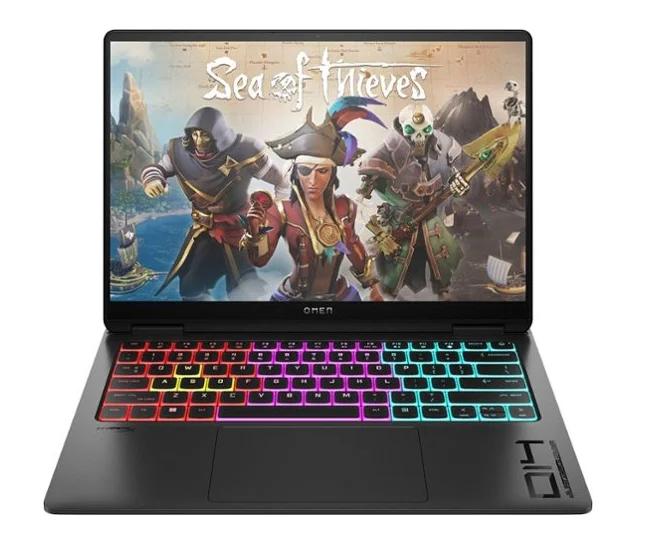
Amidst this climate of rising prices, a rare and substantial discount has emerged for power users, content creators, and gamers alike. The HP Omen Transcend 14—a 14-inch performance-oriented gaming laptop praised for its balance of portability and raw capability—is currently seeing a steep price cut. Available through Best Buy for a limited time, the high-end configuration of this machine has plummeted to $1,999.99, a dramatic reduction from its standard list price of $2,999.99.
For buyers willing to act while the promotion lasts, this represents a massive, straight-cash savings of $1,000. The discounted model is packed with top-tier specifications designed to handle demanding modern workloads, featuring an Intel Core Ultra 9 processor, a robust 32GB of high-speed system memory, a fast 1TB Solid State Drive (SSD), and a next-generation Nvidia GeForce RTX 50-series graphics card (specifically the RTX 5070). Furthermore, the device sports a vibrant 120Hz 3K OLED display, blending visual fidelity with a compact form factor that defies the traditional stereotype of bulky, heavy gaming laptops.
Chronology of the Component Crisis and the Rise of Compact Gaming
The Roots of the Global Memory Crunch
To understand why a $1,000 discount on a flagship laptop is such a noteworthy market anomaly, it is essential to trace the chronology of the ongoing hardware supply strains that have plagued the industry over recent years.
- Late 2022 to 2023: The consumer electronics sector began absorbing the macroeconomic shocks of post-pandemic supply chain recalibrations. Demand for dynamic random-access memory (DRAM) and NAND flash storage fluctuated wildly, leading major semiconductor foundries to scale back production to stabilize plummeting wholesale prices.
- Mid-to-Late 2024: As artificial intelligence infrastructure expanded at an exponential rate, massive allocations of fabrication plant capacity were redirected toward high-bandwidth memory (HBM) and enterprise-grade server components. Consumer-grade RAM and SSD modules experienced a secondary squeeze as fab lines prioritized lucrative enterprise contracts.
- 2025 and Beyond: The compounding shortage of silicon-level memory components culminated in a full-scale "memory crisis." Manufacturers of pre-built desktops, laptops, and mobile workstations faced mounting costs for basic building blocks, forcing brands to pass these expenses directly onto consumers. Consequently, retail prices for laptops equipped with 32GB of RAM and high-end storage crept steadily upward, turning mid-range rigs into luxury investments.
Evolution of the 14-Inch Form Factor
Concurrently, the engineering narrative of gaming laptops shifted dramatically. Historically, portable gaming meant carrying a heavy, loud, 15-inch or 17-inch chassis weighed down by inefficient cooling apparatuses and power bricks resembling bricks of lead.
- 2022–2023: Manufacturers began experimenting with smaller footprints, realizing that remote workers, students, and traveling professionals desired discrete graphics capabilities without the physical burden. Devices like the Asus ROG Zephyrus G14 pioneered the movement, proving that smaller chassis could house capable components.
- 2024: HP entered the high-end compact arena by introducing the Omen Transcend line, aimed at users who required color-accurate OLED panels, sleek minimalist aesthetics for professional environments, and uncompromised gaming performance in a chassis thin enough to slip easily into a standard backpack.
- 2025 (Current Generation): The integration of Intel’s Core Ultra architecture and Nvidia’s RTX 50-series mobile graphics allowed machines like the latest HP Omen Transcend 14 to maximize thermal efficiency and battery life, cementing the 14-inch category as the ultimate sweet spot for mobile productivity and entertainment.
Supporting Data: Specifications and Retail Breakdown
To truly evaluate the value proposition of a $1,000 discount, one must dissect the technical architecture offered within the discounted HP Omen Transcend 14 "Shadow Black" configuration currently housed at Best Buy (Model J3YH845T5W).
Technical Specifications Matrix
| Component | Specification Details | Practical Impact |
|---|---|---|
| Processor (CPU) | Intel Core Ultra 9 (2025 iteration) | Exceptional multi-threaded performance for heavy rendering, compilation, and multitasking, coupled with improved energy efficiency via dedicated low-power islands. |
| Graphics (GPU) | Nvidia GeForce RTX 5070 | Leverages advanced DLSS technologies, ray-tracing cores, and modern tensor pipelines to run cutting-edge AAA titles at high frame rates. |
| System Memory | 32GB High-Speed RAM | Eliminates bottlenecks during intensive multitasking, video editing, game development, and modern gaming sessions. |
| Storage | 1TB NVMe Solid State Drive (SSD) | Provides rapid boot times, instant application launches, and ample storage space for modern game titles that frequently exceed 100GB each. |
| Display | 14-inch 120Hz 3K OLED Panel | Delivers infinite contrast ratios, deep blacks, vibrant color reproduction, and buttery-smooth motion clarity for both media consumption and fast-paced gaming. |
| Chassis & Finish | Shadow Black, Slim Profile | Offers a professional, understated aesthetic that fits seamlessly into corporate boardrooms, university lecture halls, and gaming setups alike. |
Economic Analysis of the Discount
At its original manufacturer-suggested retail price (MSRP) of $2,999.99, the HP Omen Transcend 14 sat firmly in the premium enthusiast tier. At this price point, it competed directly with luxury portable workstations like the Apple MacBook Pro and top-tier ultra-portable gaming rigs.
However, at the promotional price of $1,999.99, the device undergoes a radical market repositioning. A markdown of this magnitude—$1,000 off—virtually eliminates the premium surcharge often associated with ultra-thin form factors. Buyers are essentially acquiring a machine equipped with a next-generation RTX 50-series GPU, an Intel Ultra 9 processor, and 32GB of RAM for the price typically commanded by mid-range, last-generation hardware equipped with inferior displays and half the memory capacity.
Official Responses and Industry Context
Major retailers and hardware manufacturers rarely offer four-figure price cuts unless inventory adjustments or seasonal promotional alignments dictate a aggressive push. While HP has not released a direct press statement explaining the specific reasoning behind this exact Best Buy promotion, industry analysts point to broader retail strategies currently sweeping the PC market.
Speaking anonymously, a regional retail logistics coordinator noted that promotional deep discounts on flagship hardware are frequently deployed to maintain sales velocity during periods of consumer caution. "When macro conditions make buyers hesitant to pull the trigger on $3,000 luxury items, brands must bridge the psychological gap. Dropping a top-tier machine down to the sub-$2,000 threshold recaptures an entirely different demographic of purchasers who previously budgeted for a mid-range system."
Furthermore, Nvidia and Intel’s joint rollout of their respective 2025 architectures has created a natural transition period. Retailers are eager to showcase the capabilities of mobile RTX 50-series hardware to early adopters, utilizing aggressive price points to drive volume.
Hardware reviewers and technology analysts have likewise weighed in on the machine’s overall trajectory. Long-time tech journalists emphasize that while the Omen Transcend 14 faced initial critique regarding its standard launch pricing—given the fierce competition in the 14-inch segment—a $1,000 rebate completely alters the equation. At under $2,000, many of the minor compromises inherent to ultra-thin chassis design (such as thermal management under absolute maximum load) are easily forgiven in light of the sheer component value delivered.
Implications for Consumers and the Broader PC Market
The availability of a high-end, heavily discounted compact gaming laptop carries several broad implications for buyers navigating today’s complex hardware ecosystem.
1. The Death of the "Wait for a Price Drop" Dilemma
For months, consumers hesitant about rising RAM and component costs have adopted a wait-and-see attitude. However, with memory costs projected to remain elevated due to enterprise AI demands, waiting for general market prices to drop organically may prove futile. Instead, savvy buyers are realizing that the best path to affordability lies in capitalizing on aggressive, time-sensitive retail flash sales on premium configurations rather than buying lower-tier hardware at inflated base prices.
2. The Maturation of 14-Inch Gaming
The success and discounting of machines like the Omen Transcend 14 signal a permanent shift in consumer expectations. Gamers no longer want to choose between portability and performance. As thermal engineering, OLED display technology, and silicon efficiency continue to mature, the 14-inch laptop has proven that it can effectively replace both desktop replacement units and traditional productivity laptops. The fact that a machine of this caliber can be acquired for $1,999.99 suggests that high-performance mobile computing is becoming more accessible, even if temporary supply chain bottlenecks try to push prices the other way.
3. Purchasing Advice for Interested Buyers
For those considering taking advantage of the Best Buy promotion, industry experts advise acting promptly. Deals of this magnitude on bleeding-edge hardware configurations—especially those featuring cutting-edge Nvidia RTX 50-series graphics and high-end OLED displays—tend to exhaust inventory rapidly. Consumers should verify local or online stock availability and ensure that the specifications align with their personal workflows, keeping in mind that upgrades to soldered components like RAM are typically impossible in ultra-thin 14-inch chassis.
Ultimately, while the broader tech industry grapples with the ongoing memory crisis, temporary market anomalies like this $1,000 discount offer a rare window of opportunity for consumers to secure top-tier performance without paying a king’s ransom.

