

By PC Gaming Desk
Published: October 2023
Main Facts
For millions of PC gamers worldwide, Valve’s Steam client remains the undisputed epicenter of digital software distribution, social connection, and community building. Yet, despite decades of iterative updates, cosmetic overhauls, and backend optimizations, the platform continues to harbor blind spots when it comes to sophisticated hobby tracking and personalized library organization.
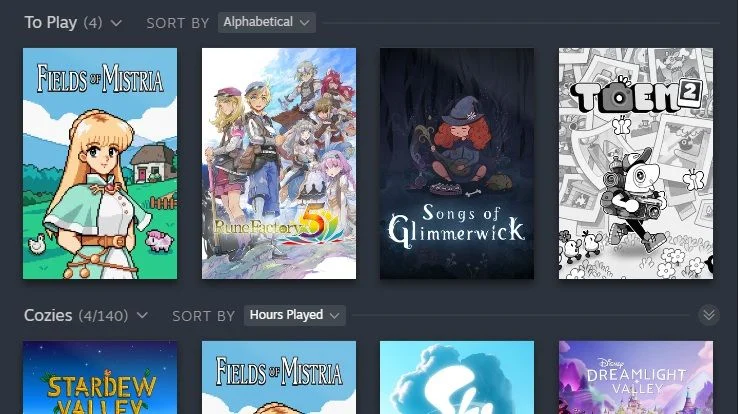
Frustrated by these persistent structural limitations, a growing segment of power users is bypassing native interface restrictions altogether, turning to custom scripts, dynamic collections, and external databases to curate their digital playing experiences. At the heart of this movement is a simple user-experience gap: Steam lacks a seamless, low-friction mechanism to queue up upcoming titles for immediate consumption without muddying the waters of the standard "Recent Games" dynamic shelf or forcing users to manually shuffle titles through static, cumbersome collections.
The core issue centers on how modern digital storefronts manage the "backlog"—the psychological and organizational hurdle of owning hundreds of titles while dedicating time to only a select few. While Steam introduced the "Dynamic Collections" feature years ago—allowing users to filter games by tags, features, and player counts—it still falls short of acting as an intentional, short-term playing queue. Consequently, enthusiasts are forced to hack together their own solutions, proving that while Valve provides the ecosystem, the modern gamer often has to supply the structural architecture.
Chronology
To understand how Steam’s library management has evolved—and where it continues to stall—it is helpful to look back at the trajectory of the platform’s interface redesigns.
- Early 2000s to 2010: Steam operated primarily as a functional launcher. Libraries were presented as a simple, alphabetical text list on the left-hand side of the screen. Organizing games meant creating basic desktop shortcuts or relying entirely on third-party launchers like Xfire.
- 2010 Library Update: Valve introduced the "Grid View," shifting the platform toward visual media (box art) and giving users their first taste of personalized aesthetic organization. However, categorization remained rudimentary, relying on user-defined "Categories" that were saved locally and frequently prone to syncing errors.
- September 2019 (The Steam Library Update): After years of community feedback, Valve rolled out a massive, long-awaited overhaul of the Steam client library. This update introduced the modern landing page, automatic event tracking, rich presence displays, and—crucially—Dynamic Collections. These collections allowed players to automatically group games based on developer-assigned tags, store categories, and installation status.
- 2020–2022: While the dynamic collections were a massive step forward, power users quickly mapped their limitations. The system struggled with nuanced intent; a game could be tagged as "RPG," but there was no native way to designate a game as "Next on the chopping block" without manually dragging it into a static folder that offered no automation.
- Present Day: Frustrated by the lack of dedicated "short-term intent" tracking tools—features commonly found in dedicated hobby-tracking websites like Backloggd, HowLongToBeat, or Letterboxd-style database platforms—individual users are taking matters into their own hands. By combining developer tags, manual categorization tricks, and hidden metadata fields, players are engineering bespoke "to play" shelves that operate entirely independently of the standard "Recent Games" algorithm.
Supporting Data
The necessity for advanced library curation tools is underscored by the sheer volume of games available to modern consumers. Industry data highlights a staggering shift in digital ownership trends over the past decade:
- The Scale of Expansion: According to SteamDB metrics, over 10,000 new games are released on Steam annually, a massive leap from the hundreds released per year prior to the introduction of Steam Greenlight and Steam Direct.
- The Backlog Phenomenon: Industry surveys, including aggregated data from platforms like Backloggd and GOG Galaxy integrations, suggest that the average active PC gamer owns between 150 and 500 digital titles, with a completion rate hovering below 20%.
- Interface Engagement Metrics: Valve’s own internal post-mortems following the 2019 library update revealed that while users spent significantly more time browsing their libraries visually, fewer than 15% of active users regularly created and maintained custom, non-automated static collections. Most users default to the "Recent Games" list, which only displays titles launched within a short historical window—effectively punishing players who step away from a game for a few weeks by burying it beneath newer acquisitions.
These metrics paint a clear picture: Steam is exceptional at facilitating acquisition, good at facilitating discovery, but historically passive when it comes to supporting intentional progression and curation.
Official Responses
Valve Corporation has traditionally taken a measured, community-driven approach to interface development. While company representatives rarely comment on niche organizational grievances, public statements from Steam UI engineers during past developer conferences offer insight into their design philosophy.
In previous panel discussions regarding the 2019 library redesign, Valve developers emphasized a commitment to reducing cognitive load. The primary goal of the Steam client, according to Valve’s design team, is to get the user into their game as quickly as possible with the minimum amount of interface friction.
"We want to surface the right game at the right time without turning your game library into an administrative chore," a Valve UI designer noted during a post-launch developer walkthrough. "Every feature we add risks adding visual clutter. The balance between advanced power-user functionality and clean, approachable design for the casual player is something we evaluate continuously."
However, third-party developers and UI designers in the broader software ecosystem have pointed out that Valve’s reluctance to implement robust metadata editing—such as custom playtimes, user-defined status tags (e.g., "On Hold," "Replaying," "Next Up"), and flexible shelf sorting—leaves a wide gap that community workarounds must fill. Valve has not announced any immediate plans to overhaul the collections system further, leaving power users to rely on hidden launch parameters, skins, and community-made plugins where applicable.
Implications
The rise of custom "to play" shelves and makeshift hobby-tracking workflows within Steam points to a broader cultural shift in how modern consumers interact with entertainment media. We are living through an era of extreme abundance, where access to content far outstrips the human capacity to consume it.
1. The Gamification of Organization
For many PC gamers, the act of organizing the library has become a meta-game in its own right. Sorting, prioritizing, and trimming digital backlogs provides a psychological sense of control over an otherwise overwhelming digital domain. When native tools fail to accommodate these psychological needs, users feel compelled to build their own systems, transforming passive consumers into active curators.
2. Fragmentation of Tracking Ecosystems
Because Steam does not natively integrate with advanced hobby-tracking frameworks, players are forced to split their tracking habits across multiple platforms. A gamer might use Steam to launch the game, Backloggd or HowLongToBeat to track completion times, Discord to broadcast their status, and a custom Steam shelf to manage their immediate queue. This fragmentation highlights an opportunity for storefronts to capture user engagement by centralizing these auxiliary tracking features.
3. Pressure on Platform Holders
As libraries grow into the thousands of titles, the demands on UI design will only intensify. Competitors in the space—such as the Epic Games Store, GOG Galaxy, and various independent launchers—have similarly struggled to nail the delicate balance between automation and manual curation. Whichever storefront eventually succeeds in building a frictionless, highly customizable "intent-based" queue system will likely capture significant loyalty from meticulous power users.
Ultimately, until Valve introduces native tools that bridge the gap between long-term collection and short-term intent, resourceful gamers will continue to engineer their own solutions—proving once again that the PC gaming community is defined as much by its ingenuity as by its passion for play.

