

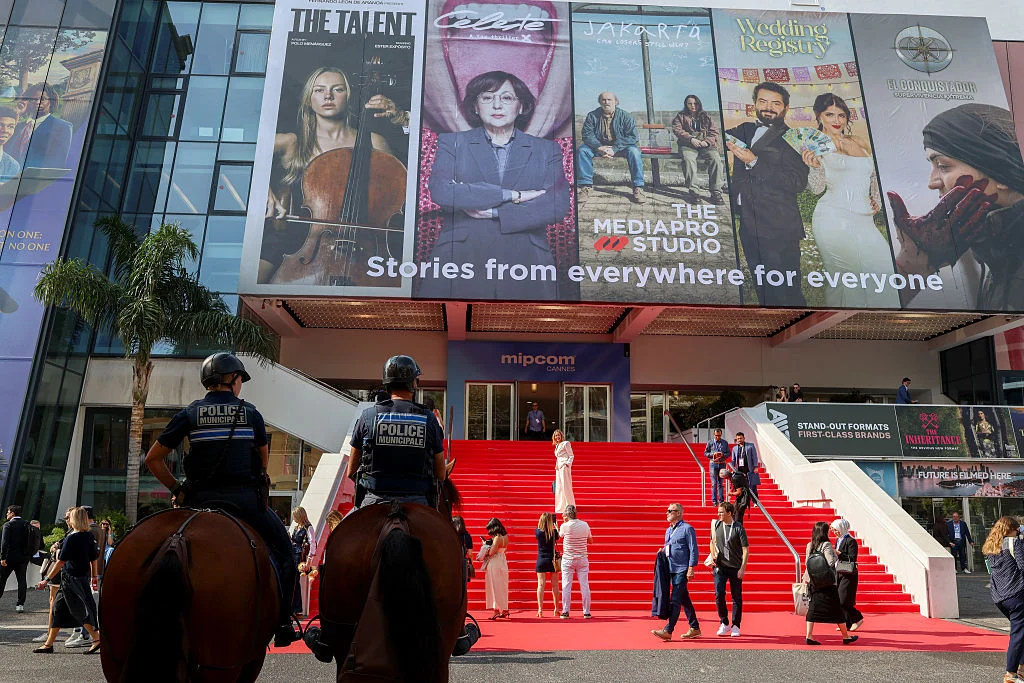
When more than 10,000 industry professionals descend upon the sun-drenched shores of the French Riviera this October, they will not be walking into a traditional trade show. They will be stepping into a laboratory for the future of media. As MIPCOM 2026 prepares to open its doors at the iconic Palais des Festivals from October 12–15, the overarching theme is clear: Convergence.
MIPCOM has long served as the "global gateway to the media and content business," acting as the primary tentpole for networking, dealmaking, and distribution for the television, film, and advertising industries. However, under the guidance of Director Lucy Smith, the event has undergone a structural metamorphosis. No longer satisfied with being a siloed marketplace for legacy media, MIPCOM is positioning itself as the epicenter where the creator economy, generative AI, and traditional broadcast powerhouses collide to forge a new industrial landscape.
The Strategic Shift: Beyond Traditional Silos
For decades, international content markets operated on a "tracks" system—if you were in television, you stuck to the scripted market; if you were in advertising, you stayed in the brand wing. According to Caroline Bernet, Head of MIPCOM Conference Programme, that era is effectively over.
"MIPCOM is really about how these businesses can meet inside the same global market for audiences, IP financing, and distributing," Bernet explains. The strategy for 2026 is not merely to invite digital creators to the table, but to integrate them into the fundamental architecture of the market. This means that the barrier between a major studio like Lionsgate or Banijay and a viral creator studio like the Sidemen or Dhar Mann is being deliberately dismantled.
By bringing these entities into the same rooms, the goal is to foster a cross-pollination of business models. Traditional players gain the agility and direct-to-audience insights of digital-native creators, while creators gain access to the scale, legal infrastructure, and distribution power of legacy media giants.
A New Era of Programming: Nexus Points and Innovation
The 2026 agenda is characterized by "nexus points"—dedicated spaces designed to facilitate high-level collision between disparate sectors. This year, the event introduces three flagship initiatives that highlight the shifting tides of the industry: MIP BrandWorks, the Global Microdrama and Vertical Leaders’ Summit, and the MIP AI Entertainment Forum.
MIP BrandWorks: The New Upfronts
MIP BrandWorks represents a significant departure from traditional advertising showcases. It is designed to bridge the gap between brands and premium content production. Senior executives will convene for an exclusive CXO Summit, featuring insights from industry giants like Meta, Dentsu, and Ferrero Rocher.
The highlight will be the BrandWorks Showcase, an "Upfronts-style" presentation where brands move beyond simple sponsorship to become active IP developers. The roster of presentations is telling:
- Webedia-Elephant will highlight The Engineers of the Future (Prime Video) and L’Oréal Luxe’s cultural content on YouTube.
- Baby Teeth will spotlight the Finding Jamie vertical series, a collaboration between Jamie Oliver and Life360.
- Vinted will unveil its "Live Better for Less" format, developed in partnership with WPP, Fan Club, and Electric Robin.
The Vertical Revolution: Global Microdrama Summit
Perhaps the most significant addition to the 2026 schedule is the invitation-only Global Microdrama and Vertical Leaders’ Summit. Vertical storytelling, once dismissed as a transient social media trend, has matured into a multi-billion-dollar industry.
This summit creates a "closed-door" environment for C-level executives from companies like Holywater, NetShort, and TikTok to engage with traditional gatekeepers. By moving these conversations into a private, high-stakes forum, MIPCOM is signaling that vertical drama is no longer a "niche" but a core component of the global IP market. The inclusion of speed-matchmaking sessions specifically for vertical series further underscores the demand for professionalized dealmaking in this sector.
MIP AI Entertainment Forum: Practical Application
The AI conversation at MIPCOM 2026 is moving away from theoretical fears and toward practical, business-driven applications. Under the banner of the MIP AI Entertainment Forum, the focus is on "creative and business use cases."
The forum, anchored by a keynote from UTOPAI founder and former Google engineer Cecilia Chen, aims to demystify the technology for the C-suite. Bernet notes that the agenda is designed to serve two masters: AI startups looking for distribution partners, and legacy entertainment companies attempting to build or acquire AI divisions. By hosting these parties under one roof, the forum acts as a marketplace for the technological infrastructure of the next decade of filmmaking.
The Convergence of Players
The guest list for 2026 serves as a map of the new media ecosystem. The presence of traditional powerhouses—including Netflix, BBC Studios, FOX, Fremantle, and Lionsgate—is expected, but the true significance lies in their proximity to the new guard.
Directly across the aisle will be representatives from YouTube, TikTok, Tubi, and Samsung TV Plus, alongside specialized platforms like Holywater and Crazy Maple Studio. This proximity is not accidental; it is a calculated effort to force a dialogue on how distribution works when the traditional broadcast window no longer holds a monopoly on consumer attention.
When a representative from a legacy studio sits down with a lead from a creator studio like the Sidemen, the conversation inevitably shifts toward IP ownership, cross-platform monetization, and the integration of social-first distribution strategies into long-form production.
Implications: A Real-Time Marketplace for IP
The ultimate goal of this convergence is to turn the Palais des Festivals into a "real-time marketplace for IP development." For attendees, the implications are profound:
- Hybridization of Content: We are moving toward a world where content is developed to be "platform agnostic." A concept tested as a vertical micro-series on TikTok may now find a natural home as a multi-season scripted drama on a streamer, thanks to the connections made during the summit.
- The Professionalization of the Creator Economy: By providing dedicated networking and conferencing formats, MIPCOM is helping to elevate creator studios into legitimate, bankable production houses that operate with the same rigor as traditional entities.
- The AI Integration Phase: The industry is moving from the "testing" phase of AI into the "integration" phase. MIPCOM 2026 will likely be the event where the first major global co-productions utilizing generative AI workflows for pre-production or VFX are announced.
Looking Ahead: Why MIPCOM 2026 Matters
As the media industry faces unprecedented disruption—from the decline of linear television to the rapid rise of generative AI—MIPCOM has chosen to double down on the idea that connection is the only path forward.
By inviting everyone from the CMOs of global consumer brands to the creators of vertical micro-dramas, MIPCOM is acknowledging a fundamental truth: the audience is everywhere, and the businesses that want to reach them must be equally omnipresent.
For those looking to navigate the shifting sands of the content industry, MIPCOM 2026 is not merely a conference to attend; it is the arena where the rules of the next decade of global entertainment are being written. As Lucy Smith noted, the event remains the "global gateway," but the gate is now much wider, and it is open to a new, diverse, and technologically empowered generation of players.
Event Details:
- Date: October 12–15, 2026
- Location: Palais des Festivals, Cannes
- Tickets: Available starting at €1,780 via the official MIPCOM website.
The future of media is not a singular medium or a specific platform. As the attendees of MIPCOM 2026 will soon discover, the future is convergence.

