

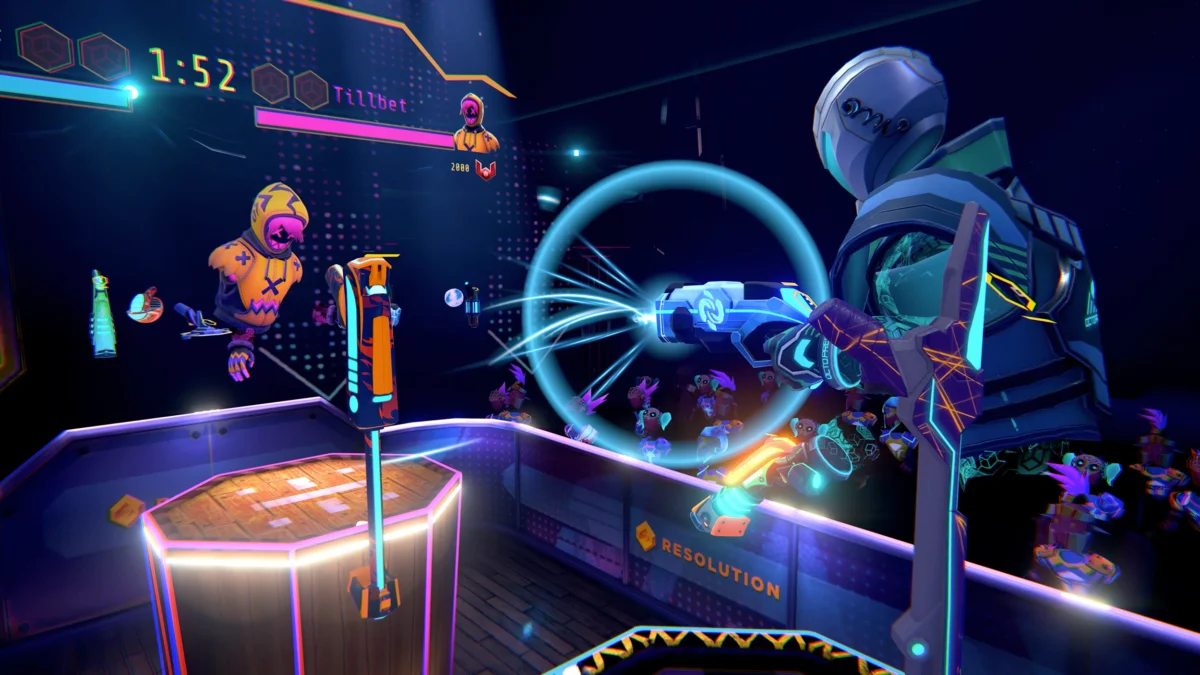
In the landscape of modern virtual reality gaming, few titles manage to capture the raw, adrenaline-fueled intensity of a competitive duel while simultaneously functioning as a rigorous physical workout. Among the myriad of experiences available on the Meta Quest platform, Blaston—developed by Resolution Games—has emerged as a dark horse. Originally released to modest fanfare, the game has quietly cemented itself as a staple for VR enthusiasts, transforming the humble act of dodging projectiles into a high-stakes tactical dance.
Main Facts: The Anatomy of a Duel
At its core, Blaston is a fast-paced, 1v1 competitive arena shooter that strips away the complexity of traditional FPS titles in favor of pure, reactive gameplay. Unlike conventional shooters where movement is governed by thumbsticks or teleportation, Blaston forces the player to physically move within their real-world environment.
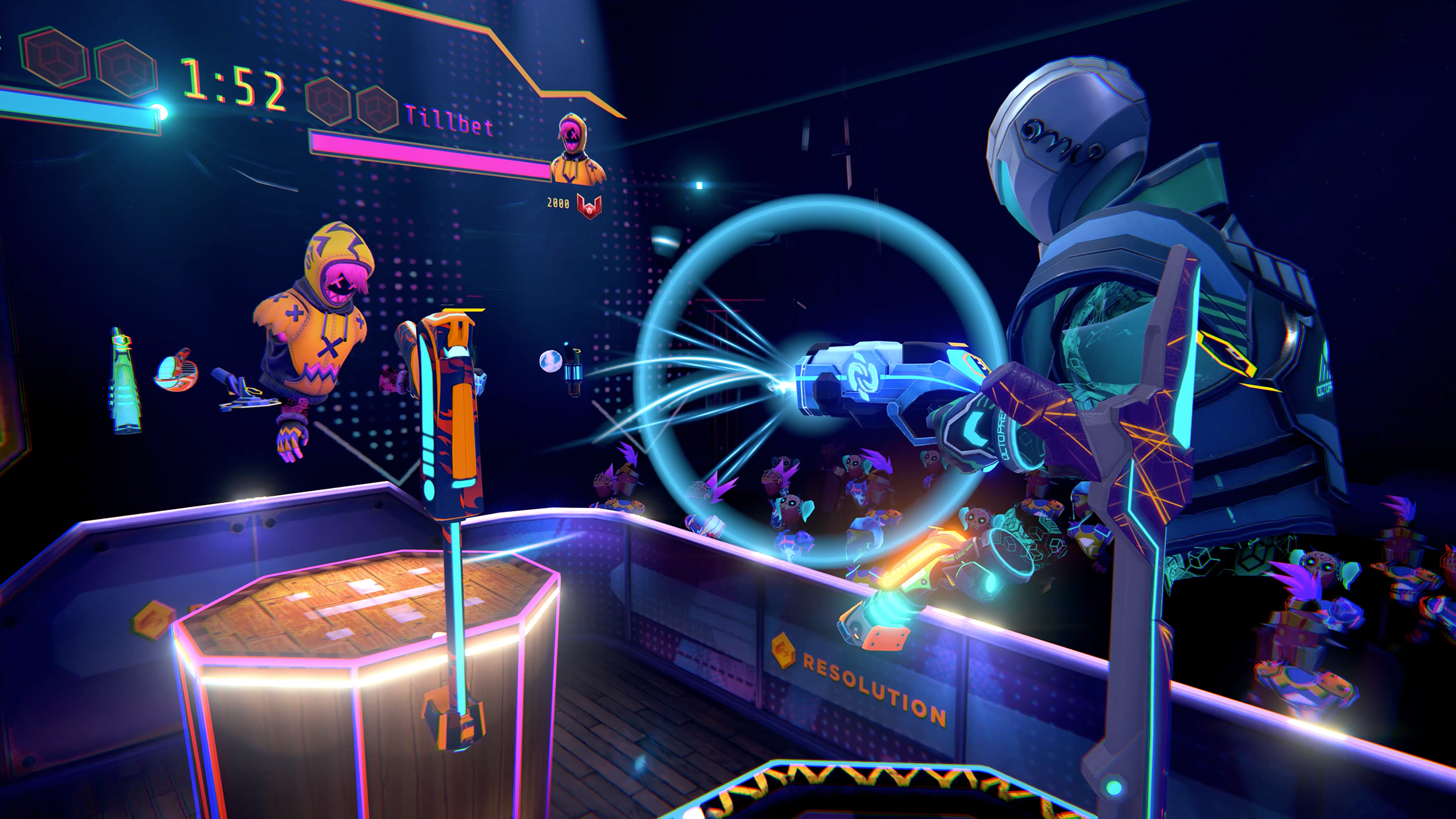
The game’s mechanics are elegant in their simplicity: two players stand on elevated platforms, separated by a modest distance. As the match progresses, various weapons spawn in designated slots around the player. The objective is singular and ruthless: deplete the opponent’s health bar. However, the catch lies in the projectile mechanics. Unlike games like Call of Duty or Valorant, where bullets are hitscan (instantaneous), Blaston projectiles travel at varying, dodgeable speeds. This transforms the game from a test of aim into a test of rhythm, spatial awareness, and physical endurance.
Chronology: From Impulse Buy to Nightly Ritual
The journey into Blaston often mirrors the experience of many VR adopters: a desire for genuine escapism. In an era where digital fatigue is common, the allure of a device like the Oculus Quest 2 lies in its ability to completely decouple the user from their physical surroundings.
Following the initial acquisition of the hardware, the discovery of Blaston typically occurs via the digital storefront’s curated lists or holiday sales. The trajectory of a Blaston player is remarkably consistent:
- The Discovery Phase: A casual, impulse-driven purchase based on aesthetic appeal or favorable reviews.
- The Learning Curve: The first few hours are spent acclimating to the weapon spawn system and the realization that the game is a full-body experience.
- The Tactical Integration: Players begin to understand that "winning" isn’t about firing as fast as possible, but about managing the arena space.
- The Habituation: Transitioning to a nightly routine, where the game serves as both a primary entertainment source and a physical exercise regimen.
Supporting Data: Spatial Control and Weapon Synergy
Blaston operates on a principle of "spatial gatekeeping." Because the arena is small, players must constantly negotiate the geometry of the battlefield. The weapons, while randomized in their spawning, are meticulously balanced to ensure no single loadout guarantees victory.
The Philosophy of the Arsenal
Each weapon in Blaston serves a specific tactical purpose:
- The Zoning Tools: These weapons, such as electrical beams or slow-moving energy clouds, do not always aim to hit the opponent directly. Instead, they force the opponent to vacate a specific sector of their platform, effectively "herding" them into the path of more lethal projectiles.
- The Precision Projectiles: These are the primary damage dealers. They require predictive aiming, forcing the player to account for the opponent’s physical reaction time.
- The Defensive/Utility Tools: Shields and traps allow players to stall for time or create "dead zones" that the opponent must circumvent.
The depth of the game lies in the synergy between these tools. A player might lay down an electrical beam to block the left side of the opponent’s space, forcing them to lean right, only to fire a high-speed projectile toward that rightward lean. It is a game of high-speed chess played with physical exertion.
Official Responses and Developer Intent
Resolution Games, the studio behind Blaston, has consistently positioned the game as a premier "esport" for the VR generation. By focusing on low-latency networking and balanced matchmaking, they have fostered a community that values skill expression over "pay-to-win" mechanics.
In various developer diaries and community updates, Resolution Games has emphasized that Blaston was designed to solve the "stationary shooter" problem. Many VR games suffer from players standing perfectly still, which kills the immersion. By making movement—specifically leaning, ducking, and sidestepping—the primary mechanic of survival, the developers have ensured that the game remains physically engaging for long-term play.
Implications for the Future of VR Fitness and Gaming
The success of Blaston has broader implications for the VR industry. It bridges the gap between "exergaming" (games designed specifically for fitness) and competitive multiplayer gaming.
The Convergence of Fitness and Fun
For years, the VR industry has struggled to market "exercise games" that don’t feel like a chore. Blaston succeeds where others fail because the physical exertion is a byproduct of the competitive drive, not the primary goal. Players aren’t "working out"; they are trying to survive a duel. This psychological shift is critical for user retention. If a game feels like a workout, the user will eventually tire of it. If a game feels like a high-stakes duel, the user will return night after night, regardless of the physical toll.
The Evolution of the "Arena" Genre
Blaston also signals a shift toward more compact, high-intensity arena experiences. As VR hardware becomes more lightweight and wireless (as seen with the Quest 2 and its successors), the need for complex locomotion systems decreases. Instead, we are seeing a return to "fixed-position" gameplay that mimics the intensity of physical sports like boxing or fencing. This is a vital development for VR accessibility, as it minimizes motion sickness while maximizing the visceral feeling of presence.
Conclusion: Why You Should Enter the Arena
The beauty of Blaston lies in its honesty. It does not promise a massive open world or a sprawling narrative. It promises a small platform, a set of weapons, and an opponent who is just as desperate to win as you are.
For those who have recently invested in a VR headset and find themselves overwhelmed by the sheer volume of "experience-heavy" titles, Blaston offers a refreshing return to form. It is a game that respects the player’s intelligence and challenges their physical limits. Whether you are looking for a new competitive obsession or simply a way to get your heart rate up after a long day of sedentary work, Blaston provides a masterclass in VR design.
As the VR landscape continues to mature, titles that focus on the "purity" of the experience—the marriage of motion and digital interaction—will undoubtedly lead the way. Blaston isn’t just a game; it is a testament to the fact that sometimes, the most immersive experiences are the ones that keep you right where you are, fighting for every inch of space in a digital arena. If you haven’t yet stepped onto the platform, you are missing out on one of the most refined and exhilarating experiences currently available in the medium. Put on your headset, clear your living room, and prepare to duel—the arena is waiting.

