

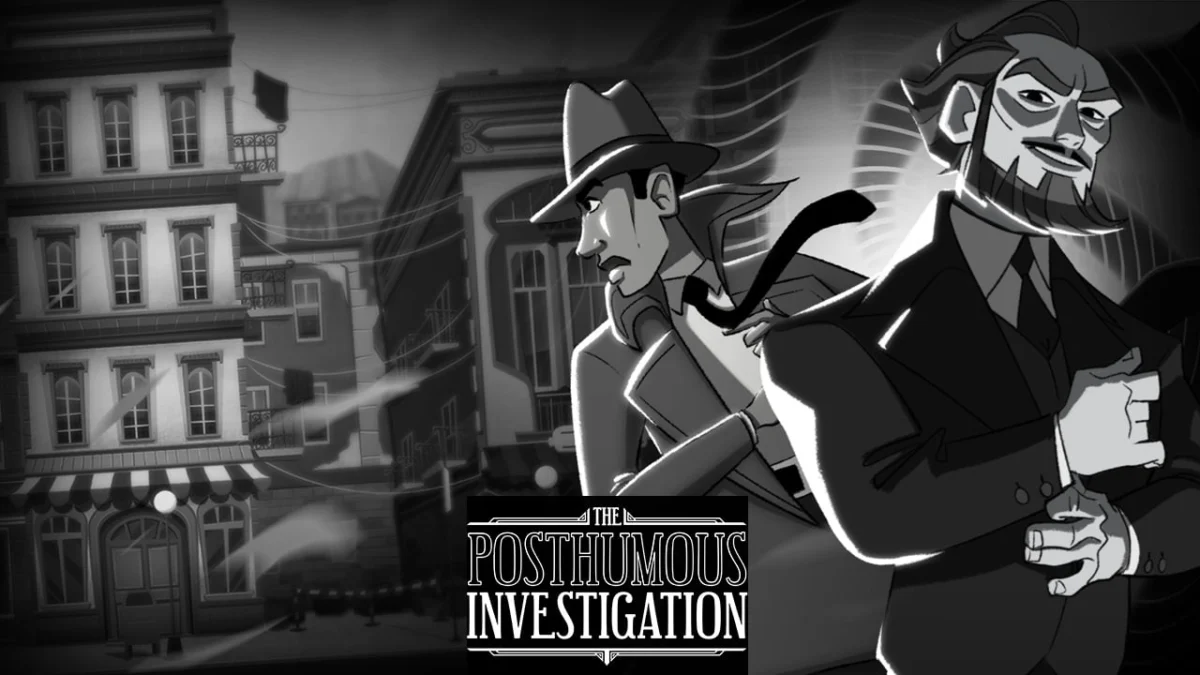
In the crowded landscape of mobile gaming, few titles manage to marry atmosphere, narrative complexity, and mechanical innovation with the precision of The Posthumous Investigation. Originally a cult hit on PC, the noir-drenched murder mystery from indie developer Mother Gaia Studio and publisher Critical Leap has officially made its transition to mobile platforms. Players are now invited to step into the rain-slicked, shadow-heavy streets of 1937 Rio de Janeiro to solve a crime where the client is the victim, and time itself is the most valuable piece of evidence.
Main Facts: A Genre-Bending Detective Experience
The Posthumous Investigation is not a traditional point-and-click adventure. It is a sophisticated time-loop simulator that tasks players with unraveling the murder of a powerful entrepreneur within a compressed, repetitive timeframe.
The core premise is stark: you are a private investigator hired to solve a case where your employer is already deceased. Trapped in a 24-hour cycle, you must relive the same day repeatedly, accumulating knowledge, uncovering secrets, and dismantling alibis. The game’s aesthetic—a stylized, atmospheric noir—complements its gameplay loop, which requires players to balance investigative intuition with strategic manipulation of the game world.
Available now on the Google Play Store, the mobile port preserves the visual fidelity and mechanical depth of the PC original, offering a seamless experience for those who prefer solving cold cases on the go.
The Chronology of a Murder: 1937 Rio de Janeiro
The narrative is set against the backdrop of 1937 Rio de Janeiro, a city caught between the glamour of its postcard-perfect vistas and the moral rot hidden in its dirty, claustrophobic alleys. The setting is integral to the game’s identity; it is not merely a stage but a character in its own right.
The chronology of the game is fixed, yet fluid. Each "run" lasts exactly one day. As the clock strikes midnight or specific events trigger the end of a cycle, the day resets. However, the player’s progress is not lost. The game operates on a "knowledge-is-power" progression system. While the world reverts to its state at the start of the day, the information gathered—clues, suspect schedules, and dialogue revelations—remains with the player.
This temporal structure forces players to observe the movements of fourteen distinct characters, each with their own routines, motivations, and hidden agendas. Understanding the sequence of events is paramount. By watching these characters go about their business, the player can identify precisely when a suspect deviates from their routine, where they hide incriminating documents, and who was in the vicinity of the crime at the critical moment.
Supporting Data: Mechanics and Investigative Tools
What sets The Posthumous Investigation apart from its peers is the granularity of its detective mechanics. The developer, Mother Gaia Studio, has implemented a suite of tools designed to move beyond simple exposition.
The Thinking Board
At the heart of the investigative process is the "Thinking Board." This interface serves as the player’s external brain, allowing them to pin documents, photographs, and witness statements. By connecting these disparate threads, players form deductions that move the investigation forward. The board is not just for organization; it is where the raw data gathered during the loop is synthesized into a coherent timeline of events.
Manipulation and Temporal Control
The game encourages active interference. Players can use knowledge from previous loops to reach areas previously locked or to confront suspects with information they haven’t yet revealed. If you know a character is planning to meet an accomplice at 4:00 PM, you can position yourself to intercept that conversation. Furthermore, the game allows for the manipulation of routines. By changing what a suspect encounters, you can force them to act in ways they normally wouldn’t, exposing holes in their alibis. The inclusion of a fast-forward mechanic enables players to skip through the mundane to reach the pivotal moments of the mystery, ensuring that the gameplay remains focused on discovery rather than repetitive waiting.
The Limbo Connection
Perhaps the most intriguing aspect of the game is the role of the victim. When the day resets, the player finds themselves in Limbo, a surreal space where they can consult with the deceased entrepreneur. This interaction acts as a narrative anchor, helping the player process the clues discovered during the loop and providing a unique perspective on the crime from the person who suffered most from it.
Official Responses and Creative Vision
The development team at Mother Gaia Studio has been vocal about the challenges of translating the intense, claustrophobic feel of a desktop noir mystery to the mobile form factor. In official communications, the team emphasized that the goal was to ensure the UI remained intuitive without sacrificing the complexity of the investigative board.
"We wanted the player to feel the weight of the investigation," a spokesperson for the studio noted. "In a time loop, the player is both a victim of the clock and its master. By making the mobile version accessible, we hope to invite more players into the meticulous, often frustrating, but ultimately rewarding process of piecing together a broken timeline."
Critical Leap, the publisher, has noted that the mobile market is increasingly hungry for "cerebral experiences"—games that demand focus and critical thinking rather than quick reflexes. The success of the PC version, characterized by its striking art style and non-linear storytelling, served as the blueprint for the mobile release. The team focused heavily on touch-screen optimization, ensuring that the "Thinking Board" remains responsive and that the navigation through the alleys of 1937 Rio feels natural for a handheld device.
Implications: The Future of Mobile Mystery Games
The release of The Posthumous Investigation on mobile platforms has broader implications for the indie gaming industry. It demonstrates a growing trend: the migration of high-concept, narrative-heavy PC games to mobile hardware without compromising on the depth of the experience.
For the player, this is a significant development. It suggests that the "mobile gamer" demographic is evolving. No longer confined to casual, short-burst gaming, the mobile audience is increasingly showing an appetite for complex narratives that require long-term investment. The Posthumous Investigation acts as a case study for how developers can utilize the unique hardware of smartphones—such as touch-based interaction and portability—to enhance a detective simulation.
Narrative Depth vs. Mechanical Complexity
The game also highlights a shift in how murder mysteries are constructed in digital spaces. Traditional mysteries often rely on a linear path of discovery. The Posthumous Investigation flips this by making the process of solving the mystery the primary loop. This mirrors the real-life work of investigators who must cross-reference witness testimony, physical evidence, and temporal discrepancies. By forcing the player to experience the same day repeatedly, the developers have successfully gamified the concept of "due diligence."
The Cultural Impact of the Noir Aesthetic
The choice of 1937 Rio de Janeiro is a refreshing departure from the standard "foggy London" or "gritty New York" settings often found in the noir genre. By embedding the narrative in the specific socio-political and geographical context of pre-war Brazil, the game offers a fresh lens through which to view classic detective tropes. This cultural specificity adds a layer of authenticity to the world-building, making the player’s interactions with the environment feel grounded and meaningful.
Conclusion: A Must-Play for the Aspiring Detective
As the mobile market continues to mature, The Posthumous Investigation stands out as a beacon of quality and ambition. It is a game that respects the player’s intelligence, asking them not just to click on objects, but to engage with a complex, interconnected web of motives and opportunities.
Whether you are a fan of classic hardboiled fiction, a devotee of puzzle-heavy games, or someone who simply enjoys the satisfaction of solving a truly difficult riddle, The Posthumous Investigation offers a deep, satisfying experience. It is a rare title that manages to make the act of failure—the resetting of the loop—feel like a necessary step toward the truth.
With its release on the Google Play Store, the gates to this haunting, rain-soaked mystery are now open. The clock is ticking, the suspect is waiting, and the victim is ready to talk. The question remains: can you solve the murder before the day runs out, or will you be trapped in this cycle of 1937 Rio forever? For those willing to dive into the shadows, the investigation begins now.

