

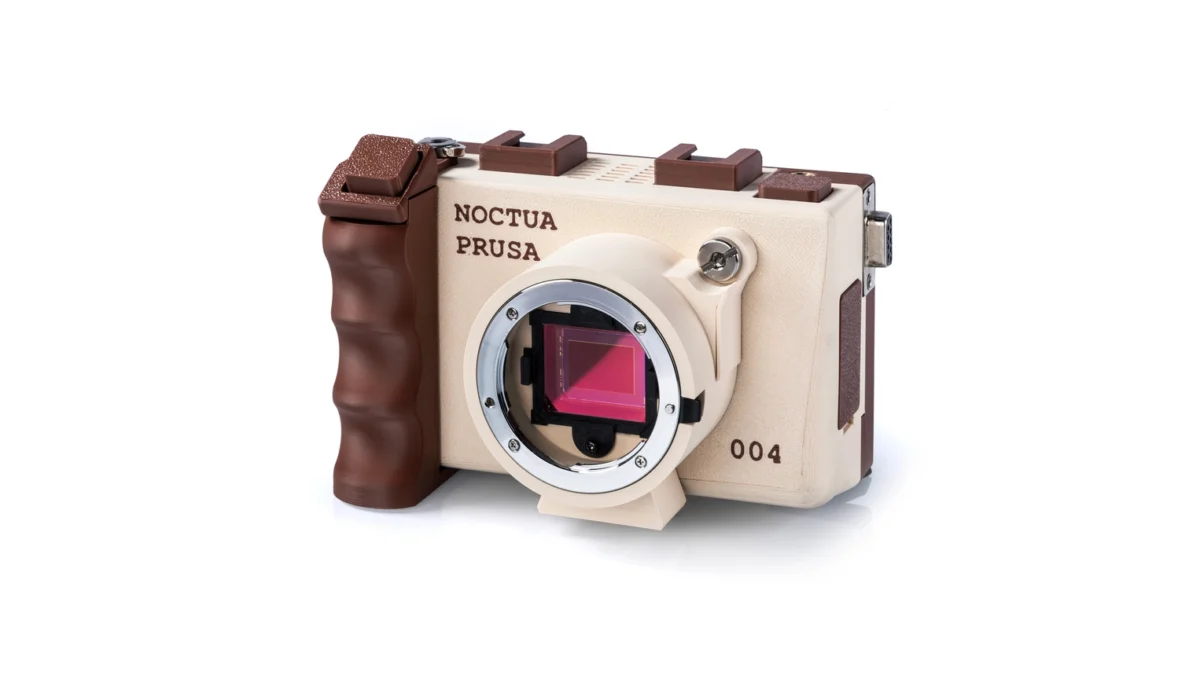
In an era where distinguishing between a genuine photograph and a hyper-realistic, AI-generated fabrication has become an exhausting daily challenge, a new hardware solution has emerged. Enter the upcoming CAIM1 anti-AI camera, a specialized capture device designed to tackle the existential crisis of digital media authenticity head-on.
Developed by Caim, the CAIM1 promises to be the world’s first camera capable of attesting to the human origin of moments the exact second the record button is pressed. By combining cryptographic proof with hardened physical security, the device aims to restore a baseline of trust in visual media. However, in an unexpected crossover that has delighted tech enthusiasts and PC builders alike, the secret to keeping this anti-AI crusader running smoothly comes from an unlikely partner: Noctua, the legendary Austrian manufacturer famous for building the quietest, most reliable cooling fans for high-end gaming PCs.
Main Facts: What is the CAIM1 Camera?
The CAIM1 is not your average consumer mirrorless or DSLR camera. Engineered from the ground up to address the societal threat of synthetic media manipulation, its core function is to establish an unbroken chain of trust from the physical world to digital storage.
Key attributes of the CAIM1 system include:
- Immediate Cryptographic Attestation: The moment a user presses record, the camera generates a verifiable cryptographic proof, locking down the footage’s authenticity at the point of capture.
- Hardware-Level Security: Caim has partnered with security innovators Tropic Square to integrate the TROPIC01 chip. Sessions are shielded behind an auditable, hardware-encrypted pipeline.
- Decentralized Storage: The verification data—the cryptographic proof—is stored on an immutable, decentralized infrastructure, ensuring that the proof remains open and accessible for anyone to verify.
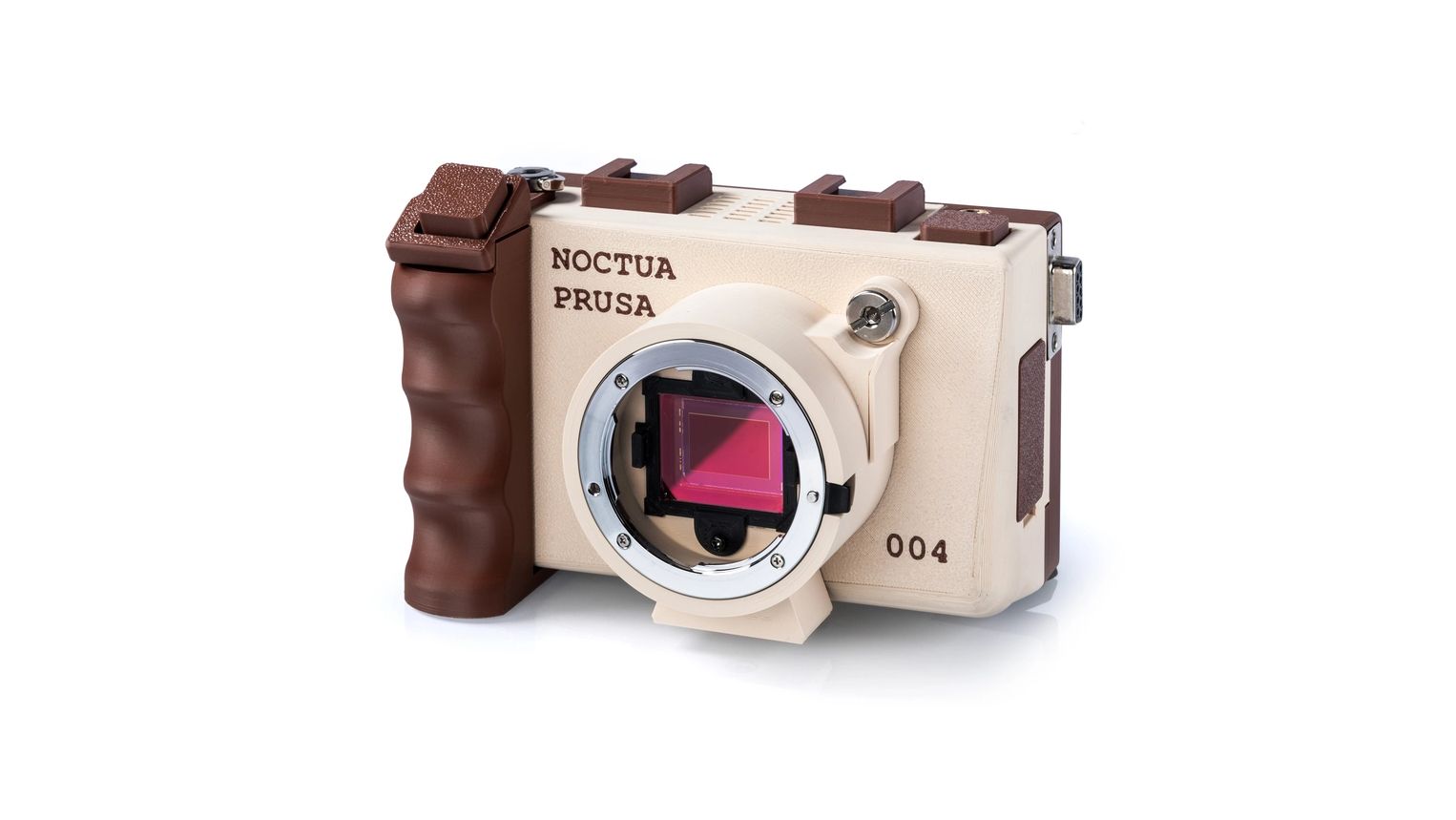
- BYOL (Bring Your Own Lens) Design: The CAIM1 ships as a core recording and processing body without a built-in lens or a traditional permanent sensor housing layout, focusing its engineering budget entirely on its security and compute pipeline.
- Noctua Cooling Integration: To prevent thermal throttling during heavy 4K60 processing and real-time cryptographic signing inside a compact, enclosed chassis, the camera relies on a specialized Noctua cooling fan.
Chronology: How the Tech World Discovered the Noctua-Caim Collaboration
The existence of the CAIM1 camera—and its surprising cooling component—did not leak through traditional mainstream tech announcements or trade show floors. Instead, the story broke via an unexpected channel: Noctua’s official X (formerly Twitter) social media page.
- The Initial Reveal: Noctua published an image showcasing the interior of the CAIM1 camera, prominently featuring one of its signature brown-and-beige cooling fans nestled inside the device’s chassis. The sensor sitting in front of the fan had been removed for the photograph, highlighting the tight integration of cooling and processing components.
- The Technical Explanation: Shortly after the social media post gained traction among hardware enthusiasts, Noctua published a dedicated technical blog post. The article detailed why the company was chosen, how the engineering challenges of a closed camera body were overcome, and why a specific 5V fan model was selected over standard 12V alternatives.
- The Public Response: The cross-industry collaboration quickly drew praise from the PC gaming community and professional videographers alike. While seeing Noctua fans inside custom builds, servers, and even niche gaming mice has become increasingly common, finding high-performance PC cooling inside a specialized cryptographic verification camera marked a novel milestone for the brand.
Supporting Data: Engineering for 4K60 and Cryptographic Security
Capturing ultra-high-definition video while simultaneously computing complex cryptographic signatures is an intensely demanding computational workload. Doing so inside a compact, mostly enclosed camera body creates an immediate bottleneck: thermal dissipation.
The Thermal Challenge
When recording at 4K60 resolution while generating real-time cryptographic proofs, the CAIM1’s internal processors are pushed to their absolute thermal limits. Without active cooling, the device would quickly overheat, leading to thermal throttling, dropped frames, or system instability.
However, adding a fan to a camera introduces a new set of engineering hurdles:
- Acoustic Noise: Microphones situated on or near a camera can easily pick up mechanical whirring, humming, or tonal fan noises.
- Vibrations: Optical sensors and delicate stabilization mechanisms are highly sensitive to physical vibrations, meaning any cooling solution must operate with near-silent smoothness.
- Power Efficiency: Portable hardware must preserve battery life. Every milliwatt consumed by auxiliary components like fans directly degrades field usability.
The Noctua NF-A4x10 5V PWM Solution
To solve these constraints, engineers selected the Noctua NF-A4x10 5V PWM fan. According to technical disclosures from Noctua, this specific model was chosen for several vital performance metrics:
- Compact Form Factor: Measuring just 40x40x10mm, it fits neatly into the tight spatial constraints of the CAIM1 chassis.
- High Static Pressure and Airflow: Despite its miniature size, the fan delivers strong static pressure capable of forcing air through dense internal components and restricted intake/exhaust paths.
- PWM Speed Control: Precise Pulse Width Modulation allows the camera’s firmware to scale fan speeds dynamically based on thermal load, keeping the system quiet during low-demand tasks and ramping up only when heavy 4K encoding and cryptographic generation are active.
- 5V Architecture Efficiency: By opting for a 5V fan rather than a conventional 12V variant, engineers avoided the need for an additional step-up voltage converter. This saves precious physical internal space, preserves battery life, and eliminates the electrical switching noise and voltage ripple that could interfere with the camera’s sensitive sensor data.
- Advanced Bearing Systems: Noctua’s proprietary bearing and motor drive technology effectively mitigates mechanical vibrations and high-frequency tonal noises, ensuring the internal microphone remains free of fan-induced acoustic contamination.
Official Responses and Industry Perspectives
The partnership between Caim and Noctua highlights a broader trend: consumer-grade PC hardware components earning a reputation for industrial-grade reliability.
Representatives from Noctua have emphasized that the company’s rigorous engineering standards—honed over decades of cooling high-wattage desktop CPUs and GPUs—translate exceptionally well to other high-density, thermally constrained electronics. While Noctua is primarily known for towering dual-tower air coolers and ultra-quiet desktop fans, its footprint in specialized commercial and industrial applications continues to expand.
Meanwhile, Caim has doubled down on the necessity of hardware-enforced trust. In official statements regarding the CAIM1, the company noted:
"CAIM1 proves its footage is real at the moment of capture. 4K60 capture and cryptographic proof generation at once push its processors to the thermal limit—inside a mostly enclosed shell. So it needs a fan. It just can’t be heard or felt."
By partnering with Tropic Square to utilize the TROPIC01 security chip, Caim is positioning the camera not merely as a novelty tool, but as a robust instrument for journalists, legal investigators, documentary filmmakers, and everyday citizens who need undeniable proof that their media has not been synthetically altered.
Implications: The Future of Media Authenticity and Hardware Design
The arrival of the CAIM1 camera—and the engineering discourse surrounding its Noctua cooling fan—points toward several significant implications for both the tech industry and society at large.
1. The Battle Against Deepfakes is Moving Upstream
For the past few years, the primary weapons deployed against AI-generated media have been detection software, watermarking protocols (such as C2PA standards), and forensic analysis tools. However, these software-based solutions are locked in an endless arms race with generative AI models that continually learn to bypass detection filters.
The CAIM1 represents a shift toward upstream verification—securing the media file at the exact hardware layer where light hits the sensor, long before software or editing suites ever touch the data. If successful, this hardware-first approach could establish a new gold standard for evidentiary integrity in journalism and law enforcement.
2. Cross-Industry Validation for PC Hardware Brands
The integration of a Noctua fan into an anti-AI cryptographic camera demonstrates how specialized component manufacturing can transcend traditional market boundaries. Just as we have recently seen Noctua cooling solutions integrated into enthusiast gaming mice, the expansion into specialized security hardware proves that superior acoustic and thermal engineering holds universal value across diverse tech sectors.
3. Challenges to Mass Adoption
Despite its noble goals and clever engineering, the CAIM1 will face several hurdles on its path to mainstream relevance:
- The "BYOL" Barrier: By adopting a "Bring Your Own Lens" model, the camera targets a niche audience of professionals and dedicated enthusiasts rather than casual smartphone users who drive the bulk of modern content creation.
- Ecosystem Reliance: Decentralized verification infrastructures and cryptographic pipelines require widespread adoption by publishing platforms, social media networks, and news agencies to be truly effective. If platforms do not natively display or parse these cryptographic proofs, everyday consumers may struggle to verify the media they encounter.
Looking Ahead
As synthetic media continues to blur the lines of our shared reality, the demand for verifiable trust mechanisms will only grow louder. Whether the CAIM1 becomes the blueprint for an entirely new category of capture devices or remains a specialized tool for niche professionals, it proves one thing definitively: safeguarding the truth in the digital age requires robust software, unyielding cryptography, and—when the processors are pushed to their absolute limits—a really, really good, whisper-quiet fan.

