

Over the past decade, the 4X strategy genre has experienced a healthy renaissance, populated by stellar additions and modern classics. Yet, few studios hold the specific reverence among strategy purers quite like Amplitude Studios. With the critical and commercial success of their Endless series—spanning both Endless Space and the original 2014 masterpiece Endless Legend—the French developer carved out a distinct identity characterized by striking painterly aesthetics, deeply asymmetrical factions, and a brilliant fusion of science and fantasy.
Now, over a decade after the original game revitalized a stagnant genre, Amplitude is back with Endless Legend 2. Published by Hooded Horse and slated for its full 1.0 release on September 17, 2026, the sequel arrives on PC with lofty expectations. Tested extensively on a robust rig featuring a Radeon RX 6800 XT, Ryzen 9 5900, and 32GB of RAM (and fully verified for the Steam Deck), Endless Legend 2 proves to be a magnificent triumph. It is a confident, gorgeous, and rule-breaking evolution of everything fans love about the franchise, even if it occasionally stumbles over minor UI hurdles and classic 4X AI tropes.
The Main Facts: What Is Endless Legend 2?
At its core, Endless Legend 2 is a science-fantasy 4X strategy game that leans heavily into the strange and arcane. Unlike traditional sci-fi settings dominated by blasters and starfleets, Amplitude’s universe offers a rich blend of high-fantasy tropes underpinned by hard science. Picture crashed starship survivors forging robotic golems, casting spells that are secretly sophisticated nanotechnology, and wielding titanium swords rather than ray guns.
Key Game Details:
- Developer: Amplitude Studios
- Publisher: Hooded Horse
- Release Date: September 17, 2026 (Version 1.0)
- Price: $50 / £45
- Platform: PC (Steam Deck Verified)
The setting of this sequel is Saiadha, a dying planet structurally reminiscent of Auriga from the first game, but with a volatile twist. Millennia ago, the ancient and enigmatic precursor race known as the Endless sealed an unknown entity deep within Saiadha’s core when they terraformed the world from a baking desert into a realm of storm-wracked oceans and isolated islands. Now, that ancient containment is failing, causing the planet’s oceans to drain slowly toward the center.
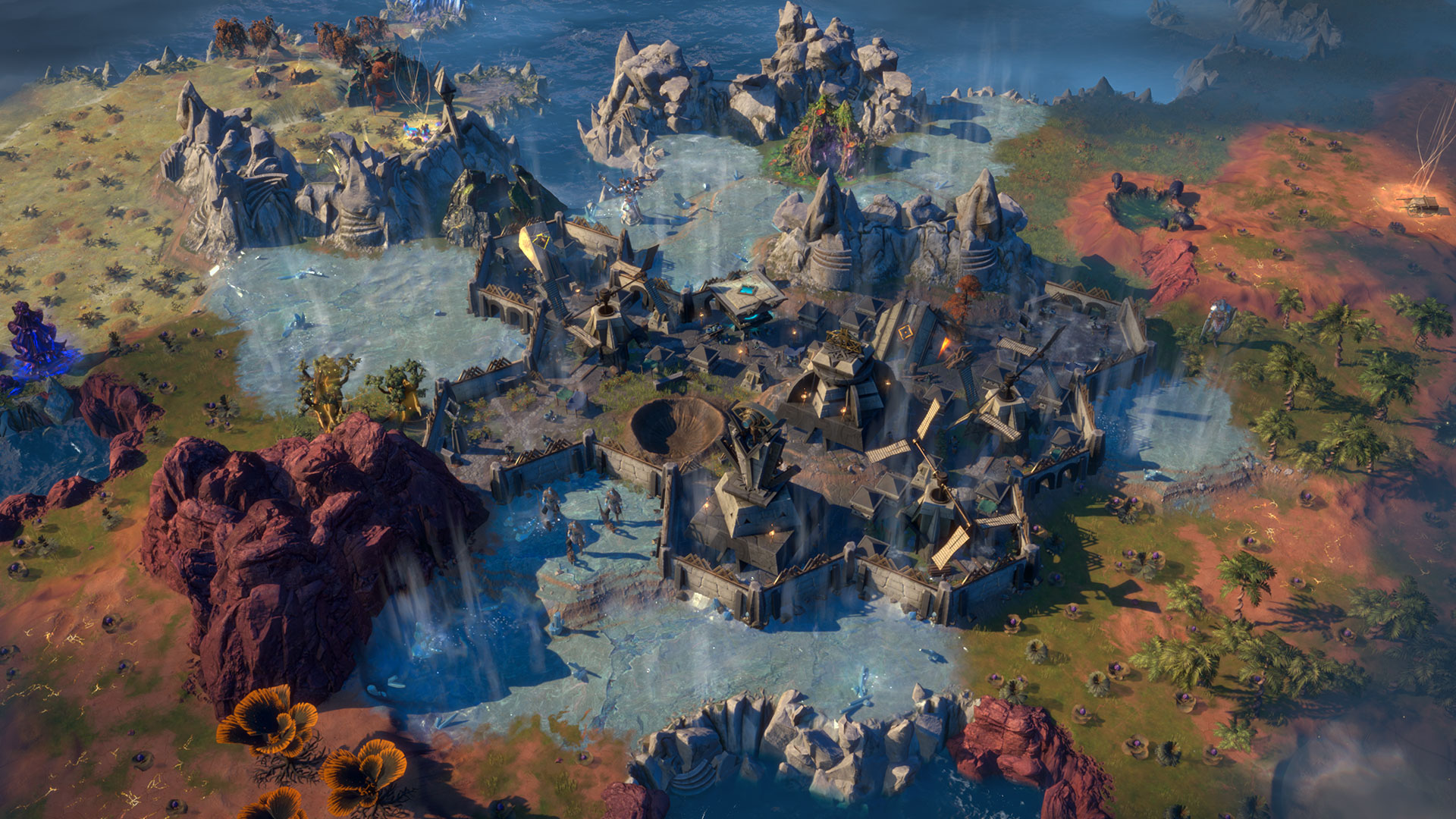
This dynamic sets up a brilliant gameplay loop. Every few dozen turns, a brutal monsoon season sweeps across the globe, culminating in an event known as Tidefall. When the tides recede, entire coastlines vanish, unveiling sunken landscapes, forgotten ruins, and long-lost technologies ripe for colonization and exploitation.
Chronology and Development: Building on a 12-Year Legacy
To understand the weight of Endless Legend 2, one must look back at the trajectory of the strategy genre. When the original Endless Legend launched in 2014, it acted as a vital shot in the arm for 4X titles that had grown routine and mathematically sterile. Over the subsequent twelve years, many of Amplitude’s signature innovations—such as region-based city expansion and dynamic map manipulation—were widely adopted across the industry.
When development on Endless Legend 2 began, the team faced a unique challenge: how to innovate in a genre that had spent a decade borrowing from their previous successes. Amplitude’s solution was to double down on what made the franchise unique—radical faction asymmetry and environmental storytelling—while integrating the groundbreaking Tidefall mechanic to disrupt the traditional pacing of 4X campaigns.
Throughout its development cycle, close coordination with publisher Hooded Horse ensured that the game remained true to its hardcore strategy roots while smoothing out modern quality-of-life expectations. The result is a title that feels simultaneously nostalgic to veterans and freshly disruptive to newcomers.
Supporting Data, Mechanics, and Aesthetics
The Economics of FIDSI and Faction Design
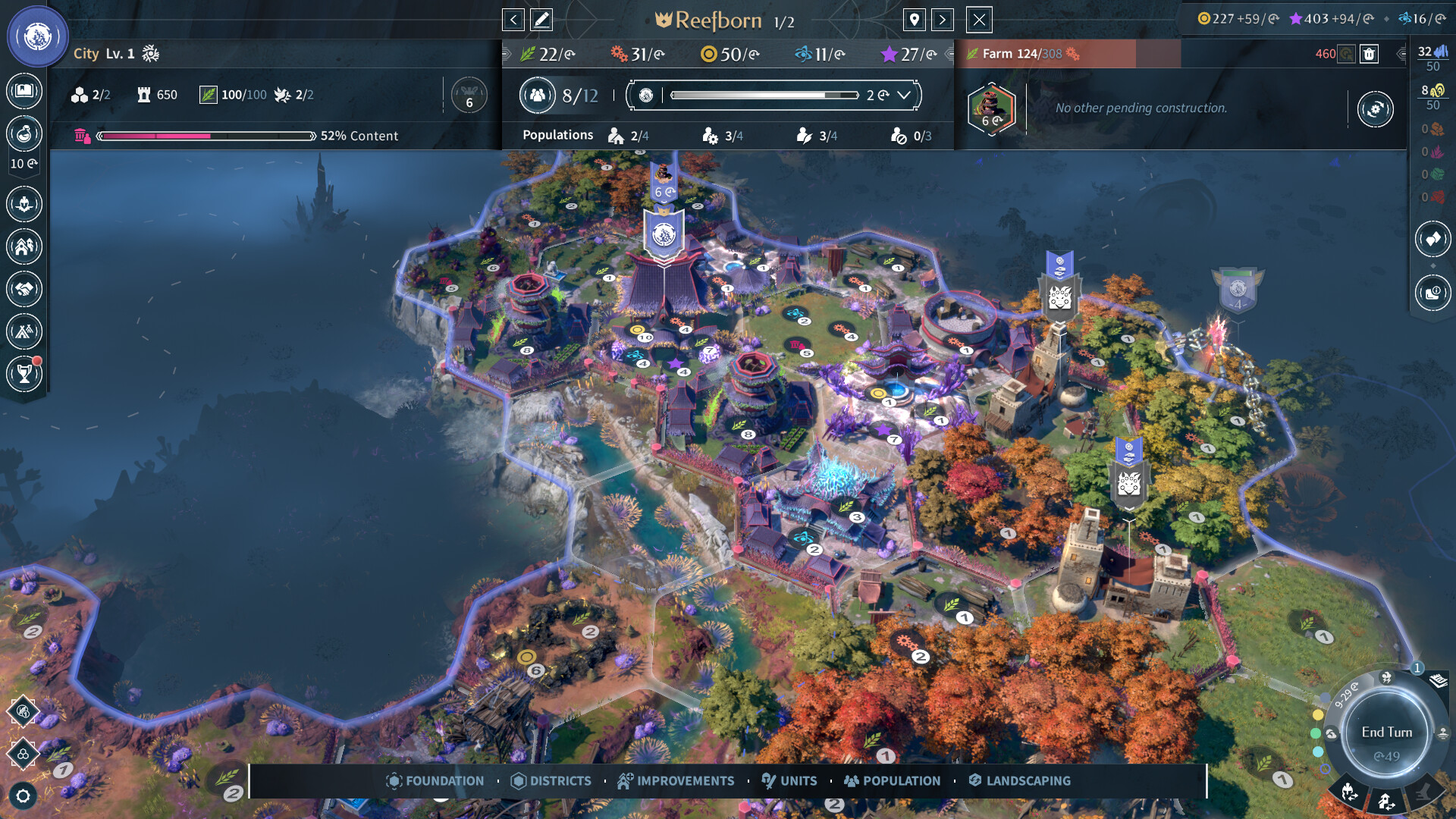
Endless Legend 2 retains Amplitude’s classic, instantly recognizable resource ecosystem. Cities generate income through the tried-and-true FIDSI framework: Food, Industry, Dust, Science, and Influence. Alongside these standard metrics, players manage stockpiles of tradeable luxury and strategic resources required for high-tier upgrades, military outfitting, and global enactments.
While some purists might argue that this system has become an industry standard, it remains exceptionally intuitive and satisfying. The true genius, however, lies in how drastically individual factions break these foundational rules.
- The Children of Sheredyn favor fortress-building over standard urban infrastructure.
- The Sandshapers, living mineral constructs, cannot farm at all; instead, they must scrape together rare materials and actively terraform the world back into a scorching desert to sustain their population.
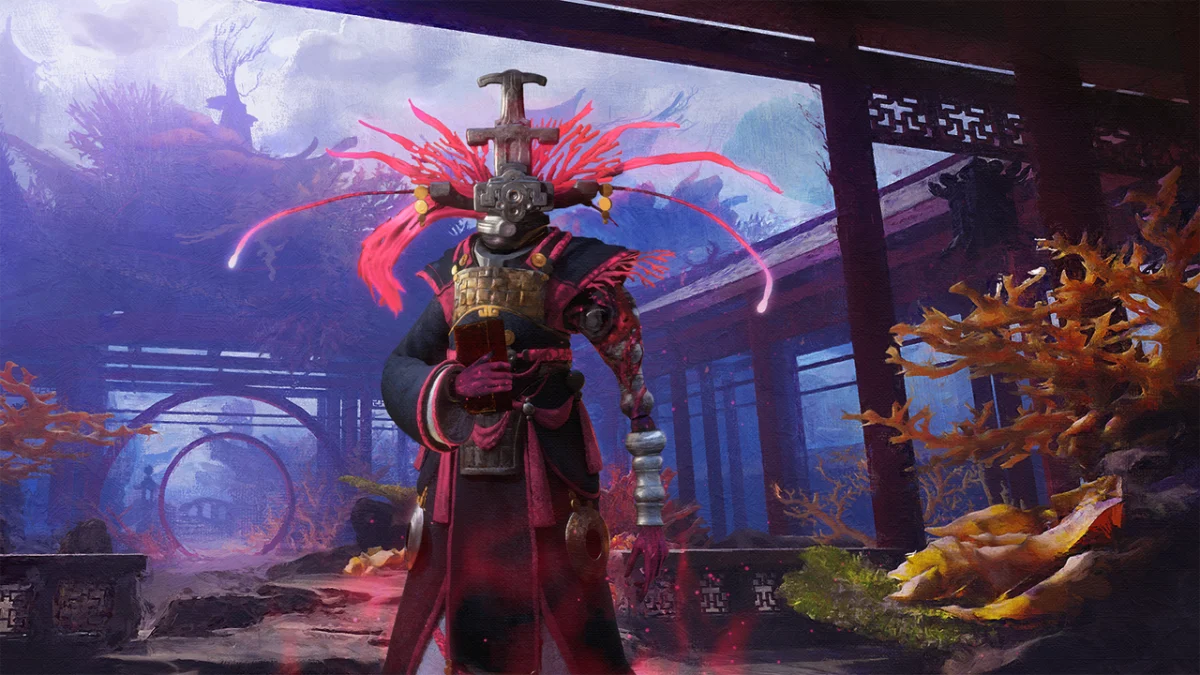
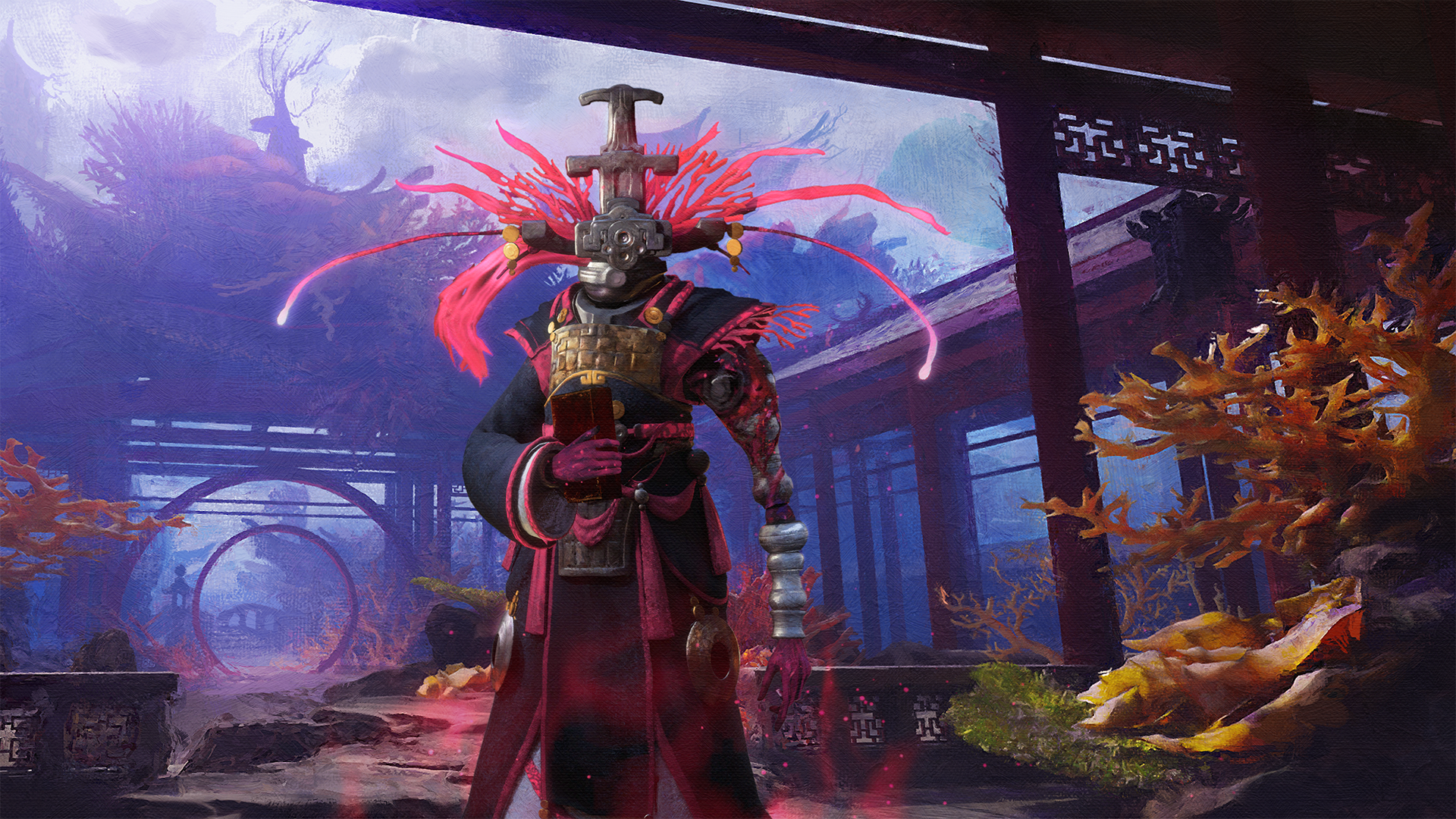
- The Aspects, a symbiosis of sentient coral and robotics, utilize massive hoards of Influence to forcefully dictate peace and trade treaties onto neighboring empires.
- The Necrophage, locked into a single central hive city, operate as an unyielding enslaving swarm of cyborgs with a perpetual, game-sanctioned casus belli against everyone else.
Audiovisual Presentation and Soundtrack
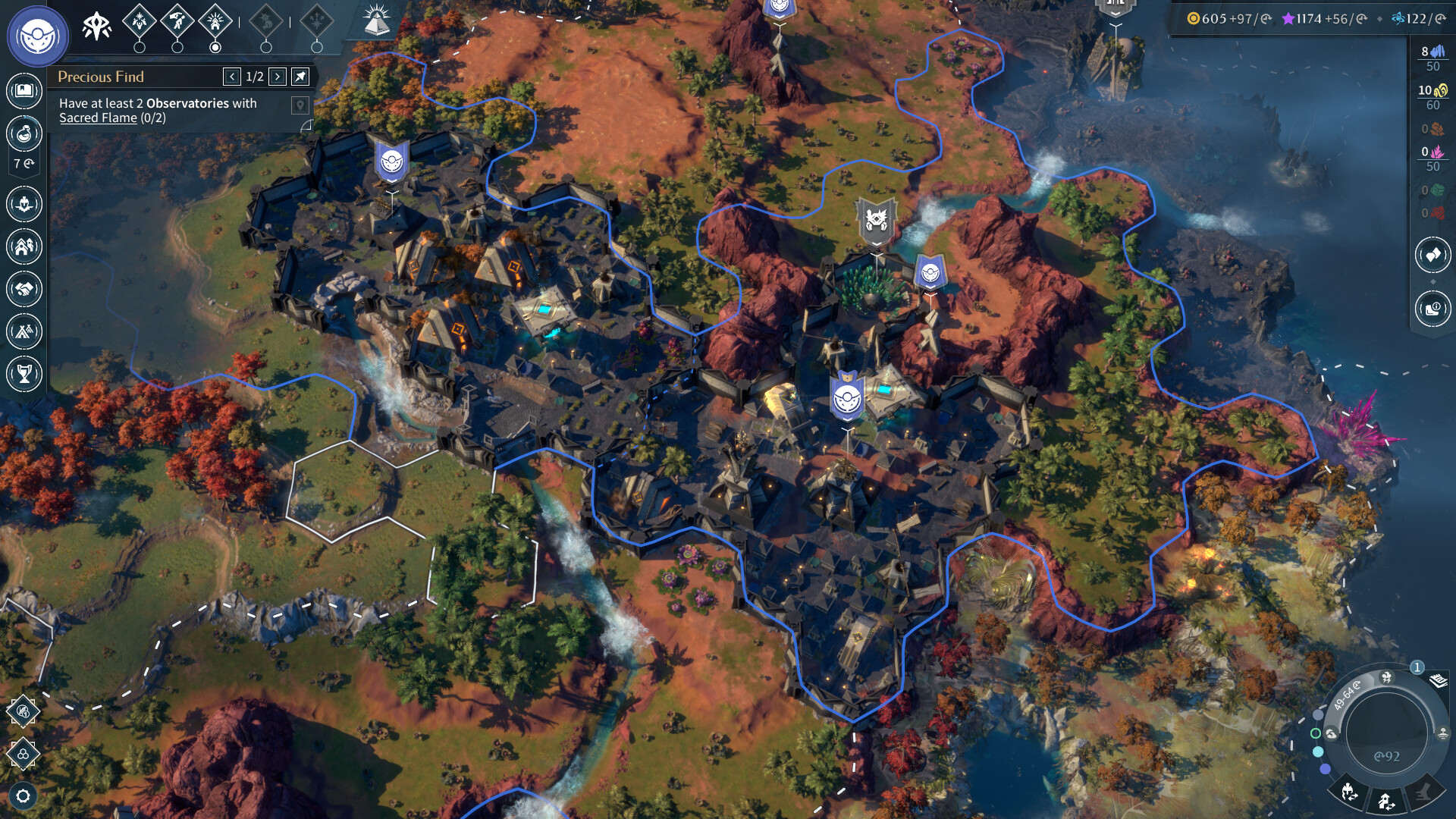
Aesthetics have always been a cornerstone of the Endless franchise, and the sequel boasts one of the most cohesive, visually striking art styles in modern strategy gaming. The terrain utilizes painterly color palettes with a mixture of matte and gloss finishes that make biomes—especially the newly revealed ocean floors—instantly distinct. Texture work is superb, clearly conveying everything from sand and stone to living fields of active circuitry.
However, the presentation is not entirely without flaw. The lighting model is notably flat, remaining largely static outside of monsoon sequences, which occasionally robs 3D models and environments of dynamic depth. Furthermore, while the user interface remains one of the best in the genre, the choice to represent cities, armies, and resource nodes with map symbols rather than clear text labels creates unnecessary friction, forcing players to memorize icon placements during the opening hours.
On the audio front, composer Arnaud Roy delivers another career-defining soundtrack. Utilizing ethereal, subdued tones centered around a crystal organ, the score adapts dynamically to gameplay states. It avoids repetitive loops by shifting effortlessly based on active screens, even dampening bass frequencies during diplomacy windows to ensure faction leader voice acting rings crystal clear.
Official Responses and Developer Philosophy
Amplitude Studios has long maintained a philosophy centered on player agency through radical asymmetry. In developer diaries and interviews leading up to the 1.0 launch, the team emphasized their desire to avoid "homogenized" 4X design.
"We didn’t want players to feel like they were just playing humans with slightly different colored hats," lead design notes indicate. By allowing factions to outright ignore core mechanics—such as the Sandshapers’ inability to farm or the Necrophage’s singular city restriction—Amplitude intentionally courts imbalance to achieve high narrative and strategic replayability.
Publisher Hooded Horse has similarly championed this uncompromising vision, positioning Endless Legend 2 as a premier flagship title for strategy enthusiasts who crave intellectual challenge over casual accessibility.
Implications: How Endless Legend 2 Reshapes the 4X Genre
Most 4X games suffer from a notorious late-game slump. Once the initial exploration and land-grab phases conclude, campaigns frequently devolve into a stagnant, tedious grind toward a predetermined victory condition as sprawling empires lock into cold wars.
Endless Legend 2 elegantly sidesteps this trap via the Tidefall mechanic. Every time the oceans recede, the geopolitical landscape fractures and reforms. Isolated territories suddenly bridge together, hidden dungeons emerge for hero units, and long-dead frontiers transform into valuable economic hubs. A player’s safe, inner-empire border can become a volatile frontline overnight. This mechanical disruption forces players back into the most exhilarating phases of 4X gameplay multiple times within a single standard-length match.
Tactical Depth and AI Challenges
On the military front, unit movement is deeply integrated into the core loop. Armies are constantly on the move—scouting, completing minor faction quests, guarding borders against seasonal Doomwraiths, and positioning themselves for impending coastal shifts.
Turn-based tactical combat, fought directly across the main campaign map, rewards intelligent positioning and terrain mastery. Factions like the ranged-focused Tahuks or the desert-loving Sandshapers thrive by exploiting chokepoints and favorable hexes. However, combat can occasionally feel mathematically rigid; damage scaling often results in equal exchanges unless numerical superiority reaches a stark 2:1 ratio, occasionally forcing players to lean heavily on system exploits or buff-stacking.
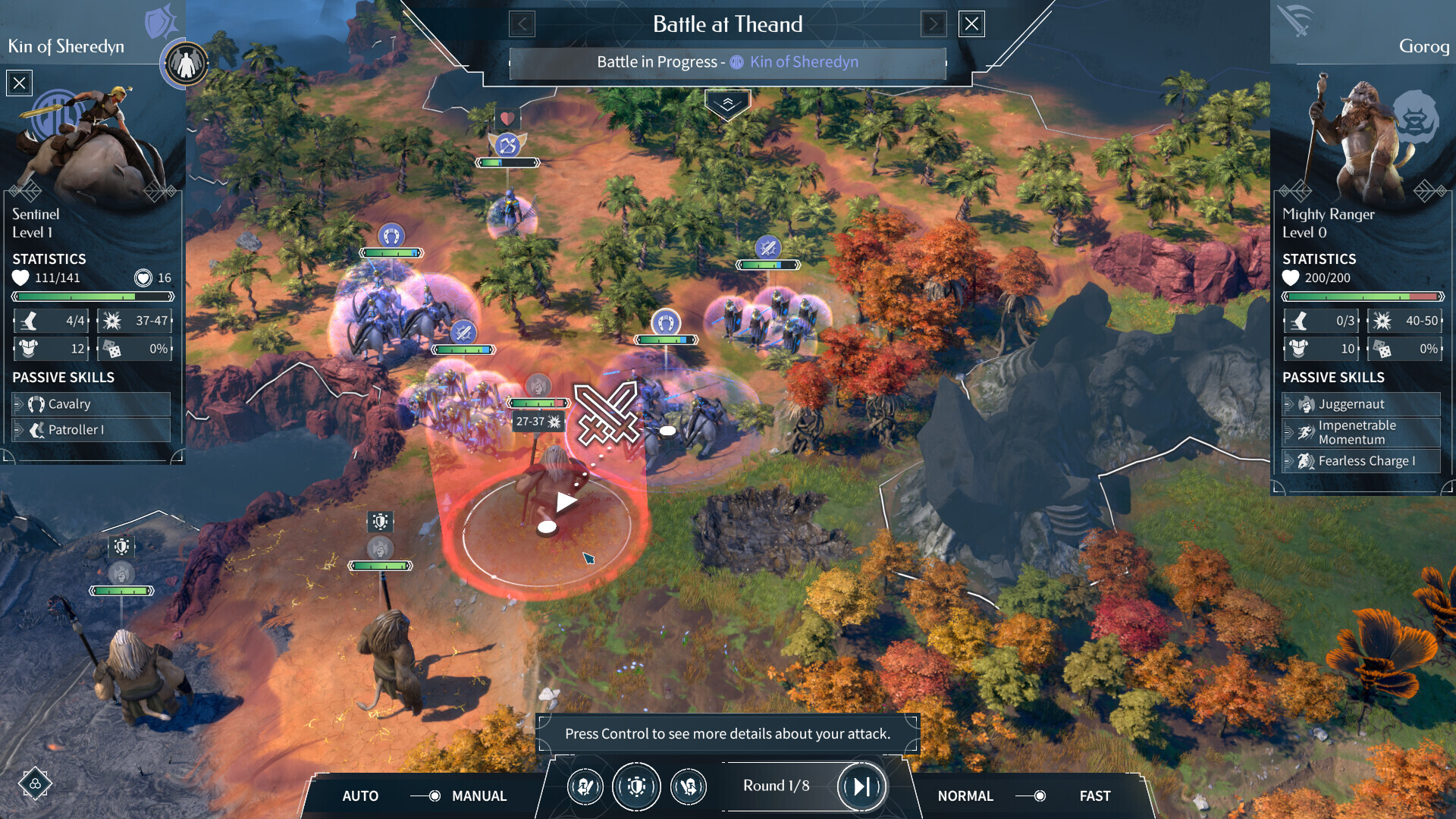
Additionally, while default difficulty settings are remarkably well-tuned, the highest tiers rely on traditional 4X crutches—inflating AI capabilities via resource bonuses rather than teaching the computer to play smarter. This occasionally forces players to resort to min-max cheese tactics to survive waves of enemy units that cannot be matched through legitimate production alone.
Verdict
Despite minor UI iconographic quirks and standard AI balancing limitations, Endless Legend 2 is a magnificent achievement. It respects the legacy of its predecessor while bravely rewriting the rules of modern strategic design. By weaponizing environmental decay through the stunning Tidefall mechanic, Amplitude Studios has crafted a game that constantly surprises, challenges, and delights. For strategy veterans and fantasy aficionados alike, Endless Legend 2 is an essential journey into the fantastical.

