

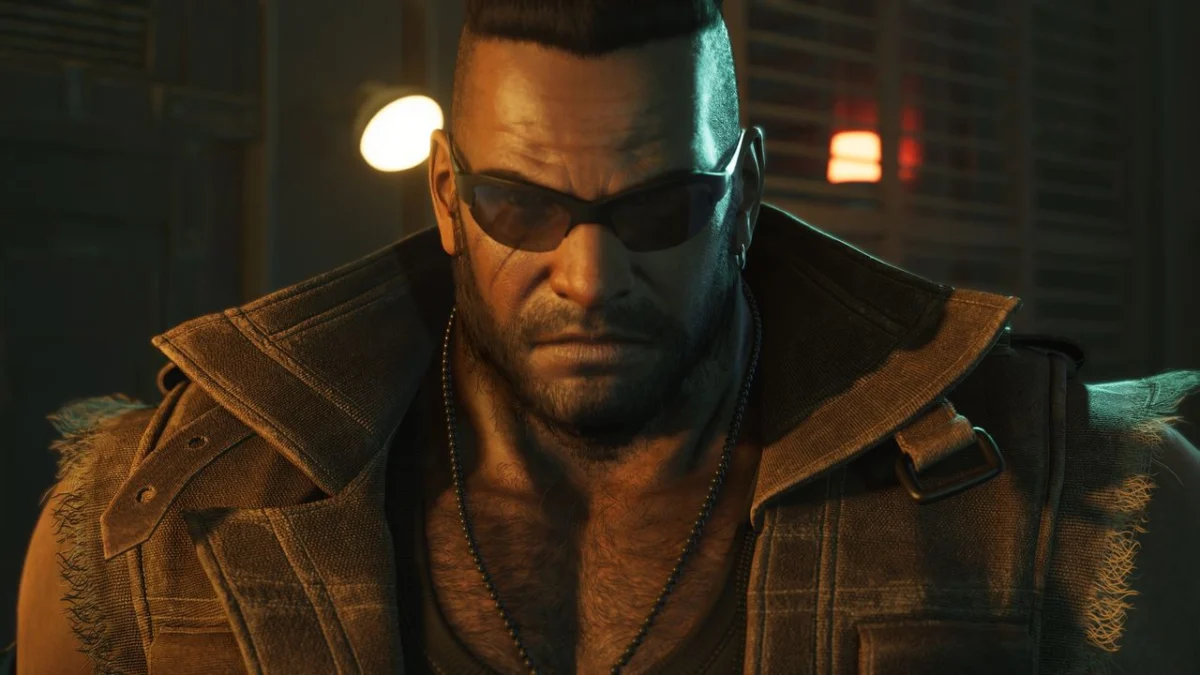
As the Final Fantasy 7 Remake trilogy hurtles toward its highly anticipated conclusion, the development team at Square Enix is facing the ultimate design challenge: adapting gaming’s most legendary and mechanically complex summon into a modern, action-driven masterpiece. According to recent insights from the core creative team, bringing the Arthurian pantheon of destruction back to the screen required an unexpected "emergency meeting" and a complete overhaul from the ground up after the studio’s initial attempts failed to meet their rigorous standards.
With Final Fantasy 7 Revelation slated to launch this coming April across major consoles and PC, fans are eagerly awaiting how Square Enix plans to close out one of the most ambitious video game projects in modern history. Among the endless list of high expectations, the return of the Knights of the Round stands out as a monumental hurdle—one that the developers nearly over-engineered simply to match the sheer awe of the 1997 original.
Main Facts: The Return of a Legend
The core details surrounding the inclusion of Knights of the Round in Final Fantasy 7 Revelation highlight the immense pressure Square Enix is under to deliver a definitive finale:
- The Return Confirmed: Game Director Naoki Hamaguchi officially confirmed in a recent interview with MinnMax that the Knights of the Round will feature prominently in Final Fantasy 7 Revelation.
- The Boss Battle Mandate: True to the design philosophy of the Remake trilogy—where players must prove their worth against supreme entities before acquiring their power—gamers will have to face all 13 legendary knights in a grueling combat encounter before claiming the materia.
- The Emergency Pivot: Following an internal review, Combat Director Teruki Endo deemed the initial design iteration of the boss battle "not strong enough." This led to an impromptu emergency meeting involving art directors, motion directors, and lead designers to scrap the work and rebuild the encounter from scratch.
- Release Window: Final Fantasy 7 Revelation is scheduled to launch next April, arriving simultaneously for current-generation consoles and PC, with Square Enix already managing logistical challenges such as physical disc download requirements to ensure zero technical compromises.
Chronology: From 1997’s Grinding Nightmare to Modern Development
To understand why the Knights of the Round demand such extraordinary treatment, it is necessary to look back at the legacy of the original 1997 PlayStation classic, and how the modern trilogy has evolved the concept of summons.
1997: The Ultimate Endgame Challenge
In the original Final Fantasy 7, obtaining the Knights of the Round materia was widely considered the toughest, most convoluted, and time-consuming optional challenge in the game. Players could not simply stumble upon it; the process required navigating the secret Round Island via a Gold Chocobo—which itself demanded hours of meticulous breeding, feeding, and racing.
Once acquired, casting the spell unspooled a notoriously long, cinematic animation where 13 armored knights systematically decimated the enemy with Arthurian fantasy flair. While visually stunning the first few dozen times, the sheer length of the sequence eventually led players to discover and utilize intricate glitches, such as the famous Vincent Mug glitch, simply to bypass the lengthy animation during late-game grinding sessions.
2020–2024: The Remake Trilogy’s Summon Evolution
When Square Enix launched Final Fantasy 7 Remake in 2020, and subsequently Rebirth in 2024, the studio completely reimagined how summons functioned. Rather than passive cinematic interruptions, summons like Shiva, Ifrit, Leviathan, and Bahamut became active combat participants. Players had to earn their respect by defeating them in virtual combat simulations hosted by Chadley before they could be summoned in battle.
The Present: Revelation and the "Emergency" Overhaul
As development ramped up on Final Fantasy 7 Revelation, the team turned its attention to the crown jewel of the game’s magical arsenal. The original materia was so overpowered that it completely trivialized the game’s final bosses. Knowing this, the team wanted the transition into a modern boss fight to feel earned, terrifying, and deeply challenging.
However, during a routine internal build review, Combat Director Teruki Endo felt that their first pass at the 13 knights lacked the overwhelming intimidation factor the developers wanted. Rather than settling for a standard boss encounter, Endo pushed for a radical change, prompting Director Naoki Hamaguchi to call an urgent cross-departmental summit.
Supporting Data: The Scale of Development Pressures
Developing the concluding chapter of a multi-part blockbuster RPG is an exercise in resource management, creative iteration, and technical ambition. While specific gameplay metrics for the Knights of the Round encounter remain under wraps, production data from the Remake project highlights the intense realities of Square Enix’s production pipeline:
- Cross-Department Collaboration: The emergency meeting called by Hamaguchi pulled leads from multiple disciplines—including the art, motion, and combat design teams—illustrating how deeply integrated enemy balancing and visual fidelity are for high-end encounters.
- Technical Uncompromise: Recent headlines surrounding Final Fantasy 7 Revelation noted that even physical media editions will require mandatory data downloads. Square Enix has explicitly stated that they refuse to compromise on asset quality, texture resolution, or world scale just to fit data onto a single disc, pointing to an exceptionally heavy game file.
- Player Expectations: Fan sentiment across community hubs like Reddit and ResetEra shows that expectations for the Knights of the Round boss fight are stratospheric. Given that Rebirth raised the bar with challenging endgame superbosses like Gilgamesh and Sephiroth, the community anticipates a multi-phase, cinematic spectacle that tests every ounce of the combat system’s depth.
Official Responses: Inside the Development Room
Naoki Hamaguchi’s candor during his interview with MinnMax offered rare, transparent insight into how creative disagreements are handled within Square Enix’s upper echelons.
"Summoning Knights of the Round will be in Final Fantasy 7 Revelation," Hamaguchi stated, acknowledging both fan excitement and apprehension. "Given how powerful the materia was in the original, we’re making it a very formidable enemy."
Describing the genesis of the emergency meeting, Hamaguchi recounted how Teruki Endo’s unyielding ambition forced the studio to pivot mid-production:
"We need to make them stronger," Hamaguchi recalled Endo declaring.
"So we had an emergency meeting among all the directors, like the art director, motion director, and I had to explain to everyone [that] Endo wants to make this boss entity stronger, so we gotta start from scratch again."
Despite the sudden disruption to their schedule, Hamaguchi’s demeanor—reportedly accompanied by a smile—reflected a team confident in its creative vision and energized by the challenge of honoring a beloved gaming legacy.
Implications: What This Means for Final Fantasy 7 Revelation
The decision to completely rebuild the Knights of the Round encounter carries several profound implications for the final installment of the trilogy:
- A Peak Challenge for Veteran Players: By positioning the 13 knights as a top-tier boss battle rather than a simple reward, Square Enix is signaling that Revelation will cater heavily to hardcore players seeking ultimate endgame challenges that surpass even the brutal simulations of Rebirth.
- Narrative Integration: In the original game, the lore behind the Round Island and the knights was largely left to fan interpretation and guidebook lore. In the modern trilogy, integrating them as physical combatants opens the door for deeper lore integration, potentially tying the Arthurian entities into the broader mysteries of the Planet, the Cetra, or the Whispers.
- Pushing Technical Boundaries: Recreating 13 distinct, high-fidelity entities on screen simultaneously while maintaining the fast-paced, fluid action combat of the Remake engine represents a massive technical feat. The need to rebuild the encounter from scratch suggests that the initial pass may have suffered from performance bottlenecks or failed to capture the cinematic grandiosity expected of modern hardware.
- Setting a High Bar for the Finale: As the final chapter of the trilogy, Revelation carries the burden of closure. How Square Enix handles its most iconic legacy elements will dictate whether the trilogy sticks its landing. By showing such uncompromising dedication to a single optional boss encounter, the studio is assuring fans that no corner of the game is being rushed or treated casually.
As the April release date approaches, players can rest assured that acquiring the most powerful materia in Final Fantasy history will not be a walk in the park—it will require mastering every mechanic the trilogy has built over the past decade.

