For decades, the real-time strategy (RTS) genre has remained an unyielding stronghold for the mouse and keyboard. Aside from rare exceptions—such as Herzog Zwei on the Sega Genesis, Halo Wars, and select adaptations like Age of Empires II on Xbox—using a controller to command armies has often felt like an exercise in frustration. The complex web of hotkeys, rapid micro-management, and pinpoint unit positioning has long convinced developers that the genre simply does not translate well to a gamepad.
However, studio Creative Assembly is looking to rewrite that narrative. As the development team charges forward with Total War: Warhammer 40,000, they are doing something past RTS developers have historically shied away from: building robust, native console controller support directly into the core battle system from day one.
Speaking at Gamescom, Creative Assembly battle product owner Dave Petry addressed the industry taboo head-on. According to Petry, the notion that controllers are inherently incompatible with real-time strategy games is a "myth." The studio believes it has engineered an interface that not only works on consoles but thrives there, treating the gamepad not as a compromise, but as a legitimate and accessible alternative input device.
Chronology: The Evolution of Console RTS and the Rise of Total War
To understand the weight of Creative Assembly’s announcement regarding Total War: Warhammer 40,000, one must look at the history of real-time strategy games on consoles and how the Total War franchise has evolved over the years.
The Early Pioneers (Late 1980s – 1990s): Titles like Technosoft’s Herzog Zwei (1989) proved that RTS concepts could theoretically function on a controller, establishing basic mechanics for unit production and map control using a gamepad. However, the runaway success of Command & Conquer and StarCraft on PC cemented the keyboard and mouse as the undisputed gold standard.
The Console Experiments (2000s): Ports of classic PC games—such as StarCraft 64—demanded immense dexterity from players, earning a reputation for punishing difficulty due to input limitations.
The Modern Breakthrough (2009 – 2023): Ensemble Studios’ Halo Wars (2009) and its sequel, Halo Wars 2 (co-developed by Creative Assembly), demonstrated that streamlined mechanics could make gamepad-driven RTS viable. Later, ports like Age of Empires II on Xbox introduced automation features—such as automated villagers—to offset the lack of macro-management precision on twin-sticks.
The Total War Formula Shifts: Traditionally, Total War titles divided gameplay into turn-based strategic campaigns on an overworld map and real-time tactical battles. While the franchise remained predominantly a PC staple, the massive expansion of the sci-fi Warhammer 40,000 universe has forced Creative Assembly to cast a wider net, targeting modern gamers across all platforms.
The Gamescom Revelation (Present): Creative Assembly reveals that controller support for Total War: Warhammer 40,000 was not tacked on as an afterthought, but was conceptualized alongside the battle system itself, positioning the upcoming title as a watershed moment for the genre.
Supporting Data & Technical Adaptability
Adapting a sprawling strategy game to a console environment requires careful calibration of user interfaces (UI), camera controls, and input mapping. Past console RTS attempts have grappled with distinct bottlenecks:
Input Limitations: A standard QWERTY keyboard offers over 100 distinct keys, and a gaming mouse allows for pixel-perfect cursor placement. In contrast, a modern console gamepad features roughly 14 primary inputs (including thumbstick clicks and directional pads), forcing developers to rely heavily on radial menus, modifier keys, and context-sensitive commands.
The Halo Wars Precedent: Creative Assembly’s prior experience co-developing Halo Wars 2 provided vital institutional knowledge. While Halo Wars benefited from a simplified economic model and smaller army sizes compared to historical Total War titles, it proved that a snappy, controller-friendly tactical interface was achievable.
Splitting Macro and Micro Management: In Total War games, the complex web of base building, economic management, and technological research is handled entirely during the turn-based campaign phase. Real-time battles focus strictly on troop movement, positioning, morale, and combat execution. By isolating the real-time elements to troop deployment and tactical maneuvering, Creative Assembly has minimized the amount of frantic menu-diving required during high-stress skirmishes.
Official Responses and Developer Insights
Dave Petry’s comments at Gamescom shed light on the design philosophy driving Creative Assembly’s cross-platform ambitions. Rather than viewing the controller as an inferior input device that requires heavy hand-holding, the studio treats it as an inclusive accessibility and lifestyle choice.
"Because yes, obviously, controllers are your primary method for using consoles, but it’s just an input method," Petry explained to TechRadar. "It’s an accessibility tool, right? It’s how you want to play or how you would like to play, and so we’ve always wanted to be able to bring that experience to people who want to use a gamepad."
The studio emphasizes that the controller integration for Total War: Warhammer 40,000 was not a frantic, late-stage porting job. Instead, the team designed the battle system with dual inputs in mind from the earliest stages of production.
While acknowledging that certain high-level maneuvers—such as executing precise cycle-charges with cavalry units or manipulating enemy line-of-sight by micro-managing a single lord—might feel different on analog sticks compared to a mouse, Petry remains confident in the final product.
"I think we are learning that we can do this right, and yeah, it’s definitely something that we’re all keen to keep evolving as we ship and work on it," Petry noted. "I think we’ve landed in a really solid spot. I think we’re quite proud of where we are when it comes to the technical side of things as well."
Implications for the Industry and the Total War Franchise
The successful integration of deep RTS mechanics into a console framework via Total War: Warhammer 40,000 carries significant implications for both Creative Assembly and the broader strategy gaming market.
1. Broadening the Audience
Strategy games have historically faced a barrier to entry due to hardware requirements and complex control schemes. By successfully optimizing Total War for consoles, Creative Assembly opens up its massive, lore-rich universe to millions of players who primarily or exclusively game on PlayStation and Xbox systems.
2. Redefining Genre Standards
If Total War: Warhammer 40,000 proves that complex, large-scale tactical battles can be commanded smoothly with a gamepad without sacrificing depth, it could permanently shift developer expectations. Studios may increasingly view multi-platform simultaneous releases as standard practice for strategy titles rather than PC-first exclusivity followed by awkward, delayed console ports.
3. Setting a New Benchmark for Warhammer Adaptations
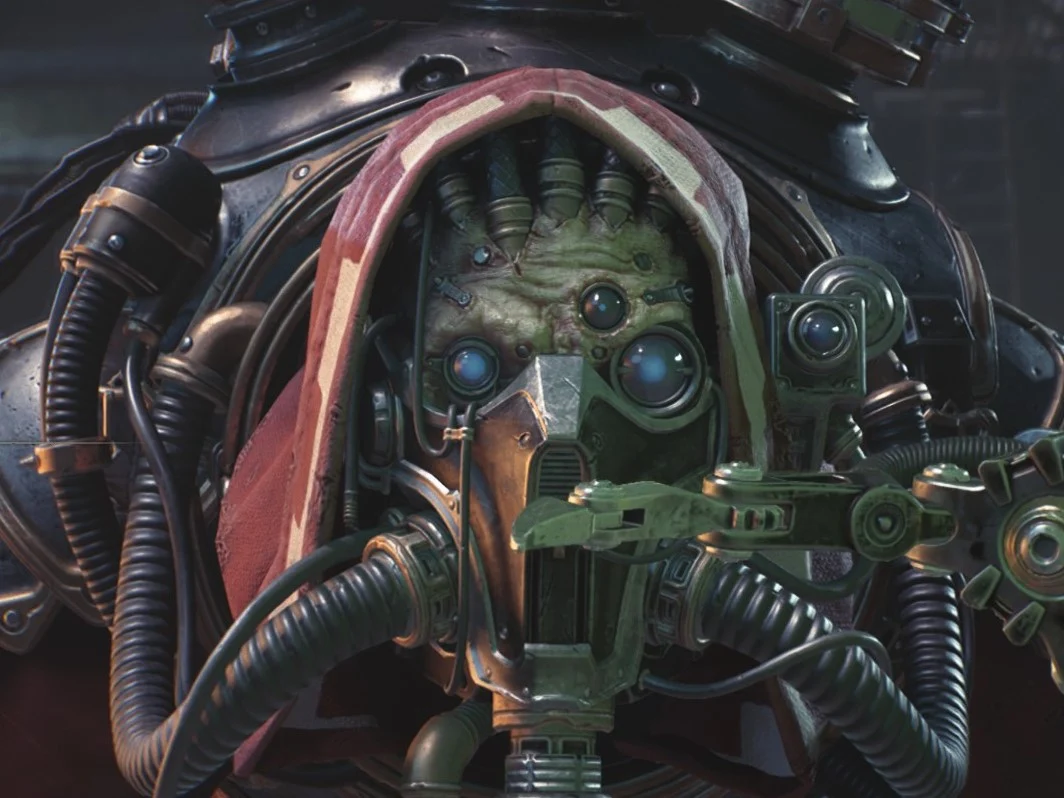
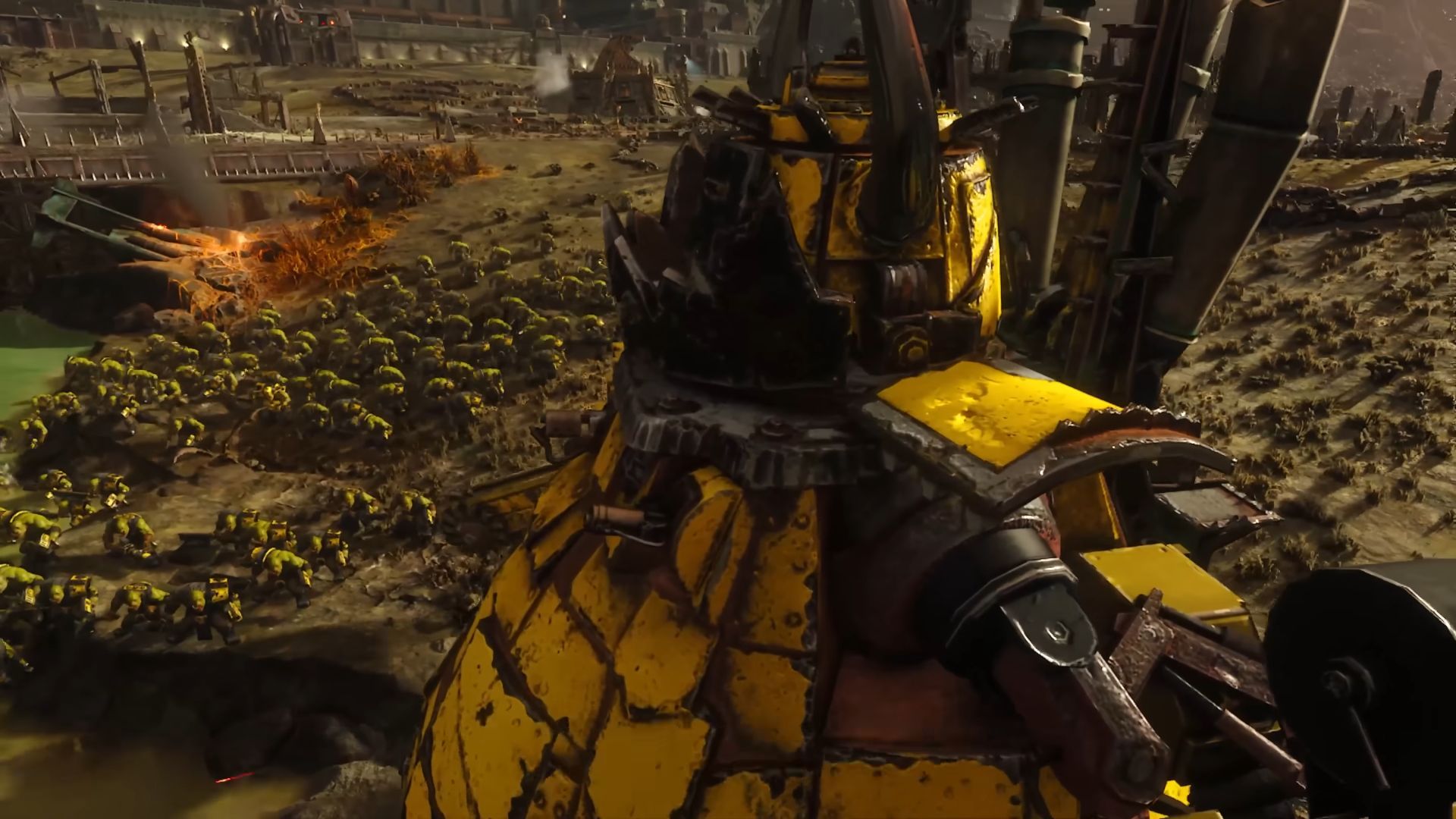
The Warhammer 40,000 universe is defined by titanic clashes, towering Orks, relentless Space Marines, and apocalyptic scale. Translating that chaotic grandeur onto a console screen while maintaining the tactical fidelity expected of the Total War brand is a monumental task. If Creative Assembly succeeds, it will cement Total War: Warhammer 40,000 not just as a high point for the franchise, but as a technical milestone in gaming history—proving once and for all that the RTS genre’s long-standing relationship with the keyboard and mouse can, indeed, evolve.