

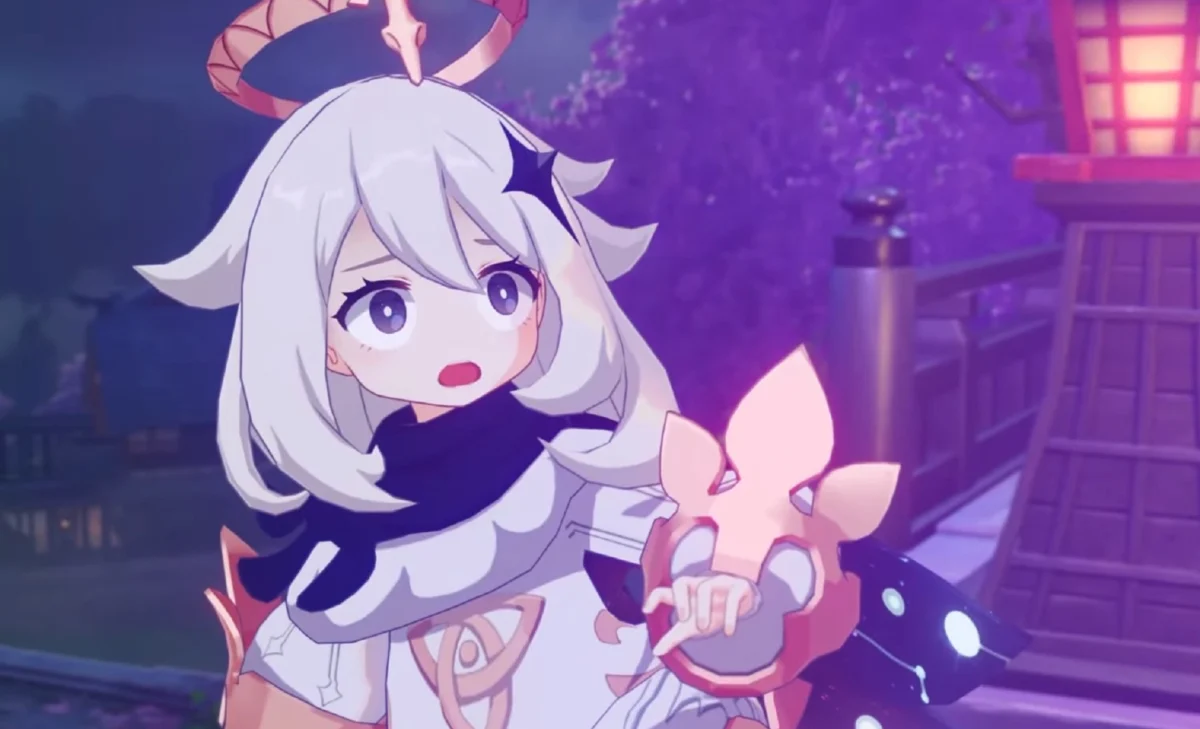
SHANGHAI — In a major legal victory for the video game industry, Genshin Impact developer HoYoverse has successfully defended its intellectual property against unauthorized generative AI exploitation. A Shanghai court has ordered an unnamed local artificial intelligence service provider to pay 750,000 Chinese Yuan (approximately $112,000 USD) in damages for illegally reproducing the voices and visual likenesses of 63 characters from the globally popular action role-playing game.
The ruling, handed down by the Pudong New Area People’s Court of Shanghai, marks a crucial precedent in the ongoing global friction between copyright holders and the rapid, often unregulated expansion of generative AI technologies. While the financial penalty fell significantly short of HoYoverse’s initial 5 million Yuan ($745,000 USD) demand, the court’s enforcement of immediate injunctive relief and the finality of the judgment—cemented after the defendant withdrew its appeal—signal a strengthening legal framework against commercial AI infringement.
Main Facts of the Case
The core of the legal dispute centered on an artificial intelligence startup based in Shanghai that specialized in synthetic voice generation and interactive conversational models. According to legal filings and reporting by Automaton, the firm took it upon itself to harvest, replicate, and commercialize the audio profiles and aesthetic identities of 63 distinct Genshin Impact characters without seeking authorization from miHoYo/HoYoverse.
The AI service provider was found guilty of several distinct copyright and unfair competition violations:
- Voice Cloning: The company synthesized and distributed AI voice packs bearing "nearly identical characteristics" to iconic Genshin Impact heroes and villains, relying on the emotional cadence, pitch, and vocal signatures established by professional voice actors.
- Visual Misappropriation: To market these illicit voice packs, the firm utilized modified promotional artwork, character splash art, and rendered models of the beloved anime-style protagonists.
- Commercial Exploitation: Rather than keeping the models as simple technological proofs-of-concept, the provider packaged the assets into consumer-facing products. These modified versions of Genshin Impact characters were repurposed as interactive, chatty virtual avatars designed for intimate, personalized conversations with users.
The Pudong New Area People’s Court ruled that this conduct did not merely cross the line into copyright infringement; it constituted severe unfair competition. By leveraging the immense goodwill, brand recognition, and artistic investment poured into Genshin Impact characters by HoYoverse, the AI startup attempted to siphon consumer interest and profit off proprietary assets.
Chronology of the Legal Battle
The timeline of the dispute highlights the swift escalation of legal action within China’s judicial system regarding digital copyright:
- The Infringement Phase: Operating under the assumption that gray-market AI training and asset reproduction could bypass traditional legal scrutiny, the Shanghai-based AI provider launched voice packs and virtual companion avatars featuring unmistakably recognizable Genshin Impact voices and likenesses.
- The Lawsuit and Injunction Request: Upon discovering the widespread exploitation of its intellectual property, HoYoverse initiated legal proceedings in the Pudong New Area People’s Court. The developer sought a robust 5 million Yuan ($745,000 USD) in damages alongside an immediate injunction to halt the distribution of the infringing AI products.
- The Initial Judgment: The court sided with HoYoverse on the core tenets of copyright infringement and unfair competition. It ordered the defendant to cease all commercial operations involving the illicit assets immediately and assessed a penalty of 750,000 Yuan ($112,000 USD).
- The Appeal and Ultimate Withdrawal: Dissatisfied with the liability or seeking to stall execution, the AI provider initially appealed the verdict. However, realizing the untenable legal foundation of its business model—particularly in light of tightening Chinese and international regulations on generative AI—the company ultimately withdrew its appeal, making the 750,000 Yuan payout and permanent injunction legally binding.
Supporting Data and Financial Breakdown
While the ruling is a milestone for intellectual property rights in the interactive entertainment sector, a close examination of the numbers reveals a stark contrast between corporate ambition and judicial payout:
- 63: The total number of Genshin Impact characters whose unique vocal profiles and design traits were illegally cloned and monetized by the AI service provider.
- 750,000 CNY (~$112,000 USD): The final monetary damages awarded to HoYoverse by the Pudong New Area People’s Court.
- 5,000,000 CNY (~$745,000 USD): The original financial compensation demanded by HoYoverse, reflecting the scale of the infringement across dozens of characters and the potential revenue generated by the illicit AI service.
- 100%: The compliance rate mandated by the court, requiring an immediate, total cessation of the infringing behaviors and bringing a definitive end to the defendant’s commercialization of the cloned assets.
Although HoYoverse received less than 20% of its requested financial settlement, legal analysts note that the securing of an immediate injunction and the establishment of a legal precedent holding synthetic voice providers accountable are far more valuable long-term assets for the gaming giant.

Official Responses and Industry Context
The case arrives at a turbulent crossroads for the video game industry. Across the globe, game developers, publishers, and legal experts are sounding the alarm over the unchecked scraping of copyrighted material by generative AI enterprises.
In recent months, entertainment lawyers have increasingly warned that generative AI models represent a "copyright landmine." Many major game studios have begun explicitly drafting anti-AI clauses into contracts with freelance artists, voice actors, and localization teams. This defensive posture is driven not only by strict legal parameters but also by fierce pushback from core gaming communities, who have consistently rejected generative text, imagery, and voice acting as soulless substitutes for human creativity.
HoYoverse has maintained a guarded yet firm stance on the integrity of its creative assets. As a company that relies heavily on emotional connections between players and its expansive rosters of characters in titles like Genshin Impact and Honkai: Star Rail, protecting the exact vocal performances of voice actors and the bespoke designs of character artists is paramount. The unauthorized transformation of these characters into generic, AI-driven virtual companions strikes directly at the heart of the developer’s brand identity.
Broader Implications for Generative AI and Game Development
The Shanghai court’s decision carries profound implications that stretch far beyond the borders of mainland China:
1. The Vulnerability of Synthetic Voice Work
Voice actors have been among the most vocal opponents of generative AI, frequently highlighting how their life’s work is used to train neural networks without consent or compensation. By successfully prosecuting a company that cloned the voices of 63 distinct characters, HoYoverse has set a vital precedent for protecting vocal talent. It demonstrates that mimicking a character’s distinctive audio footprint for commercial chatbot or avatar services is a legally punishable offense.
2. Redefining "Unfair Competition" in the AI Era
Traditional copyright law often struggles to keep pace with rapid technological evolution, particularly when AI developers argue that "transformative" technologies or public data scraping fall under fair use. By framing the violation not just as copyright theft but as unfair competition, the Shanghai court bypassed certain technical loopholes, focusing instead on the commercial harm caused by passing off cheap AI replicas as high-value entertainment properties.
3. A Chilling Effect on Gray-Market AI Startups
For smaller, opportunistic AI service providers operating on the fringes of copyright law, this ruling acts as a stark warning. The days of treating established video game franchises as an open-source training ground for virtual companions and chat services are rapidly coming to an end. As legal frameworks harden in major markets like China, the United States, and the European Union, generative AI firms will face immense pressure to secure formal licensing agreements or risk catastrophic litigation.
Ultimately, while the financial penalty collected by HoYoverse represents a drop in the ocean compared to the billions generated by its blockbuster titles, the legal clarity established by the Pudong New Area People’s Court is priceless. As the industry navigates the disruptive wave of generative technologies, this case serves as a clear message: pretending that stolen intellectual property was always yours is a legal strategy with a very short expiration date.

