

By Bruno Ferreira
Contributed to Tom’s Hardware
Main Facts: The NeoGeo AES+ Delay and Hardware Philosophy
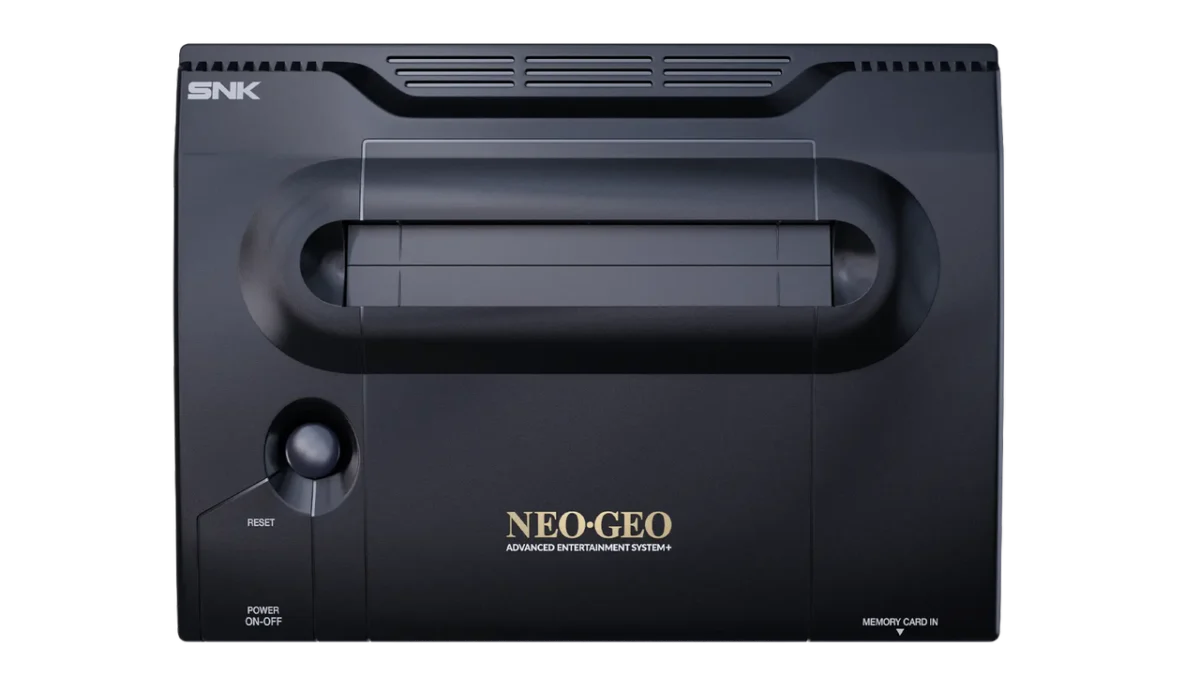
Plaion has officially announced a significant 10-month delay for the release of the NeoGeo AES+, pushing its global launch back to September 16, 2027. While hardware delays are common in the modern technology sector, the underlying causes cited by Plaion point to a complex intersection of surging consumer interest and global semiconductor supply chain constraints. According to the company, demand for the upcoming retro console has substantially outpaced initial internal projections. However, the primary catalyst for the postponement is the ongoing, industry-wide RAM shortage—a crisis heavily exacerbated by the explosive growth of artificial intelligence (AI) infrastructure and hyperscale data center construction.
Unlike the vast majority of modern retro-console re-releases, which rely on software emulation running on generic system-on-chip (SoC) architectures, the NeoGeo AES+ is engineered to be a contemporary, hardware-level 1:1 replica of SNK’s legendary home console. Rather than emulating games through software, Plaion is utilizing dedicated Application-Specific Integrated Circuits (ASICs) alongside modern implementations of classic processing blocks, presumably mirroring the Motorola 68000 CPU and Zilog Z80A co-processor layout of the original machine.
To ensure absolute fidelity and allay any concerns from purists, Plaion enlisted heavyweight engineering talent, including long-time MiSTER core developer Jotego. The hardware architecture goes so far as to implement authentic 5-volt power delivery, ensuring direct physical and electrical compatibility with original NeoGeo AES cartridges, as well as third-party arcade adapter solutions.

Chronology: The Evolution, Decline, and Rebirth of a Legend
To understand the cultural and engineering significance of the NeoGeo AES+, one must look back at the fascinating history of SNK’s hardware ecosystem, which spanned an impressive 14-year commercial lifecycle from 1990 to 2004.
- 1990 — The Arcade and Home Convergence: SNK revolutionizes the video game industry by launching the Multi Video System (MVS) for arcades and the Advanced Entertainment System (AES) for the home. For the first time in gaming history, a home console shares the exact same hardware specifications as its arcade counterpart. The only initial differences are the form factor, the marketing name, and a software lockout mechanism designed to keep arcade operators from exploiting cheaper home cartridges.
- 1993–1997 — The Golden Era of Fighting Games: As titles like Samurai Shodown, Fatal Fury, and The King of Fighters dominate arcades, the NeoGeo AES establishes a cult following among affluent gamers. Despite its prohibitive cost, it becomes the undisputed gold standard for 2D fighting games.
- 2004 — End of an Era: SNK officially discontinues the production of new NeoGeo hardware and software cartridges, bringing a staggering 14-year run to a quiet close.
- May 2024–Present — The Modern Revival Era: Spurred by a resurgent interest in physical media and FPGA/hardware preservation, Plaion and SNK announce the development of the NeoGeo AES+, aimed at bridging the gap between retro hardware collection and modern manufacturing standards.
- September 16, 2027 — The Revised Launch Date: Following supply chain disruptions driven by global AI demand, the anticipated shipping date for the NeoGeo AES+ is locked in for late 2027.
Supporting Data: Pricing, Configurations, and Technical Specifications
The original NeoGeo AES was infamous for its astronomical price tag upon release in 1990, retailing for $399.99 (approximately $1,028 when adjusted for inflation) for just the base console, one arcade stick, and zero bundled games. A "Gold System" package, featuring two joysticks, a memory card, and a pack-in game, cost an eye-watering $649.99—equivalent to roughly $1,671 today.
Plaion’s modern tiered pricing structure for the AES+ makes the hardware considerably more accessible, though collector editions still command premium figures:
- Base Model ($249.99 / €199.99): Includes the console and one wired arcade joystick. Considering that a high-end arcade stick routinely commands $75 to $100 on the standalone market, the base entry price is remarkably competitive.
- Anniversary Edition ($349.99 / €299.99): Features a distinct white chassis finish, a copy of Metal Slug, a modern wireless joystick, and a digital/physical memory card replication unit.
- Ultimate Edition ($999.99 / €899.99): The collector’s dream package, bundling all ten re-released physical cartridges, two joysticks (one wired, one wireless), and a dedicated gamepad.
Re-Released Launch Cartridges
Plaion has committed to manufacturing ten iconic titles in physical cartridge form for the launch window:

- Metal Slug
- Garou: Mark of the Wolves
- Pulstar
- The King of Fighters 2002
- (Six additional classic SNK titles to be detailed closer to launch)
Technical Architecture Breakdown
The longevity of the original NeoGeo platform was rooted in its monumental over-engineering. At a time when competitors relied on simple 8-bit or early 16-bit tiles, the NeoGeo packed a staggering array of resources:
- Processing Power: Seven distinct processors and co-processors working in tandem, anchored by a Motorola 68000 main CPU running at 12 MHz and a Zilog Z80 sound CPU.
- Graphics Capabilities: A specialized GPU featuring a 24-bit bus capable of rendering 3,840 simultaneous colors on screen from a palette of 65,536, spread across up to 380 independent sprites.
- Sprite Mechanism: Unlike the traditional tile-map background layers used by the Sega Genesis and Super Nintendo, the NeoGeo utilized an unconventional but remarkably fast vertical-strip sprite architecture coupled with hardware scaling.
- Storage Capacity: Expandable cartridge ROM capacities grew exponentially over the system’s lifespan, culminating in late-era giants storing up to 716 Mb (89.5 MB) of high-fidelity graphical assets and audio data.
Official Responses and Industry Context
Plaion’s frank admission regarding the AI-driven RAM shortage highlights a systemic vulnerability in modern hardware manufacturing. As massive technology conglomerates aggressively buy up high-speed memory modules (such as HBM and specialized DRAM variants) to fuel large-scale generative AI model training and server farms, smaller hardware manufacturers and niche consumer electronics companies are increasingly pushed to the back of the queue.
In statements accompanying the delay notice, Plaion representatives emphasized that the extra ten months of development time will not be wasted. The engineering team, bolstered by community hardware legends like Jotego, intends to use the window to optimize the ASIC manufacturing runs, stress-test compatibility with rare third-party MVS converters, and secure long-term component supply contracts that bypass the volatile spot market for RAM.
Industry analysts note that while retro enthusiasts may lament the 2027 arrival, the decision to delay rather than compromise on the hardware architecture is a testament to the purity of the project. Emulation-based boxes can be mass-produced with generic silicon chips, but a true hardware replica requires specific memory timings and bus widths that cannot easily be substituted without altering how the software behaves.

Implications: What the AES+ Means for Retro Preservation
The delay of the NeoGeo AES+ serves as a micro-cosmic reflection of broader anxieties within the video game preservation community. As original, aging arcade and home console hardware degrades due to capacitor leakage, trace corrosion, and silicon rot, the demand for authentic, hardware-accurate recreation projects has never been higher.
1. The Death of Software Emulation Fatigue
For years, consumers have been fatigued by low-cost "plug-and-play" emulation consoles pre-loaded with ROMs packaged inside cheap plastic shells. These devices often suffer from input lag, audio distortion, and inaccurate physics calculations. The NeoGeo AES+ represents a philosophical shift toward hardware preservation through recreation, mirroring the ethos of the FPGA community (such as the MiSTer FPGA project) while offering native cartridge slots for original media collectors.
2. Supply Chain Realities for Niche Hardware
The reality that a niche retro gaming project can be delayed by artificial intelligence data center expansions underscores how deeply interconnected the global semiconductor market has become. No sector—no matter how nostalgic or seemingly disconnected from modern computing trends—is immune to the silicon supply crunch.
3. Validating the Physical Media Market
Plaion’s decision to manufacture brand-new physical cartridges for classic titles like Metal Slug and Pulstar proves that a robust, high-spending market exists for tangible gaming artifacts. In an era dominated by digital storefronts, subscription services, and sudden license delistings, the willingness of consumers to pay up to $1,000 for an Ultimate Edition physical bundle signals a powerful vote of confidence in physical ownership.

As the industry counts down toward the revised September 16, 2027 launch date, all eyes will remain on Plaion and its engineering cohort to see if the NeoGeo AES+ can successfully bridge the gap between 1990s arcade majesty and the brutal supply chain realities of the late 2020s.

