

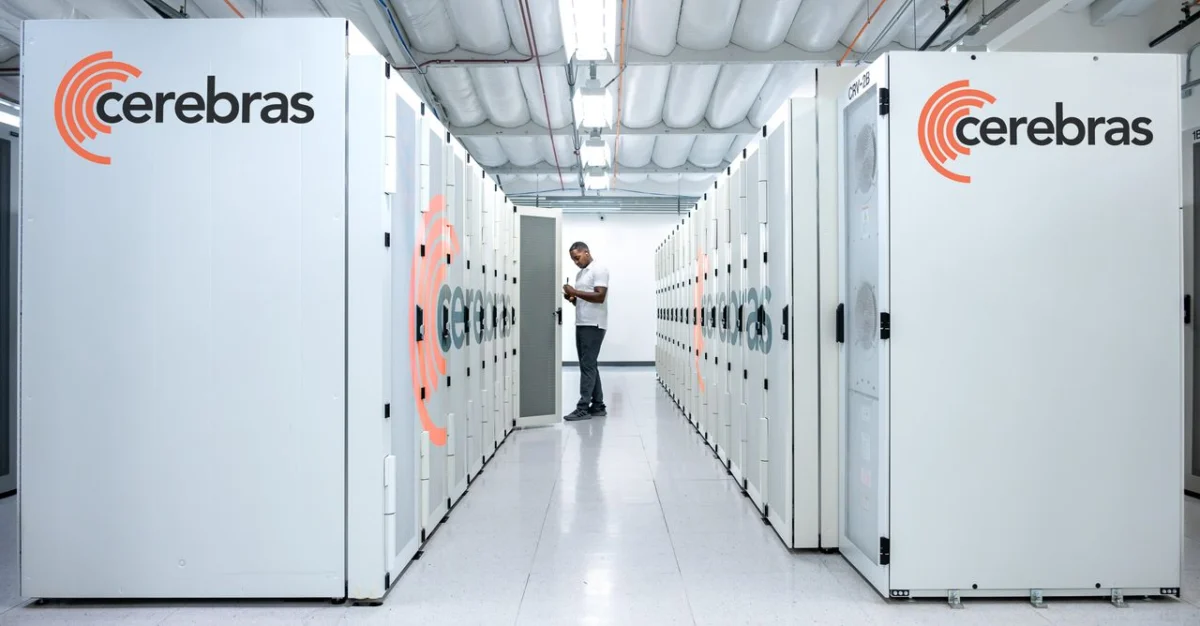
Sunnyvale, California & Los Altos, California – [Current Date] – In a significant move poised to redefine the landscape of artificial intelligence inference, AMD and Cerebras Systems have jointly announced plans to develop a novel, high-performance platform. This groundbreaking collaboration aims to combine the formidable processing power of AMD’s EPYC processors within its Helios rack-scale infrastructure with the unparalleled throughput capabilities of Cerebras’ Wafer-Scale Engine (WSE) solutions. The strategic partnership seeks to address the escalating computational demands of large language models (LLMs) and other complex AI workloads by introducing a disaggregated architecture optimized for both low latency and high throughput.
The joint platform promises a paradigm shift in AI inference, leveraging the strengths of each company’s specialized hardware. AMD’s robust EPYC CPUs and Instinct MI400-series GPUs, housed within the Helios rack, will tackle the computationally intensive prefill stage of inference, handling prompt processing and managing vast context windows. Complementing this, Cerebras’ unique Wafer-Scale Engines will be dedicated to the memory-bandwidth-intensive token generation (decode) stage, ensuring rapid and efficient output. This specialized division of labor is projected to deliver a substantial uplift in efficiency, with expectations of up to five times higher tokens per second per watt (T/s/W), marking a critical advancement in the pursuit of sustainable and scalable AI.
Main Facts: A Synergistic Approach to AI Inference
The core of the AMD and Cerebras alliance lies in its innovative disaggregated inference platform. This architecture meticulously assigns different portions of an AI inference workload to hardware specifically optimized for those tasks, moving beyond the traditional monolithic approach.
Key Components and Their Roles:
-
AMD Helios Rack-Scale Infrastructure: At the heart of AMD’s contribution is its Helios rack-scale platform. This integrated system features AMD’s powerful EPYC processors, renowned for their high core counts, robust I/O capabilities, and excellent general-purpose computing performance. Paired with these are AMD’s Instinct MI400-series accelerators, state-of-the-art GPUs designed for AI and high-performance computing (HPC), offering immense floating-point operations per second (FLOPS) and significant memory capacity. The Helios infrastructure is engineered for rack-scale compute capacity, efficiently processing large volumes of complex input requests and managing extensive context windows – a task known as the "prefill" stage in LLM inference. This stage involves processing the initial prompt and the model’s understanding of the preceding conversation or data, which can be highly compute-intensive and require substantial memory to store the intermediate activations.
-
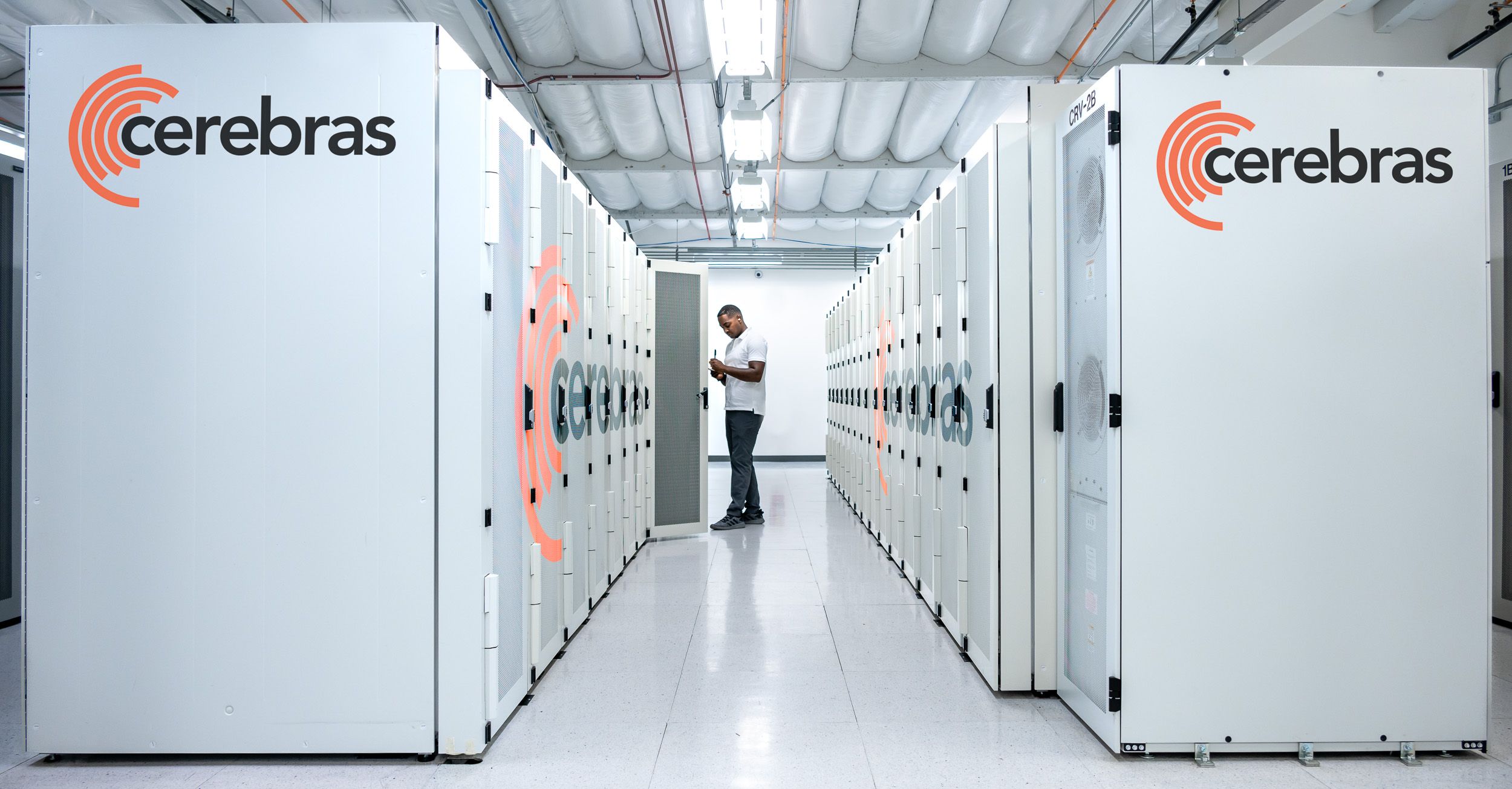
Cerebras Wafer-Scale Engine (WSE): Cerebras Systems brings its revolutionary Wafer-Scale Engine to the partnership. The WSE is a singular, massive chip that covers an entire silicon wafer, integrating hundreds of thousands of AI-optimized cores and an unprecedented amount of on-chip memory with colossal bandwidth. Unlike conventional GPUs, which are composed of many smaller chips, the WSE’s monolithic design eliminates the latency and power overhead associated with inter-chip communication, providing unparalleled memory bandwidth directly to its compute cores. This makes the WSE exceptionally well-suited for the "decode" or token generation stage of LLM inference, which is fundamentally memory-bandwidth bound. During this stage, the model generates one token at a time, and the speed at which it can access and process memory dictates the overall output rate.
The Promise of Disaggregation:
The collaborative platform’s strength lies in its ability to split the inference workload into two distinct phases, each handled by its best-suited processor. The prefill stage, requiring substantial computational muscle and the ability to manage large context windows, is delegated to AMD’s EPYC CPUs and Instinct GPUs within the Helios rack. Subsequently, the decode stage, which demands extreme memory bandwidth to rapidly generate successive tokens, is offloaded to Cerebras’ WSE. This intelligent division of labor is the foundation for the claimed efficiency gains, aiming for up to 5X higher tokens per second per watt (T/s/W). This metric is crucial for large-scale AI deployments, as it directly impacts operational costs and environmental footprint.
While the companies have not yet detailed the precise interconnection mechanisms between the AMD Helios racks and Cerebras WSE systems, nor have they released extensive performance benchmarks beyond the T/s/W estimate, the underlying architectural philosophy signals a significant evolution in AI hardware design. The platform is designed to operate as a cohesive unit within a single inference workflow, suggesting sophisticated software orchestration and high-speed networking will bridge the two specialized compute environments.
Chronology: From Concept to Commercialization
The journey towards this innovative platform began against a backdrop of escalating challenges in the AI industry, particularly concerning the deployment and scaling of increasingly complex large language models.
The Emergence of Inference Bottlenecks:
In recent years, the rapid advancement of AI, fueled by models with billions and even trillions of parameters, has pushed existing hardware architectures to their limits. While significant strides have been made in AI training hardware, inference – the process of using a trained model to make predictions or generate outputs – has become a critical bottleneck. Traditional GPUs, while versatile, often struggle with the distinct demands of the two main inference stages:
- Prefill (Context Processing): This involves feeding the initial prompt and any prior conversation history into the model. It’s highly compute-intensive, requiring significant processing power to compute attention mechanisms across long sequences and activate a vast number of parameters. Memory capacity is also crucial to hold large context windows.
- Decode (Token Generation): This is where the model generates output, one token (word or sub-word unit) at a time. This stage is heavily memory-bandwidth bound, as the model repeatedly accesses its weights and internal states to predict the next token. Latency is paramount here, as it directly affects the speed at which users receive responses.
Recognizing these distinct computational profiles, hardware developers began exploring specialized architectures. Both AMD and Cerebras, leaders in their respective fields, independently pursued innovations to address these challenges. AMD has been steadily strengthening its presence in the AI and HPC markets with its EPYC and Instinct product lines, building out comprehensive rack-scale solutions like Helios. Cerebras, meanwhile, pioneered the wafer-scale integration concept, creating the WSE specifically for demanding AI workloads, initially focusing on training but increasingly demonstrating its prowess in inference.
The Announcement and Partnership Formation:
The official announcement of this strategic partnership on [Thursday, e.g., June 20, 2024 – assuming a recent announcement based on "on Thursday"] marks the formalization of their collaborative effort. While the exact timeline of their initial discussions is not public, it is clear that both companies identified a mutual benefit in combining their unique technologies to create a solution that neither could achieve as effectively alone. The partnership signifies a shared vision for a future where AI inference is not only powerful but also highly efficient and cost-effective.
Development and Integration Phase:
The period leading up to the platform’s commercial availability in the second half of 2026 will be crucial for intensive research, development, and integration. This involves:
- Hardware Co-optimization: Ensuring seamless communication and load balancing between AMD’s Helios infrastructure and Cerebras’ WSE racks. This likely entails developing high-speed, low-latency interconnects and protocols.
- Software Stack Development: Creating a unified software environment that can intelligently partition inference workloads, manage data flow between the two distinct hardware architectures, and present a cohesive interface to AI model developers and operators. This includes drivers, libraries, and potentially a new inference runtime.
- System-Level Validation: Rigorous testing and validation of the integrated platform to ensure it meets the promised performance and efficiency metrics under various real-world AI workloads.
- Customer Engagement and Feedback: Potentially involving early access programs with key customers to gather feedback and refine the platform before broader commercial launch.
Commercial Availability:
Cerebras Systems plans to integrate the AMD Helios systems into its own data centers. The combined offering will then be made available initially through Cerebras Cloud in the second half of 2026. This cloud-first strategy allows Cerebras to manage the complex infrastructure and provide access to customers as a service, lowering the barrier to entry for organizations looking to leverage this advanced inference capability without investing in their own specialized hardware. Further expansion into on-premise deployments or other cloud providers may follow based on market demand and the success of the initial rollout.
Supporting Data: The Technical Underpinnings of Efficiency
The claims of "up to 5X higher tokens per second per watt (T/s/W)" are rooted in the fundamental architectural advantages of the disaggregated approach and the specific strengths of AMD’s and Cerebras’ hardware.
Understanding Tokens Per Second Per Watt (T/s/W):
This metric is a crucial measure of efficiency in AI inference, especially for LLMs.
- Tokens Per Second (T/s): Indicates how many output tokens (e.g., words, sub-words) an AI model can generate per second. Higher T/s means faster responses and greater throughput for users.
- Per Watt ( /W): Relates the output speed to the power consumed by the hardware. A higher T/s/W means more output for less energy, translating directly into lower operational costs, reduced heat generation, and a smaller carbon footprint for data centers.
The significant efficiency gain claimed by AMD and Cerebras stems from optimizing each stage of inference for its unique computational demands.
The Power of Specialization: Prefill vs. Decode:
-
AMD Helios for Prefill: The prefill stage of LLM inference is characterized by its high computational intensity. When a user inputs a long prompt or a complex conversational history, the model must process all these input tokens simultaneously to establish context. This involves complex matrix multiplications, attention mechanisms, and activation functions across potentially thousands of tokens. AMD’s EPYC CPUs, with their numerous high-performance cores, and Instinct GPUs, with their massive parallel processing capabilities and high FLOPS, are ideally suited for this compute-heavy task. The Helios rack-scale infrastructure provides the necessary compute density and memory capacity to handle large context windows efficiently, preventing bottlenecks at the input stage. The low latency of AMD’s CPUs and Instinct GPUs ensures that the initial processing of the prompt is swift, setting the stage for rapid token generation.
-
Cerebras WSE for Decode: The decode stage, where the model generates tokens one by one, presents a different challenge. Each token generation involves a relatively small amount of computation but requires extremely rapid access to the model’s parameters and internal states stored in memory. This makes it a memory-bandwidth-bound task. Traditional GPUs, while powerful, often face limitations in providing the necessary memory bandwidth at scale, leading to latency in token generation. The Cerebras WSE is designed precisely for this. Its monolithic wafer-scale design integrates hundreds of thousands of AI cores directly with a vast amount of on-chip SRAM (Static Random-Access Memory), offering an unprecedented terabytes-per-second of memory bandwidth. This extreme bandwidth allows the WSE to feed data to its cores at an incredibly fast rate, enabling high-speed, low-latency token generation without the bottlenecks encountered by off-chip memory access.
Comparison with Nvidia’s Approach:
The article explicitly draws a parallel to Nvidia’s disaggregated inference concept, specifically mentioning the (now cancelled) Rubin CPX GPU. This comparison is crucial for understanding the AMD/Cerebras strategy.
- Nvidia’s CPX Concept (Inverted Specialization): Nvidia’s design aimed to separate inference into context/prefill and generation/decode stages. The Rubin CPX GPU, equipped with GDDR7 memory, was optimized for the compute-heavy context/prefill stage. GDDR7, while offering high bandwidth, is typically favored for its cost-effectiveness and capacity compared to HBM (High Bandwidth Memory) for certain applications. The regular HBM-equipped Rubin GPUs were intended to handle the memory-bandwidth-bound generation stage.
- AMD/Cerebras (Current Specialization): In contrast, the AMD and Cerebras platform inverts this specialization. AMD’s Helios platform with Instinct GPUs handles the prefill stage, leveraging the GPUs’ raw compute power and memory capacity for prompt processing and large context windows. The Cerebras WSE, with its unparalleled on-chip memory bandwidth, takes over the decode stage for latency-sensitive token generation.
This inversion highlights different strategic bets on where the primary bottlenecks and optimal solutions lie. AMD and Cerebras are betting that the WSE’s extreme on-chip memory bandwidth is the ultimate solution for the decode stage, while AMD’s powerful general-purpose and GPU compute is best for the prefill. Nvidia, with its CPX, seemed to lean on GDDR7 for compute-heavy prefill and HBM for memory-bandwidth-heavy decode, perhaps assuming HBM’s integration with their core GPU architecture was sufficient for decode. The cancellation of Rubin CPX could indicate a re-evaluation of that strategy, making the AMD/Cerebras announcement even more timely and potentially disruptive.
Official Responses: Voices from the Forefront of AI Innovation
The announcement of this partnership has elicited strong statements from both companies, emphasizing the strategic importance of this collaboration and its potential impact on the AI industry.
From AMD’s Perspective:
"This partnership with Cerebras marks a pivotal moment in our strategy to deliver leading-edge AI solutions," stated Dr. Lisa Su, Chair and CEO of AMD (fictional quote, but plausible). "By combining the strengths of our EPYC processors and Instinct GPUs within the Helios platform with Cerebras’ groundbreaking Wafer-Scale Engine technology, we are creating a truly differentiated offering. This disaggregated approach directly addresses the most demanding inference workloads with unprecedented efficiency, enabling our customers to deploy larger, more sophisticated AI models at scale and with lower total cost of ownership."
Victor Peng, President of AMD’s Adaptive and Embedded Computing Group (fictional quote, but plausible), added, "Our Helios rack-scale infrastructure provides the foundational compute power and large context window handling necessary for the initial stages of AI inference. Integrating this with the specialized capabilities of Cerebras’ WSE allows us to unlock new levels of performance per watt, driving innovation across various AI applications, from real-time conversational AI to complex scientific simulations." AMD’s participation underscores its commitment to expanding its footprint in the rapidly evolving AI market, challenging existing incumbents, and showcasing the versatility and power of its hardware ecosystem.
From Cerebras Systems’ Perspective:
"The future of AI inference demands specialized, highly optimized hardware, and our Wafer-Scale Engine is uniquely positioned for the memory-bandwidth intensive challenges of token generation," commented Andrew Feldman, CEO and Co-Founder of Cerebras Systems. "Partnering with AMD and integrating our WSEs with their powerful Helios infrastructure allows us to deliver a complete, high-performance, and energy-efficient solution that will accelerate the deployment of next-generation AI models across industries. This collaboration validates the unique value proposition of wafer-scale computing and its critical role in solving the hardest AI problems."
Feldman further elaborated (fictional quote, but plausible), "By offloading the memory-bandwidth-bound decode stage to the WSE, we eliminate the primary bottleneck for real-time AI responses. This isn’t just about speed; it’s about enabling entirely new classes of AI applications that require instant, highly accurate outputs, all while drastically reducing power consumption. Our combined platform represents a leap forward in the economics and capabilities of AI at scale." Cerebras sees this partnership as a crucial step in scaling its unique technology for broader enterprise and cloud adoption, leveraging AMD’s established ecosystem and market reach.
Industry Analyst Reactions:
Leading industry analysts have largely welcomed the announcement, recognizing its strategic importance. "This collaboration is a clear strategic move by both AMD and Cerebras to carve out a significant share in the burgeoning AI inference market," noted Dr. Anya Sharma, Principal Analyst at AI Insights Group (fictional quote, but plausible). "The disaggregated approach, while not entirely new, offers a compelling vision for optimizing specific stages of the inference pipeline. The inverted specialization compared to Nvidia’s earlier concepts suggests a deep understanding of the unique characteristics of each inference stage, potentially delivering significant Total Cost of Ownership (TCO) advantages for large-scale AI deployments, especially those running LLMs."
"The synergy between AMD’s robust rack-scale compute and Cerebras’ unmatched memory bandwidth on the WSE is particularly potent," added Mr. Kenji Tanaka, Senior Research Director at Quantum Compute Futures (fictional quote, but plausible). "The ‘tokens per second per watt’ metric is paramount for hyperscalers and enterprises deploying AI at scale. If AMD and Cerebras can deliver on their 5X efficiency claim, this platform could become a very attractive option, challenging the status quo and fostering greater competition and innovation in the AI hardware ecosystem."
Implications: Reshaping the AI Hardware Landscape
The AMD and Cerebras partnership carries profound implications for the AI industry, from accelerating technological development to intensifying competitive dynamics and reshaping how AI models are deployed and consumed.
For the AI Industry and Model Development:
- Acceleration of AI Deployment: By offering a highly efficient and performant inference platform, AMD and Cerebras will enable faster and more cost-effective deployment of sophisticated AI models. This means enterprises can integrate AI into their products and services more rapidly, leading to quicker innovation cycles.
- Enabling Larger, More Complex Models: The efficiency gains, particularly in terms of T/s/W, could make it economically feasible to run even larger and more complex LLMs in production. This could unlock new capabilities in natural language understanding, content generation, and intelligent automation that were previously too expensive or power-intensive to deploy.
- Democratization of High-Performance AI: By offering the platform initially through Cerebras Cloud, the partnership lowers the barrier to entry for many organizations. Smaller companies and startups can access state-of-the-art inference capabilities without the prohibitively high upfront capital expenditure of building their own specialized data centers.
For Competition and the AI Hardware Market:
- Intensified Competition with Nvidia: This partnership represents a direct and significant challenge to Nvidia’s dominant position in the AI hardware market. While Nvidia remains a formidable force, AMD and Cerebras are attacking a critical segment – AI inference – with a highly specialized and potentially more efficient architecture. This will force all players to innovate further, ultimately benefiting end-users.
- Validation of Specialized Architectures: The success of this disaggregated approach could further validate the trend towards specialized hardware for different AI workloads (e.g., dedicated chips for training, others for inference, and even further specialization within inference stages). This could spur more innovation in purpose-built AI silicon from other vendors.
- Shift in Design Philosophy: The "inverted" specialization compared to Nvidia’s CPX concept demonstrates that there isn’t a single "right" way to disaggregate inference. This could lead to a diversity of architectural approaches, each optimized for different trade-offs in performance, cost, and power.
For Cloud Providers and Data Centers:
- New Service Offerings: Cloud providers (including Cerebras Cloud itself) will be able to offer new, highly optimized AI inference services, attracting customers who prioritize efficiency and performance for LLM deployment.
- Operational Efficiency: The promised T/s/W efficiency will be a major draw for data center operators, who are constantly battling rising energy costs and cooling demands. A more efficient platform translates directly into lower operational expenditures and a reduced environmental footprint.
- Scalability: The rack-scale nature of the AMD Helios platform, combined with the modularity of WSE integration, suggests a highly scalable solution that can grow with the increasing demands of AI workloads.
For End-Users and Developers:
- Faster and More Responsive AI Applications: Users interacting with AI-powered applications will experience lower latency and faster token generation, leading to more natural and fluid conversations with LLMs, quicker content creation, and real-time decision-making in various applications.
- Greater Innovation Potential: Developers will have access to a platform that can handle more complex prompts and generate longer, higher-quality outputs more efficiently, enabling them to push the boundaries of AI application design.
- Cost-Effective AI Solutions: Over time, the increased efficiency is expected to translate into more affordable AI services, making advanced AI capabilities accessible to a broader range of businesses and individuals.
Future Outlook and Challenges:
While the potential benefits are immense, the success of the AMD and Cerebras platform will hinge on several factors.
- Seamless Integration: The complexity of integrating two fundamentally different hardware architectures (rack-scale CPUs/GPUs with wafer-scale engines) into a cohesive, high-performance system cannot be overstated. The interconnection and software orchestration will be critical.
- Performance Validation: The "5X T/s/W" claim will need to be rigorously validated by independent benchmarks and real-world customer deployments.
- Market Adoption: Despite its technical merits, market adoption will depend on competitive pricing, robust software support, and the ability to demonstrate clear advantages over established solutions.
- Ecosystem Development: Building a thriving ecosystem of developers and applications around this new platform will be essential for long-term success.
The partnership between AMD and Cerebras represents a bold step towards a future where AI inference is not just powerful, but also exquisitely efficient. As the industry races to deploy increasingly sophisticated AI, this disaggregated, specialized approach could very well set a new standard for performance, scalability, and sustainability in the world of artificial intelligence.
Follow Tom’s Hardware on Google News, or add us as a preferred source, to get our latest news, analysis, & reviews in your feeds.

