

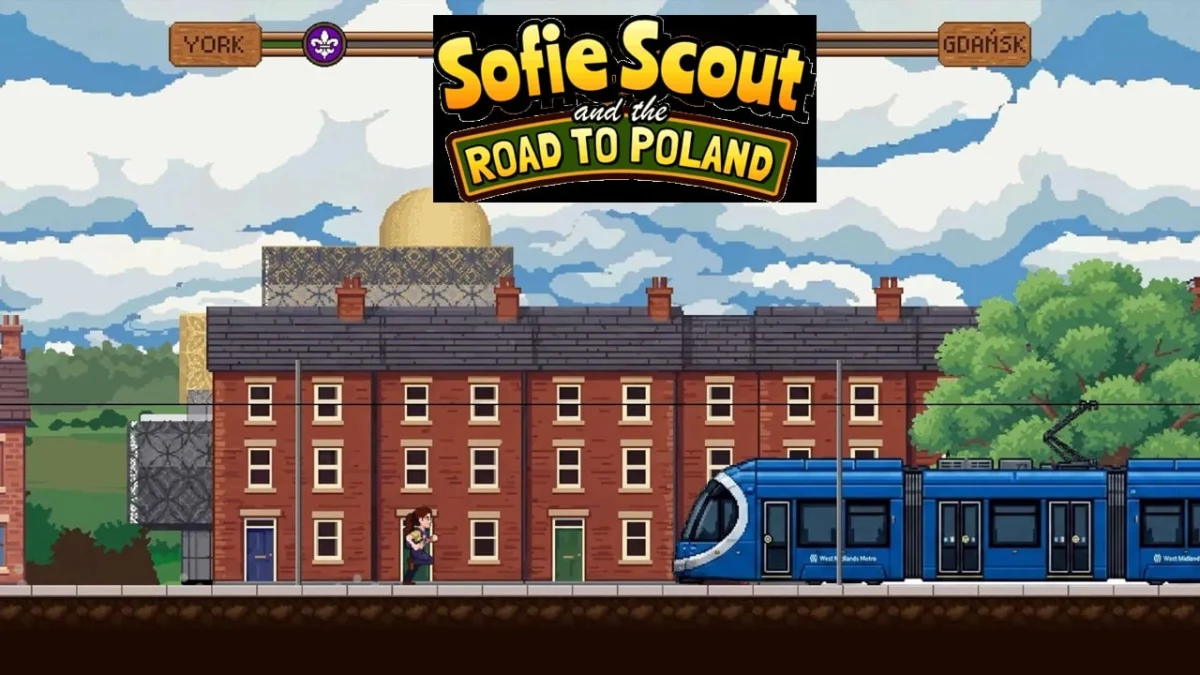
In an era where digital entertainment often feels detached from the physical world, a heartwarming initiative from York, England, is bridging the gap between mobile gaming and real-world adventure. Two 13-year-old Scouts, Juno and Ellie, have launched a mobile title titled Sofie Scout – Road to Poland. While the game is designed as a charming, fast-paced endless runner, its inception was driven by a singular, ambitious goal: to fund their journey to the 2027 World Scout Jamboree in Gdańsk, Poland.
By blending creative game design with grassroots fundraising, these two young entrepreneurs have turned a personal challenge into an international project. Every copy of the game sold serves as a brick in the road to Poland, proving that with enough ingenuity, the youth of today are more than capable of shaping their own futures.
The Core Concept: A Race Against Time
Sofie Scout – Road to Poland is not merely a fundraising tool; it is a labor of love that leans into the classic mechanics of the "runner" genre. The premise is simple but high-stakes: the titular character, Sofie, has missed her bus to the World Scout Jamboree. Faced with the prospect of missing the global gathering, she must sprint across the continent of Europe.
Players are tasked with navigating Sofie through a series of iconic European landscapes, including London, Bruges, Antwerp, Amsterdam, Rotterdam, and Berlin. The gameplay is frantic and engaging, requiring players to jump, slide, and dodge obstacles ranging from chaotic traffic to unforeseen urban hazards. The aesthetic is defined by a "scrappy" pixel art style, which gives the game a nostalgic, indie-game charm that contrasts sharply with the high-stakes pressure of the narrative.
The game is currently available on the Google Play Store for $2.99, a price point carefully chosen to balance affordability for casual gamers with the necessity of reaching the ambitious financial goals set by the developers.
The Financial Challenge: The Road to £3,600
For many, the World Scout Jamboree is a once-in-a-lifetime opportunity, but it comes with a significant price tag. To participate in the 2027 event in Poland, each Scout is required to raise £3,600. This figure covers travel, logistics, accommodation, and the various educational programs that define the Jamboree experience.
For two 13-year-olds, raising £7,200 combined through traditional means—such as bake sales or car washes—would be a monumental, if not exhausting, task. Juno and Ellie recognized that to hit this target, they needed a scalable solution. By creating a digital product, they have tapped into a global market rather than a local one.
Crucially, the financial model is transparent and mission-driven. Every penny of profit generated by Sofie Scout – Road to Poland is funneled directly into their travel funds. However, the vision extends beyond the 2027 event. The creators have noted that should they exceed their fundraising target, the surplus revenue will be reinvested into the development of future Sofie Scout adventures. This suggests that the game is not just a one-off fundraising gimmick, but the foundation of a potential indie gaming brand.
Chronology of Development: From Concept to Launch
The development of Sofie Scout – Road to Poland was a multi-month journey that required the young creators to master skills far beyond their school curriculum.
Phase 1: Ideation and Scope
The project began with the realization that the fundraising target was significant. Juno and Ellie, working alongside their supportive parents, sat down to brainstorm ways to raise funds that would be sustainable and reflective of their own interests. Recognizing the popularity of mobile runners, they chose a platform that allowed for accessible, pick-up-and-play experiences.
Phase 2: Design and Asset Creation
Choosing a pixel art style was a strategic decision. It allowed the two 13-year-olds to create visually distinct environments that paid homage to the European cities they hope to visit. The development phase involved learning game design logic, managing sprite animations, and coding the physics of the runner mechanics.
Phase 3: Technical Refinement
With the help of their parents, the duo navigated the complexities of the Google Play Store’s developer requirements. This included rigorous testing to ensure the game performed well on a variety of mobile devices, refining the user interface, and ensuring that the monetization path was seamless and secure for potential donors.
Phase 4: Market Entry
The launch of the game marked the beginning of a digital marketing campaign. Leveraging social media and local press, the Scouts began driving traffic to their store page. The trailer, which showcases the fast-paced gameplay, has served as the primary hook for potential players, demonstrating that this is a fully functional, high-quality mobile game.
Supporting Data: The Impact of Crowdfunded Gaming
The intersection of gaming and charity is not new, but the demographic here is notable. Usually, gaming-based charity is the domain of large organizations or professional streamers. By moving this into the hands of 13-year-olds, Juno and Ellie are challenging the industry standard.
When considering the economics, the $2.99 price point is modest. If the game gains traction, the cumulative effect of small purchases could bridge the gap to their £3,600 target with relative speed. Compared to traditional charity events, which require high overheads and physical logistics, the digital game has near-zero overhead once it is published. This makes the return on investment for their labor significantly higher, allowing the Scouts to focus on their primary objective: the Jamboree.
Furthermore, the game serves as a portfolio piece. The technical proficiency required to publish a game on the Google Play Store is a valuable skill set that will undoubtedly benefit both creators in their future academic and professional endeavors, regardless of the game’s final financial tally.
Official Responses and Public Reception
While the game is still in its early stages of widespread distribution, the initial response from the local York community and the wider Scout movement has been overwhelmingly positive. Supporters have praised the initiative for its creativity and its departure from the "traditional" fundraising models usually associated with youth organizations.
In statements regarding the project, the creators have emphasized that the support of their parents was instrumental in navigating the technical hurdles of game publishing. By acting as mentors rather than developers, the parents allowed the girls to maintain ownership of the project’s creative direction and mission. This collaborative approach has been cited as a model for how parents can support modern, technology-driven youth initiatives.
The Scouting movement, which places a high value on leadership, initiative, and community service, has also looked favorably upon the project. It embodies the core tenets of the organization—finding solutions to difficult problems and working together to achieve a shared, noble goal.
Implications for Future Youth Initiatives
The success of Sofie Scout – Road to Poland carries broader implications for how youth organizations might approach fundraising in the future.
The Digital Transformation of Grassroots Fundraising
We are seeing a shift where "the bake sale" is being augmented—and sometimes replaced—by "the digital product." Whether it is a mobile app, an e-book, or a creative design, young people are becoming increasingly adept at utilizing their digital literacy to solve real-world financial problems. This game proves that you don’t need a massive studio to create a product that generates real-world value.
Skill Development as a Byproduct
Beyond the money, the development process has provided these Scouts with an education in project management, software development, marketing, and financial planning. These are "soft skills" that are notoriously difficult to teach in a classroom setting. By engaging in this project, Juno and Ellie have effectively built a resume that many of their peers will not have until their late teens or early twenties.
A New Model for Scout Fundraising
The success of this endeavor may prompt other Scout troops to look toward digital solutions for their own fundraising needs. If two 13-year-olds in York can successfully publish a game to the global market, it opens the door for other troops to consider how their unique skills—be it art, music, coding, or writing—can be leveraged to fund their own adventures.
Conclusion
Sofie Scout – Road to Poland is more than just an endless runner. It is a testament to the power of the youth-led initiative. It represents a generation that is comfortable with digital tools and unafraid to apply those tools to the challenges of the physical world.
Whether you are an avid gamer looking for your next high-score challenge or simply someone who appreciates the ambition of two young Scouts, downloading the game is an investment in their future. As they sprint across the digital versions of London, Berlin, and Amsterdam, they are effectively taking the first steps on their actual journey to Gdańsk.
If you would like to support Juno and Ellie on their quest to the 2027 World Scout Jamboree, you can find Sofie Scout – Road to Poland available now on the Google Play Store. By participating in their digital adventure, you are helping ensure that two dedicated Scouts get the opportunity to represent their community on the global stage.
For those who prefer a different kind of challenge, the gaming landscape continues to evolve with new, creative titles launching every day. But for now, the race is on—and it is a race worth running.

