

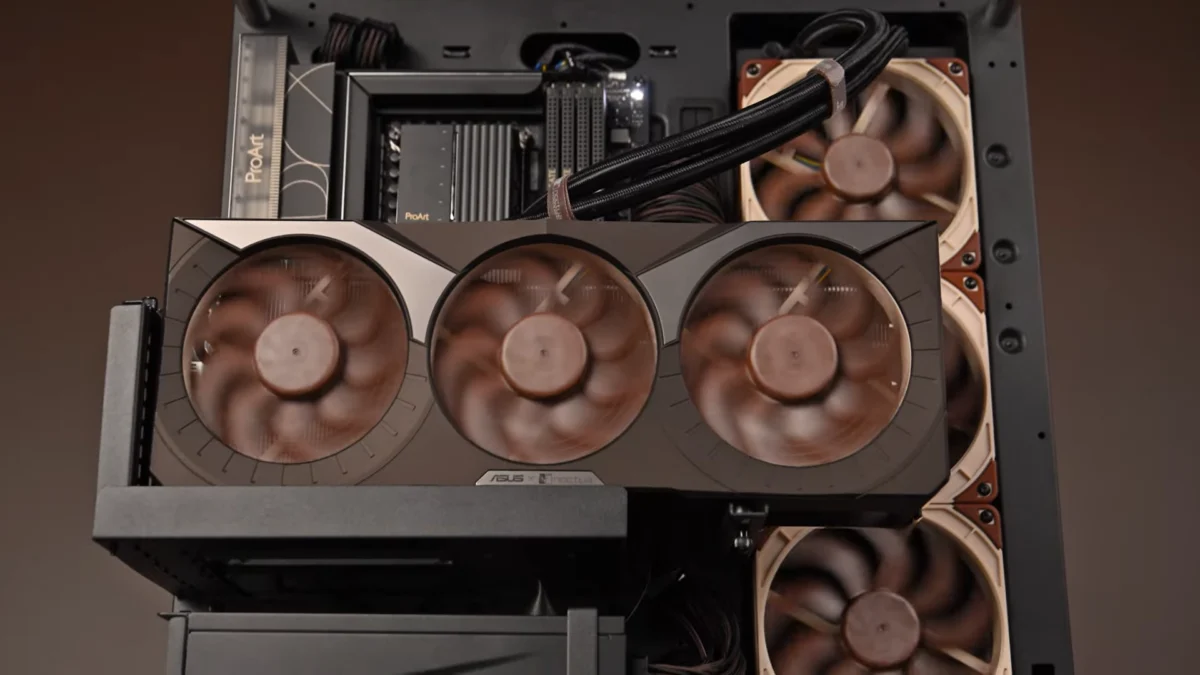
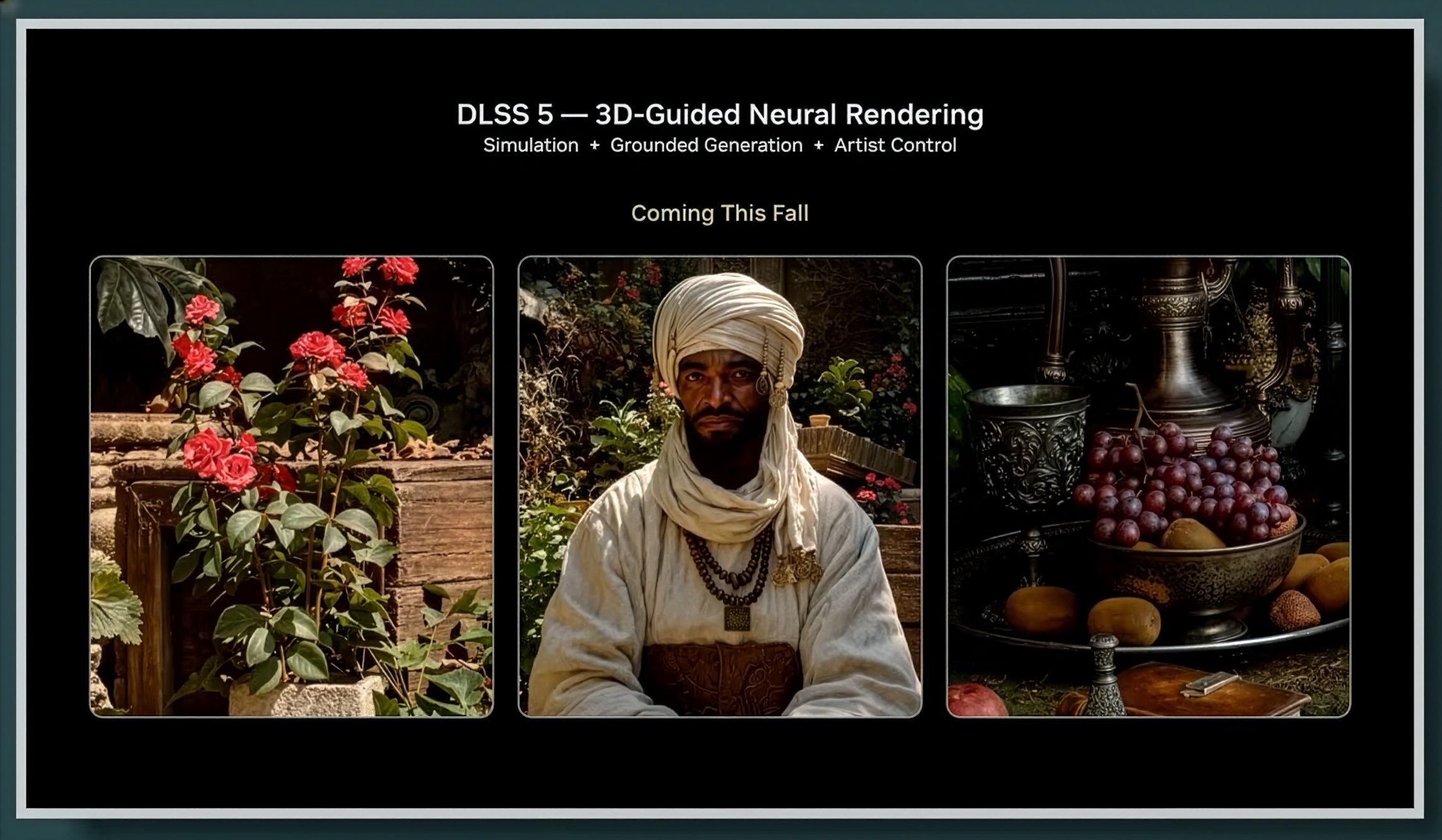
SAN DIEGO, CA – Nvidia’s Deep Learning Super Sampling (DLSS) technology has long been at the forefront of AI-powered graphics, pushing boundaries in performance and visual fidelity. Its latest iteration, DLSS 5, made a significant splash earlier this year, albeit one met with a polarized reception. Initially criticized by some segments of the press and enthusiast community for potentially "overstepping its boundaries" and "going too far with AI," the technology faced concerns about its impact on artistic intent. However, a recent showcase at SIGGRAPH 2026 has revealed a notably refined and strategically re-positioned DLSS 5, demonstrating Nvidia’s responsiveness to feedback and a clearer vision for its ambitious AI integration.
The new presentation highlights a sophisticated multi-model approach, offering developers unprecedented control over the AI’s influence on a game’s visual presentation. This shift, coupled with significant optimization breakthroughs, suggests Nvidia is keen to strike a delicate balance between groundbreaking AI enhancement and the preservation of original creative visions.
The Genesis and Initial Controversy of DLSS 5
Nvidia’s DLSS technology, first introduced in 2018, revolutionized real-time rendering by leveraging AI to upscale lower-resolution images to higher ones, effectively boosting performance without a commensurate loss in visual quality. From its initial, sometimes blurry, output (DLSS 1.0) to the widely acclaimed, nearly native-quality results of DLSS 2.0 and the transformative frame generation of DLSS 3.0, the technology has continuously evolved, becoming an indispensable feature for modern PC gaming, particularly with the advent of demanding ray tracing effects. DLSS 3.5 further refined ray reconstruction, enhancing visual quality in complex lighting scenarios.
However, the debut of DLSS 5 earlier this year marked a departure that ignited considerable debate. Initial reports suggested DLSS 5 went beyond mere upscaling and frame generation, incorporating advanced AI models to actively "transform pixels with photorealistic lighting and materials." This implied a more generative approach, where AI would not just enhance but potentially interpret and create visual elements, drawing parallels to generative AI art tools. This capability, while promising breathtaking visual upgrades, immediately sparked a backlash. Critics voiced concerns that such deep AI intervention could inadvertently distort a game’s carefully crafted aesthetic, leading to an "AI slop" that deviated from the developers’ original artistic intent. The gaming community, often purist about authenticity, questioned whether AI should have such a fundamental role in shaping a game’s look and feel.
Nvidia CEO Jensen Huang, in response to the initial wave of criticism, acknowledged the community’s concerns, stating he was "empathic to DLSS 5 concerns," but also famously asserted that "gamers didn’t understand it." This defense, while perhaps intended to underscore the technology’s nuanced capabilities, inadvertently fueled further skepticism. The challenge for Nvidia was clear: how to demonstrate the immense potential of DLSS 5’s AI enhancements while simultaneously reassuring a wary audience that artistic integrity would remain paramount.
SIGGRAPH 2026: A Reimagined DLSS 5
Fast forward to SIGGRAPH 2026, the premier conference for computer graphics and interactive techniques, where Nvidia unveiled a significantly recalibrated vision for DLSS 5. The keynote presentation, a highly anticipated event, showcased a version of DLSS 5 that visibly "looks different this time around," as noted by industry observers. This revised approach appears to be a direct response to the earlier feedback, emphasizing flexibility, control, and a clear delineation of AI’s role.
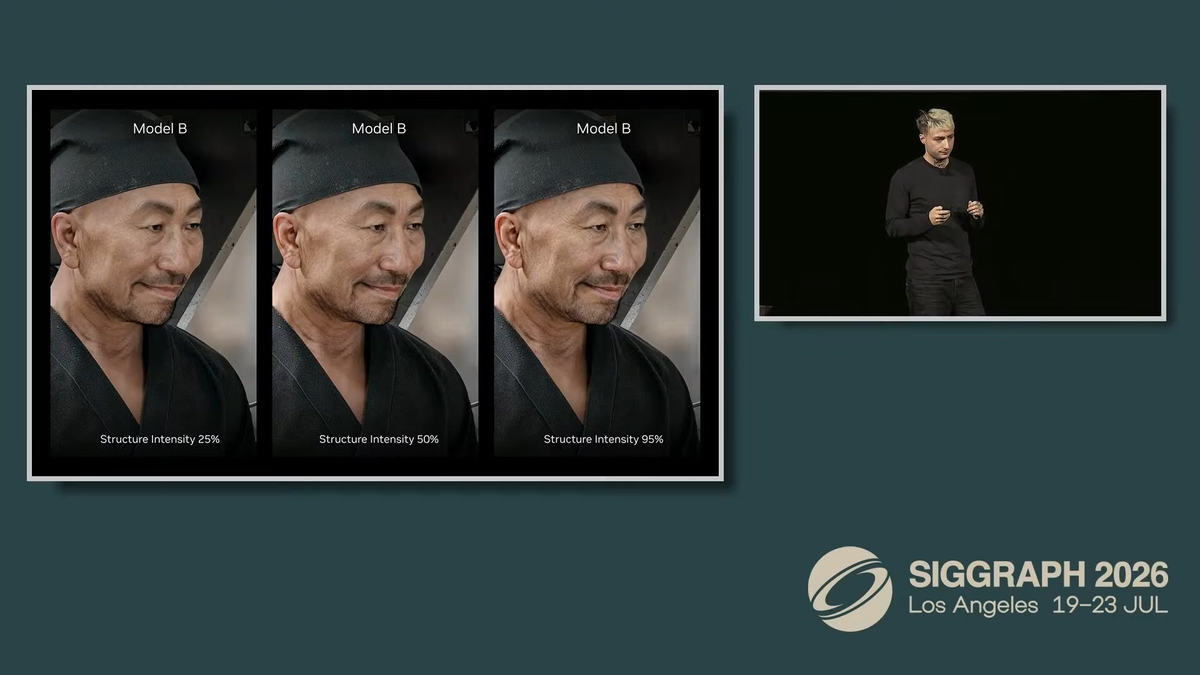
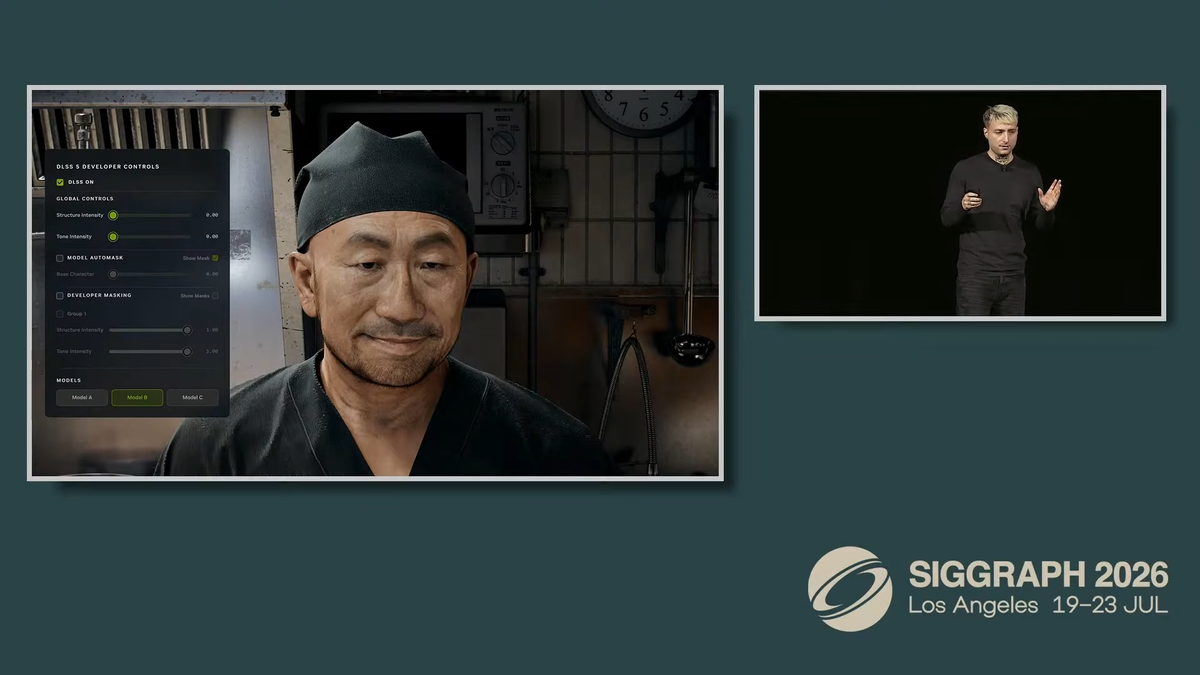
The most prominent "main takeaway" from the SIGGRAPH presentation is the introduction of three distinct AI models within DLSS 5, each offering varying levels of detail and performance impact. While Nvidia has yet to formally name these models (e.g., "Subtle Enhancement," "Balanced Fidelity," "Aggressive Transformation"), the implication is that developers will no longer be confined to a single, monolithic AI enhancement profile. Instead, they gain the unprecedented ability to dynamically employ different models based on specific in-game contexts.
For instance, a developer might opt for a more "subtle" model in narrative-heavy cutscenes where character expressions and precise lighting are critical, ensuring the AI only minimally enhances existing details. In contrast, for expansive open-world environments or fast-paced action sequences, a more "aggressive" model could be deployed to generate richer textures, more complex lighting, or even infer environmental details that would be prohibitively expensive to render natively. This granular control extends beyond mere scene selection; developers can also fine-tune how much DLSS impacts individual elements within a scene. This means characters, critical to player immersion, could be rendered with minimal AI intervention, while less central world elements might receive more extensive AI-driven beautification.
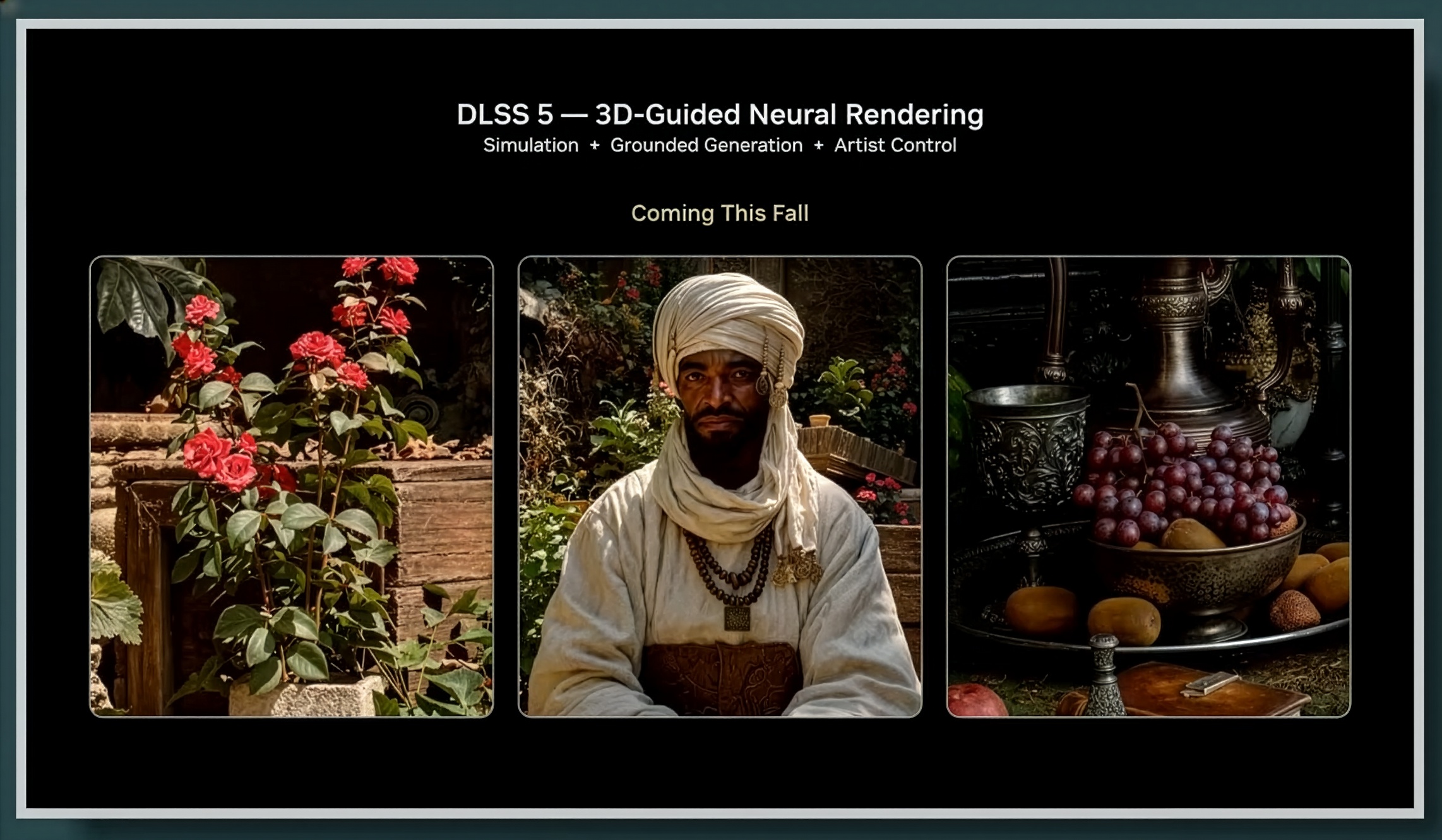
Crucially, Nvidia emphasized the ability to switch between these models in real-time without incurring latency. This technical feat is paramount for maintaining a smooth and responsive gaming experience, as any noticeable delay during model transitions would be detrimental. This real-time adaptability allows for truly dynamic visual experiences, where the game engine, in conjunction with developer-defined parameters, can intelligently adjust the level of AI enhancement on the fly, optimizing both performance and visual quality.
Supporting Data: The Mechanics of Enhancement
DLSS 5’s functionality extends beyond traditional upscaling, employing a sophisticated combination of techniques to process the original rendered frame and apply additional AI-driven effects. The core upscaling mechanism, responsible for establishing the foundational blocks of the image—such as lighting and geometry—still operates conventionally, much like previous DLSS iterations. This ensures that the structural integrity and core visual design remain consistent with the original render.
The part that garnered such heavy criticism in the initial reveal, the "beautification features" that inject photorealistic lighting and materials, is now explicitly positioned as an optional layer, applied after the initial upscaling process. This separation is a strategic move by Nvidia to address the artistic intent concerns directly. By making the more transformative AI enhancements optional, developers gain the power to decide if and when these features are appropriate for their game. This means a developer could theoretically use DLSS 5 purely for its upscaling and anti-aliasing capabilities, eschewing the generative "beautification" entirely, or apply it selectively.
However, a key ambiguity remains: it is currently unclear whether end-users will have the ability to actively choose to not process the frame through these "beautification features." While developers gain control, many in the community would likely prefer direct user options to toggle such advanced AI enhancements, ensuring their personal preference for artistic fidelity is respected. This clarity will be vital for broader acceptance upon release.
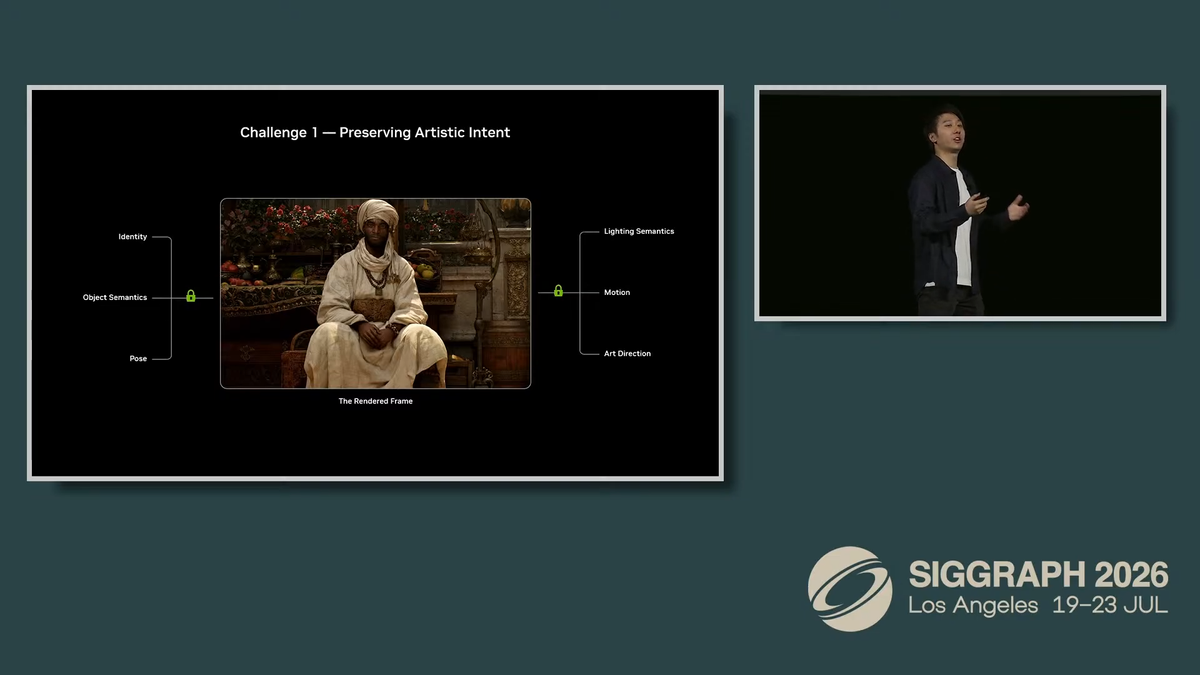
Nvidia also outlined three primary technical challenges faced during DLSS 5’s development, many of which appear to be direct responses to the initial critical reception:
-
Preserving the Original Creative Vision: As previously explained, the multi-model architecture and the optional nature of the generative enhancements are Nvidia’s proposed solutions. By giving developers fine-grained control over the degree and application of AI, the aim is to empower them to align AI enhancements with their artistic goals, rather than having AI dictate the aesthetic. This represents a significant philosophical shift from the initial, more "hands-off" generative approach.
-
Handling One Frame at a Time: A fundamental challenge for integrating generative AI into real-time gaming is its typical operational model. Most powerful generative AI models process multiple frames or data chunks together to achieve coherence and quality. This, however, introduces latency, which is anathema to interactive gaming where millisecond response times are crucial. Nvidia’s commitment to "handle one frame at a time" ensures that DLSS 5 does not negatively affect response times, a critical factor for competitive gaming and overall player immersion. This likely involves highly optimized AI inference engines and specialized algorithms that can make intelligent decisions on a per-frame basis without needing extensive temporal context from future frames.
-
Optimization of the DLSS 5 Model: The initial demonstrations of DLSS 5 were reportedly running on powerful, multi-GPU setups, specifically "two RTX 5090s," indicating the immense computational resources required. The SIGGRAPH presentation unveiled remarkable progress in optimization, stating that the model can now run on a single GPU and is "VRAM efficient." This is a monumental achievement, significantly broadening the potential adoption of DLSS 5 beyond the absolute highest-end systems. While Nvidia did not explicitly confirm whether a single RTX 5090 (or similar high-end Blackwell GPU) is still required for optimal performance, the claim of "single GPU" operation suggests a much wider range of compatible hardware. The company attributes this efficiency to a "more compact model that has learned from a larger diffusion model," implying techniques like model distillation or pruning, where a smaller, faster model retains much of the knowledge and capability of a much larger, more unwieldy one. The ultimate promise remains "real-time 4K performance," which, if delivered broadly, would be a game-changer for high-fidelity gaming.
Official Responses and Nvidia’s Strategic Narrative
Nvidia’s presentation at SIGGRAPH 2026 was more than just a technical showcase; it was a strategic narrative re-alignment. The company effectively acknowledged the initial "critical response" and the "backlash" without explicitly backtracking on the technology’s core capabilities. Instead, the focus was on how Nvidia has listened, learned, and refined DLSS 5 to better serve the gaming and development communities.
The emphasis on developer control, multi-model flexibility, and the optionality of the generative features serves as Nvidia’s direct response to concerns about artistic intent. Jensen Huang’s earlier statements about gamers "not understanding it" now gain a more nuanced context: perhaps the initial presentation didn’t adequately convey the forthcoming levels of control and choice. The new narrative positions DLSS 5 not as an AI overlay that dictates aesthetics, but as a powerful, adaptable tool that empowers developers to achieve their desired visual outcomes, whether that’s pure performance uplift, subtle enhancements, or more transformative AI-driven beautification, all within their creative control.
The demonstrations, which reportedly showed a more "polished and mature" version of the technology, were designed to rebuild trust and showcase the tangible benefits of DLSS 5 when applied thoughtfully. By addressing the performance and VRAM efficiency concerns, Nvidia is also signaling a commitment to making this advanced technology accessible to a broader range of hardware, moving away from the perception that it’s exclusively for the ultra-enthusiast segment.
Implications for the Future of Gaming Graphics
The implications of a refined DLSS 5 are far-reaching, impacting gamers, developers, and the competitive landscape of the graphics industry.
For Gamers: The promise of real-time 4K performance on a single GPU, coupled with potentially breathtaking visual enhancements, means a more immersive and visually stunning gaming experience for a wider audience. If the artistic intent concerns are genuinely addressed through developer control and perhaps user-facing options, DLSS 5 could usher in a new era of graphical fidelity where performance bottlenecks are significantly mitigated. However, the community will undoubtedly scrutinize the final implementation, particularly regarding the ability to disable the "beautification" features if they deviate too much from personal aesthetic preferences.
For Developers: DLSS 5 offers a powerful new set of tools. The multi-model approach provides unparalleled flexibility, allowing developers to integrate AI enhancements seamlessly into their game’s design, rather than being forced into a one-size-fits-all solution. This means they can strategically deploy AI to optimize performance where needed, enhance specific visual elements, or even experiment with entirely new AI-driven rendering techniques. The "VRAM efficient" and "single GPU" operation drastically lowers the barrier to entry for integrating such advanced technology, making it a more viable option for a wider range of projects. However, it also introduces new design considerations and potential complexities in managing different AI models and their impact across a game’s diverse content.
Competitive Landscape: DLSS 5’s evolution marks a significant escalation in the "AI arms race" among GPU manufacturers. Just when competitors like AMD were "finally catching up" with their FSR 4.1, which also introduced more advanced upscaling and potentially AI-driven features, Nvidia appears to be widening its lead with DLSS 5’s sophisticated, multi-layered AI approach and significant optimization. Intel’s XeSS also continues to evolve, but Nvidia’s advantage in dedicated AI hardware (Tensor Cores) often gives it an edge in implementing complex deep learning models with high efficiency. The ongoing competition will likely drive further innovation, benefiting consumers with better performance and visuals across the board.
Broader AI in Graphics: DLSS 5 represents a critical step in the increasing integration of generative AI into real-time graphics. It’s a testament to how AI can move beyond simple upscaling to become a co-creator of visual experiences. The lessons learned from DLSS 5’s development, particularly around balancing AI’s generative power with creative control and performance, will undoubtedly influence future AI applications in areas like procedural content generation, character animation, and even interactive storytelling.
Nvidia’s commitment to tweaking the models and parameters based on community feedback underscores the iterative nature of such advanced technological development. While there is no official release date, the expectation of a Q3 2026 launch provides a clear timeline for further refinements and real-world testing. The success of DLSS 5 will ultimately depend on its ability to deliver on its ambitious promises of performance and fidelity, all while respecting the nuanced and often fiercely protected realm of artistic expression in video games. The journey of DLSS 5, from controversy to refinement, illustrates the ongoing dialogue between technological innovation and artistic integrity in the rapidly evolving world of interactive entertainment.

