

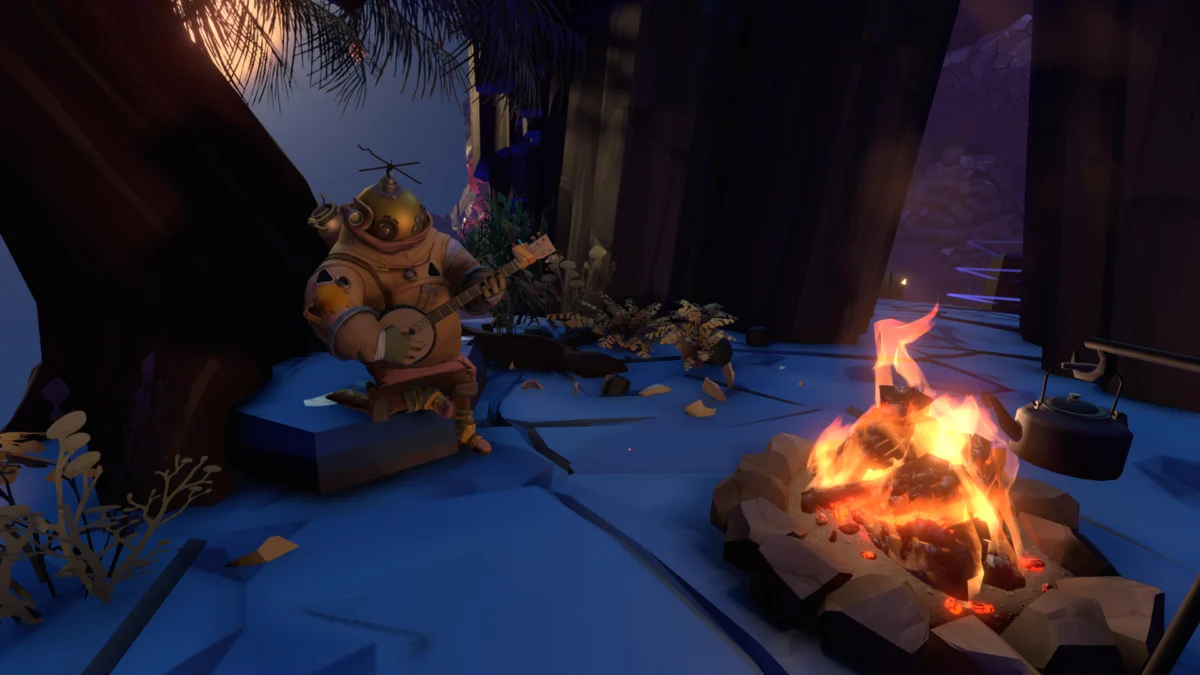
Since its initial release in 2019, Mobius Digital’s Outer Wilds has carved out a unique space in the cultural zeitgeist. While it may not share the massive, multi-million-dollar marketing budgets of AAA franchises, it has achieved something arguably more significant: a permanent, reverent presence in the discourse of critics, podcasters, and players alike. As we look back from the vantage point of the post-launch era, it is clear that Outer Wilds is not merely a game; it is a profound exploration of human curiosity, the nature of knowledge, and the inevitable passage of time.
The Core Concept: Knowledge as Progression
At its heart, Outer Wilds is an open-world mystery game set within a solar system trapped in an endless 22-minute time loop. You play as a fledgling astronaut, the latest recruit of the space program Outer Wilds Ventures, tasked with exploring a series of rapidly decaying planets.
The brilliance of the game lies in its approach to "progression." Unlike traditional role-playing games where character growth is measured by numerical stats, leveled weapons, or increased health, Outer Wilds operates on a foundation of pure information. You cannot "level up" your character; you can only "level up" your understanding of the universe. Every secret uncovered, every ancient scroll translated, and every ruin explored serves as a key to unlocking previously inaccessible areas of the map. It is a game that respects the player’s intelligence, trusting them to piece together the narrative mosaic without the hand-holding common in modern titles.
A Chronology of Discovery: From Indie Darling to Essential Classic
The journey of Outer Wilds began long before its 2019 release, rooted in creative director Alex Beachum’s master’s thesis project.
- 2012–2015: Development begins as an academic endeavor, focusing on the concept of a handcrafted solar system where the environment changes in real-time.
- 2015: The game gains massive visibility after winning the Seumas McNally Grand Prize and the Excellence in Design award at the Independent Games Festival.
- 2018: Annapurna Interactive joins as publisher, providing the necessary resources to bring the ambitious vision to completion.
- May 2019: The game launches on Windows and Xbox One, immediately drawing critical acclaim for its innovative design.
- 2020–2021: Ports for PlayStation 4, Nintendo Switch, and Steam follow, broadening its reach. The release of the Echoes of the Eye expansion in late 2021 reignites the community, proving that the game’s core loop remains as compelling as ever.
The Mechanics of Failure
One of the most polarizing aspects of Outer Wilds is its difficulty. The game demands that the player "die a lot." Death, however, is not a punishment in this universe—it is a reset button. Because the sun goes supernova every 22 minutes, the player is doomed to experience constant, recurring destruction.
This mechanical design choice forces a change in the player’s psychological state. Initially, the deaths feel like failures. Over time, however, they become pedagogical tools. The game teaches players that death is the ultimate teacher. You learn how to fly your rickety ship through treacherous gravitational pulls; you learn the patterns of the crumbling planet Brittle Hollow; you learn the terrifying behavior of the Anglerfish in the depths of Dark Bramble. By stripping away the fear of losing progress, the game encourages experimentation and bold exploration that most games would punish.
Supporting Data: The Critical Consensus
The critical reception of Outer Wilds serves as a case study in how quality-of-life and narrative depth can drive long-term engagement.
- Metacritic Standing: With a score consistently hovering in the 85–90 range across platforms, it remains one of the highest-rated titles of its generation.
- Awards Sweep: It claimed the "Best Game" title at the 2020 BAFTA Games Awards and the "Game of the Year" accolades from outlets like Giant Bomb, Polygon, and Eurogamer.
- Player Retention: Unlike many narrative-driven games that are played once and discarded, Outer Wilds enjoys an exceptionally high "re-playability" factor—not because the game changes, but because the community loves watching new players experience the game’s "Aha!" moments through streaming and content creation.
Official Responses and Developer Philosophy
In various interviews, the team at Mobius Digital has spoken about the challenge of designing a game where the primary barrier to entry is the player’s own ignorance. Alex Beachum has noted that the most difficult aspect of development was ensuring that every discovery felt earned.
"We wanted the player to feel like they were the first person to discover these secrets," the development team noted in post-mortem discussions. "If we give them a quest log or a map marker, we take away the thrill of discovery. We had to trust that if we built a compelling enough world, the players would navigate it themselves."

This philosophy has been validated by the game’s longevity. It is a rare example of a title that refuses to adapt to industry trends—such as loot boxes, battle passes, or service-based updates—and instead stands as a complete, self-contained piece of art.
Implications: The Legacy of Outer Wilds
The success of Outer Wilds has significant implications for the future of indie development. It proves that there is a massive, underserved audience hungry for "intellectual games"—experiences that prioritize player curiosity over reflex-based challenges.
1. The Death of Hand-Holding
The game has set a new benchmark for environmental storytelling. Developers are now looking toward Outer Wilds as the gold standard for how to integrate narrative into level design without relying on excessive cutscenes or dialogue trees.
2. The Power of the "Loop"
While time loops have appeared in games before (notably Majora’s Mask), Outer Wilds perfected the application of the loop as a narrative device. It transforms the game from a linear path into a web of interconnected mysteries, where the sequence in which you learn information changes your entire perspective on the ending.
3. Emotional Resonance
Perhaps most importantly, Outer Wilds is a game about existential dread and the beauty of moving on. It asks players to confront the end of their world with grace. This emotional depth has resonated with players on a personal level, making it one of the few games that people frequently describe as "life-changing."
Conclusion: An Essential Experience
Whether you are a seasoned gamer looking for your next challenge or a casual player interested in a compelling narrative, Outer Wilds is an essential addition to your library. It is a game that respects your time by never wasting it, even when it forces you to start over. It rewards persistence with some of the most profound "eureka" moments in the history of the medium.
If you have yet to step into the pilot seat of your wooden ship and launch into the stars, you are missing out on one of the greatest interactive experiences of the 21st century. It is a masterpiece of design, a love letter to the spirit of exploration, and a reminder that while all things must come to an end, the journey—and the knowledge we gain along the way—is what truly matters.
So, go ahead. Launch into the unknown. The universe is waiting, and it has so much to tell you, provided you are willing to listen.

