

The digital landscape for Digimon Story: Time Stranger has undergone a massive transformation. Following its initial debut on PlayStation 5, Xbox Series X, and PC via Steam, Bandai Namco has recently expanded the title to both the Nintendo Switch and the upcoming Switch 2. This multi-platform rollout, coupled with a substantial new performance patch for legacy consoles, has created a complex web of technical variations that demand a deep dive.
For players caught in the crosshairs of deciding where to invest their time and money, the choice is no longer as simple as picking the most powerful hardware. With cross-generational compatibility, hybrid handheld benefits, and varying frame rate caps, the "best" version of the game is highly dependent on your personal playstyle.
The Chronology of an Evolving Release
Digimon Story: Time Stranger launched last year as a mid-tier console release, garnering a solid fan base but facing criticism regarding its technical polish. At launch, the game was tethered to a 30fps cap on both PS5 and Xbox Series X, a limitation exacerbated by inconsistent frame pacing that resulted in a "stuttery" visual experience. Conversely, the PC version—while demanding—offered a significantly smoother experience, provided the user had the hardware to brute-force through the optimization hurdles.
The announcement of the Switch and Switch 2 versions marked a turning point. Bandai Namco confirmed that these iterations would introduce a "Performance Mode," targeting 60 frames per second (fps). Crucially, this update was backported to the PS5 and Xbox Series X, finally offering console players the fluid experience they had been requesting since day one. However, as our comprehensive testing shows, the journey to a stable 60fps has been uneven, and the benefits of these updates vary wildly across the hardware spectrum.
Comprehensive Technical Analysis: The Data
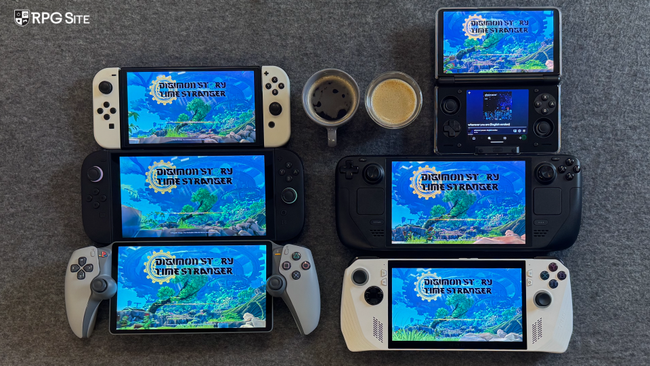
To determine the definitive experience, we conducted rigorous testing across an exhaustive list of hardware: PS5, PS5 Pro, Xbox Series X, Switch 1 (both standalone and docked in a Switch 2), the native Switch 2 version, and various PC handhelds including the Steam Deck, ROG Ally, and AYN Thor.
Visual Fidelity and Graphical Compromises
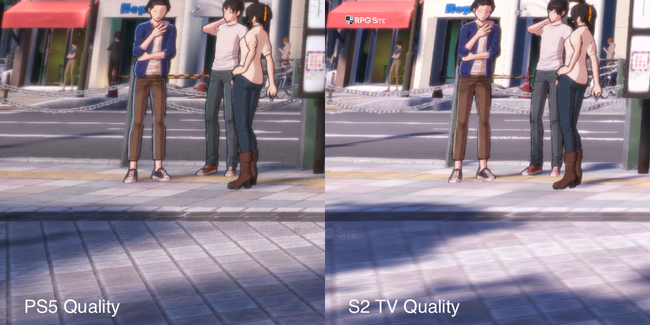
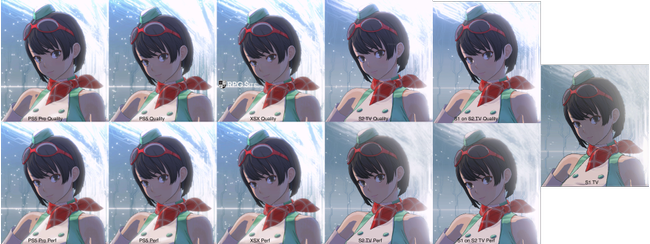
When comparing the high-end consoles—PS5, PS5 Pro, and Xbox Series X—the visual output is virtually indistinguishable. While the PS5 Pro marketing suggests "Enhanced" features, our side-by-side analysis reveals no discernible difference in resolution or texture quality compared to the standard PS5. The primary benefit of the Pro model lies in a marginally more stable frame rate in the 30fps "Quality" mode, though the 60fps "Performance" mode behaves identically across all three machines.
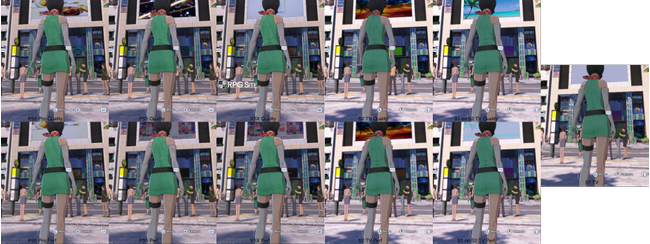
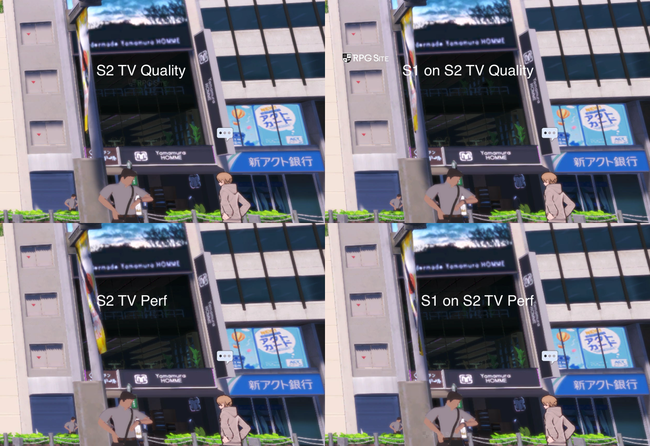
The Switch 2, while a technological marvel for a hybrid device, naturally sees significant concessions. Players will notice a decrease in texture filtering, reduced geometry draw distances, lower crowd density, and simplified shadow maps. Furthermore, post-processing effects and anti-aliasing are less aggressive than their high-end counterparts. One peculiar anomaly observed on the Switch 2 in performance mode involves distant assets—such as architectural railings or bridges—occasionally popping out of existence entirely. We suspect this is an optimization bug that may be patched, but it remains a noticeable flaw compared to the more stable PC and PS5 environments.
Performance Benchmarks: The Quest for 60fps
The implementation of the 60fps target is a welcome addition, yet it is not a "silver bullet." On the Switch 2, the game fluctuates significantly when docked. While it strives for 60, it frequently dips, particularly in high-traffic urban areas. Without Variable Refresh Rate (VRR) support, these fluctuations are perceptible.
Conversely, the PC version remains the gold standard for those with high-end rigs. Supporting up to 144fps and native 21:9 or 16:10 ultrawide aspect ratios, it is the only version that truly unlocks the game’s visual potential. The flexibility to set custom frame rate caps on PC handhelds like the ROG Ally also allows users to iron out the frame pacing issues that continue to plague the console versions, even after the recent patch.
Loading Times: A Metric of Storage
Storage speed is a critical factor for an RPG. We tested the duration from the console dashboard to the title screen, as well as the time taken to load an active save file.
| Platform | Dashboard to Title (sec) | Loading Save (sec) |
|---|---|---|
| Switch 1 | 22 | 8-9 |
| Switch 1 on Switch 2 | 16 | 3 |
| Switch 2 (Native) | 16 | 3 |
| PS5 / PS5 Pro | 10-12 | 2.5-3 |
| Xbox Series X | 25 | 4 |
| Steam Deck | 15 | 3 |
| ROG Ally | 10-11 | 2 |
| AYN Thor | 13-14 | 3 |
The results show that the PS5 Pro and ROG Ally lead the pack. Interestingly, the Xbox Series X exhibits a longer initial load time, though this is effectively mitigated by the console’s "Quick Resume" feature. The Switch 1 remains the slowest performer, with additional loading screens occasionally appearing between zones, a relic of its aging hardware limitations.
Official Stances and Community Feedback
Bandai Namco has maintained a relatively quiet profile regarding the specific technical limitations of the ports. However, the decision to prioritize a performance patch for the Switch 2 launch suggests a reactive approach to the criticism of the original console releases. While the publisher has addressed the demand for 60fps, they have yet to comment on the remaining frame pacing inconsistencies or the specific visual pop-in issues on the Switch 2.
Community feedback has been largely appreciative of the 60fps update, though there is a clear divide between "TV-first" players and "Handheld-first" players. The latter have praised the Switch 2’s portability, often stating that the visual trade-offs are a fair price to pay for the ability to take the game on the go.
Implications for the Future of Hybrid Ports
The release of Digimon Story: Time Stranger on the Switch family serves as a fascinating case study in late-stage porting. The fact that the Switch 1 version, when played on the Switch 2, receives the same performance enhancements as the native version is a testament to the hardware’s capability. It implies that for future titles, the barrier between generations may be more porous than previously anticipated.
However, the game also highlights the "optimization ceiling." When developers focus on pushing a title to a hybrid handheld, they often lack the resources to retroactively optimize the high-end PC or console versions. The lack of further optimization for the PC version following the Switch port indicates that once a game reaches a "satisfactory" level of performance, further development resources are often diverted elsewhere.
Final Verdict: Which Version is for You?
- For the Purist (TV/Monitor): If you play exclusively on a big screen, the PC version is the definitive choice, provided your hardware can handle it. It offers superior frame rates, ultrawide support, and better post-processing. If you prefer consoles, the PS5 Pro is the most stable, though the standard PS5 and Xbox Series X are entirely serviceable.
- For the Hybrid Player: The Switch 2 is the clear winner. While it suffers from visual cuts compared to the PC and home consoles, it offers a vastly superior portable experience compared to the Steam Deck or ROG Ally.
- For the Physical Collector: The Switch 1 version is the smartest purchase. Thanks to the patch compatibility, it offers an identical experience to the native Switch 2 version when played on the newer hardware, allowing you to future-proof your physical collection while enjoying the benefits of the Switch 2’s power.
Ultimately, Digimon Story: Time Stranger is a game of compromises. There is no single "perfect" version, but by understanding your hardware’s strengths and your own preferences for fidelity versus portability, you can ensure that your journey through the digital world of Digimon is as seamless as possible.

