


The survival-crafting genre has long been plagued by a fundamental design trap: the conflation of friction with depth. For years, players have been conditioned to accept that "survival" is synonymous with "menial labor." If you wanted a better axe, you spent an hour mining stone. If you wanted to expand your base, you spent another hour ferrying logs between storage crates. It was a loop defined by manual repetition, a mechanical chore list that kept the player tethered to the ground, forever punching trees.
When Pocketpair first unveiled Palworld on Steam’s Early Access, the gaming community largely dismissed it as a fleeting curiosity. Labeled as "Pokémon with guns," it was viewed as a high-concept novelty—a viral sensation that would inevitably fade once the initial shock of the premise wore off. Yet, following its massive 1.0 release, Palworld has proven to be much more than a meme. It has fundamentally altered the survival-crafting landscape by solving the genre’s biggest problem: the grind.
The Evolution of the "Survival" Formula
In the traditional survival template, the player is the protagonist, the laborer, and the manager. Every success is tied to the player’s direct, physical involvement in the world’s systems. This creates a state of perpetual attachment; if the player leaves their base to explore, progress stops. Crops wither, production lines go cold, and the base—the supposed sanctuary—falls into disrepair.

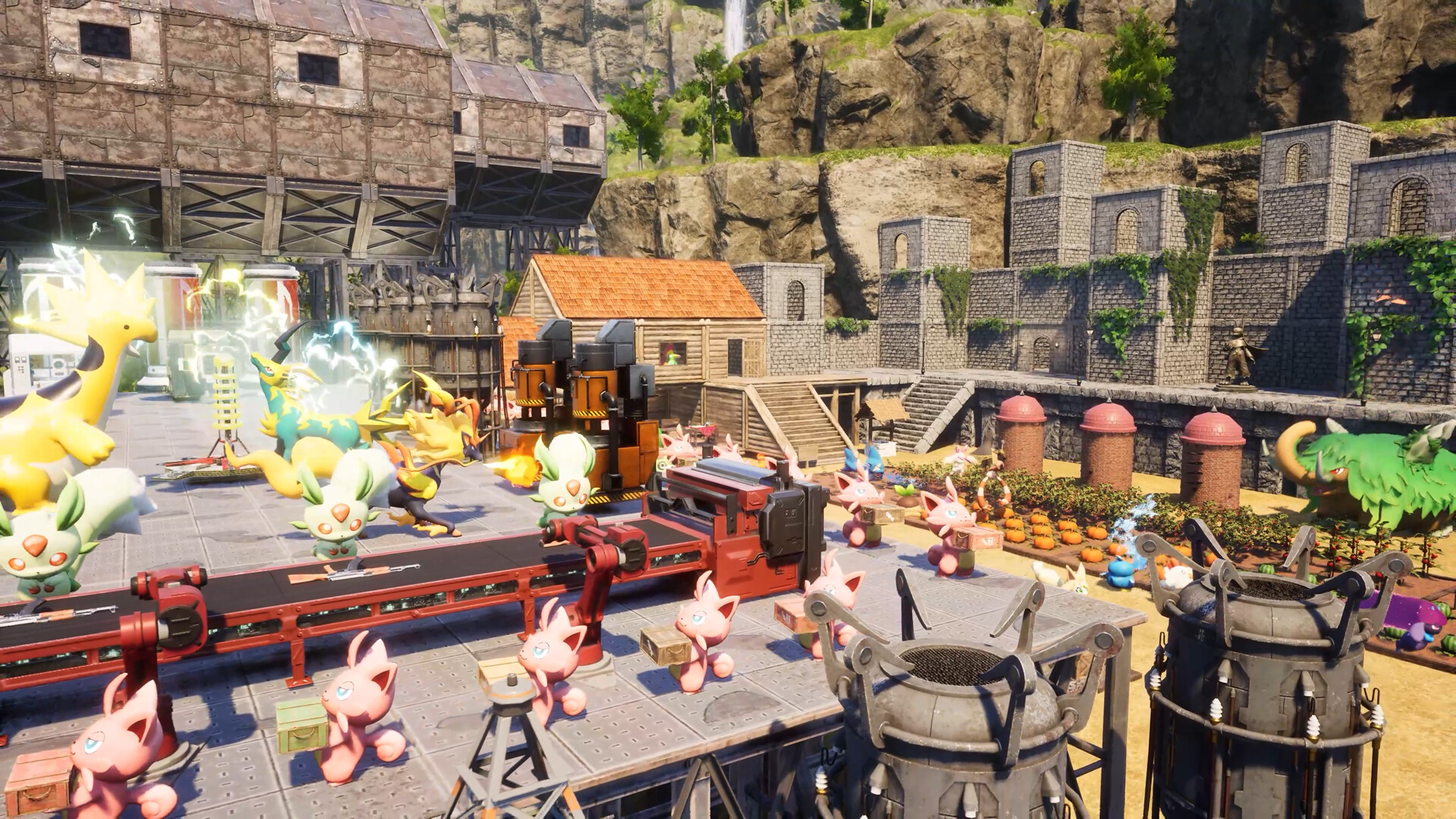
Palworld breaks this cycle by introducing the "Pals." While the game allows for the satisfying, if somewhat chaotic, utility of using a fire-type fox as a makeshift flamethrower, its true genius lies in its management layer. By assigning creatures with specific work skills—logging, watering, planting, or mining—to your base, the game shifts the player’s role from "laborer" to "overseer."
This shift is not immediate. The early hours of Palworld still feature the familiar, humble beginnings: punching trees, mining rocks, and constructing shelters that look as though a stiff breeze might topple them. However, as the player progresses and catches a diverse roster of Pals, the camp transforms from a collection of benches into a self-sustaining ecosystem. You stop thinking about your base as a place you must maintain, and start treating it as an automated facility that functions in your absence.
Chronology of a Phenomenon
The journey of Palworld is a masterclass in modern digital marketing and rapid iteration.

- Initial Reveal: Upon its early access launch, the game was immediately met with a mix of intense fascination and controversy. The visual design of the creatures drew immediate comparisons to Nintendo’s Pokémon franchise, leading to widespread speculation regarding intellectual property infringement.
- The Early Access Surge: Despite the discourse, player numbers were unprecedented. The game peaked with hundreds of thousands of concurrent players within its first week, proving that the hook of survival-crafting combined with creature-collecting was a potent commercial force.
- 1.0 Launch and Stabilization: Throughout its time in Early Access, Pocketpair actively listened to community feedback, refining creature designs and addressing stability issues. The 1.0 release saw a massive resurgence, with the game pulling in nearly 900,000 players over a single weekend—its second-highest peak since launch.
- The Current State: Today, Palworld stands as a titan of the genre, having successfully navigated legal scrutiny and technical growing pains to establish itself as a permanent fixture in the survival space.
Data-Driven Gameplay: Efficiency as an Art Form
The brilliance of Palworld lies in its "Pal pyramid scheme." The game encourages players to analyze their creatures not just by their combat stats or elemental affinities, but by their work suitability. A creature that is excellent in combat might be useless at the base, while a low-level worker could be the engine that keeps your production line running while you are out exploring.
This creates a layer of complexity that feels like a magic trick. When you return to your base after a long expedition, you don’t find a neglected ruin. Instead, you find a chest filled with resources that were gathered while you were away. You can "hoover up" the fruits of your labor and immediately reinvest those materials into a new, more advanced facility.
This loop encourages exploration. Because you are not tethered to your base for constant upkeep, the game gives you permission to be adventurous. You are free to climb mountains, seek out Alpha Pals, or infiltrate high-level oil rigs. The world continues to tick while you are away, which is a significant departure from the static, player-dependent worlds of traditional survival titles.
Official Responses and Industry Implications
Pocketpair’s response to the game’s success has been one of pragmatic refinement. Recognizing the "copyright-infringement" discourse, the developers have been proactive in revising some of the more egregious creature designs, demonstrating a willingness to distance the game from its initial, derivative label while doubling down on its unique mechanics.
The industry response has been equally telling. Palworld has highlighted a growing fatigue among players toward "busywork" mechanics. As studios look to replicate the game’s success, the focus has shifted toward how to implement meaningful automation. The industry is beginning to realize that players aren’t looking for a "job simulator"—they are looking for the reward of creation without the tediousness of the manual labor required to get there.
The Future of the Genre
Survival games often feel as though they are terrified that players will run out of things to do if they aren’t constantly forced to perform manual labor. Palworld challenges this fear. It argues that the most exciting part of a survival game is not the chore of gathering materials, but the thrill of discovery and the satisfaction of building something larger than yourself.

While the game still requires resource management and strategic planning, it respects the player’s time. It provides the tools to automate the "boring stuff," allowing the player to engage with the world on their own terms. Whether you are a fan of factory-management games like Satisfactory or a newcomer to the survival genre, Palworld offers a compelling argument: the best way to keep a player engaged isn’t to force them to grind, but to give them the autonomy to decide how they want to spend their time.
As the genre continues to evolve, Palworld will undoubtedly be remembered as the title that finally broke the "grind" cycle. It has set a new benchmark for what players expect from their virtual worlds, proving that when the chores are handled, the true potential of the open-world survival experience can finally shine. The future of the genre is no longer about the struggle for survival; it is about the mastery of your environment.

