

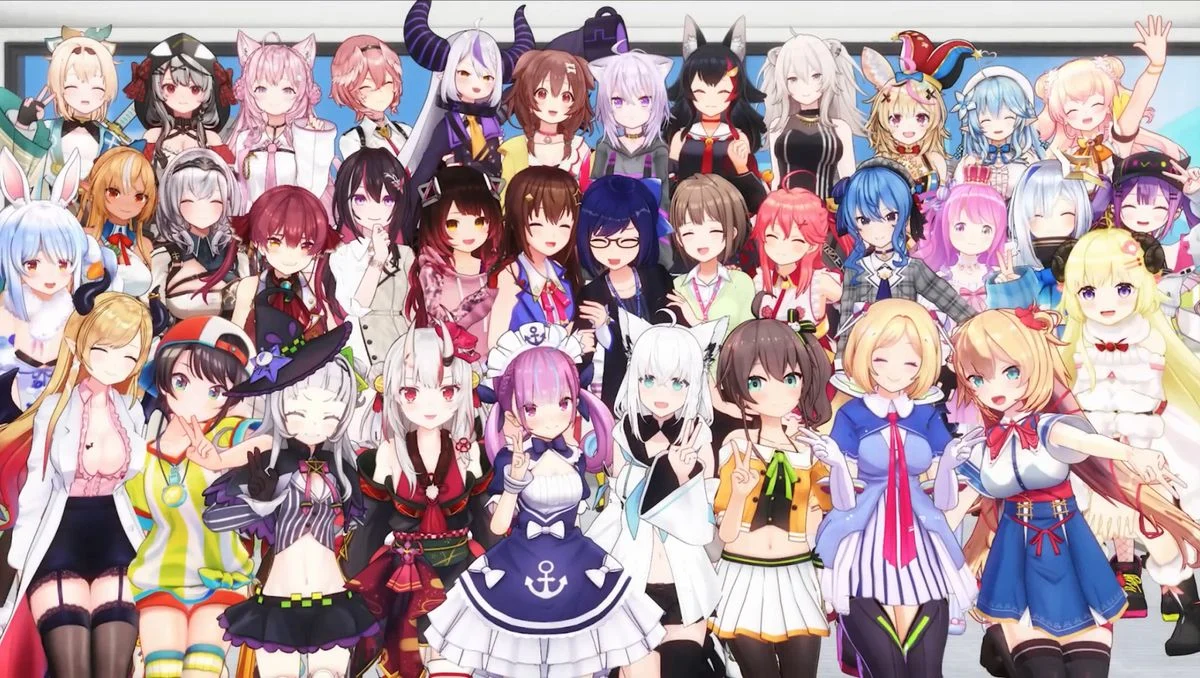
In an era where the boundary between human personality and digital avatars is increasingly blurred, the Tokyo-based agency Hololive has unveiled a business model that challenges the traditional ethos of the creator economy. For the upcoming ReGLOSS 3rd Anniversary Oshaberi Festival this September, the company is offering fans the opportunity to purchase one-minute, one-on-one virtual meet-and-greets with their stable of virtual talents.
While the price point of ¥6,600 (approximately $40 USD) may seem modest to some, the initiative has sparked a broader conversation regarding the industrialization of "parasocial" relationships. By adopting a framework more akin to the rigid, high-stakes management style of the K-pop and J-pop idol industries rather than the grassroots, community-driven model of Western social media, Hololive is signaling a shift in how digital stardom is packaged, protected, and monetized.
The Mechanics of the "Oshaberi" Experience
The ReGLOSS 3rd Anniversary Oshaberi Festival is not a standard fan convention. It is a tightly curated, pay-to-play event. For a base price of $40, fans secure a 60-second window to interact with a specific VTuber (Virtual YouTuber). However, the brevity of the interaction is matched only by the strictness of the rules governing it.
Strict Protocols and Premium Add-ons
The experience is characterized by intense limitations. Participants are strictly prohibited from offering virtual gifts, letters, or unauthorized recording of the session. The enforcement of these rules is not merely suggested; according to reports from Dexerto, Hololive has threatened legal repercussions for any fans who attempt to capture unauthorized video or audio of these interactions.
For those desperate to immortalize their minute-long encounter, Hololive has introduced an optional "Chat Memory" add-on for an additional ¥3,500 (~$22). This service provides an official recording of the session, delivered by the agency after the event. Furthermore, fans can opt for a "Virtual Photo" add-on for ¥2,500 (~$15), allowing them to pose with their chosen avatar before the countdown clock begins. By modularizing the experience, Hololive ensures that the total cost of a comprehensive interaction climbs well beyond the entry-level price, effectively gamifying the fan experience.
Chronology of a Digital Empire: The Hololive Model
To understand why this move is so significant, one must look at the structural difference between Hololive and the traditional Western content creator.
The Idol Agency Paradigm
Hololive operates as a production agency in the vein of major entertainment firms like SM Entertainment or Johnny & Associates. Unlike a typical YouTuber, who owns their channel, their brand identity, and their intellectual property, a Hololive VTuber is a character created by the agency. The "talent" behind the mask is hired to embody that persona.
- Creation: The agency develops the visual identity, the lore, and the personality traits of the character.
- Casting: The agency hires voice actors or performers to bring the digital model to life through motion-capture technology.
- Ownership: The agency retains total control. The talent does not own their social media accounts, their character design, or their accumulated subscriber base. If a performer chooses to "graduate" (leave the company), they must abandon the persona entirely, as the IP belongs exclusively to the corporation.
This model is a departure from the "independent creator" norm, where figures like Markiplier or MrBeast function as their own brand managers. In the West, if a creator leaves a platform or changes their brand, they take their audience with them. In the Hololive ecosystem, the audience belongs to the character, not the person behind it.
Supporting Data: The Economics of Scarcity
The strategy employed by Hololive relies on the psychological principle of artificial scarcity. By limiting interactions to 60 seconds and strictly policing the "behind-the-scenes" access, the agency creates a high-value commodity out of a digital conversation.
Comparing Models
| Feature | Western Creator (e.g., Twitch/YouTube) | Hololive/Idol Model |
|---|---|---|
| Ownership | Creator-owned | Agency-owned |
| Access | Free (chat, community discord) | Pay-to-play (curated events) |
| Recording | Encouraged (Clips, highlights) | Strictly prohibited/Legal action |
| Interaction | Organic/Spontaneous | Scripted/Managed |
When comparing this to traditional conventions like VidCon or TwitchCon, the contrast is stark. At Western conventions, the "meet-and-greet" is often a component of a general admission ticket or a first-come-first-served perk. At an agency-run event, the meeting is a transactional product designed to maximize revenue per user.
Official Responses and Industry Context
Hololive has remained largely silent regarding the specific criticism of its fee structure, framing these events as special commemorative celebrations. However, the industry precedent for this behavior is well-established in traditional entertainment.
Companies like Creation Entertainment, which manage conventions for massive franchises such as Star Trek or Supernatural, have long charged high fees for "photo-ops" and "autographs." In these scenarios, the stars are under contract to appear, and the event organizers mandate strict, often intimidating rules to ensure the flow of traffic and the protection of the talent’s time.
Hololive is effectively bridging the gap between digital content creation and the high-end convention circuit. By applying the "Idol" management style—which emphasizes the untouchable, almost divine status of the performer—to the internet age, they are creating a new tier of professionalized fandom.
Implications for the Future of Creator Economy
Does this signify a turning point for independent creators? Experts suggest that while the "Hololive model" is lucrative, it is unlikely to become the standard for the average American YouTuber.
The "Thick Veil" vs. "Thin Veil"
The success of the Hololive model relies on the "thick veil" between the creator and the fan. The mystery—the anonymity of the performer—is the product. Conversely, most independent creators thrive on the "thin veil"—the perception of accessibility and authenticity. A streamer who starts charging for one-on-one chats would risk shattering the parasocial bond that keeps their audience engaged, as that bond is built on the premise of friendship or shared experience.
The Revenue Question
A lingering point of contention, and one that remains unanswered by Hololive, is the distribution of the profits. In an agency-led model, the talent is typically paid a salary or a commission, while the vast majority of the revenue flows to the corporate entity. Critics of this model argue that by charging for meet-and-greets, the agency is monetizing the labor of the performer in a way that may not translate to a fair wage for the individual behind the avatar. As this sector of the industry grows, we are likely to see increased demands for transparency regarding how much of that $40 ticket price actually reaches the person behind the screen.
Conclusion: A New Frontier of Fandom
Hololive’s move to monetize 60-second interactions is a bold experiment in digital commercialization. It validates the VTuber industry as a legitimate, high-revenue entertainment sector while simultaneously highlighting the precarious nature of the performers involved. As fans continue to pay for the privilege of a minute of time, the industry must decide if it is fostering a community or simply selling an illusion. For now, the "Oshaberi Festival" serves as a case study for the future of digital celebrity: a world where personality is a product, and access is a premium commodity.

