

Cambridge, MA – In the rapidly evolving realm of quantum computing, the period spanning 2025 and early 2026 has witnessed a dramatic surge in the technical prowess and strategic importance of neutral atom quantum computing. This modality, leveraging individual atoms held in precise arrangements by optical tweezers, has emerged as a frontrunner in the race to build scalable and robust quantum machines, capturing significant attention from both the scientific community and major industrial players.
This article, the latest in our ongoing series exploring the diverse roadmaps of quantum technologies, delves into the advancements, challenges, and future prospects of neutral atom systems. Previous installments have meticulously charted the trajectories of superconducting qubits, championed by industry giants like IBM and Google, and trapped-ion qubits, with innovators such as IonQ and Quantinuum leading the charge. We also explored the intriguing world of quantum photonics, highlighting Xanadu’s continuous-variable approach and PsiQuantum’s ambitious silicon-photonic architecture. Now, our focus shifts to neutral atoms, analyzing the strides made by key companies like QuEra, Atom Computing, and Pasqal, and providing the essential context to understand why this technology is poised to redefine the quantum computing landscape.
The Rise of Neutral Atom Quantum Computing
Neutral atom quantum computing stands out for its unique blend of scalability, coherence, and programmability. Unlike their charged counterparts in trapped-ion systems, neutral atoms are less susceptible to ambient electromagnetic noise, offering potentially longer coherence times—a critical factor for performing complex quantum operations without errors. Their primary interaction mechanism, often utilizing Rydberg states, allows for strong, controlled entanglement operations between distant qubits, while arrays of optical tweezers provide a highly configurable platform for arranging hundreds, if not thousands, of qubits.
The technical advancements observed in 2025 and early 2026 are not merely incremental; they represent a maturation of foundational research into practical, engineering-driven solutions. Researchers have significantly improved the precision of atom trapping and manipulation, enhanced the fidelity of quantum gates, and demonstrated larger, more complex programmable arrays. This progress has been instrumental in positioning neutral atom systems as a compelling alternative to more established qubit architectures, particularly for applications requiring high qubit counts and flexible connectivity.
A New Paradigm in Qubit Technology
At its core, neutral atom quantum computing leverages individual atoms—typically alkali or alkaline-earth elements like Rubidium or Strontium—as qubits. These atoms are cooled to ultra-low temperatures, often mere microkelvins above absolute zero, using laser cooling techniques. They are then isolated and held in place by highly focused laser beams known as optical tweezers. The quantum information is encoded in the atoms’ electronic states, and quantum operations are performed by precisely timed laser pulses.
A key innovation driving their scalability is the ability to excite these atoms into "Rydberg states," highly excited electronic states where the outermost electron is far from the nucleus. In these states, atoms exhibit vastly increased dipole moments, leading to strong, long-range interactions. This "Rydberg blockade" mechanism allows for the creation of entangled qubit pairs and the implementation of two-qubit gates with high fidelity, even between atoms that are not immediate neighbors. The flexibility to dynamically reconfigure qubit layouts by moving optical tweezers adds another layer of programmability, making neutral atom systems highly adaptable for various quantum algorithms.
Key Players Driving Innovation
The competitive landscape in neutral atom quantum computing is currently dominated by a few pioneering companies, each with distinct strategies and technological focuses.
- QuEra Computing (USA): Spun out of Harvard University and MIT, QuEra has focused on developing large-scale, programmable quantum simulators and computers. Their approach emphasizes dense arrays of qubits and advanced control systems designed for complex problem-solving.
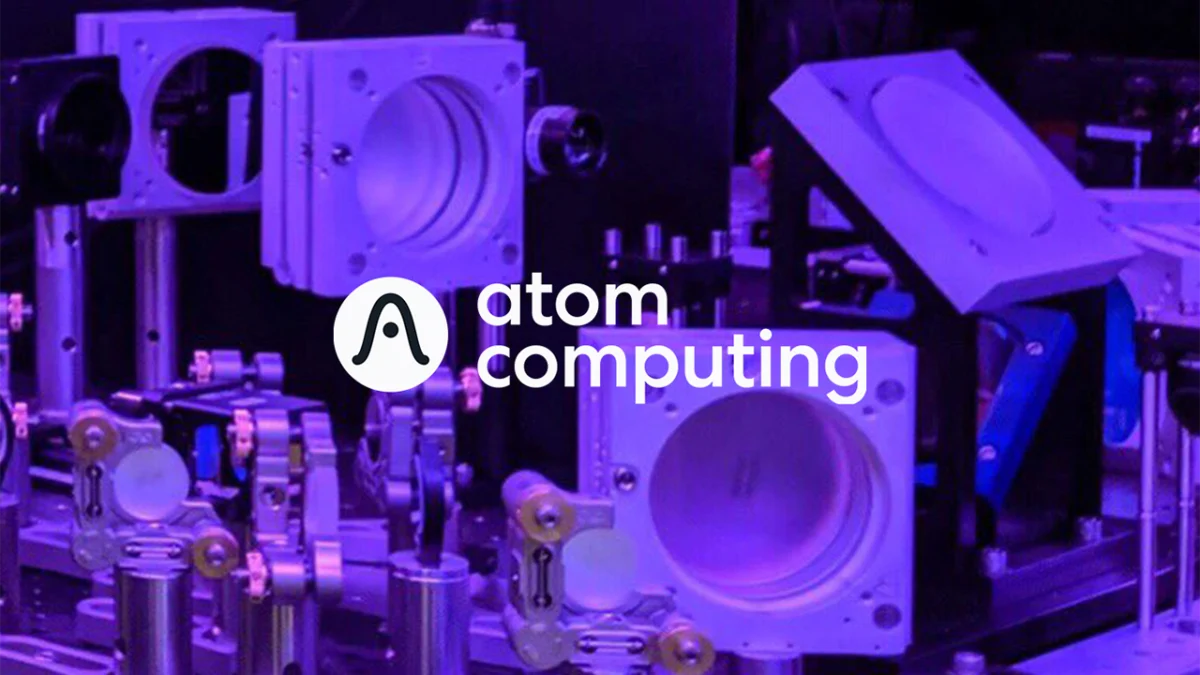
- Atom Computing (USA): Headquartered in Berkeley, California, Atom Computing has made significant strides in demonstrating high qubit counts and long coherence times. Their systems are characterized by a focus on engineering robust and scalable architectures.
- Pasqal (France): A European leader in the field, Pasqal, founded by Nobel laureate Alain Aspect and other distinguished scientists, focuses on developing full-stack quantum computers based on neutral atoms. Their technology emphasizes analog and digital quantum computation for optimization and simulation tasks.
These companies are not just building quantum hardware; they are actively developing the full stack of software, control systems, and algorithmic tools necessary to unlock the potential of neutral atom platforms, driving towards practical quantum advantage in the near future.
Chronology: From Theory to Tangible Progress
The concept of using neutral atoms for quantum information processing has roots in theoretical physics dating back decades, but its practical realization has only recently accelerated.
Milestones of 2025-2026: A Period of Accelerated Growth
The years 2025 and early 2026 mark a pivotal period for neutral atom quantum computing. This timeframe saw a confluence of breakthroughs that solidified its position as a leading contender in the quantum race.
- Early 2020s: Initial demonstrations of small-scale neutral atom arrays (tens of qubits) with impressive coherence times and gate fidelities began to emerge from academic labs. The foundational work on Rydberg blockade was firmly established.
- 2023-2024: Companies like QuEra, Atom Computing, and Pasqal began to scale up their systems, moving from academic prototypes to engineered platforms. This period saw the first demonstrations of programmable arrays exceeding 100 qubits. Significant investment rounds also validated the commercial potential of the technology.
- 2025: This year was characterized by substantial improvements in qubit control and connectivity. Researchers achieved higher fidelity two-qubit gates, often exceeding 99%, across larger arrays. Dynamic rearrangement of qubits within the array became more sophisticated, enabling more complex algorithms. Crucially, the integration of advanced control electronics and software stacks made these systems more user-friendly and accessible for external researchers and developers. QuEra, for instance, unveiled a system capable of simulating complex many-body physics problems with unprecedented accuracy, leveraging over 256 programmable qubits. Atom Computing demonstrated a system with significantly enhanced coherence times, pushing towards minute-long coherence for specific applications.
- Early 2026: The focus shifted towards improving error rates and demonstrating early forms of error mitigation and correction. Pasqal, building on its European strength, showcased advancements in linking multiple neutral atom modules, hinting at future distributed quantum computing architectures. The debate around the "noisy intermediate-scale quantum" (NISQ) era began to include neutral atom systems as serious contenders for demonstrating practical quantum advantage in specific, niche applications. Funding for neutral atom startups reached new highs, indicating strong investor confidence.
Comparative Trajectories
While other quantum modalities also saw progress during this period, neutral atoms distinguished themselves through their rapid scalability and inherent flexibility. Superconducting qubits continued to battle with cryogenic requirements and complex fabrication, though fidelity improved. Trapped-ion systems, while offering excellent gate fidelities, faced challenges in scaling up qubit numbers beyond a few dozen without significant engineering hurdles. Photonic quantum computing continued its long-term roadmap towards fault tolerance, but general-purpose quantum computers remained a distant goal for this modality.
Neutral atoms, on the other hand, offered a compelling middle ground: relatively simpler fabrication than superconducting circuits, higher qubit counts than trapped ions, and more immediate programmability than early photonic systems. This comparative advantage positioned them as a dark horse that rapidly moved to the forefront.
Supporting Data: The Mechanics, Metrics, and Market
Understanding the underlying mechanics, performance metrics, and the broader market context is crucial for appreciating the impact of neutral atom quantum computing.
The Mechanics of Neutral Atom Qubits
The operational principle of neutral atom qubits revolves around several key physical phenomena:
- Laser Cooling and Trapping: Atoms are cooled to near absolute zero using Doppler and Sisyphus cooling techniques, then held in place by tightly focused infrared laser beams (optical tweezers). These tweezers can be individually controlled and moved, allowing for dynamic arrangement of the qubits.
- Rydberg States: Qubits are typically encoded in two hyperfine ground states of the atom. To enact two-qubit gates, one or both atoms are excited to a Rydberg state. This state has an enormously large principal quantum number, leading to an expanded electron cloud and a strong dipole moment.
- Rydberg Blockade: When one atom is excited to a Rydberg state, its large electron cloud perturbs nearby atoms, shifting their energy levels. This "blockade" prevents a second nearby atom from also being excited to a Rydberg state. This collective effect is fundamental for implementing two-qubit gates, as it ensures that only one atom can be in the Rydberg state at a time within a certain radius, enabling controlled interactions.
- Readout: The state of each qubit is typically read out by illuminating the atoms with a resonant laser and observing whether they fluoresce. Atoms in one state will scatter photons, while atoms in the other state will not, allowing for high-fidelity detection.
Performance Benchmarks and Scalability
The advancements in 2025-2026 were quantified by impressive performance metrics:
- Qubit Counts: Systems moved from dozens to hundreds of qubits. QuEra and Atom Computing both demonstrated arrays exceeding 256 qubits, with roadmaps indicating targets of 1,000+ qubits in the latter half of the decade. Pasqal also showcased multi-array systems effectively achieving similar scales.
- Coherence Times: While precise numbers vary, neutral atom systems consistently demonstrated coherence times in the tens to hundreds of microseconds, and in some cases, milliseconds for specific qubit states. This is crucial for executing longer quantum algorithms.
- Gate Fidelities: Single-qubit gate fidelities routinely surpassed 99.9%, and two-qubit gate fidelities improved significantly, often reaching 99% or higher, a critical threshold for error mitigation and eventual error correction.
- Connectivity: The ability to dynamically move qubits and create arbitrary connectivity graphs within the array set neutral atoms apart, offering superior flexibility compared to fixed-architecture superconducting chips or linearly connected ion traps.
Investment and Research Landscape
The financial investment in neutral atom quantum computing soared during this period. Venture capital firms, government grants, and corporate strategic investments poured into QuEra, Atom Computing, Pasqal, and other emerging players. This capital fueled aggressive R&D, talent acquisition, and infrastructure development. Academic research continued to provide foundational insights, with universities worldwide publishing numerous papers on advanced trapping techniques, improved laser control, and novel entanglement schemes. Collaborations between industry and academia also intensified, accelerating the transfer of cutting-edge research into commercial products.
Neutral Atoms in the Quantum Ecosystem
Within the broader quantum ecosystem, neutral atom systems found their niche, particularly excelling in:
- Quantum Simulation: Their inherent ability to create programmable lattices of interacting particles makes them ideal for simulating complex physical systems, from material properties to high-energy physics.
- Optimization Problems: The high qubit count and flexible connectivity are well-suited for encoding and solving combinatorial optimization problems relevant to logistics, finance, and drug discovery.
- Digital Quantum Computing (DQC): While initially strong in analog simulation, advancements in gate fidelities and control allowed for more robust digital quantum circuit execution, expanding their applicability to a wider range of algorithms.
Compared to superconducting qubits, neutral atoms offer easier scalability and longer coherence, though their gate speeds are generally slower. Against trapped ions, they provide significantly higher qubit numbers and greater flexibility in qubit arrangement, sometimes at the expense of slightly lower gate fidelities. Photonic systems, while promising for specific applications and communication, are still further from general-purpose fault-tolerant computation.
Official Responses: Visions from the Forefront
The executives and researchers at the helm of neutral atom quantum computing companies articulate a clear vision for the technology’s impact.
QuEra: Charting a Course for Large-Scale Simulation
Dr. Alex Keesling, CEO of QuEra Computing, emphasized the company’s focus on harnessing the natural scalability of neutral atoms. "Our advancements in 2025 allowed us to cross critical thresholds in qubit count and control," Keesling stated in a recent press briefing. "We’re not just building a quantum computer; we’re building a platform that can precisely simulate the most challenging problems in materials science, chemistry, and physics. The ability to arrange hundreds of qubits with such fidelity is transformative for applications like drug discovery and novel material design. Our roadmap for the next two years involves pushing towards even higher qubit counts and integrating advanced error mitigation techniques to make our systems truly practical for industrial partners."
Atom Computing: Precision and Programmability
Dr. Rob Hays, CEO of Atom Computing, highlighted their commitment to engineering robust and reliable systems. "The past year and a half has been about engineering excellence," Hays commented in an exclusive interview. "We’ve focused on not just increasing qubit numbers but ensuring their stability, coherence, and the precision of our gate operations. Our 2025 achievements demonstrated significant improvements in maintaining qubit coherence for extended periods, which is paramount for running complex algorithms. We believe our architecture provides a clear path to fault-tolerant quantum computing, and our current focus is on enhancing the programmability of our 256-qubit system to empower researchers to explore a wider range of algorithms and use cases."
Pasqal: European Innovation on the Global Stage
Georges-Olivier Reymond, CEO of Pasqal, underscored the company’s unique approach combining analog and digital capabilities. "Pasqal’s progress in 2025 and early 2026 solidified our position as a leader in Europe and globally," Reymond explained during a technology summit. "Our neutral atom systems are proving incredibly versatile, capable of both deep quantum simulations and precise digital computations. We’ve seen significant uptake from partners in energy, finance, and automotive sectors who are eager to leverage our technology for optimization and complex modeling. The modularity of our design is a key differentiator, laying the groundwork for scaling beyond single devices and towards interconnected quantum networks." He also referenced the contributions of Nobel laureate Alain Aspect, whose foundational work provided a strong scientific bedrock for Pasqal’s innovations.
Expert Perspectives on the Neutral Atom Advantage
Independent quantum physicists and industry analysts echo the enthusiasm. Dr. Sarah Jones, a leading quantum physicist at a major research institution, observed, "Neutral atoms have truly come into their own. Their natural scalability, combined with improving gate fidelities, makes them a very strong candidate for near-term quantum advantage. The dynamic reconfigurability of qubit arrays is a game-changer for algorithm designers, offering a level of flexibility not easily matched by other architectures."
Similarly, market analysts like Mark Peterson from Quantum Insights, stated, "The investment surge in neutral atom companies in 2025-2026 is a clear indicator of their perceived potential. They offer a compelling balance of scalability and performance, making them attractive for both government-funded initiatives and private sector R&D. We project significant growth in this segment of the quantum computing market over the next five years, especially as applications move from theoretical demonstrations to practical, problem-solving tools."
Implications: The Future Unfolds
The rapid advancements in neutral atom quantum computing carry profound implications across various sectors, shaping the trajectory of quantum technology for the coming decade.
Transforming Industries with Quantum Power
The capabilities demonstrated by neutral atom systems in 2025-2026 suggest a near-term impact on several industries:
- Materials Science and Chemistry: The ability to simulate complex molecular interactions at the quantum level could revolutionize drug discovery, catalyst design, and the development of novel materials with bespoke properties.
- Finance: Quantum optimization algorithms running on neutral atom platforms could improve portfolio optimization, risk assessment, and fraud detection by processing vast datasets and exploring complex scenarios far beyond classical capabilities.
- Logistics and Supply Chain: Optimizing complex routing problems, warehouse management, and resource allocation could lead to significant efficiencies and cost savings.
- Artificial Intelligence: Neutral atom quantum computers could enhance machine learning models, particularly for tasks requiring complex pattern recognition or the processing of high-dimensional data, leading to more powerful AI systems.
Road to Fault Tolerance and Commercialization
While current neutral atom systems operate in the NISQ era, the progress in 2025-2026 laid crucial groundwork for the journey towards fault-tolerant quantum computing. The high qubit counts and improving fidelities make them prime candidates for implementing quantum error correction codes. The modular approach, where multiple neutral atom arrays could be interconnected, offers a pathway to scaling beyond a single device’s limitations, creating distributed quantum processors.
Commercialization efforts are intensifying. Beyond offering cloud access to their quantum processors, companies are exploring partnerships with industry leaders to develop specific quantum applications and integrate quantum capabilities into existing workflows. The goal is to move beyond theoretical benchmarks to deliver tangible, economic value.
Overcoming the Remaining Hurdles
Despite the impressive progress, challenges remain. Improving gate fidelities further, especially for multi-qubit gates, is critical. The engineering complexity of precisely controlling hundreds of individual laser beams and maintaining ultra-cold temperatures requires continuous innovation. Developing robust and user-friendly software stacks, compilers, and algorithmic libraries that fully leverage the unique advantages of neutral atom architectures is also an ongoing endeavor. Furthermore, the cost of building and maintaining these sophisticated systems remains high, necessitating continued investment and cost reduction strategies.
Strategic Imperative in the Quantum Race
The advancements in neutral atom quantum computing underscore its strategic importance in the global quantum race. Nations and economic blocs are investing heavily in quantum technologies, recognizing their potential to drive economic growth, enhance national security, and solve some of humanity’s most pressing challenges. Neutral atom systems, with their demonstrated scalability and versatility, are now considered a cornerstone of these national quantum strategies, alongside other leading qubit modalities. The continued innovation from companies like QuEra, Atom Computing, and Pasqal will be crucial in determining who leads in this transformative technological frontier.

