

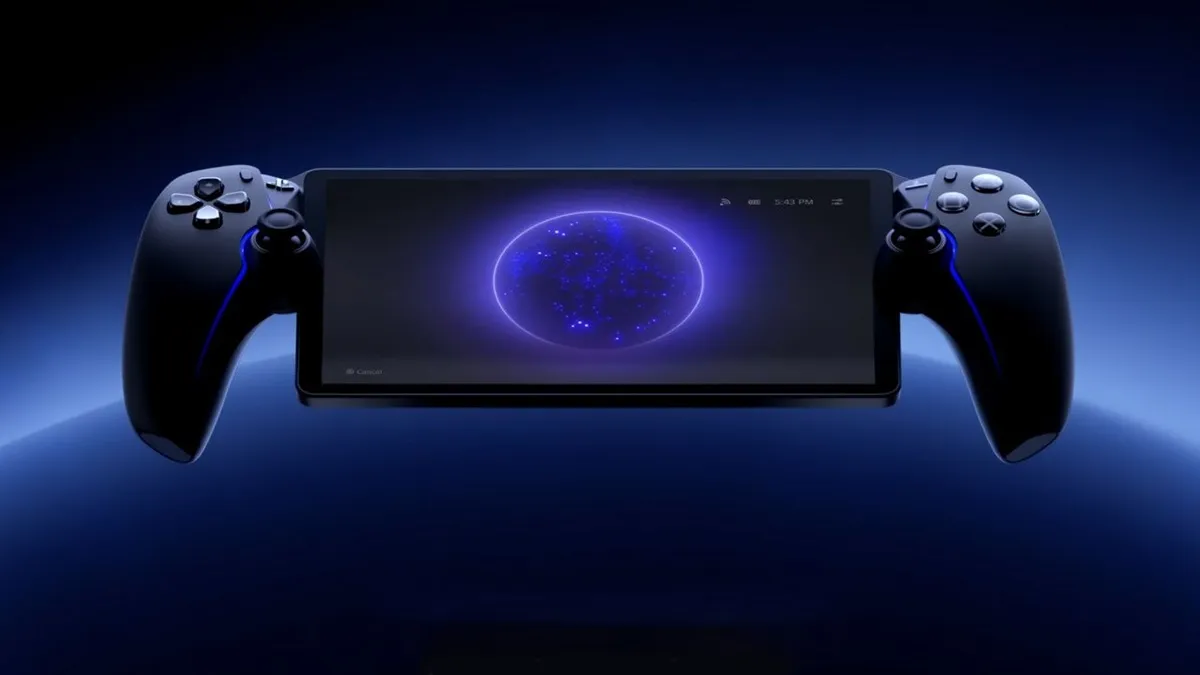
The landscape of handheld gaming continues to shift as Sony Interactive Entertainment refines the capabilities of the PlayStation Portal. In a move that addresses one of the most vocal community requests since the handheld’s cloud streaming feature exited beta in November 2025, Sony has officially updated its supported library to include the breakout hit, Assassin’s Creed: Black Flag Resynced.
For owners of the PlayStation Portal who prefer to bypass the necessity of tethering to a local PlayStation 5 console, this update represents a significant leap in utility. While the device was originally marketed primarily as a Remote Play companion, the integration of direct cloud streaming has transformed the handheld into a standalone gateway for premium gaming experiences—provided the user maintains an active PlayStation Plus Premium subscription.
Main Facts: A Seamless Shift for Portable Assassins
The latest update to the PlayStation Portal ecosystem ensures that Assassin’s Creed: Black Flag Resynced—the critically acclaimed reimagining of Ubisoft’s swashbuckling classic—is now fully compatible with the platform’s direct-to-cloud streaming service.
Previously, players wishing to experience the high-seas adventure on their Portal were required to utilize the Remote Play protocol, which necessitates an active, powered-on PS5 console acting as the host. With this library expansion, the "Remote Play" requirement is effectively lifted for this specific title. As long as the user possesses a stable internet connection and a PlayStation Plus Premium membership, they can stream the game directly from Sony’s data centers.
This update removes the hardware bottleneck that had frustrated many users since the game’s launch last week. Players can now purchase the title digitally through the PlayStation Store and initiate gameplay immediately on their handheld device, regardless of whether they own the physical console hardware.
Chronology: The Journey to Cloud Integration
The trajectory of the PlayStation Portal’s evolution has been marked by a transition from a niche accessory to a robust cloud-gaming client. To understand the significance of this update, one must look at the timeline of events leading up to this moment.
The Beta Phase and Beyond
For the first year of its life, the PlayStation Portal was strictly a Remote Play device. It was designed to bridge the gap between a gamer’s living room console and their mobile lifestyle. However, the announcement of cloud streaming support in late 2025 changed the device’s value proposition entirely. When the service officially exited beta in November 2025, it signaled Sony’s commitment to competing in the broader cloud gaming market.
The Launch of Black Flag Resynced
When Assassin’s Creed: Black Flag Resynced was released last week, it was met with immediate, overwhelming demand. The remake, which utilizes cutting-edge engine technology to modernize the beloved 2013 title, shattered Ubisoft’s internal sales projections. As the game dominated social media discourse and topped charts on gaming forums, the inability to stream it directly to the Portal became a focal point of user criticism.
The Patch Deployment
In the 48 hours following the surge in community feedback, Sony engineers worked to authorize the title for the cloud streaming server-side library. As of this morning, the restriction has been lifted, allowing the game to appear in the "Cloud" tab for PlayStation Plus Premium subscribers, effectively ending the period of exclusivity where the title required a local PS5 host.
Supporting Data: Sales, Performance, and Market Reach
The buzz surrounding Assassin’s Creed: Black Flag Resynced is not merely anecdotal; the data indicates a massive cultural moment for the franchise.
- Sales Momentum: Ubisoft has reported that the digital sales of Black Flag Resynced have outpaced their "best-case scenario" projections by nearly 40% in the first seven days. This surge in ownership has created a high-velocity demand for cross-platform accessibility.
- The Cost of Entry: The title is currently retailing at the standard $59.99 price point on the PlayStation Store. Unlike many legacy titles that see frequent discounting, Resynced remains at full MSRP, reflecting the high production value and the "remake" status of the software.
- Infrastructure Requirements: To stream this title effectively, Sony recommends a minimum stable connection of 15 Mbps, with 50 Mbps suggested for optimal 1080p resolution at 60 frames per second. As the game features complex water physics and volumetric lighting, the stability of the cloud server becomes paramount.
Official Responses and Industry Context
While Sony has not issued a formal press release regarding the individual addition of Black Flag Resynced to the library, representatives have acknowledged the "ongoing optimization of the cloud catalog" in response to user feedback.
"Our goal with the PlayStation Portal is to offer flexibility," a spokesperson for the platform noted during a brief technical briefing. "We monitor the most-requested titles for cloud streaming and prioritize them based on server load capacity and licensing agreements with our publishing partners. We understand that our players want to access their library on their own terms."
Ubisoft, meanwhile, has praised the collaboration with Sony. The developer noted that the "Resynced" engine was specifically built to be scalable, allowing it to perform well under the latency conditions inherent in cloud streaming, provided the network architecture is robust.
Implications: The Future of the PlayStation Portal
The addition of Black Flag Resynced to the cloud library carries significant implications for the future of PlayStation’s hardware strategy.
1. Decoupling from the Console
This move reinforces the theory that Sony is slowly pivoting the PlayStation Portal away from being a "PS5 peripheral" and toward being a "PlayStation ecosystem portal." If Sony continues to enable direct streaming for top-tier third-party titles, the necessity of owning a physical PS5 console to play new releases diminishes for the handheld-only demographic.
2. The PlayStation Plus Premium Value Proposition
For a long time, the value of the Premium tier of PlayStation Plus was debated. By gatekeeping direct cloud streaming behind this subscription, Sony is creating a compelling reason for owners of the Portal to maintain an active, higher-priced membership. This creates a recurring revenue model that is highly attractive to investors.
3. Impact on Game Design
As cloud streaming becomes a primary way to consume triple-A titles on handhelds, developers may begin to optimize games specifically for this medium. We are already seeing "cloud-first" optimizations in modern releases, where UI scaling and text size are adjusted for the smaller 8-inch screen of the Portal, ensuring that the experience does not feel like a compromise compared to a 4K television.
4. Competitive Pressure
With competitors like the Steam Deck and various Windows-based handhelds offering offline play, Sony’s reliance on cloud streaming is a high-stakes gamble. By ensuring that the most popular games—like Black Flag Resynced—are available on the Portal immediately, Sony is mitigating the "offline" advantage of their competitors by providing a seamless, high-fidelity experience that requires no local hardware overhead.
Final Thoughts: A New Era of Portability
The integration of Assassin’s Creed: Black Flag Resynced into the PlayStation Portal’s cloud library is a win for the consumer. It proves that Sony is listening to the feedback loop of its user base and is capable of agile, server-side updates that improve the value of hardware already in the hands of millions.
For the player who just wants to jump into the Caribbean, climb the rigging of the Jackdaw, and engage in high-seas combat without worrying about the status of their home console, this update is a welcome relief. As the industry continues to move toward a cloud-centric future, the PlayStation Portal stands as a testament to the fact that the hardware of tomorrow isn’t just about what’s under the hood—it’s about what can be delivered over the wire.
As we look toward the remainder of 2026, it is highly likely that more major titles will follow this path, further cementing the Portal as a standalone contender in the portable gaming wars. Whether this leads to a "cloud-only" version of the device in the future remains a subject of intense speculation, but for now, the ability to play one of the year’s biggest hits on the go is more than enough to keep the community satisfied.

