

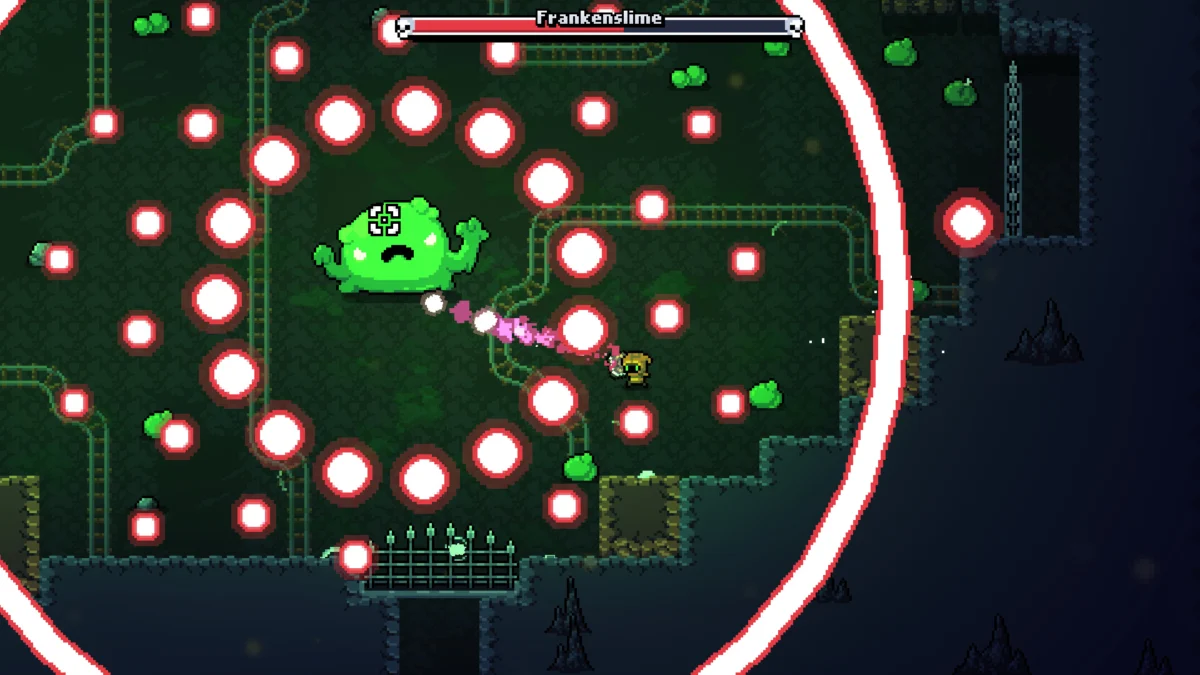
The landscape of independent gaming in 2021 was defined by an unprecedented surge in creative audacity. As the year drew to a close, the industry saw a proliferation of titles that refused to be categorized by traditional genre boundaries. Among these standout experiences, Archvale—developed by idoz & phops and published by Humble Games—emerged as a sleeper hit that defied expectations. By seamlessly synthesizing the deep, progression-based mechanics of a traditional Role-Playing Game (RPG) with the frantic, precision-based intensity of a "bullet hell" shooter, Archvale proved that two disparate game design philosophies could coexist in harmony.
The Core Concept: Where RPG Meets Bullet Hell
At its heart, Archvale is an ambitious experiment in ludology. The genre of "bullet hell" (or danmaku) typically relies on twitch reflexes, pattern recognition, and a singular focus on survival. Conversely, the RPG genre centers on character growth, gear optimization, and long-term strategic planning. Fusing these two requires a delicate balance: if the game is too slow, the bullet hell elements feel sluggish; if it is too fast, the RPG mechanics become meaningless.
Archvale achieves this balance by placing the player in a vibrant, top-down pixel art world that feels nostalgic yet mechanically modern. The narrative premise is classic high fantasy: a kingdom once shackled by the tyranny of an evil king is now in search of a savior. Players take on the mantle of this hero, tasked with traversing a fractured map to recover the legendary pieces of the Arch. The world is non-linear, allowing players to tackle regions in almost any order they choose, provided they have the mettle—and the equipment—to survive the escalating difficulty.
A Chronology of the Archvale Experience
To understand the impact of Archvale, one must look at the trajectory of its release and the player reception that followed.
The Pre-Launch Anticipation (Early 2021)
Following its announcement, the game was framed as an "open-world RPG with shooter elements." For many in the indie community, this sounded like a recipe for a cluttered experience. However, early trailers showcased a fluidity of movement that suggested the developers were prioritizing "game feel" above all else.
The December 2021 Launch
Released on December 2, 2021, on PC and Nintendo Switch, Archvale hit the market at the tail end of a crowded year. Despite the noise of triple-A holiday releases, it quickly carved out a niche. Within the first weeks of its release, the game garnered significant attention for its accessibility; unlike many bullet hell games that feel exclusionary, Archvale provided a progression system that allowed players to "grind" their way out of a difficult encounter if their raw skills were lacking.
Post-Launch Reception and Community Engagement
By the time the game reached its one-month anniversary in late December 2021, the community had coalesced around its unique features: the "badge" system, the vast array of weapons, and the lighthearted, often humorous NPCs—most notably the beloved frog chef.
Technical Foundations and Supporting Data
What makes Archvale more than just a novelty is its depth. The game’s design choices are backed by a robust internal logic that keeps players engaged for dozens of hours.
The Gear and Badge System
The game features an extensive loot system. Unlike static RPGs, Archvale allows players to craft and find weapons that fundamentally change how the game plays. Players can choose from a massive variety of bows, swords, wands, and guns. Each weapon type interacts differently with the bullet patterns of the enemies.
Furthermore, the "Badge" system functions as a modular skill tree. Players can equip badges that provide passive bonuses—such as increased movement speed, health regeneration, or elemental resistance. This allows for an organic "class" system. A player might start a session focused on a glass-cannon mage build, only to swap their badges and armor mid-dungeon to become a tanky archer. This flexibility is the core reason the game avoids the monotony common in repetitive combat-heavy titles.

Difficulty Scaling and Player Retention
Bullet hell games often suffer from a high "churn rate," where players quit after hitting a difficulty wall. Archvale mitigates this through:
- Vertical Progression: Upgrading armor and health provides a buffer against the high-damage projectiles of late-game bosses.
- Exploration-Based Power-Ups: Hidden caches and side quests reward curiosity, allowing players to out-level challenging zones.
- Responsive Controls: The game features highly precise hitboxes, ensuring that when a player dies, they feel it was due to their own error rather than a failure of the game’s engine.
Official Perspectives: The Developers’ Vision
While the developers (idoz & phops) maintained a relatively quiet profile during the launch period, their design choices spoke volumes. In various interviews and blog posts, the team emphasized the goal of "making a difficult game accessible."
"The idea was to take the stress out of the bullet hell genre," the developers noted in early promotional materials. By ensuring that the world was open and that players could return to town to craft better gear whenever they hit a wall, they successfully shifted the paradigm from "get good or give up" to "prepare and overcome."
The inclusion of humorous elements—such as the aforementioned frog chef—served as a necessary tonal palate cleanser. The developers understood that a game consisting entirely of high-tension dodging would lead to "player burnout." The charm of the world-building acts as the glue that holds the intense combat sequences together.
The Broader Implications for Indie Gaming
Archvale serves as a case study for the current state of indie development. Its success highlights several key trends in the industry:
1. The Death of Genre Purity
We are entering an era where "genre-blending" is no longer a risk but a requirement for standing out. Archvale joins the ranks of games like Hades or Undertale that refuse to sit in a single box. By mixing the intensity of a shoot-’em-up with the long-term rewards of an RPG, the game appeals to two distinct demographics, effectively doubling its potential audience.
2. The Power of "Game Feel"
In an age where photorealistic graphics often take center stage in the mainstream market, Archvale proves that pixel art and fluid animations are still the most important tools for immersion. The game’s aesthetic is clean and readable, which is a functional necessity for a bullet hell game, but it also carries a nostalgic weight that resonates with players of all ages.
3. The Shift Toward "Fair" Difficulty
Archvale represents a pushback against the "masocore" trend (games designed specifically to punish the player). While the game is undeniably difficult, it is never "unfair." The tools to succeed are always present in the inventory, provided the player takes the time to explore and engage with the game’s systems. This shift toward "fair challenge" is likely to be a major design pillar for indie developers in the coming years.
Conclusion: A Must-Play for the Modern Gamer
As we look back at the catalog of 2021, Archvale stands as a testament to the power of thoughtful, creative design. It does not reinvent the wheel, but it does combine two different types of wheels to create a vehicle that is entirely unique.
Whether you are a seasoned veteran of the bullet hell genre looking for a narrative framework, or an RPG enthusiast looking to test your reflexes, Archvale offers a rare experience. It is a game that respects your time, rewards your curiosity, and provides a level of satisfaction that is increasingly rare in the modern gaming landscape. From its intricately designed boss battles to the quiet charm of its NPC interactions, Archvale is not just a game; it is a masterclass in how to build an experience that is as rewarding as it is challenging. For those who have yet to journey to the land of Archvale, the path is open, the enemies are waiting, and the frog chef is ready to serve.

