

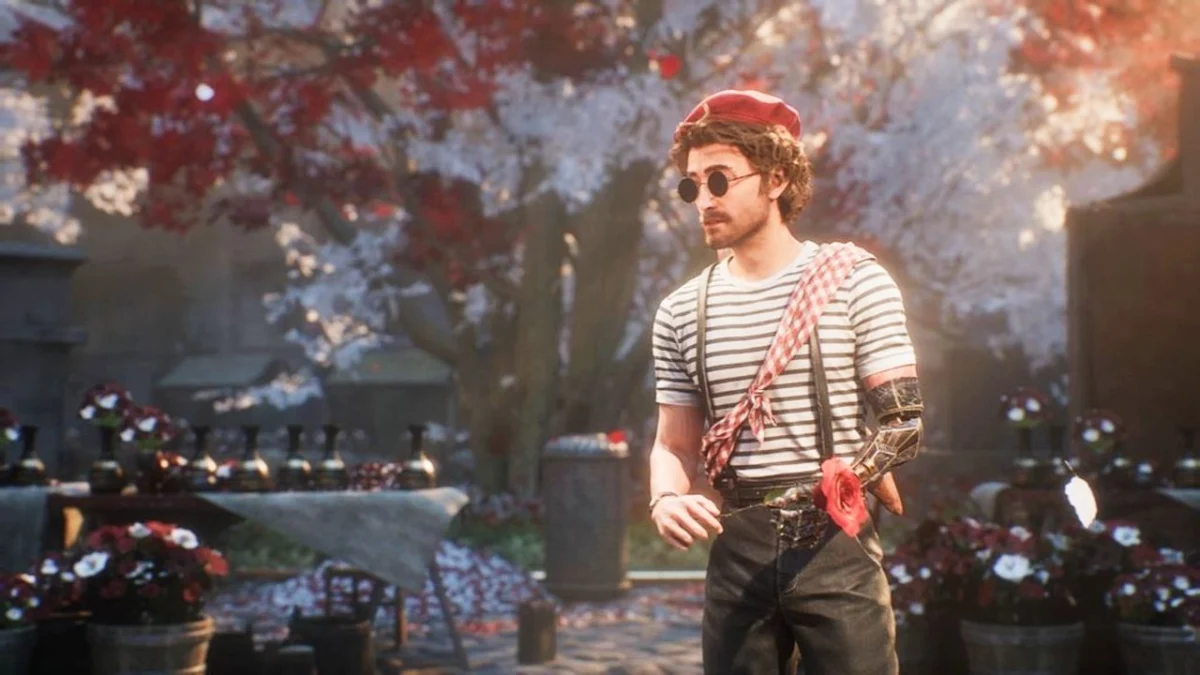
In the rapidly evolving landscape of interactive entertainment, few debates are as polarized or as existential as the role of generative artificial intelligence. For Guillaume Broche, the creative force behind the critically acclaimed RPG Clair Obscur: Expedition 33, the rise of AI represents a double-edged sword: a technological inevitability that promises unprecedented efficiency while threatening the very soul of the creative process.
In a candid appearance on Konbini’s Video Game Club, Broche reflected on the industry’s trajectory, admitting that while the prospect of generating entire games from simple prompts is likely on the horizon, it remains a "scary" reality for developers who define themselves by the act of creation.
The Philosophical Divide: Creation vs. Generation
For Sandfall Interactive, the stance on generative AI is one of cautious restraint. While many studios are racing to integrate large language models and diffusion-based image generators into their pipelines to trim costs and speed up production, Broche maintains that his studio has drawn a hard line.
"We aren’t using the tech for any creative work," Broche stated during the interview. While he acknowledged that the use of AI for "administrative duties" or "coding assistance" is a matter of practical nuance—often depending on the specific workflow—the core artistic elements of Expedition 33 remain strictly human-made. For Broche, the distinction is vital: delegating artistic vision to a machine, he argues, "takes away from the joy of creating things."
This perspective highlights a growing divide in the gaming industry. On one side are the efficiency-driven conglomerates looking to leverage AI to scale content production in an era of ballooning development budgets. On the other are independent creators like Broche, who view the friction and effort of development not as a hurdle to be cleared, but as the essential essence of the medium.
A Chronology of Controversy: The Texture Incident
The discussion around AI for Sandfall Interactive is not merely theoretical; it is rooted in a recent, high-profile controversy that serves as a cautionary tale for the industry. Following the launch of Clair Obscur: Expedition 33, sharp-eyed players identified several textures within the game that appeared to be generated by AI.
The fallout was swift. Although Sandfall Interactive immediately removed the assets, clarifying that they were "placeholders" that were never intended to reach the final build, the damage to the studio’s reputation was palpable. The incident triggered a significant backlash from the community, leading to the revocation of several Game of the Year (GOTY) awards that the studio had been initially granted.
This chronology of events illustrates the volatility of the current market. Even a minor, unintentional inclusion of AI-generated content can lead to a PR crisis, underscoring the intense scrutiny players are now applying to the tools used by developers. For Sandfall, the lesson was clear: in the eyes of the modern player, the "human touch" is not just a marketing slogan—it is a baseline expectation.
The Economics of AI: Efficiency vs. Artistic Integrity
To understand why studios are tempted by AI, one must look at the current economics of the gaming sector. The cost of producing a high-fidelity RPG has skyrocketed over the last decade, with some projects costing hundreds of millions of dollars and requiring hundreds of developers.
AI-powered tools offer a seductive promise: the ability to generate thousands of environmental assets, background NPCs, or basic dialogue lines in a fraction of the time it would take human artists and writers. However, as Broche suggests, there is a "scary" side to this optimization. If a game can be "churned out in five seconds with a prompt," does it retain the emotional resonance that made titles like Expedition 33 stand out?
Broche’s skepticism is rooted in the belief that great games are the product of intentionality. When every asset is curated by a human hand, there is a cohesive vision that holds the world together. When that vision is outsourced to an algorithm, the risk of "soullessness" becomes a genuine concern for developers who pride themselves on world-building.
Looking Ahead: The "Five-Second" Future
The most striking moment of Broche’s commentary involved his prediction for the future of the medium. He posits that we are moving toward an era where the technical barriers to entry will be virtually erased.
"The day will come when we’ll be able to churn out a game in five seconds with a prompt," he said. The question, he adds, is not "can we?" but "should we?" and more importantly, "will it be any good?"
This fear is shared by many in the industry, from indie developers to AAA veterans. The democratization of game creation via AI could lead to a saturated market where the signal-to-noise ratio becomes impossible to navigate. If everyone can create a game with a prompt, the value of human-led, high-quality development may shift, either becoming a premium "luxury" experience or disappearing entirely into a sea of generated mediocrity.
The Security of Success
Despite the looming existential questions, Broche expresses a sense of relief regarding his studio’s current position. The massive success of Clair Obscur: Expedition 33—a game that has been cited by some as a spiritual successor to the emotional depth of Lost Odyssey—has provided Sandfall Interactive with a degree of stability.
"That’s why I’m also glad… because we’re a studio that’s secure," Broche noted. This security is critical. When a studio is beholden to quarterly earnings or investor pressure, the temptation to adopt cost-cutting AI tools becomes almost mandatory. By achieving critical and commercial success on their own terms, Sandfall has bought itself the freedom to avoid the "best way possible" (in terms of speed and profit) in favor of the "right way" (in terms of artistic integrity).
Implications for the Industry
The implications of Sandfall’s stance are significant. As the industry moves forward, we are likely to see a bifurcation of the market:
- The AI-Integrated Pipeline: Studios that prioritize speed, scale, and cost-reduction will likely integrate AI across all departments, from procedural generation of terrain to voice synthesis.
- The Artisanal Movement: A counter-movement, led by studios like Sandfall, will likely lean into the "human-made" aspect of their games as a primary selling point.
For developers, the challenge will be to balance the practical utility of AI (such as automating tedious, non-creative administrative tasks) while fiercely protecting the "joy of creating." As Broche rightly identifies, the industry is in a state of collective unease. We are standing on the precipice of a shift as profound as the transition from 2D to 3D, and the choices made today—by developers and players alike—will define the creative landscape for decades to come.
Ultimately, the goal for developers like Broche is to ensure that while the tools of the trade may evolve, the heart of the game remains undeniably human. Whether that is a sustainable business model in the long run remains to be seen, but for now, the success of Expedition 33 serves as a powerful reminder that players are still, and perhaps always will be, looking for a story told by a person, not a prompt.

