

Main Facts
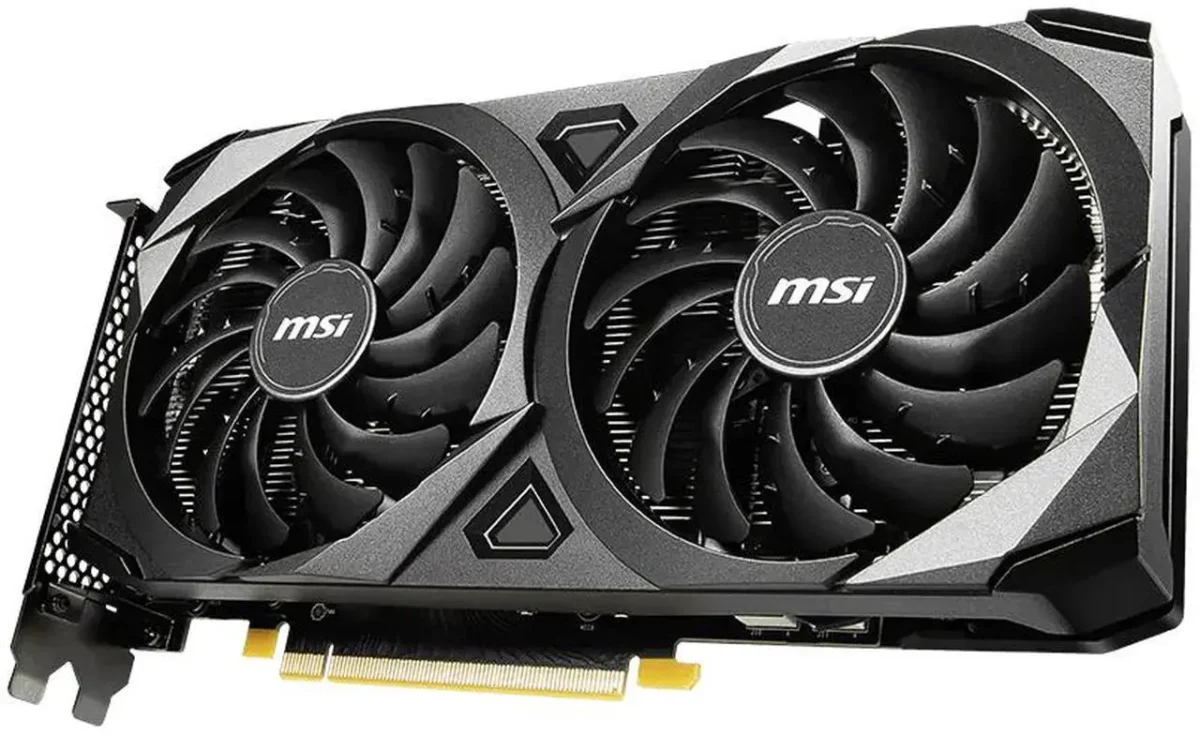
In a surprising and significant development for PC enthusiasts and value-conscious consumers, Nvidia’s venerable GeForce RTX 3060 12GB graphics card has officially re-entered the retail market. Barely a week after initial reports hinted at Nvidia’s strategy to reintroduce older, yet still highly capable, GPUs, the MSI GeForce RTX 3060 Ventus 2X 12GB OC has been spotted on Newegg’s virtual shelves for an enticing price of just $329.99, complete with free shipping. This re-emergence marks a critical shift in the current GPU landscape, which has been plagued by scarcity and inflated prices, particularly for cards equipped with substantial video memory.
The return of the RTX 3060 12GB is especially noteworthy given its dual appeal. For gamers, it offers a robust platform for smooth 1080p and capable 1440p gaming, further enhanced by Nvidia’s advanced DLSS (Deep Learning Super Sampling) technology. Crucially, the card’s generous 12GB of GDDR6 VRAM addresses a growing concern in modern gaming, where 8GB has become a significant bottleneck for contemporary titles demanding high-resolution textures and complex environments. Beyond gaming, this ample VRAM also positions the RTX 3060 12GB as an attractive entry point for the burgeoning field of local AI model execution, allowing users to run large language models (LLMs) and other machine learning tasks without relying on cloud services or incurring subscription fees. This combination of affordability, performance, and memory capacity makes the card a compelling option amidst ongoing, AI-driven GPU shortages that have disproportionately affected the availability of new, high-VRAM cards.
A Resurrected GPU: A Chronology of the RTX 3060’s Journey
The journey of the Nvidia GeForce RTX 3060 12GB has been anything but conventional, mirroring the tumultuous shifts in the graphics card market over the past few years. Its recent return to retail at a competitive price is the latest chapter in a story marked by initial promise, market disruption, and now, a strategic re-introduction.
Initial Launch and Market Position
The Nvidia GeForce RTX 3060 was first unveiled in January 2021, with its 12GB variant launching in late February 2021. Positioned as a mainstream offering, it was designed to deliver excellent 1080p gaming performance and capable 1440p experiences, succeeding the popular GTX 1060 and RTX 2060. At its initial launch, the RTX 3060 12GB carried a Manufacturer’s Suggested Retail Price (MSRP) of $329. However, its debut coincided with a perfect storm of unprecedented demand. The cryptocurrency mining boom, fueled by surging altcoin prices, created insatiable demand for GPUs, transforming them into digital gold. Simultaneously, global supply chain disruptions, exacerbated by the COVID-19 pandemic, severely constrained manufacturing and logistics.
This confluence of factors meant that the RTX 3060 12GB, despite its attractive price point and specifications, rarely, if ever, sold at its MSRP. Instead, it was immediately snatched up by miners and scalpers, appearing on secondary markets at hugely inflated prices, often two or three times its intended cost. The decision by Nvidia to equip the RTX 3060 with 12GB of VRAM was particularly prescient, even then. While 8GB was still common for mid-range cards, Nvidia recognized the increasing VRAM demands of modern game engines and future applications, setting the 3060 apart from many of its contemporaries and even some higher-tier cards like the RTX 3060 Ti and RTX 3070, which launched with 8GB. This generous VRAM allocation would later become one of its most defining and enduring strengths.
Disappearance and Price Escalation
As the GPU shortage intensified throughout 2021 and into 2022, the RTX 3060 12GB, like most other desirable graphics cards, effectively vanished from retail shelves. When it did appear, it was typically part of pre-built systems or sold by third-party vendors at astronomical prices. The secondary market thrived, with eBay and similar platforms becoming the primary source for anyone desperate to acquire a new GPU. For over two years, the dream of purchasing a graphics card at a reasonable price seemed like a distant memory for many PC builders and gamers.
Even as the crypto market began to cool in late 2022 and early 2023, and supply chains slowly recovered, the RTX 3060 12GB remained an elusive commodity. Its perceived value held strong due to its VRAM capacity and enduring performance profile, keeping its price stubbornly high whenever limited stock occasionally appeared. It transitioned from an affordable mid-range option to a highly sought-after, yet often overpriced, component.
The Unexpected Return
The notion of bringing back older, proven graphics cards was first publicly floated by Nvidia’s CEO, Jensen Huang, hinting at a strategy to address specific market needs. This concept recently materialized when reports indicated that the RTX 3060 12GB would indeed be making a comeback. Initially, these resurrected cards were observed hitting retail channels with price tags hovering near the $400 mark. While an improvement over the peak scalper prices, this still represented a premium over its original MSRP.
However, the latest sighting on Newegg for the MSI GeForce RTX 3060 Ventus 2X 12GB OC at $329.99 signals a more aggressive and consumer-friendly pricing strategy. This current price not only matches its original MSRP from over three years ago but also includes free shipping, presenting an arguably better value proposition than its initial launch. This competitive pricing suggests a deliberate move by Nvidia and its AIB partners to re-establish the RTX 3060 12GB as a go-to option for the mid-range segment, effectively disrupting the prevailing market dynamics once more.
Supporting Data: Performance, Specifications, and Market Context
The re-introduction of the MSI GeForce RTX 3060 Ventus 2X 12GB OC at its current price point requires a closer look at its technical merits and how it fits into today’s demanding computing landscape, both for gaming and emerging AI applications.
Technical Deep Dive: The MSI GeForce RTX 3060 Ventus 2X 12GB OC
The MSI GeForce RTX 3060 Ventus 2X 12GB OC is built upon Nvidia’s Ampere architecture, a generational leap that brought significant improvements in ray tracing and AI performance compared to its predecessors. The core specifications include:
- GPU Architecture: Ampere (GA106)
- CUDA Cores: 3584
- Boost Clock: 1087 MHz (MSI’s OC variant may have a slightly higher factory boost, typical for Ventus series)
- Memory: 12GB GDDR6
- Memory Interface: 192-bit
- Memory Speed: 15 Gbps
- TGP (Total Graphics Power): Approximately 170W
MSI’s Ventus 2X cooling solution is a dual-fan design, known for its balance of performance and acoustics. While the RTX 3060 GPU is relatively power-efficient and generates less heat than its higher-tier siblings, the dual-fan setup ensures effective thermal management, contributing to quieter operation under load. A notable inclusion in this MSI variant is the steel backplate. Beyond its aesthetic contribution, the backplate serves a crucial functional role: it enhances structural rigidity, preventing PCB (Printed Circuit Board) sag over time, and aids in passive heat dissipation, further contributing to overall cooling efficiency and potentially reducing fan noise.
Connectivity options are standard but robust, featuring three DisplayPort outputs and a single HDMI 2.1 connector. This configuration supports high-resolution, high-refresh-rate displays, including up to 4K at 120Hz or 8K at 60Hz (with Display Stream Compression), making it versatile for various monitor setups. Its relatively modest TGP of 170W means it doesn’t require an excessively powerful PSU, making it suitable for a wide range of existing PC builds.
Gaming Performance Analysis
For gamers, the RTX 3060 12GB remains a formidable card, especially when considering its current price.
- 1080p Resolution: At 1080p, the RTX 3060 12GB excels, delivering high frame rates in most modern titles with high to ultra-settings. Games like Cyberpunk 2077, Red Dead Redemption 2, and Assassin’s Creed Valhalla can be played smoothly, often exceeding 60 FPS, providing an excellent experience for users with high-refresh-rate monitors. The 12GB VRAM is particularly beneficial here, ensuring that even VRAM-intensive titles with maxed-out texture settings don’t encounter stuttering or performance drops due to memory limitations.
- 1440p Resolution: Stepping up to 1440p, the RTX 3060 12GB remains quite competent. While demanding titles might require a slight reduction in certain graphical settings (e.g., from Ultra to High), it can still deliver a highly enjoyable and playable experience, typically maintaining frame rates well above 30 FPS, and often closer to 60 FPS depending on the game. Again, the 12GB VRAM provides a crucial buffer, preventing memory-related performance degradation that 8GB cards might encounter at this resolution.
- 4K Resolution: While not its primary target, the RTX 3060 12GB can even tackle some games at 4K, albeit with significant concessions. Achieving playable frame rates at 4K often necessitates dialing down settings considerably, and most importantly, heavily relying on Nvidia’s DLSS technology. DLSS 4.5, with its advanced AI-powered upscaling, can significantly boost frame rates by rendering the game at a lower internal resolution and intelligently reconstructing the image to 4K, often with impressive visual fidelity. For users willing to experiment with settings and leverage DLSS, the 3060 can offer a surprising 4K experience in less demanding titles or competitive esports games.
The enduring relevance of the RTX 3060 for gaming is underscored by the continuous improvements in Nvidia’s driver support and the maturation of DLSS, which has become a vital tool for extending the performance lifespan of GPUs.
AI and Local Computing Prowess
Perhaps one of the most compelling aspects of the RTX 3060 12GB in the current technological climate is its capability for local AI model execution. The explosion of interest in generative AI, from large language models (LLMs) to image generation (e.g., Stable Diffusion), has created a new demand for GPUs, particularly those with ample VRAM.
- VRAM for AI: AI models, especially LLMs and complex neural networks, require vast amounts of memory to store their parameters and intermediate computations. While 8GB of VRAM might suffice for smaller models or basic tasks, it quickly becomes a significant limitation for running more sophisticated models locally. For instance, many popular LLMs, even quantized versions, benefit immensely from 12GB or more, allowing users to load larger model variants, achieve better inference speeds, or run more complex local applications. The 12GB on the RTX 3060 offers a sweet spot, providing enough headroom to experiment with a wide array of freely available AI models without encountering "out of memory" errors that plague 8GB cards.
- Benefits of Local AI: Running AI models locally offers several advantages:
- Privacy: User data never leaves the local machine, addressing concerns about data security and privacy often associated with cloud-based AI services.
- Cost-Effectiveness: Eliminates recurring subscription fees for commercial AI bots or cloud compute time, making it a one-time hardware investment.
- Offline Capability: Models can be run without an internet connection, ideal for remote work or areas with unreliable connectivity.
- Customization and Control: Users have full control over the models, allowing for fine-tuning, experimentation, and integration into custom workflows.
For those considering building a "homelab" or simply wanting to explore the world of local AI without breaking the bank, the RTX 3060 12GB at $329.99 represents an excellent entry point. It’s a pragmatic choice for replacing or supplementing commercial AI bots, providing a powerful, private, and cost-effective alternative.
Official Responses and Industry Perspective
The strategic re-introduction of the Nvidia RTX 3060 12GB is not merely a fortuitous stock replenishment but rather a calculated move that reflects Nvidia’s adaptability to evolving market dynamics and its commitment to maintaining a robust product presence across various segments.
Nvidia’s Strategy: Responding to Market Dynamics
Nvidia CEO Jensen Huang had previously hinted at the possibility of bringing back older, successful GPUs, signaling a pragmatic approach to navigating the complexities of the current hardware landscape. The actualization of this strategy with the RTX 3060 12GB suggests several motivations:
- Addressing VRAM Demands: The primary driver appears to be the increasing VRAM requirements of both modern gaming titles and, more significantly, the explosion of generative AI. With many newer, mid-range cards like the RTX 4060 and RTX 4060 Ti launching with only 8GB of VRAM, there was a noticeable gap in Nvidia’s current product stack for an affordable card with ample memory. The 12GB RTX 3060 directly fills this void, offering a compelling solution for applications where VRAM is paramount.
- Combating AI-Driven Scarcity: The insatiable demand for high-end GPUs from the AI industry has led to unprecedented shortages and price increases, particularly for cards with large VRAM capacities. While the RTX 3060 is not an enterprise-grade AI accelerator, its 12GB of VRAM makes it highly attractive for consumer-level local AI experimentation. By re-releasing it, Nvidia can cater to this emerging segment without diverting production capacity from its more profitable, high-end AI chips.
- Filling Product Gaps and Market Segmentation: The current RTX 40-series lineup is somewhat fragmented, especially in the sub-$400 price bracket. The RTX 3060 12GB slides neatly into this space, offering a performance and VRAM profile that can compete effectively against certain AMD offerings and even provide a more attractive proposition than some of Nvidia’s own lower-tier 40-series cards, particularly for users prioritizing VRAM. This helps Nvidia maintain market share and offer a diverse portfolio to different consumer needs.
- Optimizing Production Lines: Re-activating production for an established GPU like the RTX 3060 allows Nvidia and its manufacturing partners to leverage existing designs, proven processes, and potentially older, less in-demand fabrication nodes. This can be more cost-effective and efficient than developing entirely new chips, especially if there’s available capacity.
The re-introduction also implicitly acknowledges that the "legacy" label doesn’t necessarily mean obsolete. For many users, a proven, well-supported card like the RTX 3060, especially with its VRAM advantage, offers better value than some newer, more expensive alternatives with limited memory.
Retailer and AIB Partner Engagement
The appearance of the MSI GeForce RTX 3060 Ventus 2X 12GB OC on Newegg is a testament to the coordinated effort between Nvidia and its Add-in-Board (AIB) partners like MSI, as well as major retailers.
- MSI’s Role: MSI’s decision to re-manufacture or re-release this specific Ventus 2X variant indicates a belief in its market viability. As a trusted AIB partner, MSI benefits from offering a popular, high-demand product that can capture a significant segment of the market. The Ventus series is known for its reliability and balanced design, making it a safe choice for re-introduction.
- Newegg’s Role: As a prominent online retailer for PC hardware, Newegg is a crucial channel for such product re-introductions. Offering the card at a competitive price, with free shipping, demonstrates an aggressive sales strategy aimed at attracting consumers who have long waited for affordable GPU options.
- Supply Chain and Manufacturing: The re-emergence implies that Nvidia has either identified significant quantities of existing inventory (new old stock) or, more likely, has recommissioned manufacturing lines for the GA106 GPU. Given the scale implied by a general return to retail, it’s probable that new batches are being produced to meet anticipated demand. This also suggests a careful assessment of chip and component availability to ensure a consistent supply.
This collaborative effort highlights the industry’s responsiveness to market signals, especially in a sector as dynamic as graphics cards.
Implications and Future Outlook
The return of the Nvidia RTX 3060 12GB at an attractive price carries significant implications for consumers, the broader GPU market, and the future trajectory of PC hardware.
For Consumers: A Win for Value and Accessibility
For a substantial segment of the PC building community, this development is unequivocally positive.
- Budget-Conscious Gamers: Those looking to build or upgrade a gaming PC on a budget now have a powerful, reliable option. The RTX 3060 12GB provides excellent performance for 1080p and 1440p gaming, supported by DLSS, making it a fantastic value proposition for its price. It offers a clear upgrade path for users on older GTX cards or those seeking to move beyond integrated graphics.
- Entry-Level AI Enthusiasts: The 12GB VRAM makes this card an unprecedented entry point for individuals interested in local AI model execution. It democratizes access to powerful AI tools, allowing experimentation with LLMs, image generation, and other machine learning tasks without the prohibitive cost of high-end GPUs or the recurring fees of cloud services. This could foster innovation and learning within the enthusiast community.
- Relief from Market Volatility: After years of unpredictable pricing and scarcity, the stable availability of a capable GPU at its MSRP (or better) provides much-needed relief. It instills confidence in consumers that they can acquire essential hardware without resorting to secondary markets or paying inflated prices.
- Upgrade Path Consideration: For many, the RTX 3060 12GB might serve as an excellent stop-gap solution, providing strong performance now while they wait for future generations of GPUs to mature and become more affordable. However, for a significant number, its balanced performance and ample VRAM will make it a long-term solution, especially if their primary focus is 1080p or 1440p gaming and local AI experimentation.
Broader Market Impact
The re-introduction of the RTX 3060 12GB is likely to send ripples throughout the GPU market.
- Competitive Pressure: This move places direct competitive pressure on AMD’s mid-range offerings, such as the Radeon RX 6700 XT or even some RX 7600/7700 XT variants, particularly in terms of VRAM capacity and DLSS advantage. It forces competitors to reconsider their pricing and feature sets in this crucial segment.
- Product Lifecycle Extension: Nvidia’s decision sets a precedent for extending the lifecycle of successful GPU architectures. In an era where new generations often feel like incremental upgrades, bringing back a well-loved, proven card with a specific advantage (like VRAM) can be a smart business move, especially if it addresses market deficiencies. We might see other older, VRAM-rich cards being reintroduced if this strategy proves successful.
- Redefining "Current Generation": The strong return of a 30-series card at a competitive price blurs the lines between "current generation" (40-series) and "previous generation." It emphasizes that performance and features, especially VRAM, are often more important than the generational label for many consumers.
- Impact on Entry-Level 40-series: The RTX 3060 12GB could potentially cannibalize sales of Nvidia’s own RTX 4060 (8GB) and RTX 4060 Ti (8GB), as its 12GB of VRAM and comparable raw performance for a similar or lower price point make it a more compelling option for many use cases. This might force Nvidia to adjust pricing or features of its lower-end 40-series cards in response.
The Evolving Role of VRAM
This entire saga underscores the dramatically increasing importance of VRAM in modern computing. What was once considered a secondary specification has become a critical bottleneck for both high-fidelity gaming and resource-intensive AI applications. The RTX 3060 12GB, a card that was perhaps ahead of its time in its VRAM allocation, now perfectly aligns with current and future demands. It serves as a clear benchmark for what is increasingly considered "sufficient" VRAM for a balanced, future-proof PC experience.
Conclusion
The return of the Nvidia GeForce RTX 3060 12GB to retail, particularly the MSI Ventus 2X model at $329.99, is a significant moment in the GPU market. It’s a strategic maneuver by Nvidia to address critical market needs: providing an affordable, high-VRAM option for both gamers struggling with modern game demands and a burgeoning community of local AI enthusiasts. Its blend of reliable gaming performance, future-proof VRAM, and a compelling price point makes it an immediate standout. For consumers who have patiently navigated years of shortages and inflated prices, this resurrected GPU offers a genuine win – a powerful, versatile component that delivers exceptional value in a market hungry for accessible performance. As the industry continues to evolve, the RTX 3060 12GB stands as a testament to the enduring appeal of well-engineered hardware and the constant interplay between technological innovation and market demand.
For those looking to capitalize on this opportunity or explore other potential savings, resources such as "Best PC Hardware deals," "SSD and Storage Deals," "Hard Drive Deals," "Gaming Monitor Deals," "Graphics Card Deals," or "CPU Deals" pages are invaluable for finding the best components to complement this compelling GPU.

