

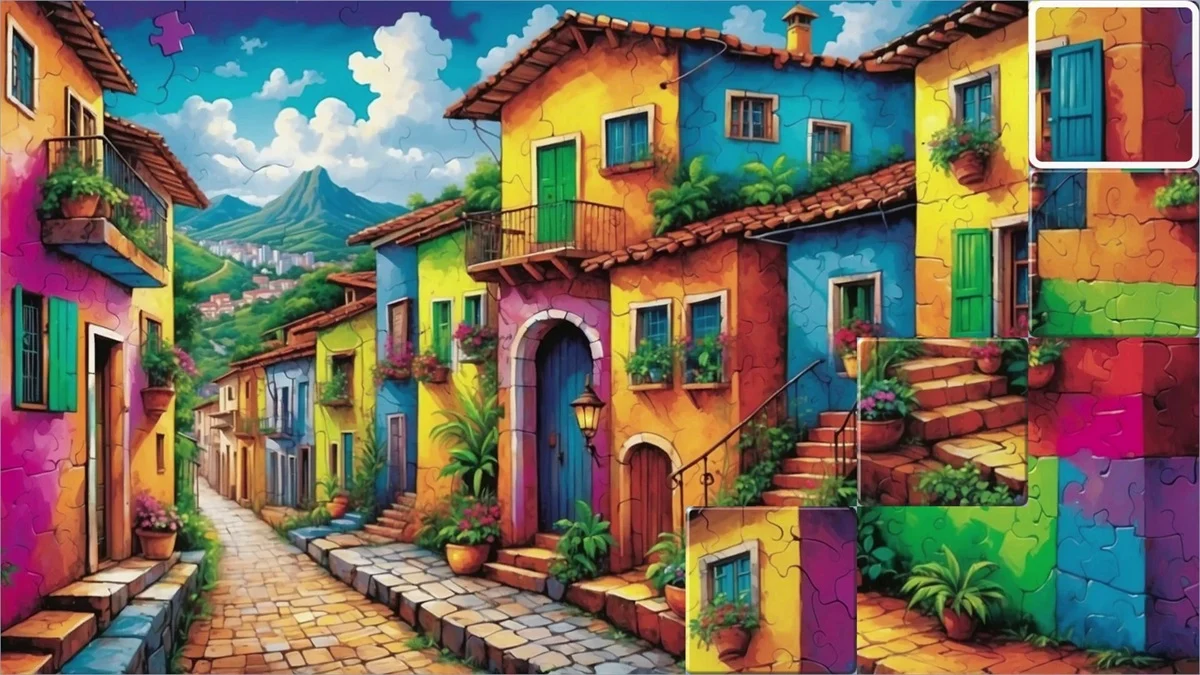
In the rapidly evolving landscape of digital storefronts, the PlayStation Store (PS Store) remains a primary hub for millions of players. While the headlines are frequently dominated by high-budget, "AAA" blockbusters requiring significant financial investment, there exists a vibrant ecosystem of smaller, experimental, and budget-friendly titles that often go overlooked. Recently, Sony’s digital storefront refreshed its catalog with two distinct, relaxing experiences: The Legend of Fireball and Splash of Color. Both titles have garnered immediate attention not only for their accessible gameplay loops but for their inclusion of Platinum trophies—a highly coveted digital accolade for PlayStation enthusiasts.
Main Facts: A Dual Release of Tranquility and Precision
The recent arrivals on the PlayStation Store serve as a reminder that gaming does not always need to be a high-stakes, adrenaline-fueled affair. The Legend of Fireball (available on both PS4 and PS5) and Splash of Color (exclusive to the PS5) have been introduced as "free-to-play" titles, allowing users to dive into their mechanics without an initial monetary commitment.
- Splash of Color: Developed as a visually stimulating puzzle experience, this title tasks players with the objective of assembling vibrant, intricate images by swapping tiles. It is a game rooted in the "zen" genre, focusing on pattern recognition and the satisfying tactile sensation of watching chaotic visuals organize themselves into coherent, colorful works of art.
- The Legend of Fireball: In contrast to the contemplative nature of Splash of Color, this title leans into arcade-style physics. Players assume the role of an aspiring fireball fighter, starting in the humble setting of a training room. The primary gameplay loop involves aiming, firing, and destroying various objects, which serves as both a stress-reliever and a progression system as the player grows in power.
Crucially, both games have been confirmed to include full Trophy lists, culminating in a Platinum trophy. For the "Trophy Hunter" community—a dedicated segment of the PlayStation user base that prizes the acquisition of digital rewards—this is a significant development, as free-to-play games often omit the Platinum tier, rendering these two titles notable outliers in the current PS Store landscape.
Chronology: The Evolution of Free-to-Play Accessibility
The journey of free-to-play (F2P) titles on the PlayStation platform has been a long one. Historically, the F2P model was reserved for massive multiplayer experiences like Fortnite, Warframe, or Genshin Impact. These games were designed for longevity and recurring revenue through microtransactions.
However, the recent influx of smaller, "bite-sized" indie experiences marks a shift in how the PS Store handles its "Free" section. Over the last eighteen months, there has been a steady increase in titles that offer a "lite" version of a game for free, with the option to purchase cosmetic or utility-based add-ons.
- Phase 1 (2020–2021): The transition to the PlayStation 5 brought an emphasis on technical performance. Early F2P titles were mostly ports or established multiplayer games.
- Phase 2 (2022–2023): The rise of the "trophy-friendly" indie title. Developers began to realize that providing a straightforward, achievable Platinum trophy was a powerful marketing tool for visibility on the PS Store.
- Phase 3 (2024–Present): The current era. We are seeing a refined approach where "zen" or "hyper-casual" games are being released with the explicit intent of providing a relaxing, low-barrier entry point for players who are tired of the "grind" of service-based games. The Legend of Fireball and Splash of Color are the latest fruits of this specific trend.
Supporting Data: The Value Proposition for Players
When analyzing the viability of these titles, one must look at the "Value-to-Time" ratio. In the modern gaming market, where a premium title can cost upwards of $70, the barrier to entry for these games is non-existent.
Trophy Accessibility
For many, the appeal of these games lies in the "Platinum difficulty." While many AAA games require 50 to 100 hours of gameplay to earn a Platinum trophy, these indie titles are designed to be completed in a fraction of that time—typically between one to three hours. For the average player, this provides a "quick win," a psychological reward that reinforces their engagement with the PlayStation ecosystem.
Monetization Models
It is important to address the elephant in the room: monetization. Both The Legend of Fireball and Splash of Color do feature optional, paid add-ons. However, a crucial piece of data for the consumer is that these purchases are entirely supplemental. They do not gate content, nor are they required to achieve the Platinum trophy. This distinguishes these titles from "pay-to-win" models, positioning them instead as "freemium" experiences where the player chooses to pay only if they wish to support the developer or expedite their progress.
Official Responses and Developer Intent
While Sony (PlayStation) rarely comments on individual indie releases, the company’s broader strategy regarding the PS Store has been clear: foster a diverse library that caters to all types of players. By allowing these smaller titles to feature Platinum trophies, Sony is essentially providing a platform for independent developers to reach an audience that might otherwise ignore them.
Developers of these types of games often cite the "Zen Gaming" movement as their primary motivation. The design philosophy behind Splash of Color, for instance, is centered on the concept of "Flow State"—a psychological term describing complete immersion in a task. By removing time limits, health bars, and complex narrative requirements, the developer creates a safe space for the player to decompress.
In the case of The Legend of Fireball, the focus is on "satisfying feedback." The act of breaking objects and seeing physics-based destruction is a classic mechanic that provides immediate sensory gratification. The developers have emphasized that the goal was to create a game that felt "good to play" for 15-minute bursts, perfect for a busy professional or a student looking to unwind after a long day.
Implications: The Future of the PS Store Ecosystem
The inclusion of these games on the PS Store carries several implications for the gaming industry at large.
1. The "Trophy-First" Marketing Strategy
We are seeing a trend where the "Platinum-ability" of a game is becoming a primary selling point. This is a double-edged sword. On one hand, it guarantees downloads and visibility. On the other, it risks saturating the store with games that exist solely to inflate a player’s Trophy count. Sony’s challenge moving forward will be to ensure that the quality of these titles remains high enough to avoid the "shovelware" label—a label that these two specific titles have managed to avoid due to their polished aesthetics and solid mechanics.
2. The Rise of "Zen" Gaming as a Product
The success of Splash of Color highlights a growing market segment: players who are experiencing "AAA-fatigue." Large, open-world games are often exhausting, requiring hundreds of hours of commitment. The shift toward shorter, more focused experiences suggests that players are valuing their time more than ever. If developers can continue to offer high-quality, relaxing experiences that respect the player’s time, this genre will likely see significant growth in the coming years.
3. Impact on the Indie Developer Landscape
For indie developers, the PlayStation platform is becoming more accessible. The tools provided by Sony’s developer portal, combined with the massive user base of the PS5, allow a small team to achieve global reach with minimal marketing spend. When a game offers a Platinum trophy, the "word-of-mouth" factor within the trophy-hunting community acts as a grassroots marketing engine that money cannot buy.
4. Consumer Empowerment
Ultimately, the availability of free, high-quality experiences empowers the consumer. In a market dominated by inflation and rising costs, having access to entertainment that is both free and rewarding is a net positive for the community. It encourages players to experiment with genres they might not otherwise try—if you aren’t paying, the risk of "buyer’s remorse" is eliminated.
Final Verdict: Should You Download?
If you are a PlayStation user who enjoys the occasional break from competitive multiplayer or complex narrative campaigns, both The Legend of Fireball and Splash of Color are worth your consideration. They represent a well-executed intersection of low-stakes gameplay and high-reward progression.
Whether you are looking to bolster your trophy collection or simply need a meditative thirty minutes to reset your brain, these titles provide exactly what they promise. They do not aim to change the landscape of gaming, nor do they try to compete with the latest God of War or Spider-Man installments. Instead, they occupy a necessary niche: the space of simple, effective, and accessible joy.
As the PlayStation Store continues to refresh its catalog, we can expect to see more titles following this template. For the player, this means a more diverse, flexible, and rewarding experience across the board. So, if your PS5 is currently sitting idle between major releases, consider giving these two titles a spin. They offer a rare opportunity to engage with the console’s ecosystem in a way that is entirely free of stress—and, of course, they come with that shiny, satisfying Platinum trophy to add to your collection.
In an era where "bigger" is almost always seen as "better," these games remind us that sometimes, the best things in life—and on the PlayStation Store—really are free.

