

In the rapidly evolving landscape of global gaming, the recent surge of high-fidelity, high-budget Chinese titles has dominated the headlines. From the record-shattering cultural phenomenon of Black Myth: Wukong to the highly anticipated, kinetic spectacle of Phantom Blade: Zero, the world has suddenly turned its eyes toward the East. However, beneath the polished, AAA-grade surface of these modern hits lies a foundation built by years of quiet, persistent indie innovation. Among the most significant of these precursors is The Scroll of Taiwu, a dense, uncompromising simulation epic from developer ConchShip Games.
After eight years of evolution in Steam Early Access, The Scroll of Taiwu has finally hit its 1.0 release. It is a milestone that signifies more than just the completion of a project; it represents the end of a grueling developmental odyssey that predates the current “Golden Age” of Chinese game development. While it lacks the flashy combat trailers of its contemporaries, The Scroll of Taiwu offers a depth of systemic complexity that arguably positions it as one of the most ambitious indie projects of the last decade.
The Architecture of an Epic
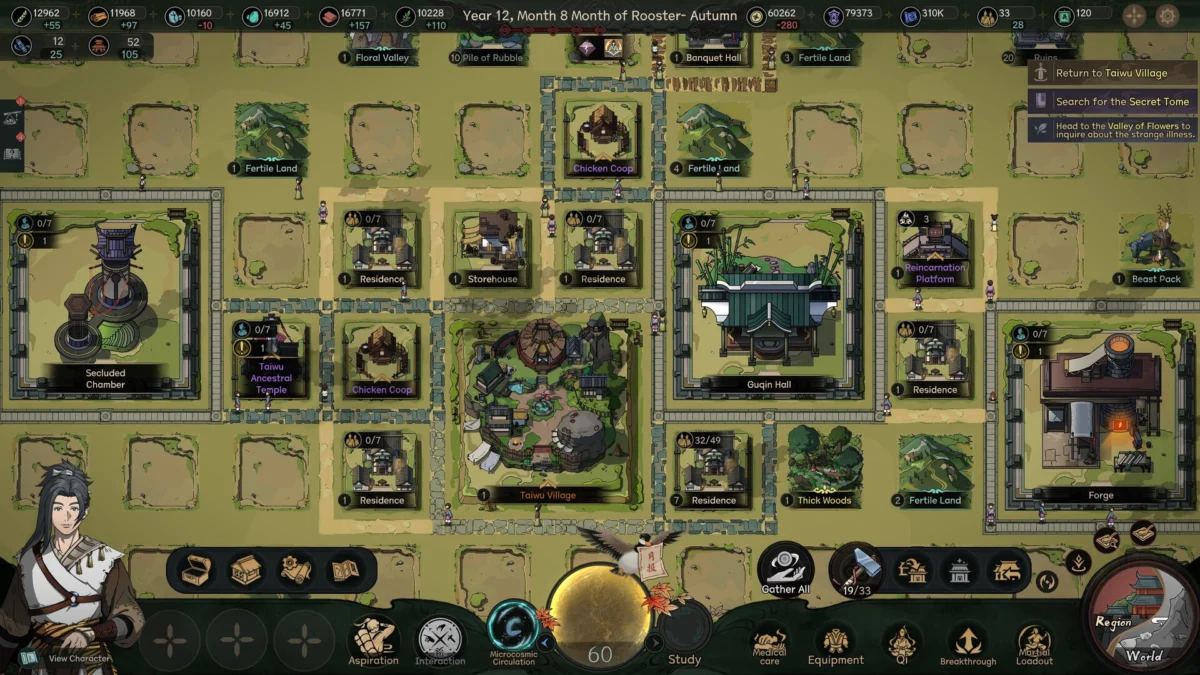
To understand The Scroll of Taiwu, one must move past the surface-level expectations of modern action-RPGs. It is not a game defined by twitch reflexes or soulslike boss patterns; rather, it is a game defined by its staggering, almost overwhelming, simulation density.
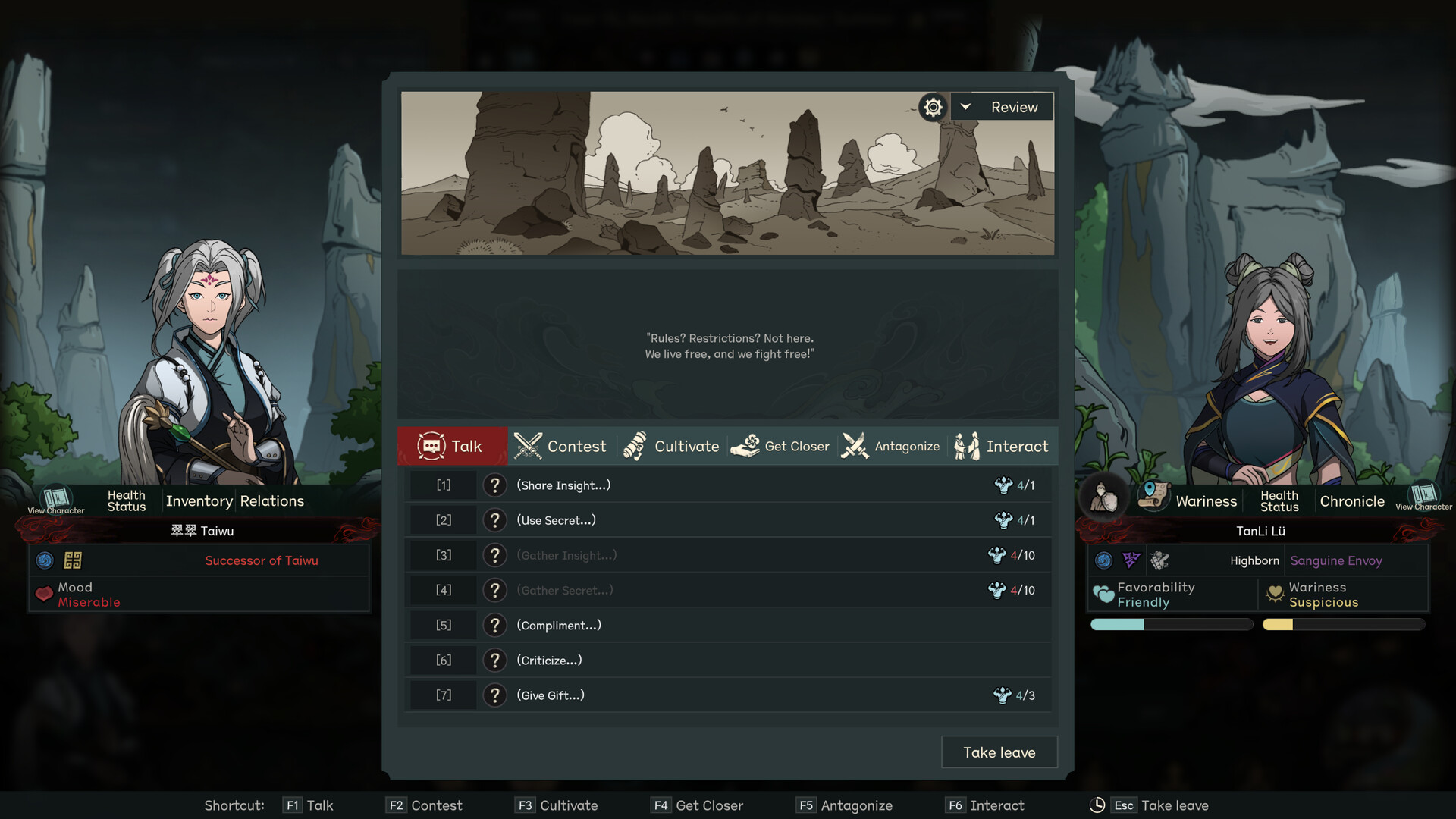
Publishing advisor Leye "Yager" Yu, who has been instrumental in bridging the gap between the Chinese developers and the global market, describes the title as a conceptual hybrid of Crusader Kings 2, Kenshi, and the narrative depth of Baldur’s Gate. In the game, players traverse a sprawling open world, but the core loop is not about leveling up a character in a vacuum. It is about navigating a complex tapestry of martial arts mastery, social climbing, town management, and political machination. Every decision made in the opening hours echoes into the future of the world, creating a narrative simulation that feels alive, unpredictable, and punishingly authentic to its Wuxia roots.
A Chronology of Development
The journey to version 1.0 has been a decade-long marathon. When The Scroll of Taiwu first debuted on Steam in 2018, it was a lightning rod for interest, drawing in millions of players despite being an unpolished, language-locked experience. The game’s growth was organic, fueled by a dedicated core of players who were willing to look past its technical hurdles to experience the sheer breadth of its design.
- 2018: The game launches into Early Access, quickly becoming a surprise hit in China. Its complex, systems-heavy approach attracts a massive, dedicated community.
- 2019–2021: The development team at ConchShip Games, led by the notoriously uncompromising creator Zheng Jie, spends years refining the engine, balancing the intricate martial arts systems, and expanding the world’s lore.
- 2022–2023: As the global appetite for Chinese games begins to rise, the team works to address the game’s greatest barrier to entry: the language gap.
- 2024: The 1.0 version is released, featuring official English localization and a refined user interface intended to make the game’s dense systems more accessible to a broader, international audience.
The Challenge of Localization: 5 Million Words
One of the most significant hurdles in bringing The Scroll of Taiwu to the West has been its sheer volume of text. With a script exceeding 5 million words, the game presented a logistical nightmare for localization. For years, the lack of an English version relegated the game to a niche interest among Western players, requiring the use of fan-made patches or rudimentary machine translations to navigate its complex menus.
The 1.0 release marks the first time that the intended experience is fully accessible to the English-speaking world. Yager notes that while the localization is still an ongoing, iterative process, it is a critical step in democratizing the game’s appeal. By opening the doors to Western players, the developers are not just selling a product; they are inviting a new audience to engage with the specific cultural nuances of Chinese mythology and Wuxia tropes that have rarely been explored with this level of depth in the Western gaming market.
The "Stubborn" Visionary: A Perspective from the Inside
The success of The Scroll of Taiwu is inextricably linked to the personality of its lead developer, Zheng Jie. In an industry where "feature creep" is often discouraged by publishers looking for quick turnarounds, Jie stands out for his refusal to compromise on his vision.
Yager, who confesses to having played over 1,200 hours of the game, admits that he often found himself in the position of trying to rein in the development team. "Zheng Jie is a stubborn guy," Yager notes. "But only a stubborn guy like him can make a game that unique—that contains that many mechanics, that much text, that much gameplay and joy for players."
This stubbornness, while occasionally a source of friction for those managing the project’s timeline, is precisely what gives the game its soul. The simulation is so deep that an entire ecosystem of player-led strategy guides, discord communities, and wiki pages has sprung up, functioning much like the enthusiast communities for grand strategy titles like Europa Universalis.
Implications for the Chinese Indie Scene
The arrival of The Scroll of Taiwu on the global stage is a symbolic victory for the Chinese independent game development scene. As Yager points out, the game has served as a beacon for other creators. It proved that a Chinese indie game, rooted deeply in its own cultural traditions and built on complex, non-mainstream mechanics, could achieve massive, long-term success.
"This game didn’t just inspire the indie game developers in China," Yager explains. "The game gives them the idea that if you do something really deep, if you do something really concentrated with indie games, you can have success."
This ripple effect is visible today. The success of Black Myth: Wukong might have grabbed the headlines, but The Scroll of Taiwu built the road that allowed such games to travel. It demonstrated that there is a global audience hungry for authentic, culturally rich, and mechanically challenging experiences that aren’t merely copies of Western or Japanese design philosophies.
Looking Forward: A Future for the Scroll
Even now, with the 1.0 version out in the wild, the work is far from finished. The team at ConchShip Games is currently focused on bug squashing and further refining the English localization, acknowledging that a game of this magnitude will require ongoing support to ensure that new players aren’t overwhelmed by its initial complexity.
Yager remains optimistic, leaning on word-of-mouth and the support of content creators to spread the word. He recognizes that selling a game as dense as The Scroll of Taiwu to a Western audience accustomed to more streamlined experiences is an uphill battle. However, he is confident that the game’s striking art style and the sheer, intoxicating depth of its systems will eventually win over those looking for a truly "deep" gaming experience.
As the industry continues to globalize, The Scroll of Taiwu serves as a poignant reminder that the most rewarding games are often those that refuse to cater to the lowest common denominator. It is a testament to the power of artistic stubbornness, the value of deep-seated cultural storytelling, and the enduring appeal of games that respect the player’s intelligence enough to let them get lost in their complexity. Whether or not it achieves the same commercial ubiquity as the year’s AAA hits is almost secondary; its legacy as a pioneer of the Chinese indie movement is already firmly cemented.

