

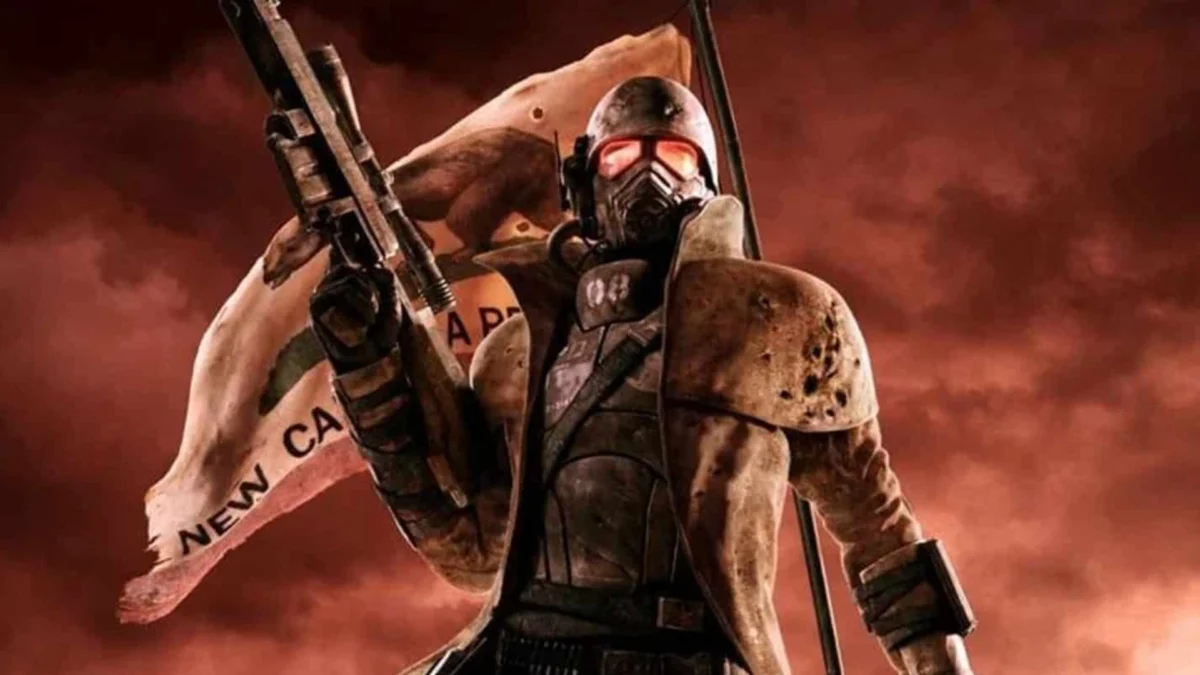
In the pantheon of Western role-playing games, few titles command the reverence and enduring cultural footprint of Fallout: New Vegas. Released in 2010, the game is frequently cited as the pinnacle of the Fallout franchise’s writing and systemic depth. Yet, in a revelation that challenges the traditional narrative of "auteur-driven" game development, director Josh Sawyer has recently pulled back the curtain on the project’s origins, admitting that his leadership of the game was the result of happenstance rather than a grand, long-term design.
As the industry continues to analyze the legacy of Obsidian Entertainment, Sawyer’s candid reflections provide a rare, unvarnished look at how one of the most beloved games of the 21st century came to be—not through a carefully orchestrated pitch, but through a confluence of luck, timing, and internal studio restructuring.
The Genesis of an Icon: Beyond the "Auteur" Myth
The prevailing assumption among gaming historians has often been that Fallout: New Vegas was a project born from the singular vision of Josh Sawyer, the veteran designer known for his work on the Icewind Dale series. However, in a recent appearance on The Examined Game podcast, Sawyer clarified his role in the project’s infancy, effectively stripping away the "auteur" label often applied to his work.
According to Sawyer, he was completely absent from the initial, critical discussions between Obsidian Entertainment and Bethesda Softworks. While the gaming community often attributes the game’s core identity—including the iconic "courier shot in the head" opening—to the vision of a single director, the reality was a deeply collaborative, almost modular process. The conceptual heavy lifting for the narrative’s inciting incident, for example, is widely credited to studio co-founder Chris Avellone, whose narrative sensibilities defined much of the game’s grit.
Sawyer’s detachment from the project’s inception was not a choice, but a matter of professional displacement. In 2009, he was deeply entrenched in the development of Aliens: Crucible, a high-profile horror RPG project that ultimately met an ignominious end when it was canceled.
"I wasn’t part of any of those early conversations," Sawyer explained. "I had been a lead designer on an Aliens project that went very badly… it was the owners who had been talking to Bethesda. I had no idea that any of this stuff was going on."
Chronology of a Serendipitous Handover
The trajectory of Fallout: New Vegas was shaped by a series of pivots that occurred behind the closed doors of Obsidian’s executive offices. To understand how the project landed in Sawyer’s lap, one must look at the climate of the studio in the late 2000s.
The Pre-Production Fog (2008–2009)
During this period, Obsidian was navigating the precarious waters of third-party development. The studio had survived the cancellation of Aliens: Crucible, a loss that left many of its senior designers without a primary project. Simultaneously, Bethesda—having successfully revitalized the Fallout franchise with Fallout 3—was looking to expand the series’ reach.
The Pitch
The initial dialogue between Bethesda and Obsidian centered on a project that would bridge the gap between Fallout 3 and a potential successor. While the working titles varied—often referred to in internal discussions as Fallout 3: New Vegas or Fallout 3: Sin City—the proposal was primarily a product of the studio’s leadership, specifically Feargus Urquhart and Chris Avellone.
The Appointment
It was during a period of professional downtime for Sawyer that the opportunity materialized. Feargus Urquhart, the CEO of Obsidian, approached Sawyer with the offer. For Sawyer, the moment was surreal. He was not looking for a new "big" project in the wake of the Aliens failure; he was simply present when the studio head decided that he was the right person to shepherd the ambitious RPG.
"I didn’t pitch New Vegas," Sawyer reflected. "It almost literally fell in my lap, because Feargus just sort of said, ‘here you go,’ and yeah, it was just luck. It was just pure luck, like most things in my career."
The "Fumbling" Professionalism: A Trend in RPG Development
Sawyer’s admission echoes the sentiments of another industry titan: Tim Cain. As one of the original creators of the Fallout franchise at Interplay, Cain has recently been vocal about the "accidental" nature of his own career. In a series of interviews and retrospectives, Cain has described his path as a series of stumbles, noting that he rarely envisioned the long-term sequels or legacy implications of his early work while in the trenches of development.
This shared perspective between Sawyer and Cain suggests a broader, perhaps uncomfortable truth about the game development industry: the most enduring creative works are often the result of "fumbling" toward excellence rather than a rigid, top-down execution of a master plan. It highlights the importance of institutional culture, where the right talent is placed in the right role at the right time, rather than relying on the myth of the lone genius.
Official Responses and Internal Dynamics
The internal culture at Obsidian during the development of New Vegas has been the subject of much debate among industry analysts. The studio, known for its dense narrative design and penchant for complex moral choice systems, operated under significant time constraints. The "luck" that Sawyer refers to was arguably the catalyst that allowed him to focus entirely on the game’s systemic identity—its reputation systems, weapon mods, and survival mechanics—rather than the political maneuvering required to secure the contract.
Bethesda’s involvement was, by all accounts, a collaborative partnership that allowed Obsidian the creative autonomy to expand on the lore of the West Coast, a territory established by the original Fallout games but largely ignored by Fallout 3. By allowing a director who was "plucked" from the roster to take the helm, Obsidian ensured that the game remained a product of the studio’s collective DNA rather than an external imposition.
Implications for the Future of RPG Design
What does this reveal about the future of the RPG genre? As games become increasingly expensive and development cycles longer, the "accidental" director model—where a project is handed to a capable veteran who wasn’t necessarily part of the initial "big idea" phase—may become a standard practice for managing risk.
- Agility Over Auteurship: The success of New Vegas proves that the vision of a project can evolve and sharpen once a capable leader is integrated into an existing framework.
- The Value of Institutional Knowledge: Because Sawyer was already at Obsidian, he was able to pivot from the canceled Aliens project to Fallout without the learning curve required of an external hire.
- The Luck Factor: As both Sawyer and Cain have noted, the intersection of talent and opportunity remains the most unpredictable variable in software development.
Conclusion: The Enduring Legacy
Fallout: New Vegas remains, nearly 15 years after its release, a benchmark for what can be achieved when a talented team is given a sandbox and a degree of freedom. That its director considers his appointment a stroke of luck does not diminish the game’s achievements; rather, it highlights the human element of a industry often obsessed with marketing, metrics, and pre-planned roadmaps.
Josh Sawyer’s reflection serves as a reminder that the best games are often the ones that manage to survive their own creation processes. Whether through the strategic decisions of leadership like Feargus Urquhart or the readiness of designers like Sawyer, New Vegas stands as a testament to the fact that sometimes, the best path forward is not the one you planned, but the one you find yourself standing on.
As the industry looks toward the next generation of RPGs, the story of New Vegas will continue to serve as a beacon—a reminder that in the wasteland of development, it pays to be in the right place at the right time.

