

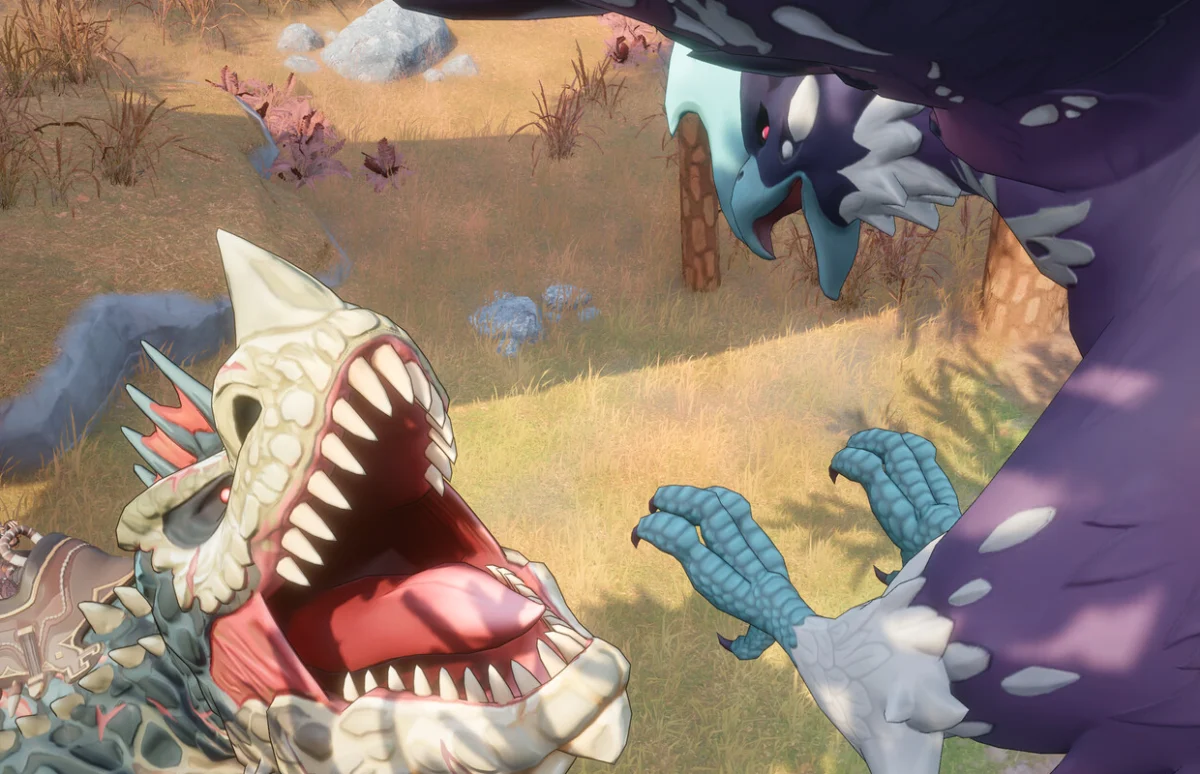
In a major development for the survival-crafting genre, Tokyo-based publisher Shueisha Games, in partnership with developer Magnus Games Studio, has officially pulled back the curtain on Wild Wild Eden. Formerly known to the industry under the working title Project Survival, the game is now confirmed for a Steam Early Access release scheduled for the first quarter of 2027.
The announcement, which includes a comprehensive suite of new trailers, gameplay footage, and high-fidelity screenshots, marks a significant milestone for the project, which has been in active development since its initial reveal in 2023. By moving from a codename to a finalized, evocative title, the developers are signaling a shift from the experimental phase of production to a focused, community-driven launch strategy.
The Evolution: A Chronology of Development
The journey of Wild Wild Eden is one defined by methodical refinement and strategic expansion. The project first garnered public attention during the "BitSummit Let’s Go!!" event in Kyoto in July 2023. At the time, it was introduced to the gaming press as Project Survival, a mysterious open-world venture that promised to marry traditional crafting mechanics with an emphasis on environmental exploration.
For nearly three years, the teams at Shueisha Games and Magnus Games Studio have operated with a focus on what they describe as "delivering the highest-quality experience possible." This period of relative silence, punctuated by internal testing and asset refinement, has culminated in the official rebranding. The transition from Project Survival to Wild Wild Eden represents more than just a name change; it reflects the maturation of the game’s core identity—an experience centered on the emotional stakes of survival rather than mere resource management.
With the Steam store page now live, the development team has officially opened the doors for prospective players to wishlist the game, a critical metric for visibility in the hyper-competitive Steam marketplace. The transition to the Early Access model in Spring 2027 is intended to allow for a collaborative development process, where player feedback will directly influence the final tuning of the creature-breeding and settlement-building systems.
The World of Eden: An Overview of Gameplay Mechanics
At its heart, Wild Wild Eden presents a radical departure from the bleak, gritty aesthetic that dominates the survival genre. The game is set on an untamed, vibrant planet defined by its verticality and sense of wonder. Players are thrust into a landscape characterized by floating landmasses, shimmering, crystalline seas, and ancient, forgotten ruins that hint at a complex planetary history.
The Bond System: Monsters as Family
Perhaps the most distinctive feature of Wild Wild Eden is its philosophy regarding the creatures that inhabit its world. In most survival titles, fauna are categorized as either hostile threats to be eliminated or resources to be harvested. Wild Wild Eden challenges this convention by positioning monsters as sentient, emotional companions.
The game features a deep, robust breeding system that allows players to cultivate unique creatures that serve as more than mere tools for efficiency. According to the developers, these creatures possess individual behaviors and complex AI that evolve based on their interactions with the player. Whether they are acting as mounts for traversing the skies or as integral members of the player’s tribe, these monsters are framed as "family." The development team emphasizes that the emotional core of the game lies in the narrative connections built between the player and their tamed beasts.
Exploration and Settlement
The survival mechanics are grounded in a mix of environmental traversal and creative building. Players are tasked with constructing settlements that must adapt to the verticality of the world. Scaling mountains and diving into the depths of the ocean are not merely optional activities but are essential for gathering rare materials and discovering the secrets of the planet. The game’s, "build your own unique settlement" directive suggests a high degree of modularity, allowing players to create structures that harmonize with the diverse biomes of the alien world.
Supporting Data and Technical Ambition
The scope of Wild Wild Eden suggests that Shueisha Games is positioning the title to compete with established giants of the open-world survival space. The decision to pursue an Early Access model is a deliberate one, reflecting the technical complexity of an open-world, multiplayer-compatible RPG.
Technical Specifications and Scale
While specific hardware requirements are yet to be finalized, the visual fidelity showcased in the initial trailers indicates that the game is leveraging modern lighting engines to render its sprawling, vibrant environments. The "floating landmass" mechanic, in particular, requires sophisticated spatial management and optimization to ensure smooth performance, particularly when multiple players are interacting within the same instance.
The Multiplayer Dynamic
Wild Wild Eden is designed to function equally well as a solo experience or as a collaborative online venture. The multiplayer component is built to facilitate shared discovery, with the developers noting that every day in the game world brings fresh, unpredictable adventures. By allowing players to share their settlements and their uniquely bred creatures, the game aims to foster a community-driven economy and social ecosystem that will likely be the primary driver of its long-term retention.
Official Perspectives: The Philosophy of the Developers
In an official statement accompanying the reveal, the team at Shueisha Games articulated a vision that moves beyond the "challenge" of survival. While the genre is often defined by hunger meters, durability stats, and combat difficulty, the developers of Wild Wild Eden are aiming for a different kind of engagement.
"A survival adventure designed not only to challenge players, but to move them," the developers stated. This focus on "moving" the player implies a narrative-heavy approach. By placing the player in a world where they must find a new home after losing their old one, the game creates an inherent emotional motivation for survival. The bonds forged with creatures act as an anchor, grounding the player in the world and providing a sense of purpose that transcends the typical loop of "gather, craft, survive."
The decision to partner with Magnus Games Studio—a team known for their technical proficiency—was clearly driven by the need to balance this ambitious, emotive narrative with a stable, reactive gameplay loop. The collaboration appears to be a symbiotic one: Shueisha Games provides the narrative framework and publishing infrastructure, while Magnus Games focuses on the mechanical integrity of the creature-breeding and world-simulation systems.
Implications for the Survival-Crafting Genre
The announcement of Wild Wild Eden comes at a pivotal time for the survival-crafting genre. Following the explosive success of games like Palworld, there is a clear appetite for titles that blend creature collection with survival mechanics. However, Wild Wild Eden distinguishes itself by prioritizing the "bond" over the "collection."
A Shift in Genre Conventions
If Wild Wild Eden succeeds in its goal of making creatures feel like members of a tribe rather than static assets, it could signal a shift in how developers approach animal companionship in games. This move toward "emotional survival" could influence future projects, pushing the industry away from the transactional nature of creature-taming games and toward more narrative-driven, symbiotic gameplay experiences.
The Early Access Gamble
The choice of a 2027 release window provides the developers with ample runway to avoid the "crunch" culture that often plagues early-access releases. By giving themselves three years of pre-launch development followed by a long-term Early Access period, the team is showing a commitment to sustainable production. This timeline suggests that Shueisha Games is invested in building a product that is polished from the outset, rather than rushing a beta to market.
Final Outlook
As the industry looks toward the first quarter of 2027, Wild Wild Eden stands out as one of the most anticipated titles in the survival-crafting pipeline. With its distinct visual style, focus on deep emotional bonds with creatures, and a clear, well-communicated development roadmap, it has the potential to define a new sub-genre of "emotive survival."
For fans of the genre, the coming months will be critical. As Shueisha Games begins to release more developer diaries and deep-dives into the breeding and settlement systems, the community will be watching to see if the game can truly deliver on the promise of a world that feels as alive as the creatures within it. For now, the path forward is set: Wild Wild Eden has emerged from the shadows of its former self, ready to challenge our understanding of what it means to survive on a strange, beautiful, and uncaring planet.

