

[Editor’s Note: Tubefilter Charts is a weekly rankings column from Tubefilter with data provided by GospelStats. It is a top-number ranking of YouTube channels based on statistics collected within a given time frame. Check out all of our Tubefilter Charts with new installments every week here.]
The 2026 FIFA World Cup has transformed from a mere sporting event into a digital juggernaut, dictating the pulse of the internet and reshaping the Global Top 50 YouTube rankings. As the world turns its collective gaze toward the pitch, the platform’s biggest soccer creators are capitalizing on the frenzy, racking up viewership numbers that defy traditional growth metrics. At the pinnacle of this surge stands Belgian creator Celine Dept, who has secured her first #1 finish of 2026, amassing a staggering 1.11 billion weekly views.
However, the dominance of traditional creators is being challenged by a strange, algorithmic phenomenon. As the World Cup hype reaches a fever pitch, a new wave of content—often labeled as “AI slop”—is infiltrating the top tiers of the platform, proving that in the battle for attention, the line between reality and digital artifice is becoming increasingly blurred.
The Anatomy of a Global Phenomenon
The current landscape of YouTube is defined by a singular, overwhelming force: the 2026 FIFA World Cup. For creators, this event represents the ultimate "content gold mine." Whether through high-production vlogs, skill challenges, or analytical breakdowns, the soccer vertical is currently enjoying a level of engagement that dwarfs almost every other niche on the platform.
Celine Dept’s rise to the top spot is a testament to the power of consistent, high-quality engagement. Her strategy involves blending athletic prowess with the rapid-fire pacing demanded by the Shorts algorithm. By maintaining a constant stream of content that appeals to both hardcore soccer enthusiasts and casual viewers, she has effectively harnessed the World Cup’s momentum to achieve her most successful week of the year.
Yet, Dept is not alone. The sheer volume of traffic flowing into soccer-related content has lifted the fortunes of numerous channels. Take, for instance, the U.K.-based creator Futcrunch. Finishing 43rd in this week’s Global Top 50 with 373.7 million weekly views, Futcrunch exemplifies how specialized, localized expertise can scale to a global level when the underlying topic—soccer—is enjoying peak international relevance.
The Rise of the AI Impostors
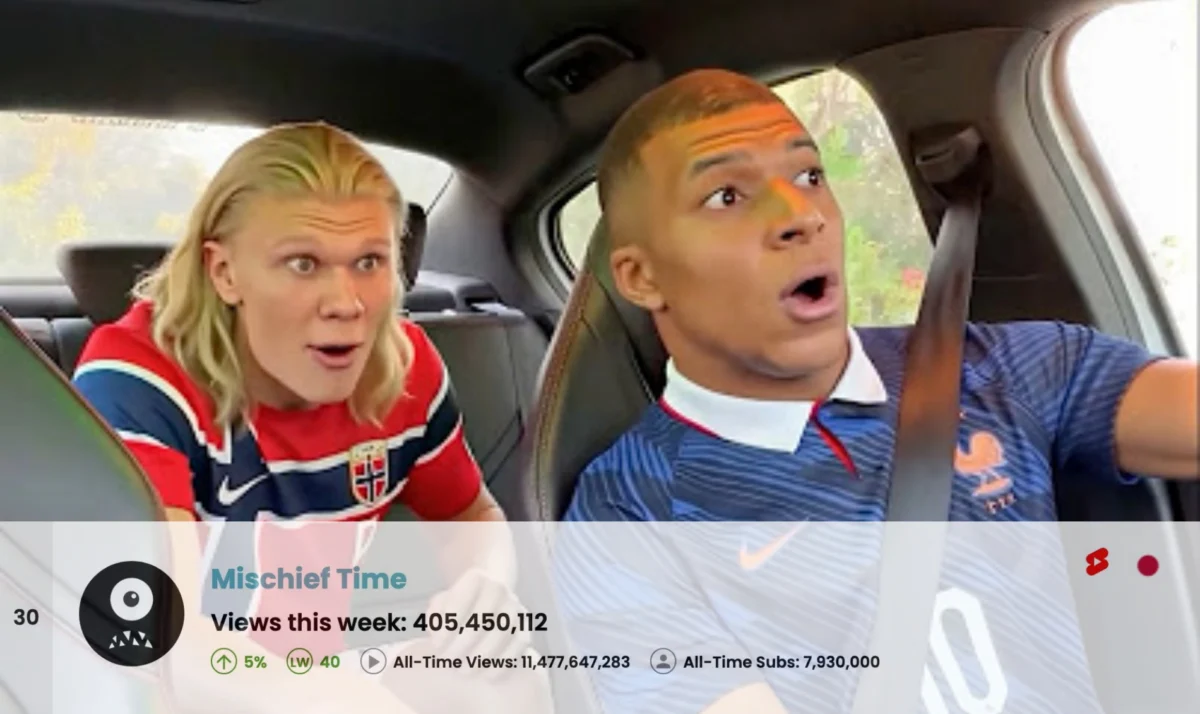
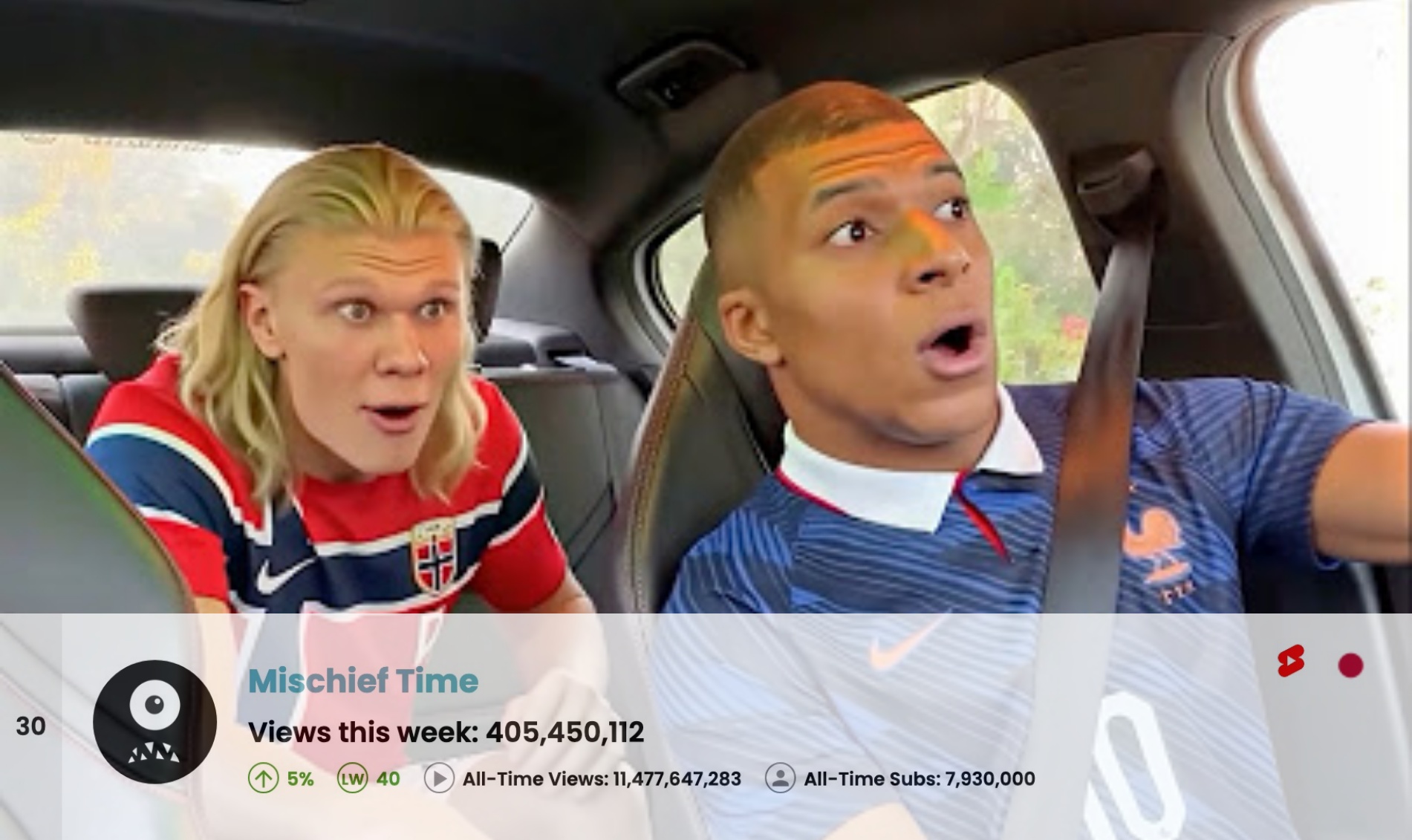
While creators like Dept represent the traditional path to success—years of brand building and authentic content—a new breed of content studios is finding a "shortcut" that is proving remarkably effective. Enter channels like Mischief Time, which finished 30th in the Global Top 50 this week with a staggering 405.4 million weekly views.
At first glance, Mischief Time looks like a standard soccer highlight channel. However, a closer inspection reveals a surreal reality. The videos feature global icons like Kylian Mbappé and Erling Haaland, but they are not the athletes themselves. They are AI-generated imitations. These digital avatars engage in mundane, humorous, and sometimes bizarre activities: sharing sweets, blowing bubbles, and pulling elaborate pranks on figures like Cristiano Ronaldo.
The “Slop” vs. Success Dilemma
The success of Mischief Time presents a complex challenge for the platform. Critics often refer to such content as “AI slop”—low-effort, automated, or synthetic media that relies on the popularity of real-world figures to hijack search results and algorithm feeds.
Despite the skepticism from traditional media circles, the metrics do not lie. These channels are attracting hundreds of millions of views, suggesting that a significant segment of the YouTube audience finds these uncanny, AI-generated skits genuinely entertaining. The paradox here is clear: while YouTube has made significant strides in helping creators collaborate with actual athletes, the AI facsimiles are competing on an equal—and sometimes superior—footing.
Chronology: The World Cup’s Digital Escalation
To understand how we arrived at this point, one must look at the timeline of the 2026 tournament’s digital footprint:
- Early 2026: YouTube announces strategic partnerships to provide creators with better access to athletes, signaling an attempt to elevate the quality of sports content.
- March 2026: The first wave of “World Cup Hype” content hits the platform. Creators begin shifting their schedules to align with the tournament buildup.
- May 2026: AI-generated soccer content begins to permeate the Short-form feed. Channels like Mischief Time start seeing exponential growth, utilizing the “uncanny valley” effect to keep viewers watching longer.
- June 2026 (Present Week): The World Cup reaches its most intense phase. The Global Top 50 is dominated by soccer-related content, with AI-driven channels cementing their place alongside legitimate sports journalism and influencer-led vlogs.
Supporting Data: A Landscape in Flux
The data provided by GospelStats highlights a clear shift in consumer behavior. The dominance of YouTube Shorts in this week’s chart is undeniable: 40 out of the top 50 channels are primarily active in the short-form space. This reinforces the idea that the World Cup’s rapid, highlight-driven nature is perfectly suited for the 60-second-or-less format.
| Metric | Performance |
|---|---|
| Top Channel (Celine Dept) | 1.11 Billion Views |
| Mischief Time (AI Content) | 405.4 Million Views |
| Futcrunch (Sports Analysis) | 373.7 Million Views |
| Shorts-Active Channels | 40 / 50 |
The data indicates that the "Shorts" format is no longer just an experimental feature; it is the primary delivery mechanism for the most viral content on the internet. Whether the content is authentic athletic footage or AI-generated parody, the medium of the "short" has become the great equalizer.
Official Responses and Platform Governance
YouTube has not been silent regarding the rise of AI-generated content. Earlier this year, the platform initiated a crackdown on “AI slop,” aiming to protect the integrity of its ecosystem and prevent misinformation. However, the line between “slop” and “parody” is thin.
Mischief Time and similar channels operate in a gray area. By explicitly labeling their content as parody and focusing on humor rather than deceptive news, they manage to bypass the more stringent bans aimed at deepfakes. Nevertheless, industry experts suggest that YouTube may eventually need to implement stricter labeling requirements for AI-generated avatars.
For now, the platform’s stance appears to be one of cautious observation. As long as the content does not violate safety guidelines or promote hate speech, the algorithm continues to reward high engagement, regardless of whether the creator is a human athlete or a set of generative algorithms.
The Implications: What Happens After the Final Whistle?
The current surge of soccer content is undeniably tied to the 2026 World Cup. But what happens when the final match concludes in July?
1. The Saturation Point
The market is currently flooded with soccer-related content. Once the tournament ends, viewership is likely to see a sharp decline across the board. The channels that will survive this transition are those that have successfully built a personality-driven brand—creators like Celine Dept—rather than those relying solely on the fleeting buzz of a specific event or a specific AI gimmick.
2. The Future of AI in Sports Entertainment
The success of Mischief Time suggests that AI-generated entertainment is here to stay. We are likely to see an increase in “digital twin” content, where creators use AI to place their own likenesses into various high-profile scenarios. This could lead to a new era of sports entertainment where fans interact with “virtual versions” of their favorite players in ways that were previously impossible.
3. The Ethical Reckoning
As the technology behind AI generation improves, the debate over likeness rights will only intensify. Are professional athletes entitled to a portion of the revenue generated by channels that use their AI-generated avatars for parody? This is a legal and ethical frontier that YouTube and its stakeholders will inevitably have to navigate.
Conclusion
The 2026 World Cup has proven that the intersection of sports, social media, and generative AI is the most fertile ground for content growth on the internet today. From the billion-view success of Celine Dept to the surreal, algorithm-defying skits of Mischief Time, the landscape is changing faster than ever before.
As a sports fan, the current era is one of unprecedented access and entertainment. Yet, it also serves as a warning of the volatility inherent in modern media. The World Cup will end, the trends will shift, and the “slop” will eventually be replaced by the next digital fad. For now, however, the beautiful game—both real and imagined—continues to reign supreme on the world’s largest stage.
Keep up to speed with the latest Tubefilter Charts and all our news by subscribing to our newsletter. You’re going to love it. Newsletter.Tubefilter.com

