

Main Facts
The gaming hardware landscape has long been shaped by innovation, but also by unmet expectations. A prime example is Valve’s Steam Machine, a concept that promised to bridge the gap between PC gaming flexibility and console simplicity, yet ultimately struggled with widespread availability and accessible pricing. This void has, however, sparked a vibrant DIY movement, with enthusiasts and creators stepping up to craft their own visions of a compact, living-room-friendly gaming PC. Among these ingenious alternatives, the Terk Box v1.1 has emerged as a particularly compelling contender, hailed by many as the closest spiritual and design successor to Valve’s original concept.
This ambitious 3D-printed Mini-ITX gaming PC case is the brainchild of a collaborative effort between Jacob Terkelsen, a former Tom’s Hardware contributor now contributing his expertise at AMD, and a prominent figure in the 3D printing and Small Form Factor (SFF) PC communities known by the handle 3DCatt. Their combined talents have yielded a design that not only echoes the aesthetic of the Steam Machine but also offers a fully customizable and open-source pathway for gamers to build their ideal compact system. The project, recently spotlighted by Hackaday, underscores a growing trend where community innovation fills the gaps left by mainstream hardware manufacturers, offering solutions tailored by and for the most passionate users.
The Terk Box v1.1 distinguishes itself by making its complete source files, including detailed parts lists and .STL files, freely available on Printables.com under a Creative Commons license. This open-source approach empowers anyone with a 3D printer to embark on their own Steam Machine-inspired build, fostering a spirit of collaboration and iterative improvement within the SFF PC community. While the project is openly acknowledged as a work in progress, with specific component constraints and design nuances that require careful consideration, it represents a significant step towards democratizing access to high-performance, compact gaming hardware that aligns with the original vision Valve set out to achieve. The ongoing dialogue between its creators and the burgeoning community of builders promises further refinements, hinting at a v1.2 that addresses current limitations and pushes the boundaries of DIY SFF design.
Chronology: From Valve’s Vision to Community Innovation
The story of the Terk Box v1.1 is inextricably linked to the trajectory of Valve’s own Steam Machine. To understand the impetus behind such a community-driven project, it’s crucial to revisit the historical context that created the demand for alternatives.
2013-2015: The Dawn and Dusk of the Steam Machine
Valve, a titan in the digital distribution and game development spheres, first unveiled the Steam Machine concept in 2013. The promise was revolutionary: a Linux-based gaming console powered by Valve’s SteamOS, designed to bring the vast Steam library to the living room with the flexibility and power of a PC, all packaged in a console-like form factor. This vision was accompanied by the innovative Steam Controller and Steam Link, forming a comprehensive ecosystem aimed at disrupting the traditional console market. Initial prototypes and developer kits generated considerable excitement, showcasing sleek, compact designs from various hardware partners like Alienware, Falcon Northwest, and Zotac.
However, the journey from concept to market was fraught with challenges. The primary hurdles included:
- Pricing: Many Steam Machine configurations launched at price points comparable to, or even exceeding, traditional gaming PCs or dedicated consoles, often without offering a compelling value proposition.
- Availability: Despite multiple hardware partners, the machines never achieved widespread retail presence or consistent stock, contributing to a perception of exclusivity and scarcity.
- Operating System Maturity: SteamOS, while promising, was still in its infancy. Compatibility issues with certain games, driver complexities, and the learning curve for users accustomed to Windows or console interfaces deterred a broader audience.
- Market Confusion: The distinction between a Steam Machine, a regular gaming PC, and a console was often blurred, leading to consumer uncertainty about its specific role and benefits.
By 2015, as the first wave of Steam Machines hit the market, disappointment began to set in. Reviews highlighted the high cost for the performance offered, the limited game library on SteamOS compared to Windows, and the general lack of a clear market identity. The initial hype gradually faded, and while Valve continued to support SteamOS and the Steam Controller, the Steam Machine as a standalone hardware category never truly gained mainstream traction. Its lingering presence in the market was often characterized by low stock and inflated prices on secondary markets, turning what was meant to be an accessible gaming solution into a collector’s item for a select few.
2020s: The Rise of DIY and SFF PCs
In the years following the Steam Machine’s initial push, the PC hardware market continued its rapid evolution. Mini-ITX motherboards became more powerful and feature-rich, compact graphics cards emerged, and advancements in cooling technology made truly small form factor (SFF) gaming PCs a viable reality. Concurrently, the proliferation of affordable 3D printing technology empowered enthusiasts to design and fabricate custom enclosures, freeing them from the constraints of commercially available cases.
It was against this backdrop of unfulfilled promises from Valve and burgeoning DIY capabilities that the concept of community-driven alternatives began to take shape. Influencers and creators, recognizing the persistent desire for a Steam Machine-esque device, started experimenting with custom builds. These ranged from highly specialized, one-off projects to more generalized designs shared online.
June 2026: The Emergence of the Terk Box v1.1
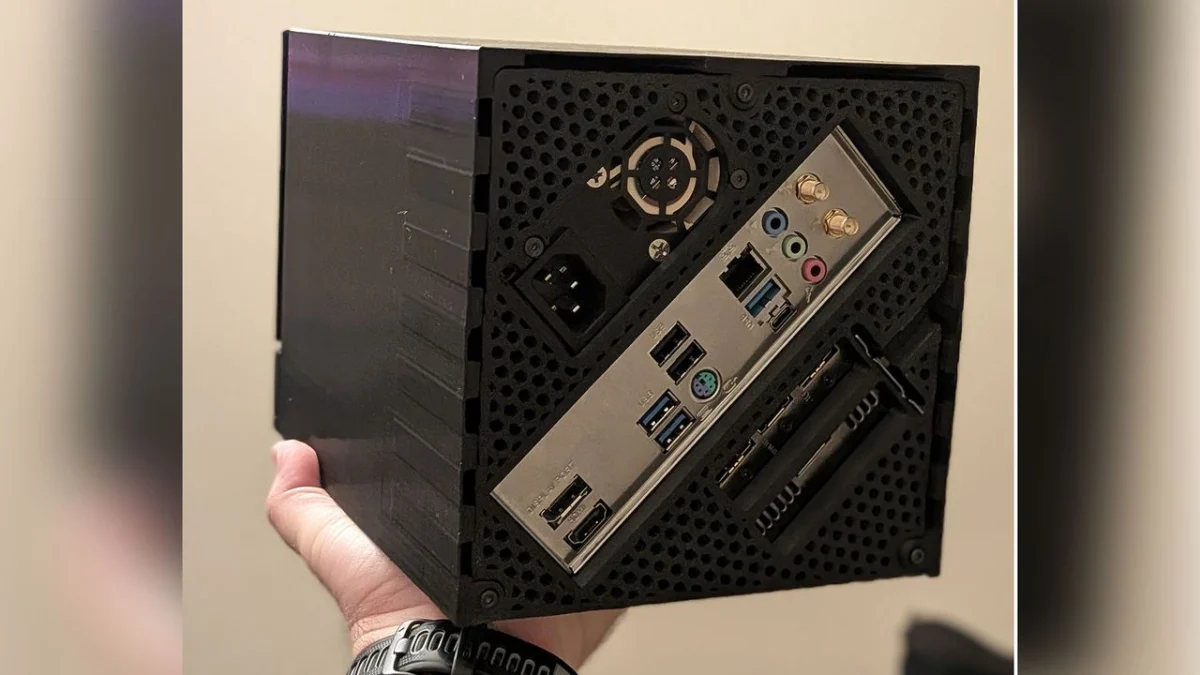
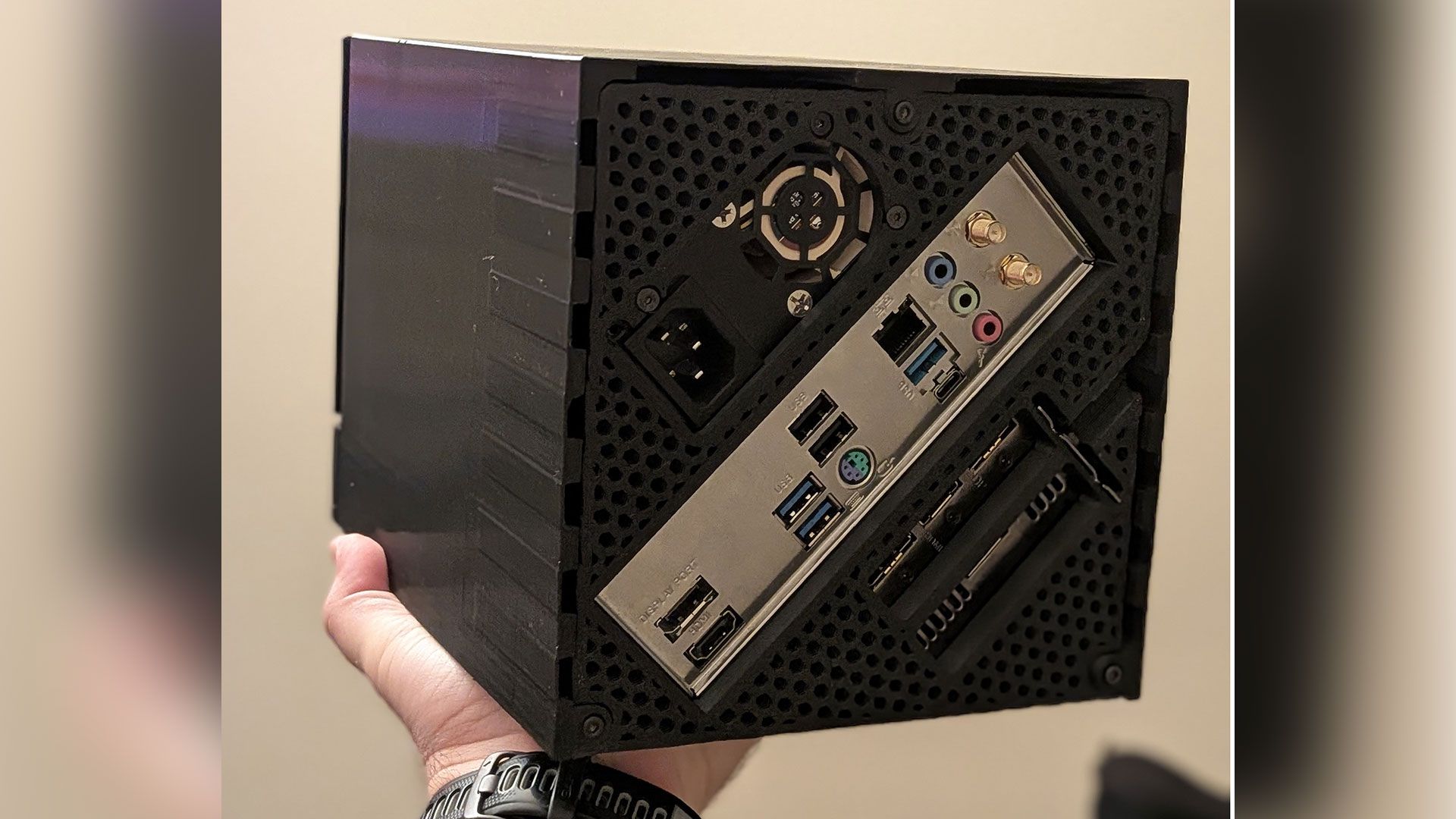
The formal introduction of the Terk Box v1.1 in June 2026 marked a significant milestone in this DIY movement. Jacob Terkelsen and 3DCatt, both deeply embedded in the PC hardware and 3D printing communities, combined their expertise to create a design that explicitly aimed to capture the "design and spirit" of the original Steam Machine. The public unveiling, notably through a tweet from 3DCatt on June 24, 2026, showcasing the Terk Box v1.1, immediately resonated with enthusiasts who had long yearned for such a solution. The tweet proudly declared the v1.1 as "complete" after its first major revision, highlighting crucial improvements like enhanced rear ventilation for the RTX 5060, a testament to the iterative and performance-focused development approach.
The rapid availability of the design files on Printables.com soon after its announcement further cemented its status as a community project, inviting immediate engagement, feedback, and potential future contributions from builders worldwide. This swift transition from concept to accessible, open-source hardware reflects a maturity in the DIY SFF PC scene, demonstrating how passionate individuals can effectively address market demands that larger corporations have struggled to meet. The journey from Valve’s ambitious but ultimately challenged vision to the Terk Box v1.1 exemplifies a shift in innovation, moving from corporate R&D to collaborative, open-source community development.
Supporting Data: Design, Components, and the DIY Experience
The Terk Box v1.1 is more than just a 3D-printed shell; it’s a carefully considered framework designed to house a potent Mini-ITX gaming PC within remarkably compact dimensions. Its open-source nature, coupled with detailed documentation, provides an invaluable resource for anyone looking to replicate or iterate upon the design.
Core Design Philosophy and Aesthetics:
The creators’ primary goal was to capture the essence of Valve’s Steam Machine. This translates into a minimalist, cube-like aesthetic that blends seamlessly into a living room entertainment setup, moving away from the often aggressive or bulky designs of traditional gaming towers. The Terk Box v1.1 measures 167 x 168 x 225mm (W x H x D). This is notably close to the original Steam Machine’s dimensions of 152 x 162 x 156mm, validating its claim as a spiritual successor in terms of physical footprint. The slight increase in dimensions for the Terk Box v1.1 is a deliberate trade-off, providing crucial internal volume for improved component compatibility and thermal management – lessons learned from the constraints of many ultra-compact SFF cases.
Open-Source Accessibility and Licensing:
One of the most defining features of the Terk Box v1.1 is its commitment to the open-source ethos. All necessary files for 3D printing, including the intricate .STL models, are readily available for download on Printables.com. This platform also hosts a comprehensive parts list, detailing every screw, standoff, and specialized component required beyond the 3D-printed chassis itself. The project operates under a Creative Commons license, encouraging users not just to build but also to modify, improve, and share their remixes, fostering a truly collaborative development environment. This approach significantly lowers the barrier to entry for custom SFF PC building, transforming a niche hobby into a more accessible endeavor for anyone with a 3D printer and a willingness to tinker.
Component Compatibility and Practical Considerations:
Building a compact SFF PC always involves navigating a delicate balance of size, performance, and thermal efficiency. The Terk Box v1.1, while innovative, is no exception, presenting specific component considerations for prospective builders:
- Motherboard: The case is designed around the Mini-ITX standard, the smallest common form factor for PC motherboards, measuring 170 x 170mm. This ensures a wide range of modern motherboards from Intel and AMD platforms can be utilized, offering flexibility in CPU choice.
- Graphics Card (GPU): This is perhaps the most critical component constraint. 3DCatt explicitly states a maximum GPU length of "about 180mm." This severely limits the selection of graphics cards, steering builders towards specialized "Mini" or "LP" (Low Profile) versions of GPUs. Jacob Terkelsen’s successful integration of his NVIDIA RTX 5060 LP graphics card serves as a practical example of what can fit. The RTX 5060 LP, being a relatively powerful yet compact card, suggests that decent gaming performance is achievable within these limitations, but builders must meticulously check the dimensions of their chosen GPU. This constraint is a common challenge in SFF builds, where manufacturers must decide between accommodating larger, more powerful cards or maintaining a truly compact footprint. The Terk Box v1.1 prioritizes the latter.
- PCIe Riser Cable: Due to the compact nature and the horizontal mounting of the GPU, a PCIe riser cable is essential. However, user comments indicate that the recommended riser cable length might not be universally suitable, depending on the specific GPU model and its connector placement. This highlights a common snag in custom builds, where slight variations in component design can necessitate careful measurement and potentially sourcing alternative parts. The creators are likely to address this in future revisions.
- Power Supply Unit (PSU): The choice of PSU is crucial for SFF builds. The Terk Box v1.1 likely accommodates an SFX (Small Form Factor) or SFX-L PSU, which are significantly smaller than standard ATX PSUs. The original article notes a "less-than-ideal positioning of the CPU socket in relation to the PSU." This implies potential challenges with CPU cooler clearance or cable management, which could impact thermal performance or ease of assembly. These are typical design compromises in SFF cases, where every millimeter is precious.
- Cooling: Thermal management is paramount in SFF systems. The initial v1.0 likely faced cooling challenges, leading to the crucial improvement in v1.1: "more ventilation in the back so the RTX 5060 is no longer choked." This indicates a responsive design process. Terkelsen’s request for "more room for a front 140mm case fan" further emphasizes the ongoing focus on optimizing airflow and cooling performance. Integrating a larger fan would significantly improve overall case thermals, especially for the CPU and motherboard components.
- Other Components: The parts list on Printables.com details various screws, standoffs, and potentially custom brackets needed to secure the Mini-ITX motherboard, SSDs/HDDs, and other peripherals. The DIY nature means builders must be comfortable with sourcing these smaller, often specialized, components.
The DIY Price and Value Proposition:
The article notes that "the DIY price for this won’t be the most compelling." This is an important distinction. While the 3D-printed case itself is relatively inexpensive (cost of filament), the specialized SFF components (Mini-ITX motherboard, SFX PSU, compact GPU, PCIe riser cable, SFF CPU cooler) often carry a premium compared to their standard ATX counterparts. Therefore, the Terk Box v1.1 isn’t necessarily a "budget" alternative in terms of total system cost. Instead, its value lies in:
- Customization: The freedom to choose specific components, unlike pre-built Steam Machines.
- Unique Form Factor: Achieving a compact, Steam Machine-like aesthetic that is difficult to find in commercial cases.
- Open-Source Empowerment: The satisfaction of building something unique and contributing to a community project.
- Repairability and Upgradeability: The inherent flexibility of a custom PC, allowing for component upgrades over time.
For the dedicated 3D printing and PC DIY enthusiast, these benefits often outweigh a purely cost-driven analysis, making the Terk Box v1.1 a highly attractive proposition.
Official Responses and Community Engagement
While "official responses" in the traditional corporate sense are not applicable to a community-driven, open-source project like the Terk Box v1.1, the interactions and feedback from its creators and the broader user base serve as its equivalent. These dialogues are critical for identifying challenges, proposing solutions, and guiding future iterations.
Creators’ Insights and Iterative Development:
The collaboration between Jacob Terkelsen and 3DCatt is characterized by a continuous feedback loop and a commitment to iterative improvement. Terkelsen, with his background at Tom’s Hardware and current role at AMD, brings a professional perspective on hardware compatibility, thermal dynamics, and user experience. 3DCatt, as an SFF PC and 3D printing enthusiast, provides the practical design and fabrication expertise.
The transition from an implied initial design to the v1.1, and the subsequent hints at v1.2, clearly demonstrate this iterative approach:
- Addressing Thermal Issues: The explicit mention by 3DCatt of adding "more ventilation in the back so the RTX 5060 is no longer choked" for v1.1 is a direct response to a fundamental SFF challenge: heat dissipation. This suggests that earlier versions or initial testing revealed inadequate airflow, prompting a design revision to prevent thermal throttling of the GPU. This "official response" from the designer to a practical problem significantly enhances the case’s functionality.
- User Experience and Component Fit: Terkelsen’s personal experience building with his RTX 5060 LP informed his request for "more room for a front 140mm case fan." This isn’t just a personal preference but an expert’s suggestion for improving overall system cooling and potentially making CPU cooler selection easier by increasing internal airflow. Such feedback from a co-creator, especially one with deep hardware knowledge, is invaluable in refining the design for broader appeal and better performance.
- Acknowledging Limitations: The creators openly discuss the "fussiness with GPU choice" and the "less-than-ideal positioning of the CPU socket in relation to the PSU." This transparency is a hallmark of good open-source development. By acknowledging these compromises, they set realistic expectations for builders and invite community input on potential solutions for v1.2. This contrasts sharply with commercial products that often try to downplay or hide such limitations.
Community Feedback and Contributions:
The decision to host the project on Printables.com and release it under a Creative Commons license is a deliberate invitation for community engagement. User comments on the platform provide a vital channel for "official responses" from the wider builder community:
- GPU Fit Challenges: The original article notes that "some people may have had a hard time fitting their GPU" despite the stated 180mm maximum. This feedback is crucial. It could indicate that the 180mm limit is extremely tight, that specific GPU cooler designs make fitting difficult even within the length, or that users are attempting to fit cards slightly over the limit. This kind of real-world feedback from early adopters helps refine documentation, clarify compatibility guidelines, or even inspire design tweaks for future versions.
- PCIe Riser Cable Issues: Similar feedback regarding the recommended PCIe riser cable not being long enough for some GPU models is another direct "response" from the community. This points to a potential area for improvement, either by recommending a more versatile riser length or by designing the case to accommodate a wider range of riser cable placements.
- Suggestions for Improvement: Beyond issues, the Creative Commons license actively encourages "suggestions, tweaks, and remixes." This is where the open-source model truly shines. Experienced 3D printer owners and SFF PC builders can propose alternative internal layouts, ventilation schemes, or mounting solutions. This collective intelligence often leads to more robust and versatile designs than a single team could achieve. The "official response" from the project, in this context, is its willingness to integrate promising community contributions into future official revisions.
In essence, the "official responses" for the Terk Box v1.1 are a dynamic interplay between the creators’ ongoing development efforts, their personal build experiences, and the collective wisdom and practical feedback from the global community of DIY enthusiasts. This collaborative model ensures the project remains agile, responsive, and continuously evolving to meet the needs of its target audience.
Implications: The Future of DIY Gaming and SFF PCs
The emergence and reception of the Terk Box v1.1 carry significant implications for the future of DIY gaming, small form factor (SFF) PCs, and the broader hardware enthusiast community. It represents more than just a case design; it’s a testament to the power of open-source collaboration in an era where consumers increasingly seek personalized and accessible technological solutions.
Empowering the DIY Enthusiast:
The most immediate implication is the empowerment of the individual builder. By providing open-source files and detailed instructions, the Terk Box v1.1 democratizes access to a niche form factor that was once the exclusive domain of commercial manufacturers or highly skilled custom fabricators. This allows a wider audience of 3D printer owners and PC enthusiasts to:
- Overcome Market Limitations: Directly address the historical issues of Valve’s Steam Machine – scarcity, high pricing, and limited availability – by enabling self-production.
- Foster Skill Development: Encourage individuals to learn about 3D printing, SFF component selection, thermal management, and PC assembly, fostering a deeper understanding of hardware.
- Cultivate Customization: Move beyond off-the-shelf solutions, allowing for truly personalized gaming rigs that reflect individual needs and aesthetics. The ability to print in various colors or modify specific elements of the case offers unparalleled customization.
The Evolution of SFF PC Design:
The Terk Box v1.1 also serves as a proof-of-concept for how SFF PC design can evolve. The iterative process between 3DCatt and Jacob Terkelsen, coupled with community feedback, highlights a more agile development model than traditional corporate R&D.
- Rapid Prototyping and Refinement: 3D printing allows for quick prototyping and testing of design changes, significantly reducing the time and cost associated with traditional manufacturing cycles. This speed enables faster responses to user feedback and market trends.
- Focus on Niche Needs: Without the pressure of mass market appeal, open-source projects can focus on optimizing for specific use cases, such as achieving a very compact, console-like form factor that might be too risky or expensive for a large company to pursue.
- Thermal Innovation: The emphasis on improving ventilation for v1.1 and the request for a 140mm front fan in v1.2 underscore the continuous quest for optimal thermal performance in small enclosures. Community input can lead to innovative cooling solutions that might not be explored by mainstream designers.
A Model for Open-Source Hardware:
The project stands as a strong example of how the open-source software movement can be successfully applied to hardware.
- Collaborative Improvement: The Creative Commons license encourages a "remix culture," where users can build upon the original design, suggest improvements, and share their modifications. This collective intelligence can lead to a more robust, versatile, and refined product over time. The project itself hints at future versions (v1.2) that will incorporate such feedback, demonstrating a commitment to this model.
- Transparency and Trust: The open availability of design files and the transparent discussion of limitations build trust within the community. Users know exactly what they are getting into and can contribute meaningfully.
- Sustainability and Longevity: Unlike proprietary hardware that can become obsolete when manufacturer support ends, an open-source design can theoretically be maintained and improved by the community indefinitely.
Impact on the Broader Gaming Market:
While unlikely to directly compete with major console manufacturers or large PC OEMs in terms of sales volume, the Terk Box v1.1 and similar projects exert a subtle influence on the broader gaming market:
- Demonstrating Demand: These projects clearly indicate a strong, persistent demand for compact, living-room-friendly gaming PCs that offer both performance and a console-like aesthetic. This could indirectly influence commercial manufacturers to explore more SFF options or improve the accessibility of their existing offerings.
- Pushing Boundaries: The innovations arising from the DIY community, especially in areas like thermal management for extreme SFF, can inspire and inform commercial product development.
- Diversifying the Ecosystem: It adds another layer to the diverse gaming ecosystem, providing an alternative path for those who find existing commercial solutions unsatisfactory or overly restrictive.
In conclusion, the Terk Box v1.1 is more than just a 3D-printed case; it’s a vibrant expression of community ingenuity and a powerful statement on the potential of open-source hardware. As the creators continue to refine the design and the community actively engages in its evolution, it promises to remain a compelling and accessible alternative for anyone seeking to build their own Steam Machine-inspired gaming PC, ultimately shaping the landscape of compact, high-performance computing for years to come.

