

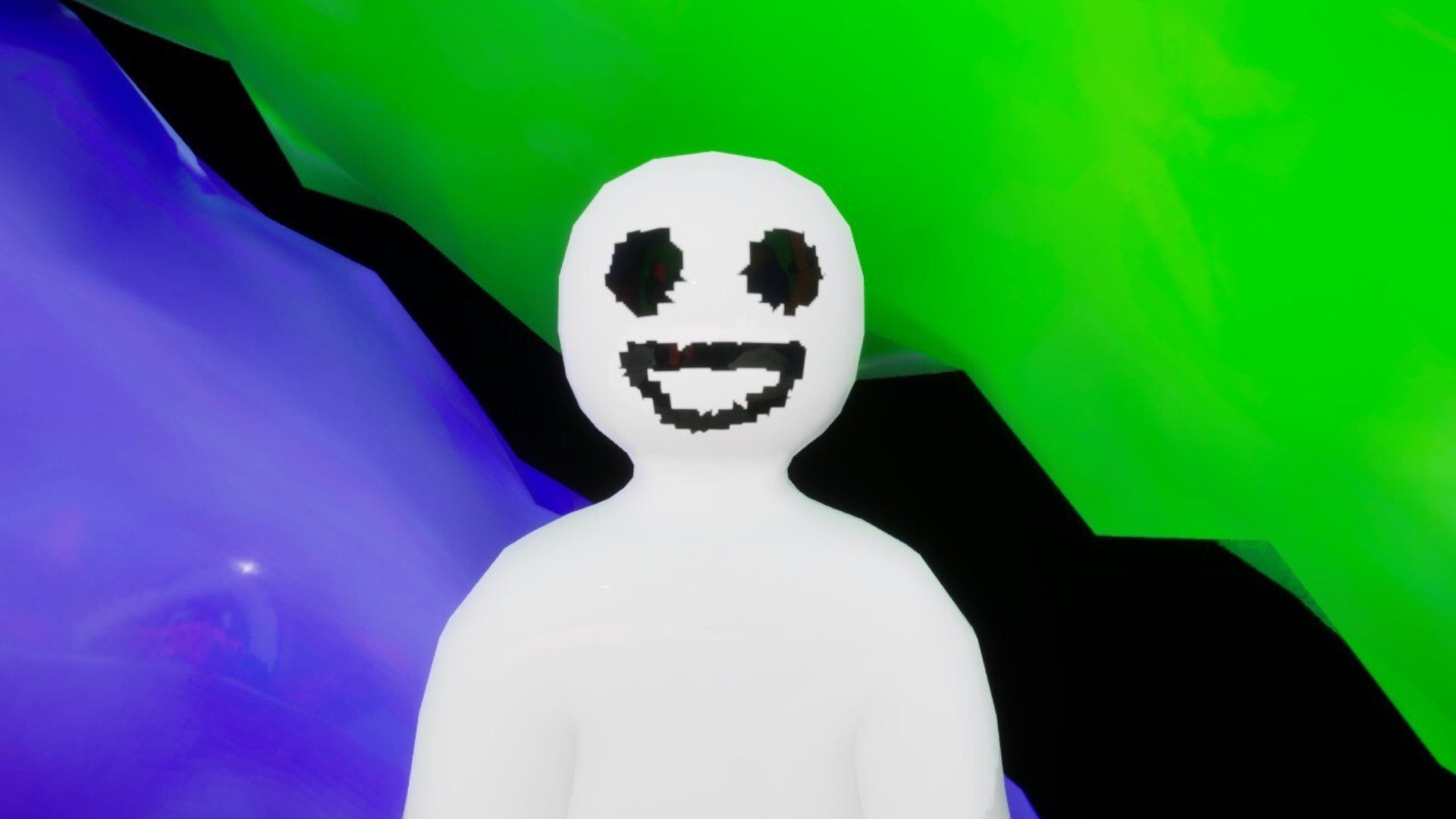
In an industry currently defined by ballooning development budgets, $70–$100 price tags, and the high-stakes pressure of "AAA" live-service titles, the breakout success of Meccha Chameleon stands as a defiant anomaly. The PvP hide-and-seek sensation, which tasks players with painting their avatars to blend seamlessly into vibrant, chaotic environments, has achieved what many industry giants fail to do in a lifetime: it has sold 10 million copies in less than a month.
What began as a viral curiosity has rapidly ascended to the upper echelons of Steam’s most-played charts. As of this writing, Meccha Chameleon is maintaining a staggering concurrent player count of nearly 200,000, signaling that this is not merely a "flash in the pan" phenomenon, but a fundamental shift in how players are choosing to spend their leisure time.
A Chronology of a Viral Sensation
The trajectory of Meccha Chameleon is nothing short of unprecedented. When the game first launched, it shattered expectations by moving one million units in its first four days. At the time, critics and analysts speculated that the game’s success was tethered to its low price point and the inherent, infectious nature of its core loop. However, as the second and third weeks progressed, rather than seeing the typical "tail-off" of a viral title, the game’s momentum accelerated.
By the end of its second week, the developer confirmed that the game had crossed the 5-million-copy threshold. By the close of its first month, the official Steam community announcement confirmed the monumental 10-million-copy milestone. This rapid acceleration suggests that the game’s growth is driven by a compounding "network effect"—as more players join, the quality of the hide-and-seek matches improves, drawing in even more participants through social media, streaming platforms, and word-of-mouth recommendations.
Supporting Data: Why the Numbers Matter
The data provided by SteamDB paints a vivid picture of a game with incredible "stickiness." While many multiplayer games experience a massive surge on launch day followed by a steady decline, Meccha Chameleon has maintained a remarkably stable and high concurrent player base.
The low barrier to entry—a modest $6 price tag—has acted as a massive catalyst. In a fiscal climate where players are increasingly wary of "premium" pricing for titles that may or may not deliver on their promises, the low-risk, high-reward nature of Meccha Chameleon is a masterclass in market psychology.
Furthermore, the game’s technical accessibility cannot be overstated. With the recent implementation of cloud support, the developers have effectively removed the last remaining friction point for potential players. Whether a user is playing on a cutting-edge gaming rig or a low-spec laptop, the game remains playable. This democratization of the experience has allowed it to penetrate markets that typically remain outside the reach of resource-heavy modern titles.
The "Friendslop" Phenomenon and the Culture of Play
To understand the success of Meccha Chameleon, one must look at the broader "friendslop" movement—a term used to describe the current wave of low-cost, high-social-value games that prioritize fun over fidelity. Players are gravitating toward titles that allow for immediate, low-stakes engagement with their peer groups.
Meccha Chameleon sits at the intersection of this movement. It captures the same spirit of communal, uncomplicated joy found in classic hide-and-seek or "prop hunt" mods that have thrived in games like Garry’s Mod and Dead by Daylight for over a decade. However, Meccha Chameleon iterates on these concepts by adding a layer of creative expression through its painting mechanics. The act of customizing one’s camouflage is not just a strategic necessity; it is a creative outlet that encourages humor, deception, and player expression.
Official Responses and Developer Strategy
The development team behind Meccha Chameleon has remained remarkably transparent throughout this meteoric rise. In their recent Steam community update, they expressed gratitude for the community’s reception, noting that the sheer volume of players has pushed their servers to their absolute limits.
Crucially, the team has avoided the common pitfall of "feature creep." Instead of immediately announcing grand, expensive expansions or complex seasonal passes, they have focused on maintaining server stability and optimizing the experience for the widest possible range of hardware. This "player-first" philosophy has served as a masterclass in community management, fostering a sense of goodwill that is rarely seen in the modern, often antagonistic, relationship between studios and their player bases.
Implications for the Industry
The success of this title poses uncomfortable questions for the AAA sector. When a $6 indie title can generate more sustained player interest than a $100 "mega-version" of a marquee franchise, the industry must re-evaluate its reliance on massive budgets and restrictive monetization models.
1. The Value Proposition Shift
The success of Meccha Chameleon suggests that players are suffering from "prestige fatigue." When a game offers instant, high-quality fun for the price of a sandwich, the value proposition of a $70 title becomes increasingly difficult to justify. We are seeing a shift where the "cost-per-hour-of-fun" metric is being heavily scrutinized by the average consumer.
2. The Power of "Clumsy" Charm
As noted in the original PC Gamer review by Lincoln Carpenter, Meccha Chameleon is not a technically perfect game. It is "wrapped in clumsy software," yet it succeeds because it prioritizes the experience of the player over technical polish. It proves that a game does not need to be a graphical powerhouse to be an essential experience. Being a "top-tier bastard"—the joy of successfully hiding in plain sight while your friends run past you—is a design hook that transcends technical limitations.
3. The Future of Multiplayer
We are likely to see a shift in development focus toward "snackable" multiplayer experiences. If Meccha Chameleon can command 200,000 concurrent players, other studios will inevitably attempt to replicate this model. The danger for the industry, however, is trying to "corporate-ize" this charm. If larger studios attempt to force-feed "friendslop" mechanics into bloated, microtransaction-heavy frameworks, they will likely miss the point of why Meccha Chameleon resonated in the first place: it is authentic, it is inexpensive, and it is unapologetically fun.
Conclusion: The Chameleon’s Legacy
Meccha Chameleon has become a cultural touchstone in a very short amount of time. It has demonstrated that there is a massive, underserved market for games that prioritize social interaction and simple, clever mechanics over the exhausting complexity of modern blockbusters.
Whether the game can maintain its current momentum in the long term remains to be seen, but the mark it has left on the industry is indelible. It has proven that in an era of global economic uncertainty and corporate gaming excess, a simple idea, executed well, and priced fairly, will always find its audience. For the developers of Meccha Chameleon, the mission is clear: keep the servers running, keep the game accessible, and continue to facilitate the "top-tier bastardry" that has captivated millions.
As we look toward the future of the medium, we should expect to see more developers leaning into this model. The era of the bloated, hyper-expensive, mandatory-monetized game is not ending, but it is certainly facing a fierce new challenger: the humble, affordable, and irresistibly fun hide-and-seek game that taught us all how to paint our way to the top.

